
Printable ND Permit Practice Test
40 questions from the North Dakota question bank. Answer key on the last page. Last verified 2026-09-05 against the official North Dakota driver manual.
1. When a green arrow appears while the light is red, what movement may you make?
- Turn in the direction of the arrow after yielding to pedestrians and vehicles already in the intersection
- Make any turn without checking the intersection
- Proceed straight regardless of the arrow direction
- Remain stopped until the circular signal turns green
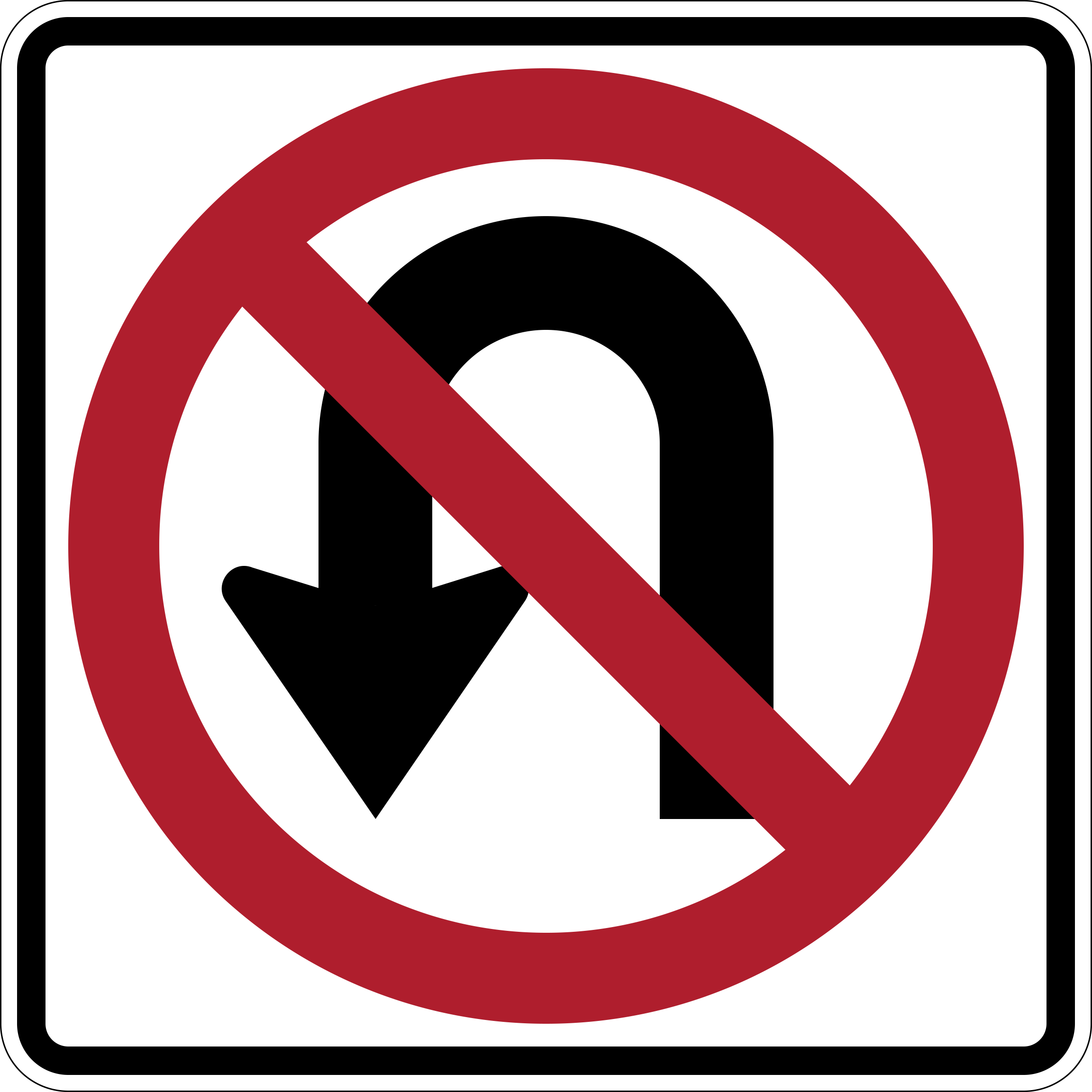
2. Which movement is forbidden by the red circle and slash over the U-shaped arrow?
- Yielding to a pedestrian
- Turning into a legal driveway
- Following the lane straight ahead
- Making a U-turn at that location
3. How many hours of supervised practice driving must an applicant under 16 complete?
- A minimum of 20 hours on city streets only
- A minimum of 50 hours in variable conditions
- A minimum of 30 hours in daylight only
- A minimum of 75 hours on an Interstate
4. What do North Dakota speed limit signs show when driving conditions are ideal?
- The maximum permitted speed
- The minimum speed required
- A recommended speed that has no legal effect
- The speed reserved for emergency vehicles
5. At what point total does North Dakota move to suspend a driver's license?
- 12 or more points
- 6 points
- 20 points
- Any points at all
6. What service fee does North Dakota charge each time a temporary registration permit is bought or renewed?
- No fee
- $50
- $100
- A $10 service fee in addition to the registration fee
7. What is the North Dakota penalty for distracted driving, such as texting or losing control due to an unnecessary activity?
- $25 and one point
- $500 fine
- $250 fine
- $100 fine
8. What is the maximum speed when approaching a railway crossing where the view of the track is obstructed?
- 45 miles per hour unless otherwise posted
- 25 miles per hour unless otherwise posted
- 20 miles per hour unless otherwise posted
- 55 miles per hour unless otherwise posted
9. A 17-year-old visitor with a valid license from another state wants to drive in North Dakota. What minimum age applies to non-residents?
- 14
- 15
- 18
- 16
10. Who is prohibited from using an electronic communication device while driving in North Dakota?
- Only drivers who are under 16
- Instruction permit holders and licensed drivers under 18
- Only drivers carrying passengers
- Only commercial drivers on interstates
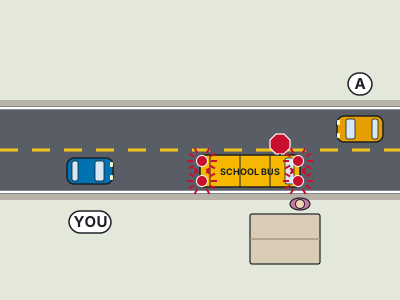
11. What must drivers approaching a school bus do when its red lights are flashing?
- Continue if the driver can see an open lane
- Stop only if traveling behind the bus
- Pass slowly after checking for children
- Stop from both directions
12. What should you do as this railroad warning indicates that a crossing is near?

- Stop on the tracks to listen for a train
- Accelerate to clear the tracks before looking
- Slow down so you can safely stop if a train is coming
- Treat the crossing as an ordinary intersection
13. What does a green traffic signal permit when the intersection is clear?
- Stop until a flashing signal appears
- Proceed through the intersection
- Yield to every vehicle behind you
- Use the signal only for a left turn
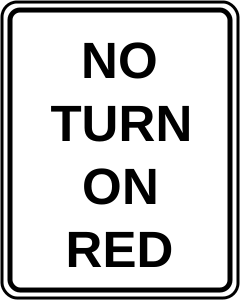
14. What does this NO TURN ON RED sign require at an intersection?
- A complete stop before the crosswalk
- Do not turn while the traffic signal is red
- A left turn after yielding
- A straight movement on a green light
15. How should you position your vehicle before making a right turn at an intersection?
- Stay as far right as possible and turn close to the right curb
- Approach beside the centerline and turn wide
- Enter the left lane before turning right
- Use the shoulder as the normal turning path
16. What does the round yellow railroad advance warning sign tell you about the road ahead?
- You are nearing a railroad crossing
- A roundabout entrance is mandatory
- A bicycle lane is ending
- A hospital entrance is nearby
17. What license does a restricted Class D operator's license become when the holder reaches age 16?
- A temporary instruction permit
- A motorcycle permit
- An unrestricted operator's license
- A commercial driver license
18. Unless otherwise posted, what is the maximum speed on a paved and divided multi-lane highway in North Dakota?
- 55 miles per hour on a paved and divided multi-lane highway
- 70 miles per hour on a paved and divided multi-lane highway
- 65 miles per hour on a paved and divided multi-lane highway
- 80 miles per hour on a paved and divided multi-lane highway
19. What shape do most signs in North Dakota work areas have?
- Diamond shaped
- Round
- Octagonal
- Pennant shaped
20. What should a driver do when conditions require traveling below the posted speed limit?
- Stop on the roadway whenever visibility changes
- Maintain the posted number in every condition
- Add five miles per hour to preserve traffic flow
- Drive slower than the posted limit when conditions require it
21. When visibility is less than 1,000 feet because of fog, what lighting action does the manual require?
- Use only the parking lights and leave headlights off
- Use the vehicle's headlights
- Turn on hazard lights while keeping all other lights off
- Use high beams continuously so the fog reflects more light
22. How long must a 16 or 17 year old hold an instruction permit before completing the road test or waiving it?
- Twelve months in every case
- Three months regardless of age
- Six months or until age 18, whichever comes first
- Until age 21
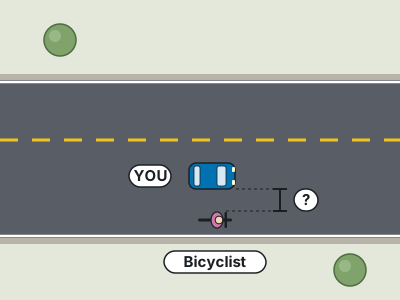
23. When passing a bicyclist on a North Dakota roadway, what minimum space must the driver leave?
- At least two feet of space
- At least four feet of space
- At least three feet of space
- At least six feet of space
24. During which dates may studded snow tires be used legally in North Dakota?
- September 1 through May 1
- November 1 through March 31
- October 15 through April 15
- December 1 through February 28
25. Why does a roundabout have an apron around its center island?
- To provide a place for vehicles to stop before entering
- To mark the edge of the center island for passenger vehicles
- To provide a separate lane for entering traffic
- To provide extra room for the rear wheels of large trucks
26. In what direction may traffic travel on the road shown by this ONE WAY sign?
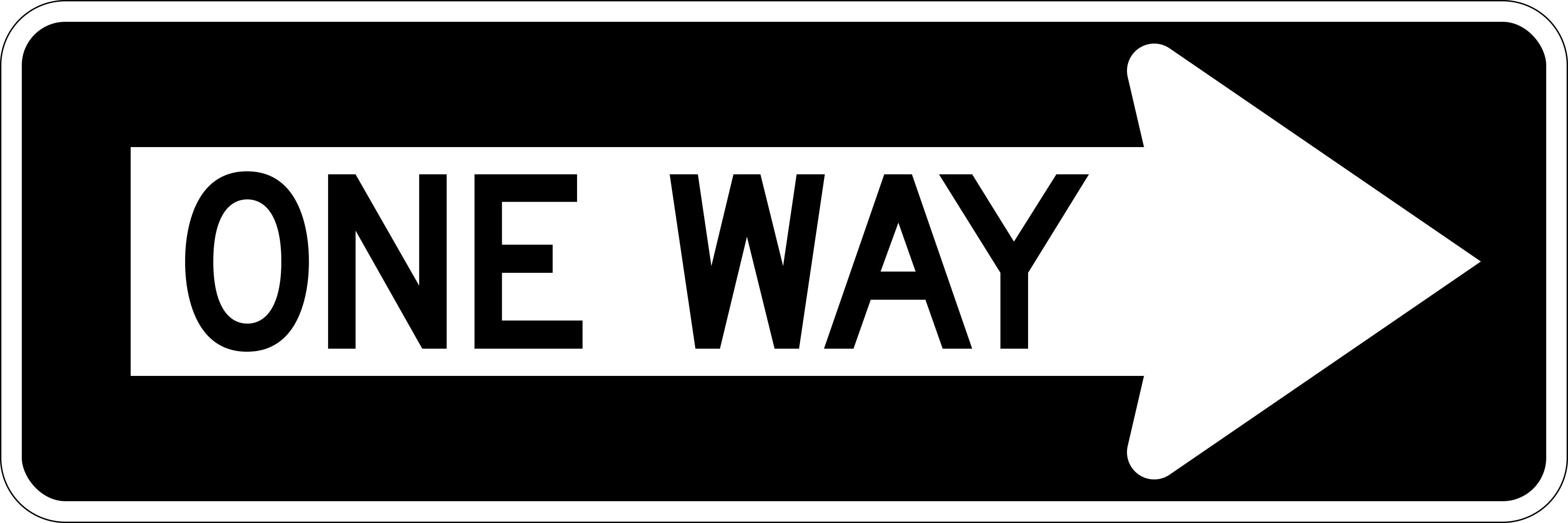
- Only toward the nearest shoulder
- In either direction when the center is clear
- In the direction shown by the arrow only
- Only during daylight hours
27. After a North Dakota DUI conviction, what insurance proof does the law require?
- Proof of financial responsibility through SR 22 insurance coverage
- A new vehicle title from the county auditor
- A commercial vehicle permit
- A medical examination certificate
28. What does a warning sign for a turn or sharp turn tell you to do?

- Pass any vehicle traveling more slowly
- Maintain speed until the turn is over
- Use the shoulder to straighten the path
- Reduce speed before entering the turn
29. After a minor's permit or license is cancelled for the specified alcohol or drug related offense, how is the minor treated for licensing?
- As a driver who needs only a replacement card
- As a driver eligible only for a commercial license
- As a driver whose license automatically returns after 30 days
- As someone who never held a permit or license
30. A North Dakota driver's first offense in seven years involves an alcohol concentration of 0.10%. How long is the license suspended?
- 30 days
- 180 days
- 91 days
- One year
31. When a school bus is stopped with red lights flashing, who must stop?
- Only drivers traveling toward the bus
- Only drivers traveling behind the bus
- Drivers approaching from both directions
- No one if the bus is on a straight road
32. A North Dakota parent cannot appear to sign a teen's permit sponsorship and designates another adult by notarized document. Who keeps financial liability?
- The designated adult
- The state
- The teen alone
- The father, mother, or legal guardian
33. How should drivers pass a parked emergency or NDDOT maintenance vehicle with emergency or work lights flashing on an Interstate or multilane highway?
- Move over to the opposite lane and proceed with due caution
- Stop and wait until an officer waves traffic through
- Honk and maintain normal speed in the same lane
- Turn around before reaching the parked vehicle
34. What does North Dakota require on a trailer towed faster than 25 mph?
- Safety chains or brakes capable of holding the trailer if the coupling breaks
- A red flag on the hitch
- Nothing beyond a hitch
- A second driver
35. What does one solid yellow line beside one broken yellow line mean for the lane with the solid line?
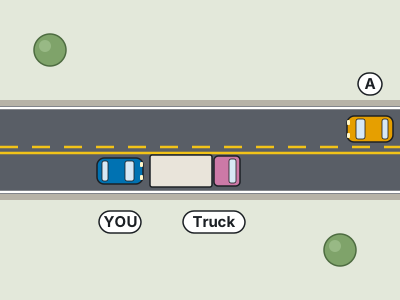
- Traffic must turn right immediately
- Passing is required before the next intersection
- The lane is reserved for parking
- Passing is not allowed from that lane
36. Under current North Dakota law, what minimum fee applies to speeding 1 to 10 mph over the limit in a highway construction zone while construction workers are present?
- $80
- $40
- $150
- $250
37. Before entering a roundabout, whom must you yield to?
- Only vehicles approaching from behind
- Pedestrians, bicyclists, and traffic already circulating
- No one, because entering traffic has priority
- Only trucks using the center island apron
38. At this stop sign, where must you bring the vehicle to a complete stop?

- Only after the front wheels pass the crosswalk
- After entering the intersection so cross traffic can see you
- At the far side of the intersection
- Before the stop line or crosswalk area
39. What colors may be used for North Dakota school warning signs?
- Orange or white only
- Fluorescent yellow green or standard yellow
- Blue or brown depending on the school district
- Red and black only
40. When does a North Dakota crash trigger the crash reporting duties?
- Any crash, however minor
- Only if a vehicle is towed
- Combined damage of $4,000 or more, or any personal injury or death
- Damage of $500 or more
Answer key
- 1. A
- 2. D
- 3. B
- 4. A
- 5. A
- 6. D
- 7. D
- 8. C
- 9. D
- 10. B
- 11. D
- 12. C
- 13. B
- 14. B
- 15. A
- 16. A
- 17. C
- 18. B
- 19. A
- 20. D
- 21. B
- 22. C
- 23. C
- 24. C
- 25. D
- 26. C
- 27. A
- 28. D
- 29. D
- 30. C
- 31. C
- 32. D
- 33. A
- 34. A
- 35. D
- 36. C
- 37. B
- 38. D
- 39. B
- 40. C