
Test 3 of 10 · 20 questions · Free 2026
ND Permit Practice Test 3
Jump to the test ↓A fixed 20 question set from the North Dakota bank with answers and plain English explanations.
Question 1 of 20 · 0 right so far
All 20 questions in test 3
Every question below comes from the North Dakota question bank on this page. Open a question to see the correct answer and the explanation. Nothing here is hidden behind a signup.
1. How many hours of supervised practice driving must an applicant under 16 complete?
- A minimum of 20 hours on city streets only
- A minimum of 50 hours in variable conditions
- A minimum of 30 hours in daylight only
- A minimum of 75 hours on an Interstate
Show answer
A minimum of 50 hours in variable conditions. Applicants under 16 must complete at least 50 hours of supervised practice driving in variable conditions. The manual says this is in addition to formal driver education, so classroom or behind the wheel course hours do not erase the separate practice requirement. The smaller totals and the Interstate only option add restrictions or figures not stated. Keep a supervised log that reflects changing conditions rather than one repeated setting.
Study this in the handbook: Instruction permits and licenses for minors
2. What does a green traffic signal permit when the intersection is clear?
- Stop until a flashing signal appears
- Proceed through the intersection
- Yield to every vehicle behind you
- Use the signal only for a left turn
Show answer
Proceed through the intersection. Green means go only when the intersection is clear. The driver still has to watch for pedestrians, vehicles that entered late, and any movement that could make proceeding unsafe. A green light is not limited to left turns, and it does not require waiting for a flashing phase. The other traffic does not automatically receive priority simply because it is behind you. Check both sides and continue only after the path is open.
Study this in the handbook: Traffic signals and arrows
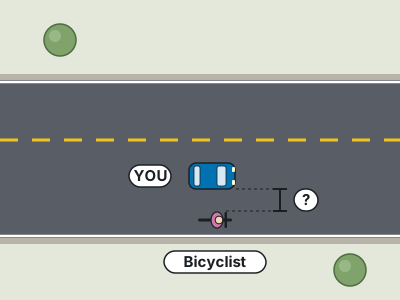
3. When passing a bicyclist on a North Dakota roadway, what minimum space must the driver leave?
- At least two feet of space
- At least four feet of space
- At least three feet of space
- At least six feet of space
Show answer
At least three feet of space. North Dakota requires the motor vehicle operator to leave a minimum of three feet of passing space between the vehicle and bicycle. The two foot option leaves less room than the law requires, while four and six feet exceed the legal minimum rather than identify it. The manual adds that you should pass a bicyclist only when road and traffic conditions make it safe, check over your shoulder after passing and before moving back to normal position, and give bicyclists extra room in inclement weather.
Study this in the handbook: Trucks, motorcycles, bicycles and pedestrians
4. How should drivers pass a parked emergency or NDDOT maintenance vehicle with emergency or work lights flashing on an Interstate or multilane highway?
- Move over to the opposite lane and proceed with due caution
- Stop and wait until an officer waves traffic through
- Honk and maintain normal speed in the same lane
- Turn around before reaching the parked vehicle
Show answer
Move over to the opposite lane and proceed with due caution. When the specified emergency or NDDOT maintenance vehicle is parked with lights flashing, drivers should move to the opposite lane and proceed with due caution. Waiting for an officer is not the ordinary instruction, and sound or normal speed does not create the needed buffer. Turning around is unnecessary and may be unsafe. Identify the lights early, check the opposite lane, signal the move, and maintain a careful pace while passing the work area.
Study this in the handbook: Move over and crash reporting
5. When a vehicle begins to hydroplane, what does the North Dakota manual identify as the underlying danger?
- The tires ride on water instead of the roadway surface
- The tires lose some contact with the roadway because of reduced tread
- The engine cannot maintain speed through standing water
- The steering becomes heavier because the road is wet
Show answer
The tires ride on water instead of the roadway surface. Hydroplaning means the tires are riding on water rather than on the roadway surface. The manual's advice is to slow down and be alert in rain, since rain also reduces visibility and increases the chance of a dangerous skid. Reduced tread, an engine that cannot hold speed, or heavier steering are not how the manual defines the danger. The defining cue is the tire riding on a layer of water instead of gripping the pavement.
Study this in the handbook: Night, winter and deer
6. What are the minimum age and parental requirement for a North Dakota instruction permit?
- At least 15; no parent needed
- At least 14; applicants under 18 need parent or legal guardian approval and sponsorship
- At least 16; parent must ride along to the test
- At least 14; parent approval only under 16
Show answer
At least 14; applicants under 18 need parent or legal guardian approval and sponsorship. All North Dakota permit applicants must be at least 14 years of age, and applicants under 18 must have parent or legal guardian approval and sponsorship, signed by the father, mother, or legal guardian. The age 15 and 16 choices are too old for the minimum. Sponsorship is required until 18, not just under 16. Applicants must also pass the knowledge examination and visual screening before the permit is issued.
Study this in the handbook: Instruction permits and licenses for minors
7. A North Dakota driver under the influence causes a crash that seriously injures another person. What is added to the minimum DUI penalties?
- An additional 90 days in jail
- An extra $100 fine
- A one year suspension only
- Nothing extra
Show answer
An additional 90 days in jail. On top of the minimum DUI penalties, causing a serious injury to another person in a crash adds 90 days in jail. Causing a death extends the jail time by one year. An extra $100 fine or a suspension alone would understate the added penalty, and the manual clearly adds time rather than nothing. The manual warns that these are only the minimum penalties.
Study this in the handbook: Trucks, motorcycles, bicycles and pedestrians
8. What do wide white stop lines show at an intersection?
- Where to begin accelerating through a turn
- Where to stop before entering the intersection
- The edge of a bicycle lane
- A lane reserved for emergency vehicles
Show answer
Where to stop before entering the intersection. Wide white stop lines identify the point where a driver must stop before entering an intersection. Stopping behind the line keeps the crosswalk and the crossing path visible and available. The acceleration, bicycle-lane, and emergency-lane choices describe unrelated markings or uses. If a stop line is present, use it as the first stopping reference; if a crosswalk is also marked, remain behind both rather than rolling forward into pedestrian space.
Study this in the handbook: Pavement markings and passing
9. What does a North Dakota Class B license cover?
- Any combination vehicle
- Motorcycles only
- Any single vehicle with a GVWR or gross weight of 26,001 pounds or more, towing a vehicle not over 10,000 pounds
- Passenger cars only
Show answer
Any single vehicle with a GVWR or gross weight of 26,001 pounds or more, towing a vehicle not over 10,000 pounds. Class B covers any single vehicle with a GVWR or gross vehicle weight of 26,001 pounds or more, whichever is greater, and may tow a vehicle not in excess of 10,000 pounds. A Class B holder may also operate Class C and D vehicles but not a Class M motorcycle unless endorsed. Class D covers single vehicles under 26,001 pounds.
Study this in the handbook: Residency, license classes and insurance
10. Your vehicle has trouble on a North Dakota highway. Where should you stop, and how do you show you need help?
- Keep driving until the next town
- Stop in the travel lane and turn on high beams
- Stop in the left lane and wave
- Stop on the shoulder and raise your hood
Show answer
Stop on the shoulder and raise your hood. The manual is direct: never stop on the traveled part of the roadway. In an emergency, stop on the shoulder and raise your hood to show that you are having difficulty. Stopping in a travel lane or in the left lane while waving puts the vehicle where moving traffic expects to travel, and the manual's instruction is to get onto the shoulder instead. Driving on to the next town with a serious problem is not the instruction either. Get well onto the shoulder, raise the hood, and stay alert to passing traffic.
Study this in the handbook: Right of way rules
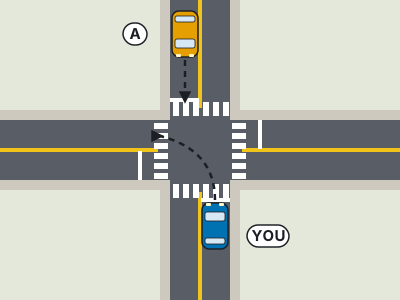
11. At an intersection, who must yield when a vehicle is turning left?
- The left-turning vehicle yields to oncoming traffic
- Oncoming traffic must always stop for the left turn
- The vehicle behind the turning car has priority over oncoming traffic
- The left-turning vehicle may cross first when its signal is on
Show answer
The left-turning vehicle yields to oncoming traffic. A vehicle turning left must yield to oncoming traffic. The driver should watch for vehicles passing on the right side of a vehicle that is turning left, since that movement can be easy to miss. Oncoming traffic does not automatically stop, and a following vehicle cannot give the turning driver priority. Even a signal for the turn does not justify crossing an occupied path. Check the opposing lane and the area beside the vehicle ahead before beginning the turn.
Study this in the handbook: Pavement markings and passing
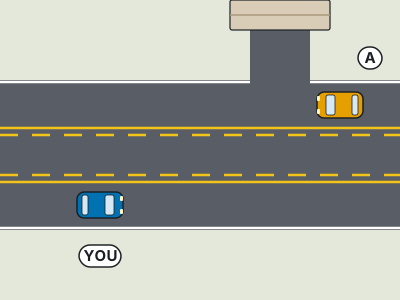
12. What is the purpose of a two-way center left-turn lane?
- It is a travel lane for driving straight through
- It is a passing lane for through traffic
- It is a standing lane for temporary parking
- It is for left-turning vehicles in either direction
Show answer
It is for left-turning vehicles in either direction. A center lane marked for two-way left turns is shared by vehicles preparing to turn left from either direction. It is not designed for passing, temporary parking, or continuing straight through the roadway. The passing and through-travel choices are especially risky because they place drivers in a lane intended for opposing turning movements. Use the center lane briefly for the left-turn maneuver, check for conflicting traffic, and return to the normal travel lane once the turn is complete.
Study this in the handbook: Regulatory and guide signs
13. Under North Dakota's farm exemption, what may a 15 year old drive?
- Nothing until age 16
- Any truck anywhere in the state
- A commercial tractor trailer
- A farm vehicle within 150 miles of the farm, up to 50,000 pounds, when hauling agricultural products or supplies
Show answer
A farm vehicle within 150 miles of the farm, up to 50,000 pounds, when hauling agricultural products or supplies. Under the farm exemption listed with the Class D license, a 15 year old may drive a farm vehicle within 150 miles of the driver's farm, having a gross weight of not more than 50,000 pounds, when transporting agricultural products or farm supplies. The exemption is tied to farm use, distance from the farm, and weight, so it does not open every truck or a commercial tractor trailer to a 15 year old. The other license classes in the manual each require their own knowledge exam and skills demonstration.
Study this in the handbook: Residency, license classes and insurance
14. How long must a North Dakota driver stay in the 24/7 Sobriety Program when it is required?
- Six months
- 30 days
- Until one year violation free
- Until the fine is paid
Show answer
Until one year violation free. Participation in the 24/7 Sobriety Program is required until the driver is one year violation free. The program allows a temporary restricted license after at least 14 days of suspension instead of 30. Driving while suspended or revoked after an alcohol related violation carries a four day mandatory minimum jail sentence and a fine of up to $1,000, and the license plates and registration card may be impounded for the length of the suspension or revocation.
Study this in the handbook: Alcohol, BAC and implied consent
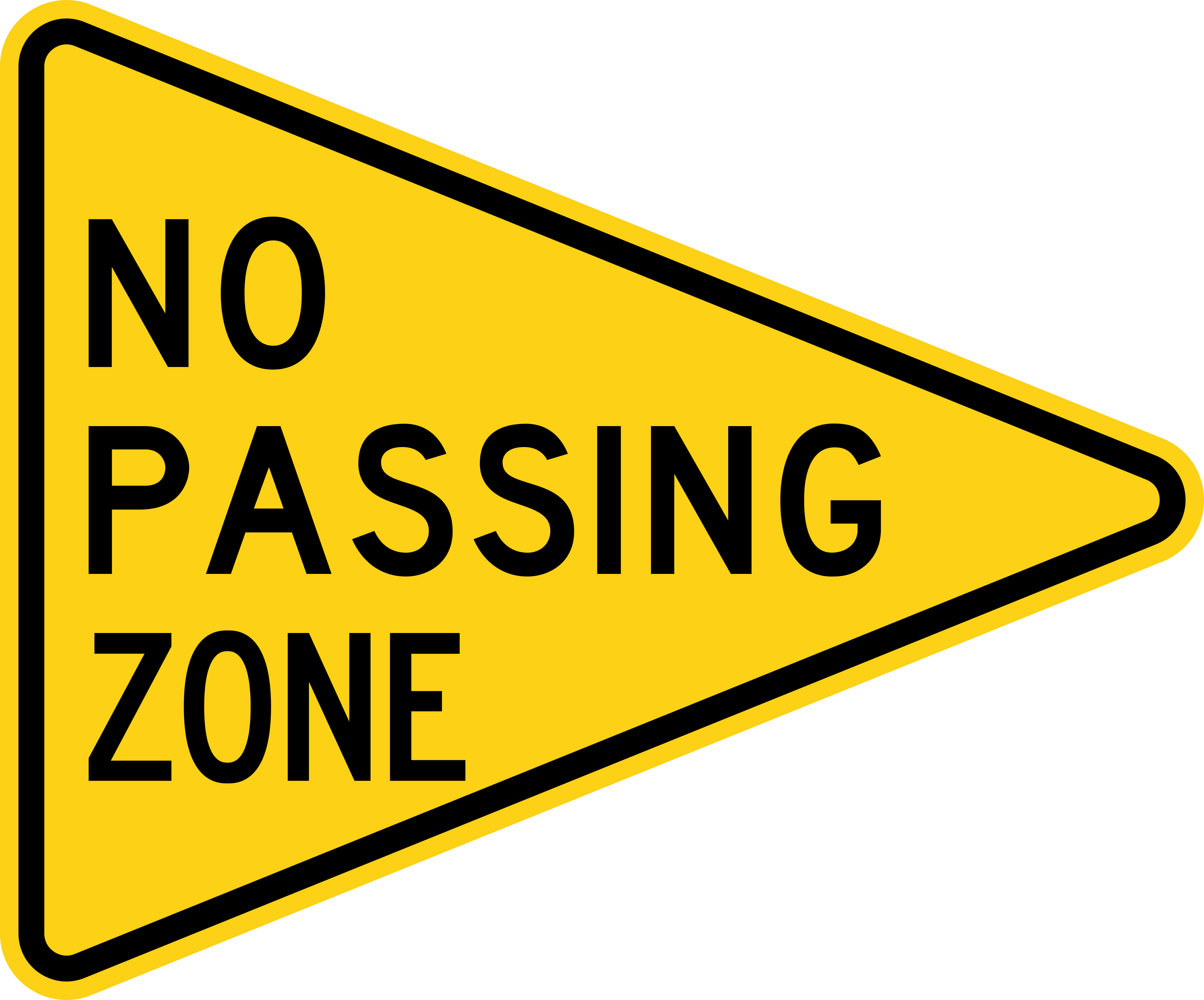
15. Where is the pennant shaped no passing warning sign normally placed?
- In the center of every intersection
- Only above the traffic signal
- On the roof of the nearest vehicle
- On the left hand side of the road
Show answer
On the left hand side of the road. North Dakota describes two no pass sign shapes and locations. The rectangular version is placed on the right, while the pennant shaped warning sign is found on the left side of the road. Therefore, the left side is the identifying placement in this item. The sign is not an overhead traffic signal, a vehicle marking, or an intersection fixture. When you see it, treat the roadway as a no passing area and wait for a legal, clearly marked opportunity before overtaking.
Study this in the handbook: Regulatory and guide signs
16. What do regulatory signs do?
- Give mandatory instructions to the driver
- Suggest scenic destinations without legal effect
- Warn only about animals at night
- Show the distance to the state border
Show answer
Give mandatory instructions to the driver. Regulatory signs control traffic and give instructions that drivers are required to follow. That makes them different from guide signs, which provide directional or service information, and from warning signs, which alert drivers to hazards. A regulatory sign is not merely a scenic suggestion, an animal warning, or a mileage marker. When reading one, identify the action it commands or prohibits and comply before continuing, because the sign governs how traffic may use that roadway.
Study this in the handbook: Regulatory and guide signs
17. What does the orange triangle on the rear of a vehicle or towed piece of equipment tell you?
- It marks a vehicle that may travel only on an Interstate
- It is carrying hazardous materials and must be passed quickly
- It is a school vehicle that requires an immediate stop
- It is traveling 25 mph or less, so slow down and use caution
Show answer
It is traveling 25 mph or less, so slow down and use caution. The orange triangle with a red reflective border identifies a slow-moving vehicle or equipment traveling at 25 miles per hour or less. That low speed creates a large closing-speed difference, so reduce your speed and stay ready for an unexpected turn or lane movement. The hazardous-material choice assigns the emblem a meaning the manual does not give it. The school-vehicle choice confuses this marker with school bus warnings, while the Interstate choice invents a roadway restriction. When the triangle appears ahead, treat the vehicle as slow and leave enough room to react.
Study this in the handbook: Warning, school and work zone signs
18. If windshield wipers fail while driving in rain or snow, what does the manual advise?
- Stop in the travel lane and wait for the wipers to restart
- Speed up to reach a sheltered location before visibility worsens
- Slow down and use the side window to see while leaving the roadway
- Continue at the same speed while relying on headlights alone
Show answer
Slow down and use the side window to see while leaving the roadway. A wiper failure in rain or snow can quickly make forward vision unsafe. The manual advises slowing down, using the driver's side window to see as the vehicle leaves the roadway, and getting out of the traffic path. Speeding up or continuing at the same pace increases exposure to poor visibility, while stopping in a travel lane creates a new collision hazard. Reduce speed smoothly, signal when possible, and move off the roadway as soon as it is safe.
Study this in the handbook: Points, texting and other penalties
19. If this WRONG WAY sign faces you, what situation is it warning about?
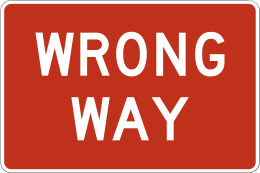
- You are entering a gravel road
- You are traveling against the permitted direction on a street, freeway, or ramp
- You are approaching a school crossing
- You are leaving a divided highway legally
Show answer
You are traveling against the permitted direction on a street, freeway, or ramp. The Wrong Way sign tells the driver that the vehicle is traveling in the wrong direction on a street, freeway, or ramp. The gravel-road choice describes a surface, not travel direction. A school crossing has a separate warning sign, and leaving a divided highway does not make opposing travel lawful. This message deserves immediate attention: slow, avoid further movement into traffic, and find a safe opportunity to get out of the opposing path. Never continue simply because the roadway looks clear.
Study this in the handbook: Regulatory and guide signs
20. What do North Dakota warning signs tell drivers to expect?

- A parking area with no traffic controls
- A guaranteed clear roadway ahead
- Potentially hazardous conditions ahead requiring extra caution
- A registration checkpoint at every intersection
Show answer
Potentially hazardous conditions ahead requiring extra caution. North Dakota warning signs alert drivers to potentially hazardous conditions ahead and tell them to proceed with extra caution. They do not guarantee a clear road, create a parking area, or announce a registration checkpoint. The warning may involve a curve, intersection, pedestrian crossing, slippery pavement, or another change in the roadway. Use the sign as an early prompt to reduce speed, scan for the pictured condition, and prepare for a safe response before reaching it.
Study this in the handbook: Warning, school and work zone signs
QualitySpace is expanding to North Dakota
We are a California-based independent insurance brokerage working on licensing in more states. We cannot help with North Dakota insurance yet. Leave your email and we will let you know when we can.
Every question is written from the official North Dakota Noncommercial Driver License Manual. Need paper? Printable ND practice test with answer key.
Last verified 2026-10-05. How we check every question · Study all 205 as flashcards
Frequently asked questions
How many questions are on this North Dakota practice test?
This fixed set has 20 questions. It is test 3 of 10 from the 205 question North Dakota bank.
How does this fixed test relate to the full North Dakota bank?
Each numbered test is a fixed set of questions in a fixed order, so you can retake the same test later and compare. Every test mixes road signs and the other topics in about the same proportion as the full bank. Tests 1 to 10 together cover 200 of the 205 questions in the North Dakota bank, each once. The full practice page mixes the whole bank at random.
Last verified 2026-10-05. See the North Dakota DMV facts page for sourced state details.
Return to the full North Dakota practice test · Study road signs