
Test 11 of 25 · 20 questions · Free 2026
NH Permit Practice Test 11
Jump to the test ↓A fixed 20 question set from the New Hampshire bank with answers and plain English explanations. The real NH exam is 40 questions, 80 percent to pass; take the full length version on the main practice page.
Question 1 of 20 · 0 right so far
All 20 questions in test 11
Every question below comes from the New Hampshire question bank on this page. Open a question to see the correct answer and the explanation. Nothing here is hidden behind a signup.
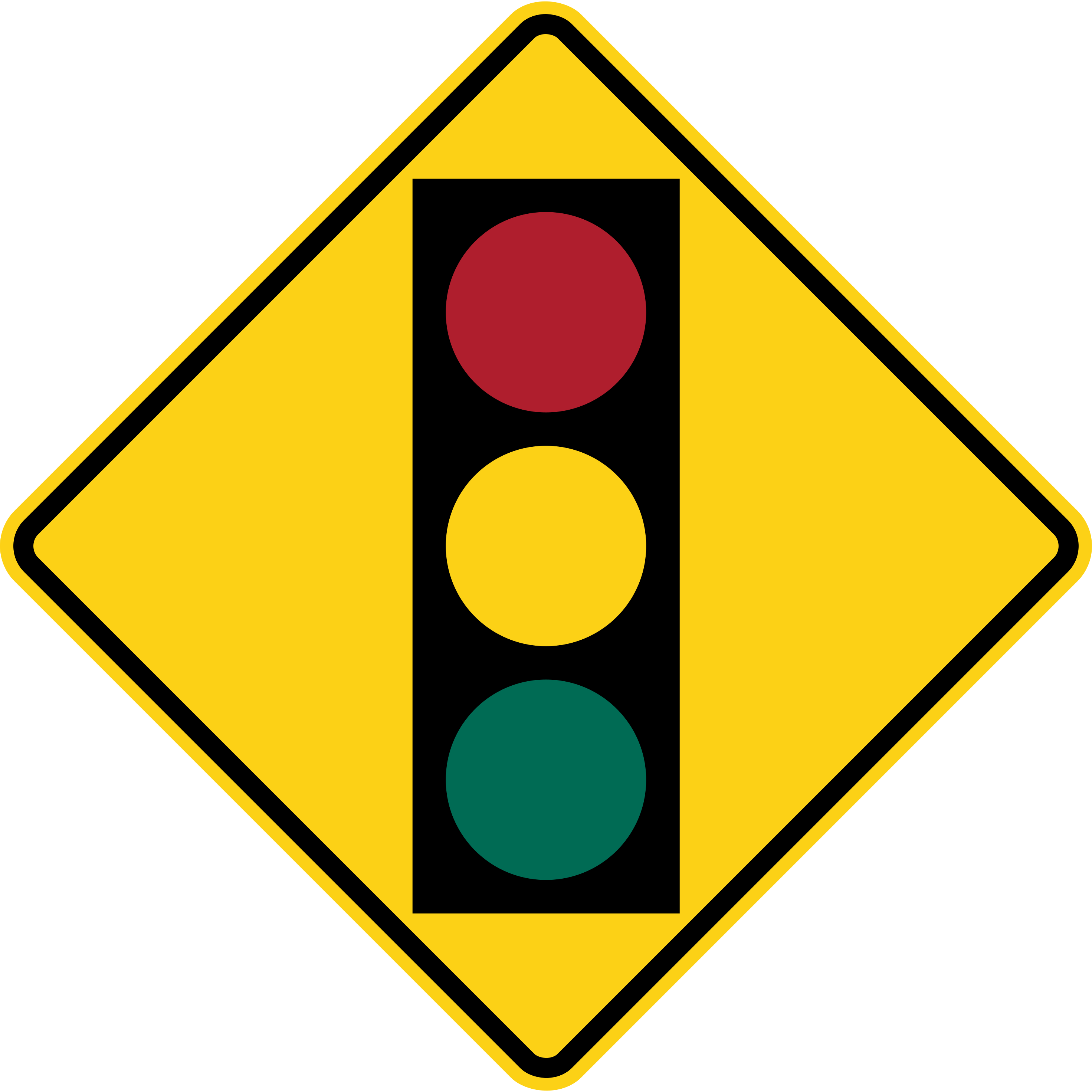
1. What does this yellow sign showing a traffic signal warn a New Hampshire driver about?
- A traffic signal is ahead
- A flashing yellow signal is ahead
- A railroad signal is ahead
- The signal ahead is out of order
Show answer
A traffic signal is ahead. Traffic Signal Ahead is one of the warning signs the manual lists, alongside Stop Sign Ahead, Sharp Curve Ahead and Advisory Speed Around Curve. Warning signs tell a driver to slow down because of an intersection ahead and to be prepared to stop if necessary, so this one gives time to prepare for the light before reaching it. It says nothing about the signal being broken or flashing, and railroad crossings use the round RR sign instead.
Study this in the handbook: Sign shapes, colors and warning signs
2. Inside a multi-lane roundabout in New Hampshire, what passing rule applies beside other vehicles?
- Pass slower vehicles freely on either side
- Drive beside trucks for as long as needed
- Do not drive beside or try to overtake any vehicle
- Overtake only before reaching your exit
Show answer
Do not drive beside or try to overtake any vehicle. Circulating traffic stays in lane without driving beside or passing other vehicles. Lane changes inside the circle cut across paths aimed at different exits. Large trucks and trailers may straddle both lanes, leaving little room for a car tucked alongside. Picking the entry lane sorts your exit early, so patience inside protects that plan. Hold position, watch signs count down, and leave at your spoke without crossing the path of traffic still circling beside you.
Study this in the handbook: Roundabouts and school buses
3. At a New Hampshire stop, there is no stop line and no crosswalk lines. Where must a driver stop?
- Just inside the intersection, past the curb line
- Come to a full stop before the intersection
- Halfway into the intersection for a better view
- Only after checking, without a full stop
Show answer
Come to a full stop before the intersection. Stop lines show drivers where to stop, and when no crosswalk lines are present, the driver should come to a full stop prior to entering the intersection. Stopping inside the intersection, rolling halfway in for a view, or checking without a full stop all put the vehicle in conflict space before the stop is made. After the stop, look both ways and proceed only when it is safe to continue. The edge of the intersection becomes your stop line when paint gives you none.
Study this in the handbook: Regulatory, guide, work zone and railroad signs
4. Before turning, into which lane position should a driver enter and stay?
- The lane farthest from the turn direction
- Any lane, if the signal is showing
- The center lane, then drift across
- The lane closest to the turn direction
Show answer
The lane closest to the turn direction. Before turning, a driver should enter and maintain proper position in the lane closest to the direction of travel. Starting from the farthest lane, drifting from the center, or treating any signaled lane as acceptable forces a sweep across lanes other drivers expect to stay stable. Search all corners, signal your intentions, then settle into that closest lane before the wheel turns. Staying in it through the turn keeps your path predictable, and other drivers can plan around a car that turns from where it should.
Study this in the handbook: Toll lanes, turns, U-turns and intersections
5. When may normal speed resume after a New Hampshire work zone?
- After the last visible worker passes
- When the End Road Work sign shows
- Once pavement looks smooth again
- After the last barrel or cone passes
Show answer
When the End Road Work sign shows. The End Road Work sign, not your own judgment of smooth pavement, the last visible worker, or the last barrel, releases the reduced pace. Workers and equipment may stand beyond the final rough patch near signs or parked vehicles. Posted zone signs govern the whole stretch between their bookends. Keep the slower speed and longer gap until that sign actually appears, then rebuild speed gradually rather than launching past the last truck or barrel line at full throttle.
6. Backing out of a crowded parking lot in New Hampshire, what check matters most for people on foot?
- Sweep for people before backing
- Trust the backup camera screen
- Back out quickly before anyone arrives
- Rely on pedestrians to jump clear
Show answer
Sweep for people before backing. Lots full of people demand a pedestrian check before any backing, since shoppers cross behind cars carrying bags and guiding children. A camera shows a slice of the rear, never the person approaching from the side. Children and small objects hide below window lines entirely. Turn in the seat, sweep both sides, then creep out ready to stop; the extra five seconds are the cheapest safety in the lot.
Study this in the handbook: Pedestrians and bicyclists
7. A driver under 18 is temporarily stopped in traffic. Which phone use is permitted?
- Calling a parent through a hands-free connection.
- Texting a friend about the traffic delay.
- Reporting an emergency to enhanced 911 or a public safety agency.
- Making a call that lasts less than one minute.
Show answer
Reporting an emergency to enhanced 911 or a public safety agency.. For a driver under 18, New Hampshire prohibits use of a cellular phone or other mobile electronic device while driving or temporarily stopped in traffic, whether the device is hands free or not. The exception is using it to report an emergency to enhanced 911 or a public safety agency. A call to a parent, a text to a friend, or a short call for convenience remains outside that exception. The rule is based on the purpose of the communication, not on how long the call lasts or whether the vehicle is moving.
Study this in the handbook: Youth Operator license, restrictions and renewal
8. What view does a surround or around view monitor show a New Hampshire driver?
- A rear only camera feed
- An overhead birds eye view
- A forward view of the road ahead
- Only the blind spot zones at the sides
Show answer
An overhead birds eye view. The monitor builds an overhead birds eye picture of the vehicle with a moving image of nearby lane markings, curbs, and adjacent vehicles. Mistaking it for a rear only feed undersells the system, since front and side areas appear together on the display. A forward picture would leave the rear and sides unseen in tight maneuvering. Some setups add sonar that warns when an obstruction sits too close ahead or behind. In a tight lot, glance at the overhead picture, then still check mirrors and turn your head before moving.
Study this in the handbook: Vehicle checks, seating and restraints
9. What message does the Share the Road with Bicycles warning carry for New Hampshire drivers?
- Bicycles must leave the roadway
- Bicycle lanes end ahead
- Expect riders and give them room
- Passing bicycles is banned on this road
Show answer
Expect riders and give them room. Bicyclists belong on the roadway with the same rights as other drivers, and the sign asks motorists to expect them and share space. Ordering bicycles off the road contradicts their legal place in traffic. Leave at least 3 feet at 30 mph or less when passing, plus a foot for each 10 mph above that. When the sign appears, scan the shoulder edge and lane ahead for riders, then plan passes with generous clearance.
Study this in the handbook: Sign shapes, colors and warning signs
10. Your vehicle begins to skid on a New Hampshire road. Which way should you steer?
- Toward the shoulder
- Opposite the direction the rear is sliding
- Straight ahead while braking hard
- In the direction the rear of the vehicle is sliding
Show answer
In the direction the rear of the vehicle is sliding. Skidding is caused by traveling too fast for conditions, stopping too suddenly, or tires that can no longer grip the road. If the vehicle begins to skid, ease up on the accelerator and steer in the direction that the rear of the vehicle is sliding, which lets the vehicle go straight instead of sideways. Be ready to steer the other way if it swerves back, and once the skid stops, straighten the wheels and steer in the original direction. Braking hard is not in the manual's skid steps, since stopping too suddenly is one cause of a skid.
Study this in the handbook: Emergency braking, swerving and skids
11. A New Hampshire license shows restriction F. What does that restriction require?
- An outside mirror must be used
- Driving is limited to daylight only
- An automatic transmission must be used
- Corrective lenses must be worn while driving
Show answer
An outside mirror must be used. Restriction F means Outside Mirror. The restriction list assigns Daylight Only to G, Automatic Transmission to E, and Corrective Lenses to B. A license marked F therefore carries the outside mirror requirement, while the three other listed conditions belong to their own codes. The outside mirror requirement concerns vehicle equipment, not the time of day, transmission type, or vision correction. Reading each code with its named condition prevents confusing the entries in this restriction list.
Study this in the handbook: Youth Operator license, restrictions and renewal
12. A bicyclist ahead gives no hand signal before shifting position in New Hampshire. What clue should a driver watch for instead?
- The rider pedals faster while looking straight ahead
- The bicycle rolls faster as the road slopes down
- A bell ringing twice
- Head turns, shoulder glances
Show answer
Head turns, shoulder glances. Riders who need both hands for control cannot always signal, so head turns and shoulder looks become the intent clues. A bell says presence, not direction. Reading the rider's head predicts a lane change seconds before the wheels move. Ease off when you see that glance, grant the space the signal would have requested, and never punish a rider for keeping hands on the bars over rough pavement.
Study this in the handbook: Pedestrians and bicyclists
13. Parking along a rural New Hampshire highway, where must the vehicle be placed?
- Fully off the traveled roadway
- Half on the paved surface
- In the travel lane with flashers
- Anywhere the shoulder feels wide enough
Show answer
Fully off the traveled roadway. Rural parking belongs fully off the paved and traveled part, so passing traffic never swerves around your bumper. Half measures leave a fender in the live lane at highway closing speeds. When full exit is impossible, clear view for 200 feet each way and passing room become the fallback. Darkness and fog shrink every margin, so the farther off the traveled way, the safer the night.
Study this in the handbook: Roundabouts and school buses
14. Before turning left across traffic in New Hampshire, what motorcycle check is required?
- Assume none are coming
- Scan for riders, judge their speed
- Look only for trucks and buses
- Turn whenever the road looks empty
Show answer
Scan for riders, judge their speed. Oncoming motorcycles are easy to miss and hard to judge, so the left turn waits until you have spotted any rider and read its speed. An apparently empty road hides a two foot wide machine against cluttered backgrounds. Many collisions grow from exactly this misjudgment at intersections. Hold the turn, scan twice specifically for the narrow profile, and let uncertainty vote no; the turn will still exist in ten seconds.
Study this in the handbook: Pedestrians and bicyclists
15. What brings a New Hampshire driver before a Habitual Offender hearing?
- Enough valid convictions to trigger it
- A single parking ticket
- Owning three vehicles all at once
- Driving in another state once
Show answer
Enough valid convictions to trigger it. The hearing triggers when the record holds the count of valid convictions the law sets, after which a driver found habitual loses privileges for 1 to 4 years. One ticket cannot build that record alone. Driving afterward as a declared habitual offender becomes a felony carrying prison time. Every minor conviction is therefore a brick; drivers who count theirs early stop building long before the hearing letter arrives.
Study this in the handbook: Suspensions, points and habitual offenders
16. What can pep pills, uppers, and diet pills do to a New Hampshire driver?
- Sharpen your vision quite reliably
- Jitters, dizziness, and lost focus
- Remove fatigue for a full day
- Counteract alcohol safely
Show answer
Jitters, dizziness, and lost focus. Stimulant pills sold for energy or weight loss can leave a driver nervous, dizzy, unable to concentrate, with vision affected as well. Trusting them to sharpen vision inverts their listed effects. Over the counter products for colds and allergies can also bring drowsiness, so labels deserve a read before any drive. When a bottle warns about machinery or drowsiness, believe it at home, not at highway speed with a headache building.
Study this in the handbook: How alcohol and drugs affect driving
17. How should pets ride in a New Hampshire vehicle?
- Loose on the driver's lap
- Held tightly by a child passenger
- Standing on the front seat
- In a carrier or portable kennel
Show answer
In a carrier or portable kennel. A carrier or portable kennel keeps a pet from becoming a moving distraction or a projectile in a hard stop. A lap dog sits exactly where air bags deploy and can dive at the pedals. Children should be buckled properly instead of wrestling animals. Load the kennel before the trip, settle the animal at home with short rides, and the highway hours pass quietly for everyone aboard.
Study this in the handbook: Vision, fatigue, emotions and hot vehicles
18. Driving through a New Hampshire E-ZPass toll lane, what speed behavior is required?
- Come to a full stop anyway
- Speed up to beat the reader
- Slow to a walking pace and wave traffic past
- Obey posted toll-lane speed limits without stopping
Show answer
Obey posted toll-lane speed limits without stopping. Electronic lanes work without stopping, yet posted plaza speeds still bind every driver rolling through. Stopping anyway jams the lane designed for flow and risks a rear end hit from drivers expecting movement. Cash lanes are the ones demanding a complete stop at staffed booths. Keep the transponder lane pace steady and legal, eyes ahead for lane shifts, and never back up or climb out at the plaza.
Study this in the handbook: Toll lanes, turns, U-turns and intersections
19. From which part of the lane should a left turn begin in New Hampshire?
- The right most portion
- The center of the road crown
- The left most portion of the lane
- The shoulder edge
Show answer
The left most portion of the lane. Left turns start from the left most portion of the lane, keeping the arc tight and predictable for oncoming traffic. Beginning from the right side forces a wide sweep across lanes and surprises drivers behind. Yield to oncoming vehicles before crossing their path, since they hold the right of way through the intersection. Set up early beside the center, wheels nearly straight while waiting, then turn once the gap and the far lane are clearly yours.
Study this in the handbook: Toll lanes, turns, U-turns and intersections
20. How many people were killed and injured in work zone crashes in 2022, according to the New Hampshire manual?
- About 5,000 killed
- About 50 killed and 500 injured
- 891 killed and 37,701 injured
- About 10 killed
Show answer
891 killed and 37,701 injured. In 2022, 891 people were killed and 37,701 people were injured as a result of work zone crashes, and New Hampshire itself reports more than 30,000 crashes of all kinds each year. Work zone signs are orange, fines may be doubled where clearly marked, and drivers should slow down, keep following distance, obey flaggers, and expect sudden stops and lane shifts. About 5,000 or about 10 killed, and 50 killed with 500 injured, do not match the figures the manual reports.
Every question is written from the official New Hampshire Driver's Manual. Need paper? Printable NH practice test with answer key.
Last verified 2026-10-05. How we check every question · Study all 500 as flashcards
Frequently asked questions
How many questions are on this New Hampshire practice test?
This fixed set has 20 questions. It is test 11 of 25 from the 500 question New Hampshire bank. The real NH exam asks 40 questions and you need 32 correct.
What is the passing score for the real New Hampshire test?
All knowledge exams require a passing grade of 80% That figure comes from the official New Hampshire source cited on the DMV facts page.
How does this fixed test relate to the full New Hampshire bank?
Each numbered test is a fixed set of questions in a fixed order, so you can retake the same test later and compare. Every test mixes road signs and the other topics in about the same proportion as the full bank. Tests 1 to 25 together cover every question in the New Hampshire bank once. The full practice page mixes the whole bank at random.
Last verified 2026-10-05. See the New Hampshire DMV facts page for sourced state details.
Return to the full New Hampshire practice test · Study road signs