
Printable NH Permit Practice Test
40 questions in the real NH exam format, 80 percent (32 of 40) to pass. Answer key on the last page. Last verified 2026-09-05 against the official New Hampshire driver manual.
1. This sign shows a left turn arrow crossed by a red slash. What may a New Hampshire driver not do here?
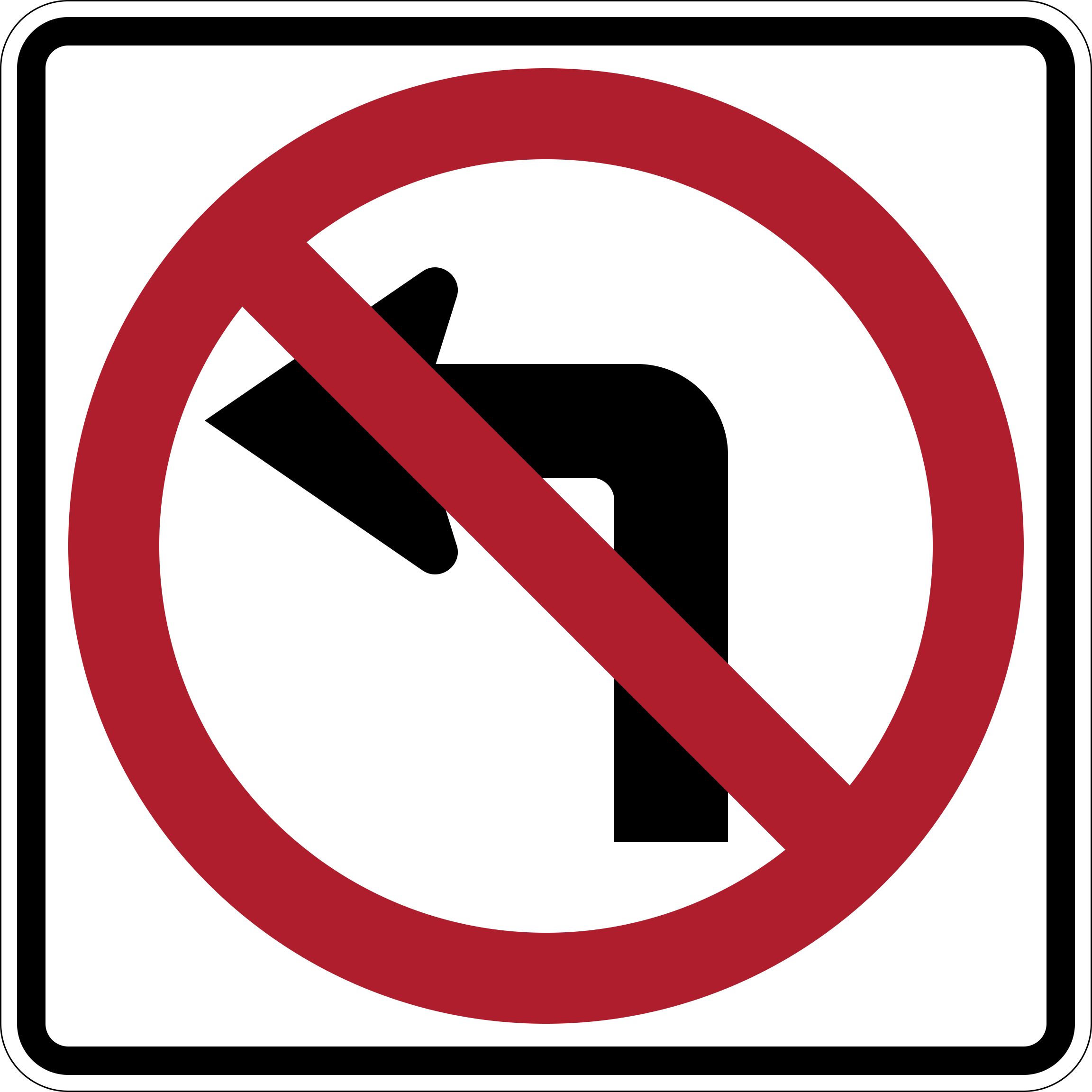
- Go straight
- Turn left
- Turn right
- Change lanes
2. What does the New Hampshire manual say about the consequences of collecting demerit points?
- They are identical for every driver
- Points can never lead to a loss of driving privileges
- They may vary depending on the driver's age
- Only commercial drivers receive demerit points
3. After passing a vehicle in New Hampshire, when is it safe to signal and return to your lane?
- As soon as your front bumper is ahead of the other vehicle
- When the complete front of the passed vehicle is visible in your rearview mirror
- After counting three seconds
- When the other driver flashes headlights
4. About how far does the New Hampshire manual say it can take to stop at 50 mph on dry pavement with good brakes?
- About 50 feet
- About 300 feet
- About 100 feet
- About 158 feet
5. Where does the New Hampshire manual say a three-point turn should be used?
- Only when the road is too narrow for a U-turn, and only on a two-lane roadway
- At any intersection without a signal
- On any multi-lane road with light traffic
- On divided highways
6. This yellow winding arrow sign appears on a New Hampshire road. Which listed warning sign is it?

- Curvy Road Ahead
- Right Curve
- Sharp Curve Ahead
- Side Road Ahead
7. Where is this white X-shaped crossbuck sign placed according to the New Hampshire manual?
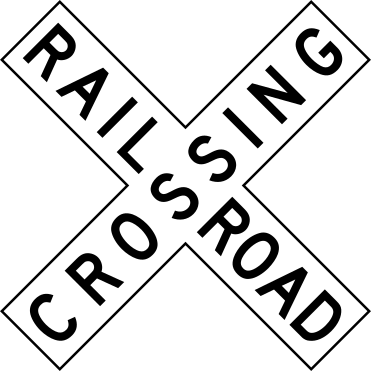
- Well before the crossing as advance warning
- At the railroad crossing itself, to indicate where the crossing is
- At the end of a no passing zone
- Only at crossings with gates
8. When does New Hampshire consider a load carried on a vehicle to be secure?
- When it is covered with a tarp
- When it stays below the height of the cab
- When a red flag is tied to it
- When nothing can slide, shift, fall or sift onto the roadway, or become airborne
9. Under RSA 265:79-c, which activity with a hand-held device is prohibited while driving in New Hampshire?
- Listening to the radio
- Talking to a passenger
- Inputting information into a GPS or navigation device
- Adjusting the climate controls
10. A New Hampshire road has a broken yellow line next to a solid yellow line, and the broken line is on your side. May you pass?
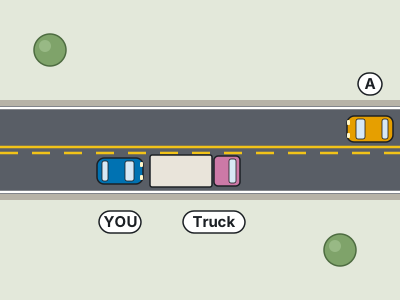
- No, the solid line applies to both directions
- Yes, when it is safe, because the line on your side is broken
- Only if the vehicle ahead signals you around
- Only at night
11. What does the New Hampshire manual describe as the best way to avoid traction loss from hydroplaning?
- Slow down in the rain or when the road has pooled water
- Drive in the tire tracks of the vehicle ahead at full speed
- Brake firmly as soon as the road is wet
- Use cruise control to hold a steady speed
12. How many hours of classroom instruction does New Hampshire driver education require?
- 30 hours
- 40 hours
- 10 hours
- 20 hours
13. How does the New Hampshire manual say a backup camera should be used?
- Together with mirrors and head checks, never as the primary tool for backing
- As the only tool needed when backing slowly
- Instead of turning your head
- Only at night
14. When entering a multi-lane highway in New Hampshire, what is the acceleration lane for?
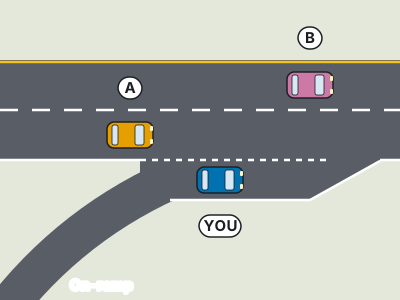
- Stopping to wait for a large gap
- Reaching the speed of other vehicles before pulling onto the roadway
- Reading the exit signs
- Passing slower traffic on the right
15. When entering a multi-lane roundabout in New Hampshire, to which traffic must you yield?
- Traffic in both lanes of the roundabout
- Only traffic in the outside lane
- No one, entering traffic has priority
- Only traffic in the inside lane
16. Which device use is generally permitted for New Hampshire drivers age 18 or older?
- Using a Bluetooth or other hands-free device to send or receive information
- Holding a phone to the ear on a rural road
- Typing an address into a phone while stopped in traffic
- Reading a text at a red light
17. Which sign shape does the New Hampshire manual say is used for traffic regulations or directions to drivers?
- A diamond
- A pentagon
- A rectangle
- A circle
18. A flagger in a New Hampshire work zone signals you to stop. What does the manual say?
- Drivers must follow the flagger's instructions
- Stop only if the signal is a red flag
- Wait for a police officer to confirm
- Proceed slowly if no workers are visible
19. How many questions are on the New Hampshire automated knowledge test, and how long do testers have?
- 40 questions in 40 minutes
- 25 questions in 30 minutes
- 50 questions in 60 minutes
- 40 questions with no time limit
20. Your brakes stop working while driving in New Hampshire. How does the manual say to use the parking brake?
- Apply it slowly to avoid locking the rear wheels and be ready to release it if the vehicle skids
- Do not use it while moving
- Yank it as hard as possible
- Apply it only after turning off the engine
21. In the New Hampshire manual, which group of signs includes this DO NOT ENTER sign?
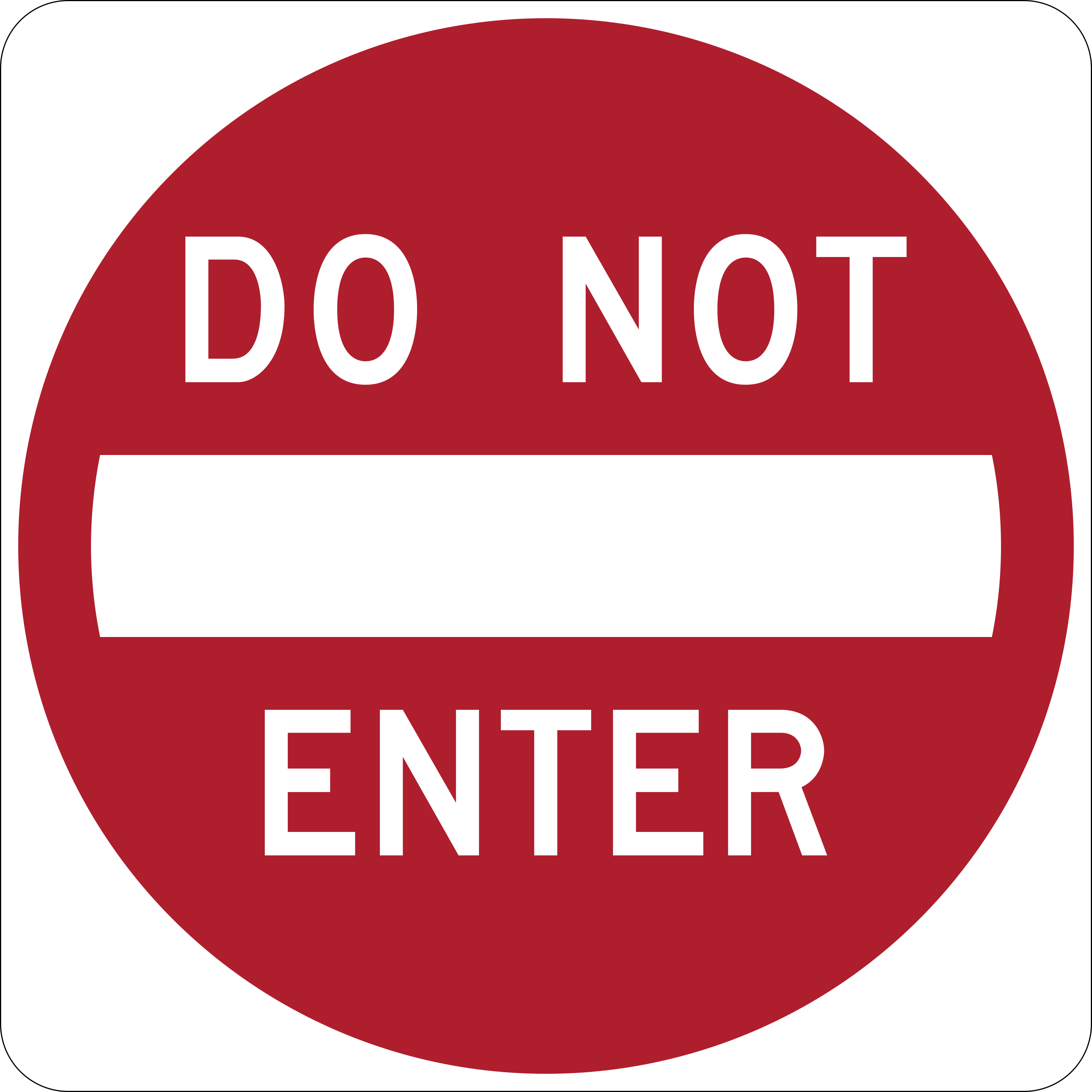
- Warning signs
- Guide signs
- Prohibition signs
- Route number signs
22. Your headlights suddenly go out at night on a New Hampshire road. What does the manual say to try?
- The high beam switch repeatedly
- Driving on the shoulder until a lit area
- Following the tail lights of the car ahead
- The turn signals or emergency flashers, then pull off the road as quickly and safely as possible
23. A pedestrian is crossing at a New Hampshire intersection that has no painted crosswalk lines. Must the driver yield?
- No, only marked crosswalks create a duty to yield
- Only if the pedestrian is in a school zone
- Yes, drivers must yield to pedestrians crossing at intersections even without crosswalk lines
- Only when a signal shows WALK
24. What is the minimum speed on a New Hampshire interstate highway in good conditions?
- 35 mph
- 45 mph
- 55 mph
- There is no minimum
25. What visual acuity must a New Hampshire applicant with sight in only one eye have?
- 20/40
- 20/20
- 20/70
- 20/30
26. What must the licensed driver who brings an applicant to a New Hampshire road test do during the test?
- Ride in the back seat during the test
- Remain at the test site until the road test has been completed
- Leave and return within one hour
- Wait in the DMV lobby only if the applicant is under 18
27. A police vehicle with lights on pulls in behind you in New Hampshire at night. Besides stopping and staying in the vehicle, what does the manual tell you to turn on?
- The high beams
- The hazard flashers and the interior lights
- The radio
- The windshield wipers
28. A train is approaching a New Hampshire crossing. How far from the nearest rail must a driver stop?
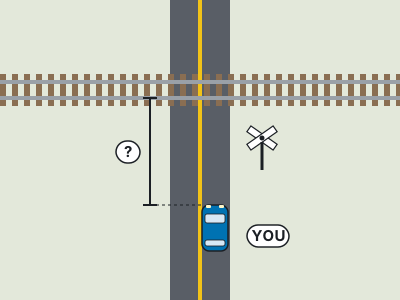
- At least 100 feet from the nearest rail
- At least 5 feet from the nearest rail
- Behind the stop line, or not less than 15 feet nor more than 50 feet from the nearest rail
- Anywhere behind the crossbuck
29. What does a steady red arrow mean for New Hampshire drivers and for pedestrians facing it?
- Drivers may turn after stopping, and pedestrians may cross
- Only pedestrians may proceed
- Drivers may not enter unless other indications shown at the same time permit it, and pedestrians facing it shall not enter the roadway
- The arrow direction is closed to trucks only
30. Which sign shape gives advance warning of a railroad crossing in New Hampshire?
- A rectangle
- An octagon
- A pentagon
- A circle
31. What colors are New Hampshire guide signs, and what do they help drivers find?
- Green, brown, or blue; they direct drivers to cities, points of interest, hospitals, service stations, restaurants and hotels
- Orange; they mark detours
- Yellow; they warn of hazards
- Red and white; they list prohibited actions
32. A police officer at a New Hampshire intersection is directing traffic against the traffic light. Who must you obey?
- The traffic light, because it is the legal control
- The police officer, who overrules any traffic light or sign
- Whichever allows you to proceed
- The sign, but not the light
33. At a New Hampshire intersection with no white stop line but a marked crosswalk, where must a driver stop?
- In the crosswalk where cross traffic is visible
- Before entering the intersection, past the crosswalk
- Before the crosswalk
- Beside the stop sign post
34. A New Hampshire traffic signal is flashing yellow. What should the driver be prepared for?
- Come to a complete stop and wait for green
- Stop, then go as at a stop sign
- Proceed at normal speed because cross traffic must stop
- Slow down, proceed with caution, and be prepared to stop for any traffic entering the intersection
35. During which hours may a New Hampshire Youth Operator under 18 not drive?
- Between 1:00 a.m. and 4:00 a.m.
- Between 11:00 p.m. and 5:00 a.m.
- Between midnight and 6:00 a.m.
- Between 10:00 p.m. and 4:00 a.m.
36. When must a New Hampshire accident report be filed with the DMV, and within how many days?
- Within 10 days for any crash
- Within 30 days only if someone is injured
- Only when police request it
- Within 15 days if there is a fatality, injuries, or combined property damage over $1,000
37. Why does the New Hampshire manual say to avoid driving next to other vehicles for long periods?
- Your vehicle may be in their blind spot, and it reduces the space needed to avoid a collision
- It uses more fuel
- It is illegal on multi-lane roads
- It blocks their view of signs
38. For how long may a first offense DUI conviction cost a New Hampshire driver their driving privileges?
- 30 to 90 days
- 5 years
- Exactly 1 year
- 9 months to 2 years
39. Why does the New Hampshire manual say to use low beams in fog, rain, or snow?
- Light from the high beams may cause glare and make it harder to see ahead
- Low beams are brighter in bad weather
- High beams drain the battery faster
- It is only a courtesy to other drivers
40. When exiting a parallel parking space in New Hampshire, when should the driver move forward into the traffic lane?
- As soon as the front bumper clears the vehicle ahead
- When the door post of the vehicle clears the rear bumper of the vehicle parked ahead
- Immediately after signaling
- After backing into the vehicle behind
Answer key
- 1. B
- 2. C
- 3. B
- 4. D
- 5. A
- 6. A
- 7. B
- 8. D
- 9. C
- 10. B
- 11. A
- 12. A
- 13. A
- 14. B
- 15. A
- 16. A
- 17. C
- 18. A
- 19. A
- 20. A
- 21. C
- 22. D
- 23. C
- 24. B
- 25. D
- 26. B
- 27. B
- 28. C
- 29. C
- 30. D
- 31. A
- 32. B
- 33. C
- 34. D
- 35. A
- 36. D
- 37. A
- 38. D
- 39. A
- 40. B