
Key points
If you cannot pull completely off the road, pull off as much as you can, with a clear view of 200 feet in each direction and room for others to pass.
Source: Handbook p. 27
“drivers should pull off as much as they can as long as there is a clear view for a distance of 200 feet in each direction and if there is enough space for other vehicles to pass.”
New Hampshire Driver's Manual, Handbook p. 27The law requires you to turn off the engine and remove the key when leaving a vehicle unattended.
Source: Handbook p. 28
“The law requires drivers to turn off the engine and remove the key when leaving a vehicle unattended.”
New Hampshire Driver's Manual, Handbook p. 28Set the parking brake and turn the wheels into the curb when parked on a hill.
Source: Handbook p. 28
“Set the parking brake and turn the wheels into the curb if the vehicle is parked on a hill.”
New Hampshire Driver's Manual, Handbook p. 28Do not park within 15 feet of a fire hydrant or within 20 feet of a crosswalk at an intersection.
Source: Handbook p. 28
“Within 15 feet of a fire hydrant Within 20 feet of a crosswalk at an intersection”
New Hampshire Driver's Manual, Handbook p. 28Do not park within 30 feet of a stop sign, yield sign or traffic signal.
Source: Handbook p. 28
“Within 30 feet of a stop sign, yield sign or traffic control signal”
New Hampshire Driver's Manual, Handbook p. 28Stay 20 feet from a fire station driveway, or 75 feet on the opposite side of the street.
Source: Handbook p. 28
“Within 20 feet of the driveway entrance to any fire station or within 75 feet on the opposite side of the street”
New Hampshire Driver's Manual, Handbook p. 28Do not park within 50 feet of the nearest rail of a railroad crossing.
Source: Handbook p. 28
“Within 50 feet of the nearest rail of a railroad crossing”
New Hampshire Driver's Manual, Handbook p. 28A van with a lift or ramp can need the entire access aisle, which can be up to 8 feet wide.
Source: Handbook p. 28
“requires the entire access aisle space, which can be up to 8 feet wide to engage the lift/ramp”
New Hampshire Driver's Manual, Handbook p. 28When leaving a parallel space, move into the lane when your door post clears the rear bumper of the car ahead.
Source: Handbook p. 29
“Move forward into the appropriate lane of traffic when the door post of the vehicle clears the rear bumper of the vehicle parked ahead of the driver.”
New Hampshire Driver's Manual, Handbook p. 29
Numbers to know
| Number | What it means | Manual |
|---|---|---|
| 200 feet | clear view needed in each direction when parking partly on a rural highway | Handbook p. 27 |
| 15 feet | from a fire hydrant | Handbook p. 28 |
| 20 feet | from a crosswalk at an intersection, and from a fire station driveway | Handbook p. 28 |
| 30 feet | from a stop sign, yield sign or traffic signal | Handbook p. 28 |
| 75 feet | from a fire station driveway on the opposite side | Handbook p. 28 |
| 50 feet | from the nearest rail of a railroad crossing | Handbook p. 28 |
| 8 feet | possible width of an access aisle needed for a van lift | Handbook p. 28 |
Recognize these signs
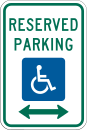
Accessible parking
3 questions from the New Hampshire practice test
1. A New Hampshire driver cannot pull completely off a rural highway to park. What minimum clear view must the parked vehicle have?
- A clear view for 50 feet in each direction
- A clear view for 500 feet ahead only
- A clear view for 200 feet in each direction, with room for others to pass
- No requirement if the hazard lights are on
Show answer
A clear view for 200 feet in each direction, with room for others to pass. Any vehicle parked along a rural highway must be moved off the paved or main traveled portion of the road. If it is impossible to pull completely off, drivers should pull off as much as they can, as long as there is a clear view for a distance of 200 feet in each direction and enough space for other vehicles to pass. Police often tow abandoned vehicles, so a driver leaving a car for several hours should leave a note on the windshield explaining the problem and when it will be moved.
2. What does New Hampshire law require when leaving a vehicle unattended?
- Leave the hazard lights on
- Turn off the engine and remove the key
- Leave the vehicle in neutral
- Roll the windows down
Show answer
Turn off the engine and remove the key. When parked, drivers should secure the vehicle, and the law requires drivers to turn off the engine and remove the key when leaving a vehicle unattended. The manual also says to lock the vehicle, place an automatic transmission in park or a manual in gear, set the parking brake, and turn the wheels into the curb on a hill. Neutral lets the vehicle roll, and open windows and flashing hazards do nothing to secure it.
3. How close to a fire hydrant may a vehicle be parked in New Hampshire?
- No closer than 50 feet
- No closer than 5 feet
- No closer than 30 feet
- No closer than 15 feet
Show answer
No closer than 15 feet. Even without a posted sign, it is illegal to park within 15 feet of a fire hydrant. The other numbers in the manual's list belong to other places: 30 feet from a stop sign, yield sign or traffic control signal, 50 feet from the nearest rail of a railroad crossing, and 20 feet from a crosswalk at an intersection or from a fire station driveway. Five feet is far too close. The same list also bars parking in front of a driveway, so check every listed feature before leaving the vehicle at the curb.
Practice this topic
Lock it in with parking questions from the free New Hampshire practice test. Every answer comes with a plain English explanation.
Source: the New Hampshire Driver's Manual, Section 7: General Driving and Parking. This lesson is a plain English summary, not the law itself; where it differs, the manual and the statute govern. Last checked 2026-09-27.