
Key points
Speed limits are the maximum you may travel under ideal conditions.
Source: Handbook p. 15
“Speed limits are the maximum speed you may travel under ideal conditions.”
New Hampshire Driver's Manual, Handbook p. 15The limit is 30 mph in any business or urban residence district.
Source: Handbook p. 15
“30 miles per hour in any business or urban residence district”
New Hampshire Driver's Manual, Handbook p. 15The limit is 35 mph in any rural residence district.
Source: Handbook p. 15
“35 miles per hour in any rural residence district”
New Hampshire Driver's Manual, Handbook p. 15The limit is 45 or 55 mph in other locations, with some exceptions.
Source: Handbook p. 15
“45 or 55 miles per hour in other locations, except:”
New Hampshire Driver's Manual, Handbook p. 15The limit is 65 mph on the interstate and turnpikes where they are divided highways of 4 or more lanes.
Source: Handbook p. 15
“65 miles an hour on the interstate system, the central New Hampshire turnpike and the eastern New Hampshire turnpike in locations where said highways are 4-lane divided highways or other divided highways of 4 or more lanes;”
New Hampshire Driver's Manual, Handbook p. 15The limit is 70 mph on I-93 from mile marker 45 to the Vermont border.
Source: Handbook p. 15
“70 miles per hour on the portion of I-93 from mile marker 45 to the Vermont border.”
New Hampshire Driver's Manual, Handbook p. 15The minimum speed on an interstate is 45 mph unless conditions make that unsafe.
Source: Handbook p. 15
“The minimum speed you may drive on an interstate highway is 45 mph, unless road and weather conditions are so bad that this speed is unsafe.”
New Hampshire Driver's Manual, Handbook p. 15In a posted school zone, the limit is 10 mph below the usual limit from 45 minutes before school opens until it opens, and from closing until 45 minutes after.
Source: Handbook p. 15
“Posted School Zone the speed limit is 10 miles per hour (mph) below the usual posted speed limit, from 45 minutes before school opening until the school opening, and from the school closing until 45 minutes after school closing.”
New Hampshire Driver's Manual, Handbook p. 15
Numbers to know
| Number | What it means | Manual |
|---|---|---|
| 30 mph | business or urban residence district | Handbook p. 15 |
| 35 mph | rural residence district | Handbook p. 15 |
| 45 or 55 mph | other locations | Handbook p. 15 |
| 65 mph (4 lanes) | interstate and turnpikes on divided highways of 4 or more lanes | Handbook p. 15 |
| 70 mph | I-93 from mile marker 45 to the Vermont border | Handbook p. 15 |
| I-93, mile marker 45 | where the 70 mph zone begins | Handbook p. 15 |
| 45 mph | minimum speed on an interstate | Handbook p. 15 |
| 10 mph below, 45 minutes | school zone limit and when it applies | Handbook p. 15 |
Recognize these signs
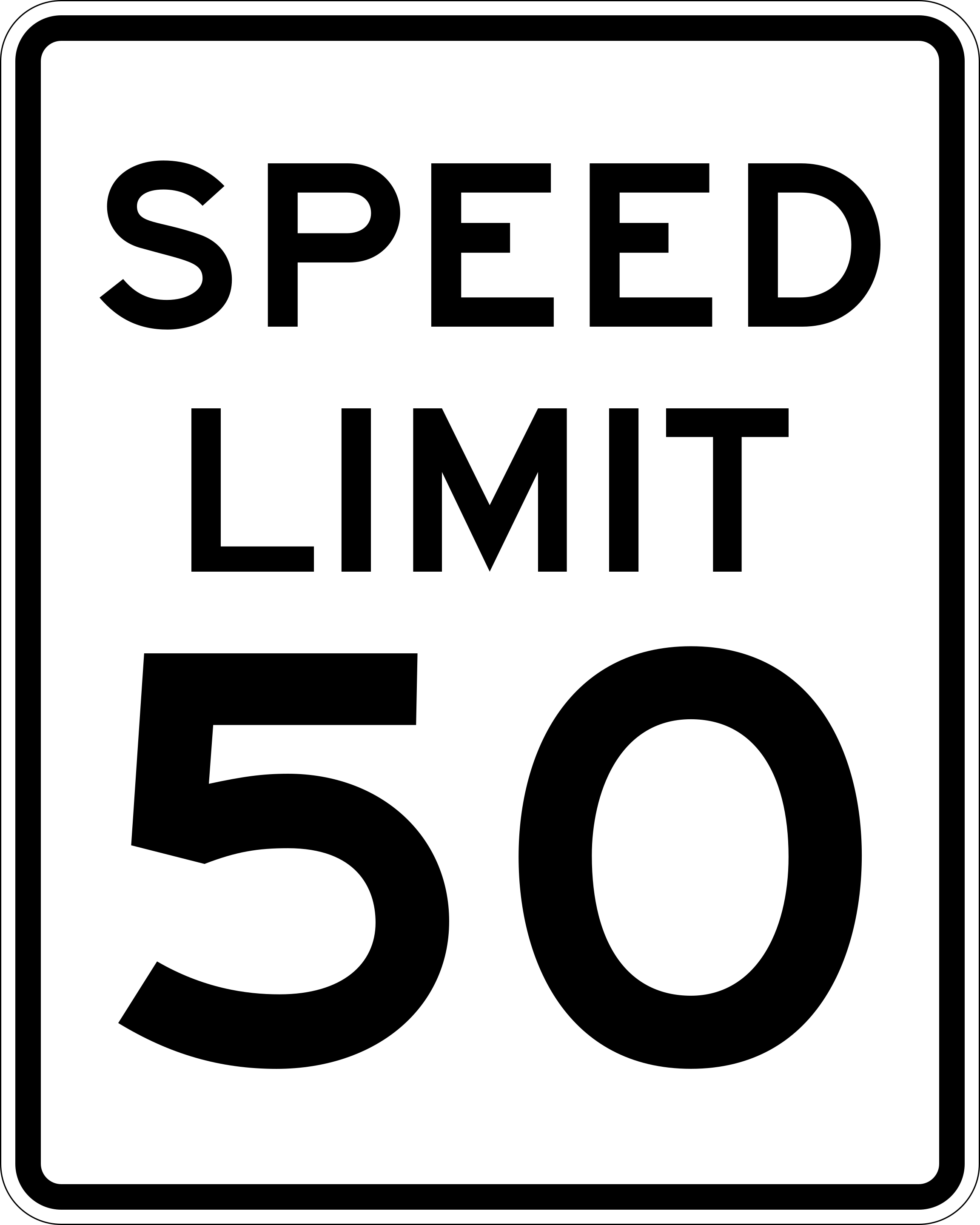
Speed limit
3 questions from the New Hampshire practice test
1. Unless posted otherwise, what is the maximum speed limit in a New Hampshire business or urban residence district?
- 25 miles per hour
- 30 miles per hour
- 20 miles per hour
- 35 miles per hour
Show answer
30 miles per hour. The maximum speed limits in New Hampshire are set by district. In any business or urban residence district as defined in RSA 259:118 the limit is 30 miles per hour. Thirty five applies in a rural residence district and on Class V highways outside the compact part of a city or town, and 45 or 55 applies in other locations. Twenty and twenty five are lower than the listed limit for these districts. Remember that limits are maximums for ideal conditions, so slow down further when weather, traffic, or visibility require it.
2. Where in New Hampshire is a 70 mph speed limit in effect?
- On every 4-lane divided interstate
- On the central New Hampshire turnpike
- On the portion of I-93 from mile marker 45 to the Vermont border
- On all Class V highways
Show answer
On the portion of I-93 from mile marker 45 to the Vermont border. The 70 mph limit applies only to the portion of Interstate 93 from mile marker 45 to the Vermont border. Elsewhere the interstate system, the central New Hampshire turnpike and the eastern New Hampshire turnpike are limited to 65 miles an hour where they are 4-lane divided highways or other divided highways of 4 or more lanes. Class V highways outside compact areas are 35 mph. The minimum speed on an interstate is 45 mph unless conditions make that unsafe.
3. What is the minimum speed on a New Hampshire interstate highway in good conditions?
- 35 mph
- 45 mph
- 55 mph
- There is no minimum
Show answer
45 mph. The minimum speed you may drive on an interstate highway is 45 mph, unless road and weather conditions are so bad that this speed is unsafe. Drivers who go far slower than the normal flow create a hazard by blocking those behind them, causing other drivers to jump from lane to lane or take chances passing. Thirty five and fifty five are not the interstate minimum, and the manual does set a floor, so there is a minimum.
Practice this topic
Lock it in with speed limits questions from the free New Hampshire practice test. Every answer comes with a plain English explanation.
Source: the New Hampshire Driver's Manual, Section 5: Basic Driving. This lesson is a plain English summary, not the law itself; where it differs, the manual and the statute govern. Last checked 2026-09-27.