
Test 6 of 10 · 20 questions · Free 2026
NV Permit Practice Test 6
Jump to the test ↓A fixed 20 question set from the Nevada bank with answers and plain English explanations. The real NV exam is 25 questions, 80 percent to pass; take the full length version on the main practice page.
Question 1 of 20 · 0 right so far
All 20 questions in test 6
Every question below comes from the Nevada question bank on this page. Open a question to see the correct answer and the explanation. Nothing here is hidden behind a signup.
1. A person carrying a white cane is crossing a Nevada street on foot. What duty does an approaching driver have?
- Proceed first unless a painted crosswalk is present
- Yield and stop if necessary before proceeding
- Sound the horn and continue without slowing
- Yield only during daylight hours
Show answer
Yield and stop if necessary before proceeding. Nevada grants a blind or visually impaired person using a white cane or animal guide the right of way on any highway, street, or road. An approaching driver must yield, come to a full stop if needed, and take precautions before moving. The painted-crosswalk choice adds a condition the rule does not require. Reduce speed early, leave room near the crossing, and avoid using the horn to direct the pedestrian. Watch for an electric vehicle hazard too, since quiet operation can make the vehicle harder to hear.
Study this in the handbook: Pedestrians and Bicyclists
2. You are entering a Nevada roundabout. Which traffic has priority?
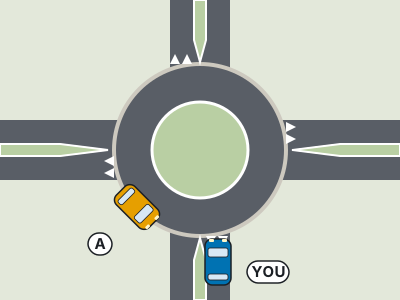
- Vehicles entering from the right
- Vehicles already circulating in the roundabout
- The vehicle that reaches the entry first
- The largest vehicle in the circle
Show answer
Vehicles already circulating in the roundabout. Entering drivers must yield to traffic already circulating inside the roundabout. That means waiting for a usable gap before entering, even when the approach lane is clear. Choosing the vehicle that arrives first applies to some other intersection situations, but it is not the roundabout rule. Once inside, travel with the established flow and use the right turn signal when leaving. The practical cue is the yield decision at the entry line: circulating traffic keeps moving, while the entering driver adjusts speed or waits until the circle can be joined safely.
Study this in the handbook: Roundabouts
3. How long is a Nevada instruction permit valid?
- 90 days
- Six months
- One year from issue
- Until age 18
Show answer
One year from issue. A Nevada instruction permit is valid for one year, and you must carry it with you whenever you drive. Ninety days and six months are too short, and the permit does not simply last until age 18. Six months is how long a driver under 18 must hold the permit before applying for a license, which is a common mix-up. Carrying the permit is required, not optional.
Study this in the handbook: Instruction Permits and Teen Restrictions
4. For how long before getting a license must a Nevada minor stay free of at-fault crashes and moving violation convictions?
- 30 days
- Six months
- A full year
- Two years
Show answer
Six months. Minors must remain free of any at-fault crashes, moving violation convictions, and any alcohol or drug conviction for six months before receiving a license. Thirty days is too short, and one or two years are longer than the rule. This lines up with the six month minimum permit period, so a violation late in the permit stage can delay the license.
Study this in the handbook: Tests and Driver Education
5. What share of Nevada highway deaths in 2020 were unbelted drivers, according to the handbook?
- 2 percent
- 75 percent
- 50 percent
- 23.03 percent, with 345 unbelted occupants killed from 2016 to 2020
Show answer
23.03 percent, with 345 unbelted occupants killed from 2016 to 2020. In 2020, 23.03 percent of highway fatalities in Nevada were drivers who were not wearing seat belts, a 1.15 percent increase from 2016 statistics, and between 2016 and 2020, 345 unbelted vehicle occupants lost their lives. Seat belts are your best protection against injury or death in a crash. In Nevada they are the law: the driver and any passengers age six and older must wear them if the vehicle is equipped with them.
Study this in the handbook: Seat Belts, Children and Phone Laws
6. An emergency vehicle approaches on a Nevada road with its siren sounding. Where should you stop?
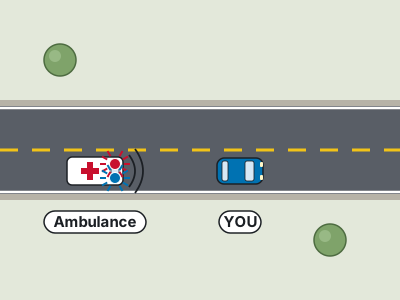
- In the middle of the intersection so it can go around
- At the right side of the road, clear of the intersection
- On the left shoulder, regardless of traffic direction
- In your lane without changing position
Show answer
At the right side of the road, clear of the intersection. Nevada requires a driver to yield immediately to an emergency vehicle using a siren or flashing lights. Move to the right side, make sure the vehicle is clear of the intersection, and remain stopped until the emergency vehicle passes. Stopping in the intersection creates a blockage, while choosing the left shoulder may place the vehicle in the emergency vehicle's path. Staying in the lane also fails to create a clear route. The key visual cue is an emergency vehicle approaching from any direction, followed by a controlled move right and a full stop.
Study this in the handbook: Emergency Vehicles and Stopped Service Vehicles
7. How long must a Nevada permit holder under 18 keep an instruction permit before applying for a driver license?
- At least three months
- At least six months
- At least nine months
- At least two years
Show answer
At least six months. A Nevada applicant under 18 must hold an instruction permit for at least six months before applying for a driver license. Three months and nine months do not match the stated minimum, while two years adds a requirement the handbook does not give. This holding period is separate from supervised driving experience, driver education, and the passenger restrictions that apply after licensing. When a teen plans the licensing steps, the permit start date is the practical cue: count six months from that point before seeking the full license.
Study this in the handbook: Instruction Permits and Teen Restrictions
8. How are first-time DUI offenders under 18 treated under Nevada's handbook?
- They are permanently barred from driving
- They receive only a written warning
- They become subject to the same penalties as drivers over 21
- They are exempt from DUI penalties until age 21
Show answer
They become subject to the same penalties as drivers over 21. Nevada states that young drivers who become first-time DUI offenders are subject to the same penalties as drivers over the age of 21. The warning choice understates the rule, while permanent disqualification is not the stated result. The age-based exemption reverses the handbook's instruction and could lead a new driver to underestimate the consequences of impaired driving. The practical cue is the phrase first-time DUI offender: the handbook connects that status to the adult penalty structure instead of creating a lesser young-driver exception.
Study this in the handbook: Tests and Driver Education
9. What must a Nevada minor's parent do for the minor to register as an organ donor?
- Sign an affidavit on the DMV-002 application acknowledging the donation cannot be amended or revoked
- Nothing, minors register on their own
- Pay a $10 fee
- Provide a doctor's letter
Show answer
Sign an affidavit on the DMV-002 application acknowledging the donation cannot be amended or revoked. Minors who wish to be organ donors may have a parent or guardian sign an affidavit on the DMV-002 application indicating that the parent or guardian understands they cannot amend or revoke the donation. Other applicants check YES when applying for or renewing a license, permit, or ID card. The handbook also says it is important to talk with your family to make your wishes known, and that you can register online at any time. No fee or doctor's letter is part of the process.
10. At a Nevada four-way stop, which driver gets to go first when vehicles arrive at different times?
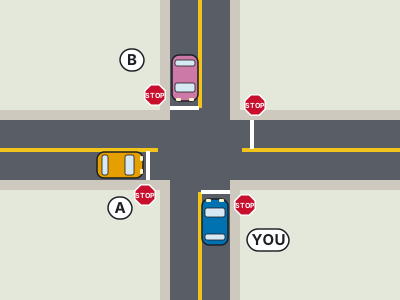
- The driver who reached the intersection first, after stopping completely
- The driver in the largest vehicle
- The driver making a left turn
- The driver who flashes headlights first
Show answer
The driver who reached the intersection first, after stopping completely. At a four-way stop, Nevada gives the first turn to the driver who reaches the intersection first, provided that driver has stopped completely. Vehicle size, the direction of the turn, and a headlight signal do not determine the order. If arrival times are close, drivers should communicate through careful observation and yield as needed rather than forcing a movement. The core sequence is simple: stop fully, identify who arrived first, let that vehicle proceed, and then continue when the intersection is clear.
Study this in the handbook: Right of Way
11. A Nevada driver is traveling through dense fog on a road posted at 55 mph. How should the driver choose a safe speed?
- Drive 55 mph because the sign controls in every condition
- Increase speed so the fog is behind the vehicle sooner
- Reduce speed to match visibility and the road conditions
- Use the shoulder while keeping the posted speed
Show answer
Reduce speed to match visibility and the road conditions. Nevada's Basic Rule requires a reasonable speed that accounts for weather and the distance a driver can see. Dense fog can make the posted 55 mph unsafe, so the driver must slow enough to maintain control and avoid endangering anyone. The choice “Drive 55 mph because the sign controls in every condition” treats the sign as permission to ignore conditions, which the handbook rejects. A practical cue is to ask whether you can see far enough to stop within the open roadway. If visibility drops, ease off the accelerator before a hazard appears rather than waiting for a lower advisory sign.
Study this in the handbook: Freeway Driving
12. What do double yellow lines mean when the lines on your side are solid?
- Passing is required
- You cannot pass
- Only motorcycles may cross
- Traffic travels in the same direction on both sides
Show answer
You cannot pass. Double yellow lines with solid lines on your side mark a no-passing condition. They separate opposing traffic, so crossing them to overtake would expose you to vehicles approaching from the other direction. The marking does not require passing, grant a special exception to motorcycles, or show that both sides move together. Keep your vehicle on your side of the center marking and wait for a lawful passing opportunity signaled by the roadway pattern.
Study this in the handbook: Highway Markings
13. When are a Nevada driver's license and registration suspended under the security deposit rule?
- After three parking tickets
- After any crash
- Only after a DUI
- After a crash with more than $750 in damage when the driver has no liability insurance
Show answer
After a crash with more than $750 in damage when the driver has no liability insurance. If a crash occurs with more than $750 in personal injury or property damage and you do not have liability insurance, your driver license and vehicle registration are suspended under the security deposit rule. Parking tickets, every crash, and DUI alone do not describe this rule. The handbook lists other suspensions separately, including 12 or more demerit points in a 12 month period, failure to appear on a traffic ticket, and failure to maintain insurance.
Study this in the handbook: Insurance and What to Do in a Crash
14. What roadway mistake is identified by the pictured DO NOT ENTER sign?
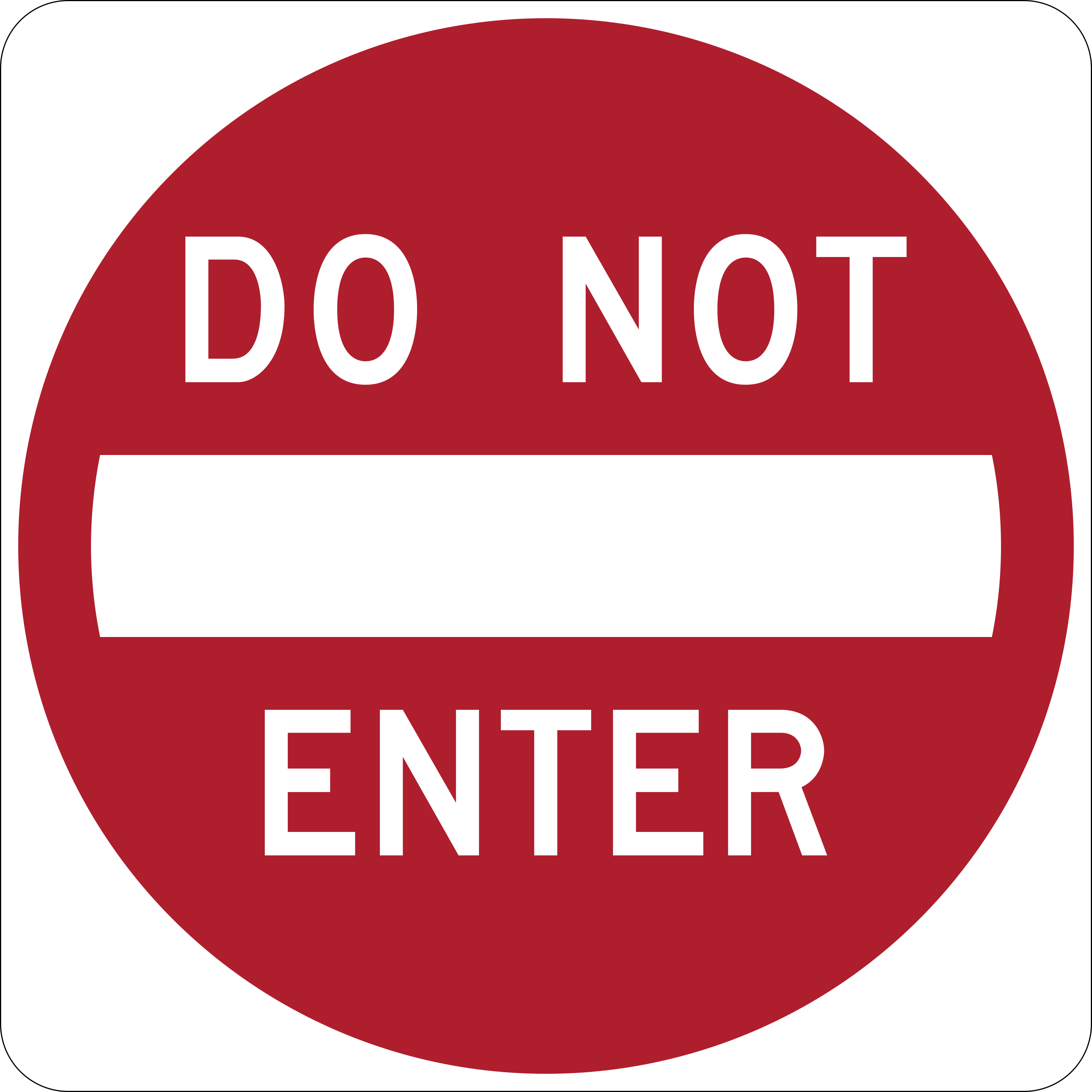
- Parking beside a red curb
- Entering a school zone during class
- Entering the freeway the wrong way instead of by the on-ramp
- Approaching a railroad crossing
Show answer
Entering the freeway the wrong way instead of by the on-ramp. Nevada tells drivers to use the on-ramp when entering the freeway, and says signs will read DO NOT ENTER and WRONG WAY if a driver has made a mistake. The pictured DO NOT ENTER sign therefore marks an entry the driver must not use, such as heading onto the freeway the wrong way. The school, curb, and railroad choices describe other controls and do not explain this sign. Treat the sign as an immediate cue: do not continue past it, and use the correct on-ramp to enter the freeway.
Study this in the handbook: Freeway Driving
15. What should you do if an emergency vehicle approaches while you are stopped in an intersection?
- Back through the intersection to the prior stop line
- Remain stopped where you are until it passes
- Move toward the center of the intersection
- Clear the intersection before stopping at the right edge
Show answer
Clear the intersection before stopping at the right edge. The handbook specifically warns drivers never to stop in an intersection when yielding to an emergency vehicle. If already there, clear the intersection in a controlled way, then pull to the right edge and stop. Remaining in place blocks the emergency route, while moving toward the center increases the obstruction. Reversing can expose the vehicle to cross traffic and pedestrians. Use the first safe movement that gets the vehicle out of the intersection, then wait at the right edge until the emergency vehicle has passed.
Study this in the handbook: Stop, Yield, Regulatory, Warning and Work Zone Signs
16. When may a Nevada driver turn right on a red light?
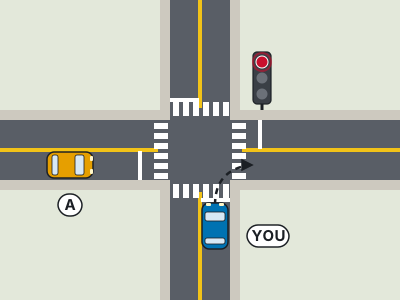
- After a complete stop, when signs do not prohibit it and traffic is clear
- Before stopping if no pedestrians are visible
- Only when another driver waves the vehicle through
- At any red light, even when a sign prohibits the turn
Show answer
After a complete stop, when signs do not prohibit it and traffic is clear. Nevada permits a right turn on red where signs do not prohibit it, but the driver must first make a complete stop and then signal and yield to motor and pedestrian traffic. A clear-looking roadway does not excuse the required stop. Another driver's wave does not replace the legal checks, and a prohibition sign controls even if the intersection appears empty. Before turning, stop behind the line or crosswalk, scan both directions and the sidewalk, and move only when the turn is safe.
Study this in the handbook: Traffic Signals and Arrows
17. What roadway situation does this merge warning sign prepare you for?

- Vehicles already on the freeway must yield to you
- Your lane is reserved for turning around at the next exit
- You must stop before joining traffic from the entrance ramp
- Traffic entering your freeway lane may require you to adjust speed
Show answer
Traffic entering your freeway lane may require you to adjust speed. A merge warning calls attention to traffic streams joining one another. Drivers already on the freeway should watch for entering vehicles and adjust speed when that creates a safe, smooth opening. The option requiring an automatic stop is unsafe because stopping before a merge can create a dangerous launch into fast traffic. The choice giving entering traffic priority reverses Nevada's rule. As the sign appears, check mirrors, keep space around your vehicle, and be ready to cooperate without abrupt braking.
Study this in the handbook: Freeway Driving
18. What do Nevada regulatory signs look like?
- They are diamond-shaped and orange
- They are always round and yellow
- They are five-sided and green
- They are rectangular with a white background
Show answer
They are rectangular with a white background. Nevada describes regulatory signs as rectangular with a white background. These signs communicate traffic laws and regulations, so their shape and color help drivers recognize that the displayed instruction must be followed. Yellow diamond signs serve as warnings, while orange signs identify construction or repair warnings. The five-sided choice belongs to school zones and school crossings, not regulatory signs. When a white rectangular sign appears, read its wording or symbol carefully and apply the stated rule to the lane and movement ahead.
Study this in the handbook: Stop, Yield, Regulatory, Warning and Work Zone Signs
19. What does a five-sided pentagon-shaped highway sign identify?
- A school zone or school crossing
- A railroad crossing ahead
- A no-passing zone
- A route marker
Show answer
A school zone or school crossing. The five-sided pentagon is the shape used for school zones and school crossings. It should prompt a slower, more attentive approach and a search for children, crossing guards, marked crossings, and active school controls. The circle belongs to railroad crossing warnings, the pennant marks no passing, and a shield identifies routes. Do not rely only on the shape; read any speed sign and obey a crossing guard or signal controlling the location.
Study this in the handbook: Sign Colors and Shapes
20. How far does the Nevada handbook say a car at 30 mph travels before stopping on ice?
- About 100 feet
- About 30 feet
- About 373 feet, well over a football field
- About 1,000 feet
Show answer
About 373 feet, well over a football field. If you are going 30 mph, your stopping distance on ice would be 373 feet, well over the length of a football field. The handbook adds that stopping distances on a wet highway may be more than double those on dry pavement, and that packed snow and ice increase them greatly. Doubling your speed makes braking distance four times as long, not twice. Slow down early on icy roads, brake gently, and leave far more following distance than usual.
Study this in the handbook: Stopping Distance and Following
QualitySpace is expanding to Nevada
We are a California-based independent insurance brokerage working on licensing in more states. We cannot help with Nevada insurance yet. Leave your email and we will let you know when we can.
Every question is written from the official Nevada Driver Handbook. Need paper? Printable NV practice test with answer key.
Last verified 2026-10-05. How we check every question · Study all 204 as flashcards
Frequently asked questions
How many questions are on this Nevada practice test?
This fixed set has 20 questions. It is test 6 of 10 from the 204 question Nevada bank. The real NV exam asks 25 questions and you need 20 correct.
What is the passing score for the real Nevada test?
80% (20 correct answers needed out of 25) That figure comes from the official Nevada source cited on the DMV facts page.
How does this fixed test relate to the full Nevada bank?
Each numbered test is a fixed set of questions in a fixed order, so you can retake the same test later and compare. Every test mixes road signs and the other topics in about the same proportion as the full bank. Tests 1 to 10 together cover 200 of the 204 questions in the Nevada bank, each once. The full practice page mixes the whole bank at random.
Last verified 2026-10-05. See the Nevada DMV facts page for sourced state details.