
Key points
Signs have three purposes: they regulate, warn and inform, and their shapes and colors help you understand the message quickly.
Source: Handbook p. 28
“Signs have three purposes: they regulate, warn, and inform. The shapes and colors of highway signs have special meanings. This helps you understand the message quickly.”
Nevada Driver's Handbook, Handbook p. 28Red means no, do not or stop; green means direction; yellow means warning; white means a rule.
Source: Handbook p. 28
“Red no, do not, or stop Green direction or guidance Yellow or yellow green general warning White regulatory, law, or rule”
Nevada Driver's Handbook, Handbook p. 28Orange marks road construction or repair; blue marks driver services; brown marks recreation.
Source: Handbook p. 28
“Orange road construction or repair warning Blue driver services, such as food and lodging Brown recreation and scenic area information”
Nevada Driver's Handbook, Handbook p. 28An octagon (8 sides) means stop; an inverted triangle means yield.
Source: Handbook p. 28
“Octagon (8 sides) STOP Diamond warning Rectangle traffic regulations or directions to drivers Inverted triangle yield right-of-way”
Nevada Driver's Handbook, Handbook p. 28A pennant means no passing, and a pentagon (5 sides) marks school zones and crossings.
Source: Handbook p. 28
“Pennant no passing Pentagon (5 sides) school zones and school crossings”
Nevada Driver's Handbook, Handbook p. 28A circle means a railroad crossing ahead, and a crossbuck marks the actual crossing.
Source: Handbook p. 28
“Circle railroad crossing ahead Crossbuck (X) actual railroad crossing”
Nevada Driver's Handbook, Handbook p. 28
Numbers to know
| Number | What it means | Manual |
|---|---|---|
| 8 | sides on a stop sign | Handbook p. 28 |
| 5 | sides on a school sign | Handbook p. 28 |
Recognize these signs
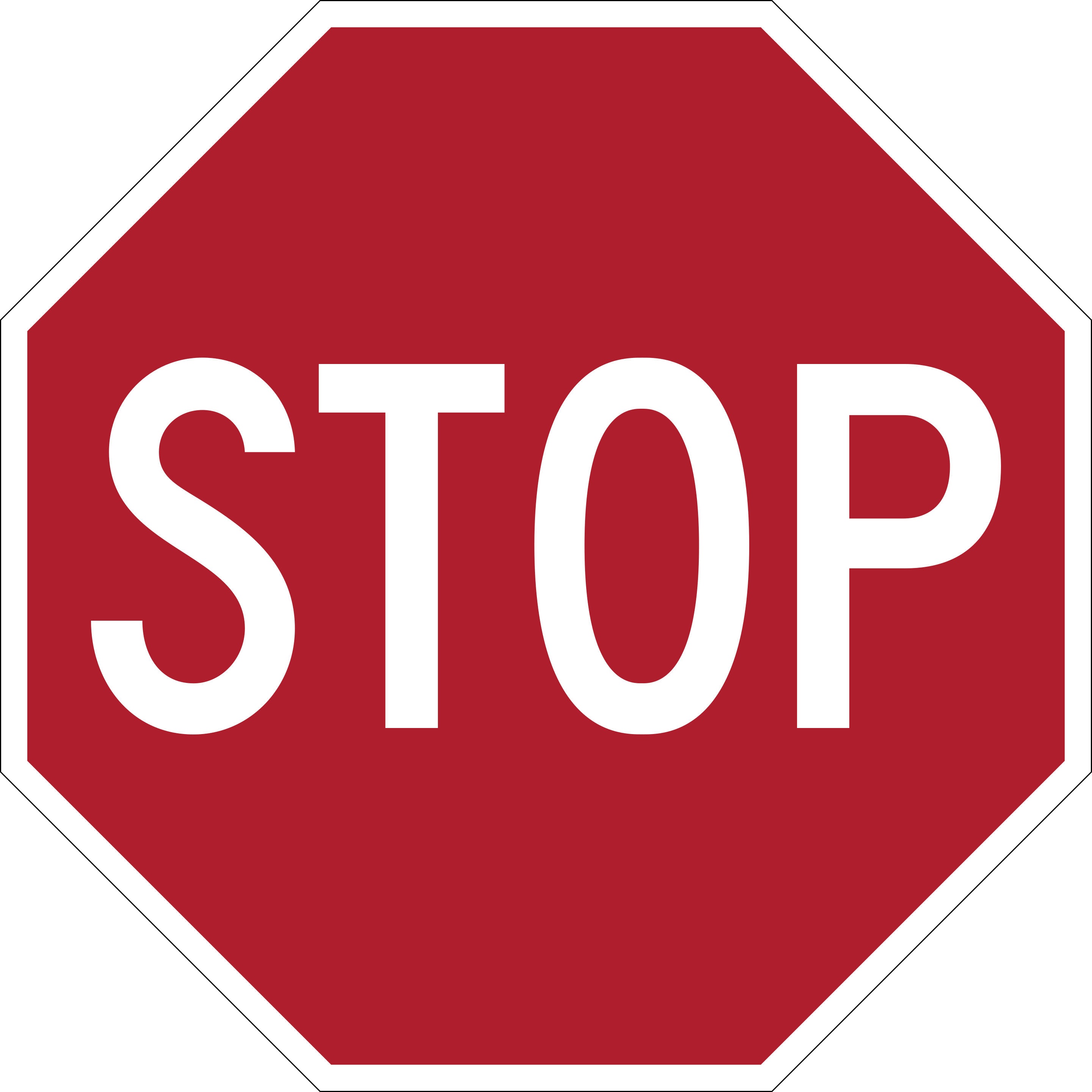
Stop 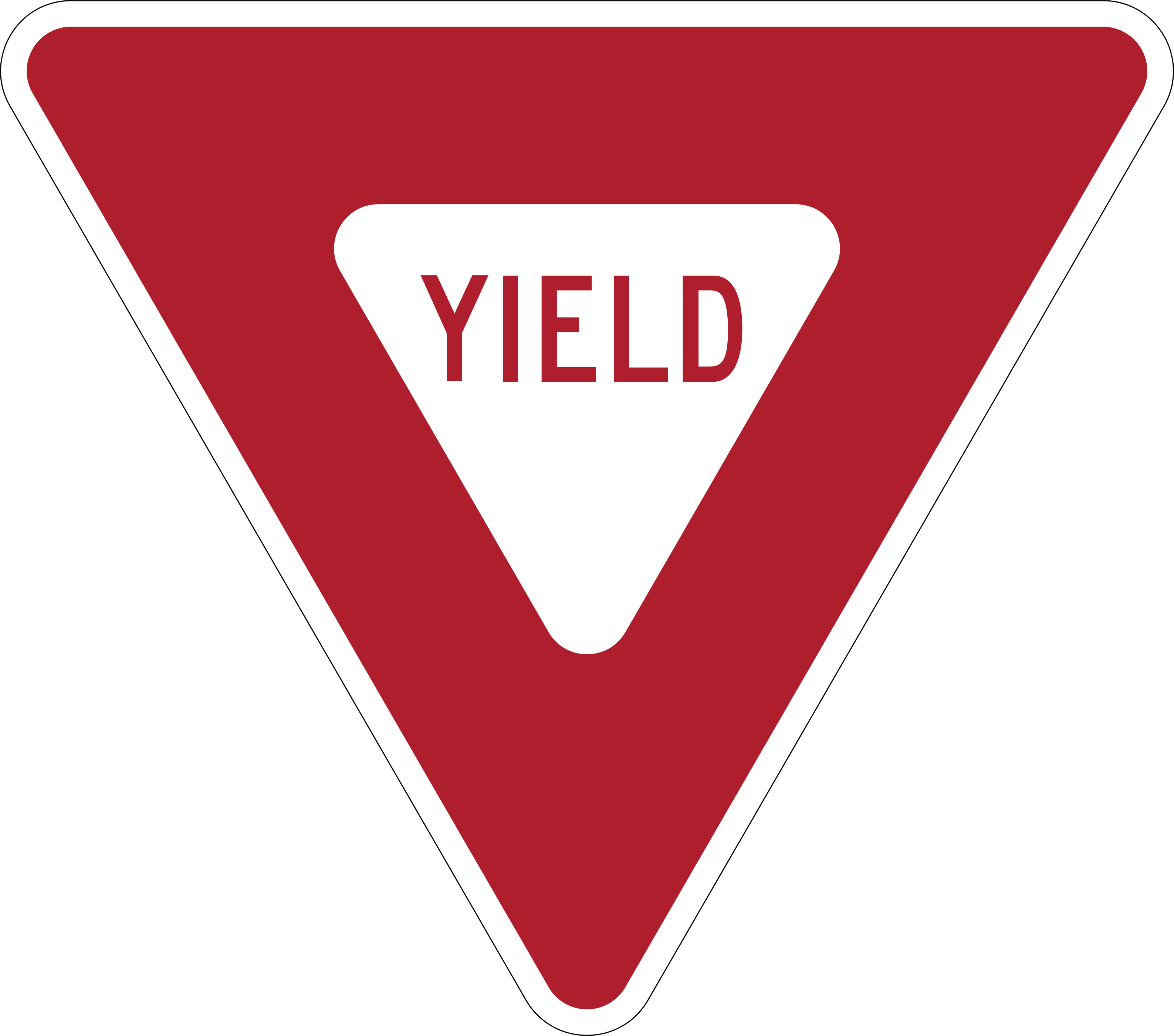
Yield 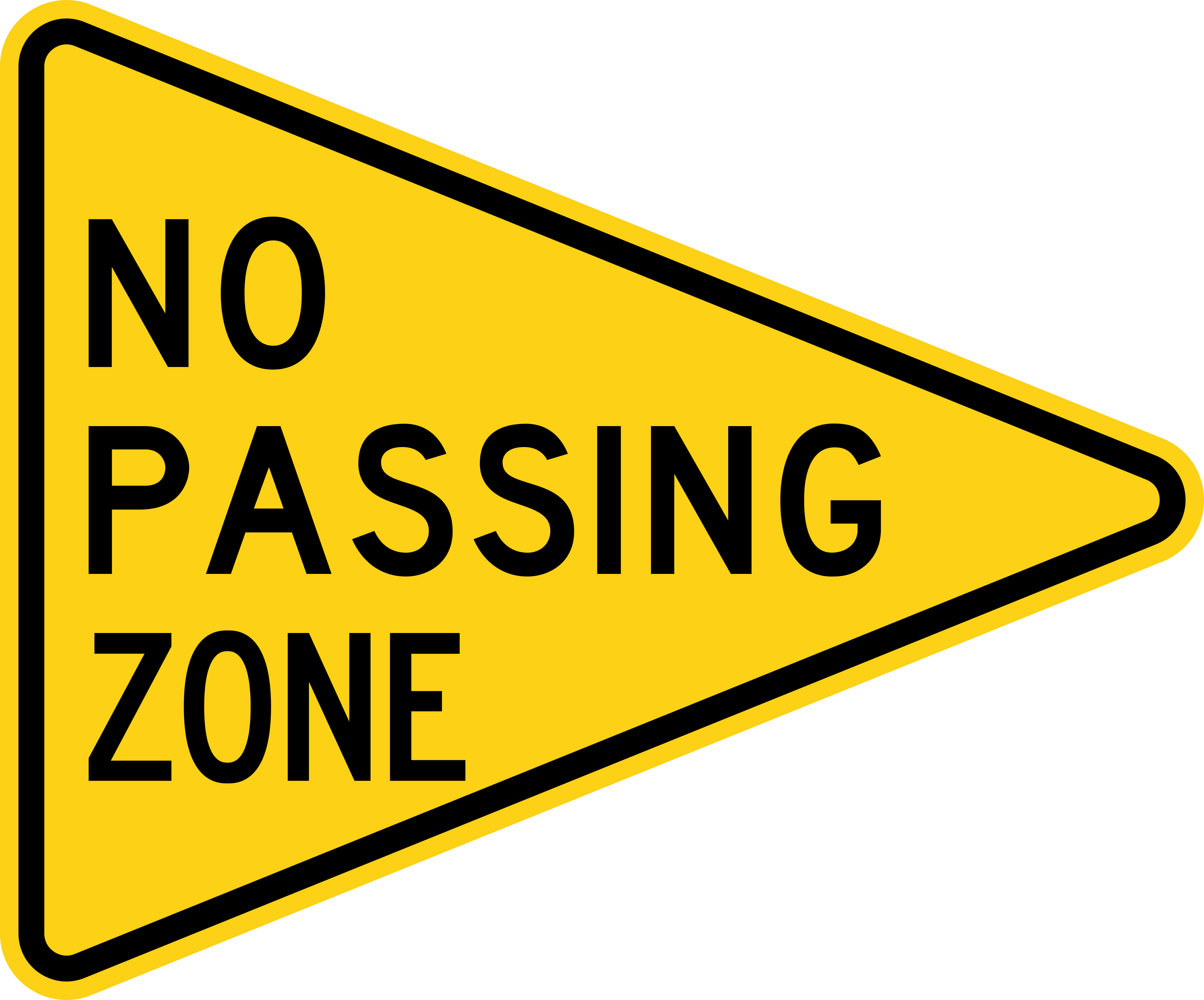
No passing zone 
School 
Railroad crossing ahead 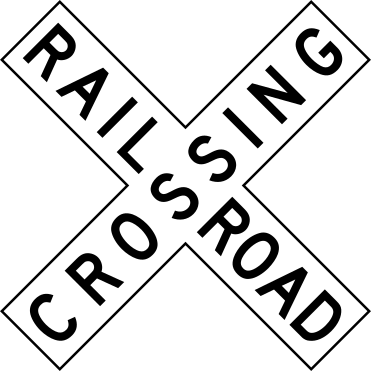
Railroad crossbuck
3 questions from the Nevada practice test
1. Which roadway sign shape is reserved for a STOP instruction?
- Inverted triangle
- Octagon with eight sides
- Circle
- Pentagon with five sides
Show answer
Octagon with eight sides. Nevada lists the octagon, an eight-sided shape, as the standard shape for STOP. The handbook says sign shapes and colors have special meanings that help a driver understand the message quickly, so the outline alone tells you a full stop is required. An inverted triangle identifies yield, a circle warns of a railroad crossing ahead, and a five-sided pentagon identifies school zones or school crossings. Connect the eight-sided outline with a required full stop, then obey the sign and the pavement markings at that location.
2. What does a five-sided pentagon-shaped highway sign identify?
- A school zone or school crossing
- A railroad crossing ahead
- A no-passing zone
- A route marker
Show answer
A school zone or school crossing. The five-sided pentagon is the shape used for school zones and school crossings. It should prompt a slower, more attentive approach and a search for children, crossing guards, marked crossings, and active school controls. The circle belongs to railroad crossing warnings, the pennant marks no passing, and a shield identifies routes. Do not rely only on the shape; read any speed sign and obey a crossing guard or signal controlling the location.
3. Why are the shapes and colors of highway signs useful to drivers?
- They identify the vehicle owner
- They make every sign a speed limit
- They show that all intersections have signals
- They help drivers understand the message quickly
Show answer
They help drivers understand the message quickly. Nevada gives highway sign shapes and colors special meanings so drivers can understand a message quickly. This visual information is useful before a driver has time to read every word or symbol. It does not mean that every sign sets a speed limit, that every intersection has a signal, or that a sign identifies a vehicle owner. Learn the common patterns, then confirm the exact instruction from the sign itself. Recognizing the visual code early gives you more time to slow, yield, stop, or follow a route.
Practice this topic
Lock it in with road signs questions from the free Nevada practice test. Every answer comes with a plain English explanation.
Source: the Nevada Driver's Handbook, Chapter 3: Signs, Signals and Markings. This lesson is a plain English summary, not the law itself; where it differs, the manual and the statute govern. Last checked 2026-09-27.