
Key points
Signal at least 100 feet ahead on city streets, or 300 feet on open highways.
Source: Handbook p. 45
“Signal your turn at least 100 feet ahead (about 10 car lengths) on city streets or 300 feet (30 car lengths) on open highways.”
Nevada Driver's Handbook, Handbook p. 45Do not change lanes in an intersection.
Source: Handbook p. 46
“Do not change lanes in an intersection”
Nevada Driver's Handbook, Handbook p. 46Never make a U-turn where you cannot see clearly 200 feet in each direction.
Source: Handbook p. 46
“Where you cannot see clearly 200 feet in each direction because of a curve, hill, rain, fog, or other reason.”
Nevada Driver's Handbook, Handbook p. 46Never U-turn near a grade with less than 500 feet of visibility in both directions.
Source: Handbook p. 46
“Near a grade where there is less than 500 feet of visibility in both directions.”
Nevada Driver's Handbook, Handbook p. 46Never exceed the speed limit to pass, and never use the shoulder.
Source: Handbook p. 47
“you should never exceed the speed limit to pass and you may never use the shoulder of the road to pass.”
Nevada Driver's Handbook, Handbook p. 47On a two lane road, do not pass within 100 feet of a street or railroad crossing, or on a double solid yellow line.
Source: Handbook p. 47
“At or within 100 feet of a street crossing; At or within 100 feet of a railroad crossing; Where there is a double solid yellow line on the highway”
Nevada Driver's Handbook, Handbook p. 47When another vehicle signals to pass, move right in your lane and never speed up.
Source: Handbook p. 47
“When another vehicle comes up behind yours and signals to pass, move to the right in your travel lane and let it pass. Never speed up when another vehicle is passing you.”
Nevada Driver's Handbook, Handbook p. 47On a highway with 2 lanes your way, driving in the left lane below the limit while being overtaken is illegal.
Source: Handbook p. 47
“While driving on a highway that has two lanes traveling in the same direction, it is illegal to travel in the far left lane at a speed that is less than the posted speed limit and you are being overtaken”
Nevada Driver's Handbook, Handbook p. 47Broken or dashed yellow lines mean you may pass when it is safe to do so.
Source: Handbook p. 32
“Broken or dashed yellow lines mean you may pass when it is safe to do so”
Nevada Driver's Handbook, Handbook p. 32
Numbers to know
| Number | What it means | Manual |
|---|---|---|
| 100 feet | signal distance on city streets | Handbook p. 45 |
| 300 feet | signal distance on open highways | Handbook p. 45 |
| 200 feet | visibility needed for a U-turn | Handbook p. 46 |
| 500 feet | visibility needed near a grade for a U-turn | Handbook p. 46 |
| 100 feet | no passing distance from street and railroad crossings | Handbook p. 47 |
| 2 | lanes in the same direction where left lane rules apply | Handbook p. 47 |
Recognize these signs
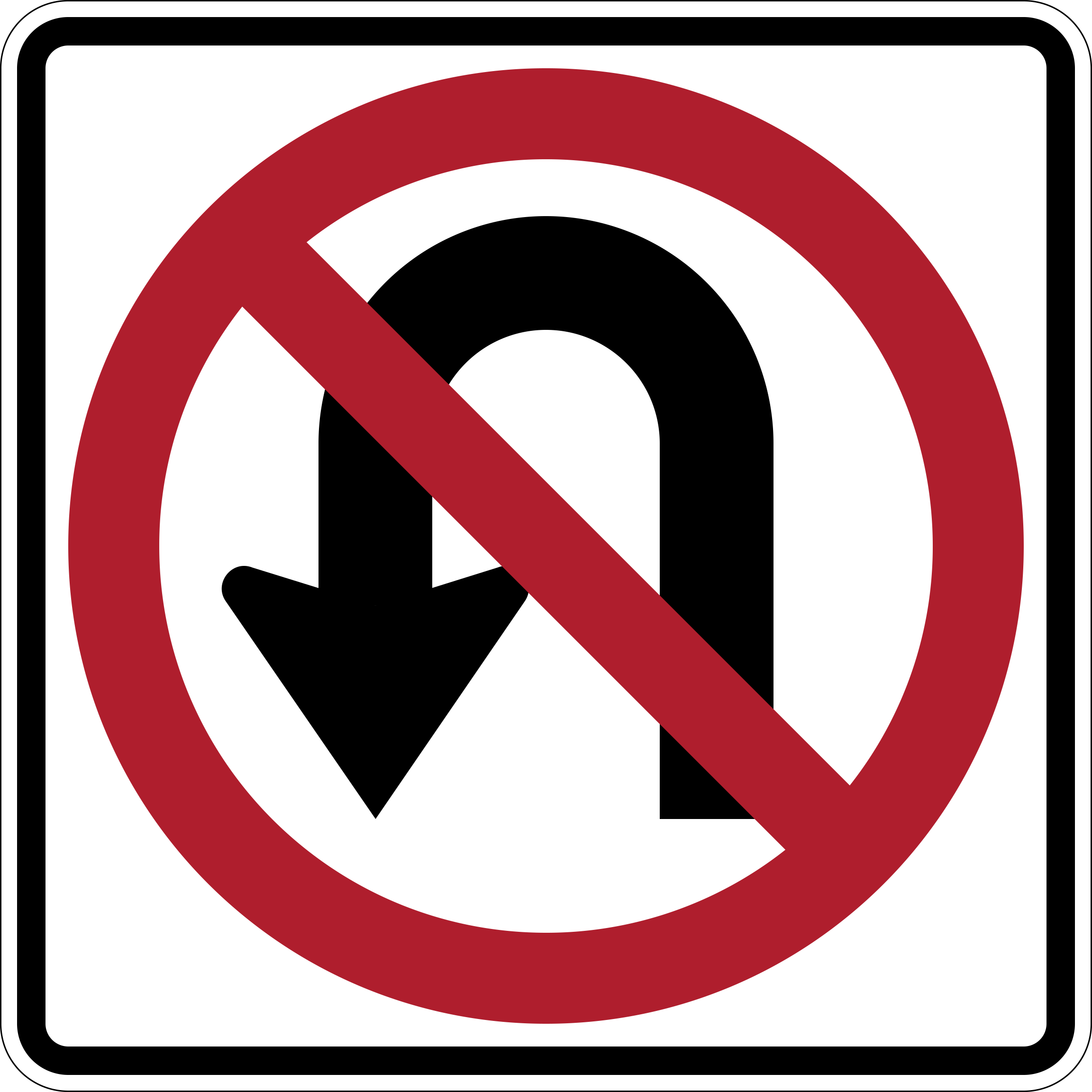
No U turn
3 questions from the Nevada practice test
1. How early must a Nevada driver signal a turn on an open highway?
- At least 100 feet ahead
- At least 200 feet ahead
- At least 500 feet ahead
- At least 300 feet ahead
Show answer
At least 300 feet ahead. On an open highway, the turn signal must begin at least 300 feet before the turn. The 100 foot figure belongs to city streets, so applying it on a highway gives following traffic less notice than required. Two hundred feet is also short, and 500 feet is not the handbook's stated threshold. Signal early enough to communicate the planned movement, then watch traffic, pedestrians, signs, and markings while slowing for the turn. The setting is the key cue: identify whether the roadway is an open highway or a city street before choosing the distance.
2. What does a double yellow line prohibit on a two-lane road?
- Driving in the lane closest to the center line
- Turning into a private driveway from either direction
- Passing across the center marking
- Stopping at an intersection controlled by a signal
Show answer
Passing across the center marking. The handbook lists a double solid yellow line as a place where passing is prohibited on a two-lane road. The marking controls crossing for an overtaking maneuver; it does not ban every driveway turn, make the inside travel lane unusable, or replace a traffic signal. Before attempting to pass, read the center marking and the surrounding roadway, then wait for a legal and visible opportunity. A solid center line should trigger a no-crossing decision, especially near curves, hills, street crossings, or railroad crossings.
3. When yellow center lines are broken, when may you pass?
- Only after crossing a solid white line
- Only while approaching an intersection
- Whenever the vehicle ahead is moving slowly
- When it is safe to do so
Show answer
When it is safe to do so. A broken yellow center line allows passing only when the maneuver is safe. The broken marking gives permission to consider passing, not a command to pass whenever a vehicle is slow. Approaching an intersection may introduce additional hazards, and a solid white line is unrelated to the opposing-direction center marking. Check sight distance, oncoming traffic, roadway space, and nearby intersections before moving left. If any condition is uncertain, remain behind the vehicle and wait for a better section.
Practice this topic
Lock it in with signals and markings questions from the free Nevada practice test. Every answer comes with a plain English explanation.
Source: the Nevada Driver's Handbook, Chapter 3: Signaling, Turning, Lane Changes and Passing. This lesson is a plain English summary, not the law itself; where it differs, the manual and the statute govern. Last checked 2026-09-27.