
Key points
The Basic Rule requires a reasonable or proper speed: besides posted limits, consider the amount and type of traffic, the weather and how far you can see.
Source: Handbook p. 35
“Nevada has a Basic Rule for driving at a “reasonable or proper” speed. This means that in addition to any posted speed limits, drivers must consider: The amount and type of traffic The weather and the distance you can see”
Nevada Driver's Handbook, Handbook p. 35Never drive at a speed that endangers you or anyone else; the safe speed may be well under the limit.
Source: Handbook p. 35
“drivers are never to drive at a speed that endangers you or anyone else. Depending on conditions, the safe speed may be considerably less than the posted speed limit.”
Nevada Driver's Handbook, Handbook p. 35School zones: 15 or 25 mph.
Source: Handbook p. 33
“In school zones, the speed limit is either 15 or 25 mph.”
Nevada Driver's Handbook, Handbook p. 33School zone limits apply from a half hour before school starts to a half hour after it ends on school days.
Source: Handbook p. 33
“These speed limits are in effect on school days from a half hour before school begins to a half hour after school ends, unless otherwise posted.”
Nevada Driver's Handbook, Handbook p. 33Business and residential areas: 25 mph.
Source: Handbook p. 35
“25 mph ............. Business and residential areas and school zones”
Nevada Driver's Handbook, Handbook p. 35Violating the direction of a school crossing guard is a misdemeanor.
Source: Handbook p. 33
“Violating the direction of a school crossing guard is a misdemeanor in Nevada.”
Nevada Driver's Handbook, Handbook p. 33Speed limits are set for normal driving conditions.
Source: Handbook p. 35
“Speed limits are set for normal driving conditions.”
Nevada Driver's Handbook, Handbook p. 35Urban freeways and rural highways: 65 mph; rural interstate freeways: 70 mph or more.
Source: Handbook p. 35
“65 mph ............. Urban freeways, rural highways 70+ mph ............ Rural interstate freeways”
Nevada Driver's Handbook, Handbook p. 35
Numbers to know
| Number | What it means | Manual |
|---|---|---|
| 15 or 25 mph | school zone limits | Handbook p. 33 |
| 25 mph | business and residential areas | Handbook p. 35 |
| 65 mph | urban freeways and rural highways | Handbook p. 35 |
| 70 mph | rural interstate freeways (70 or more) | Handbook p. 35 |
Recognize these signs
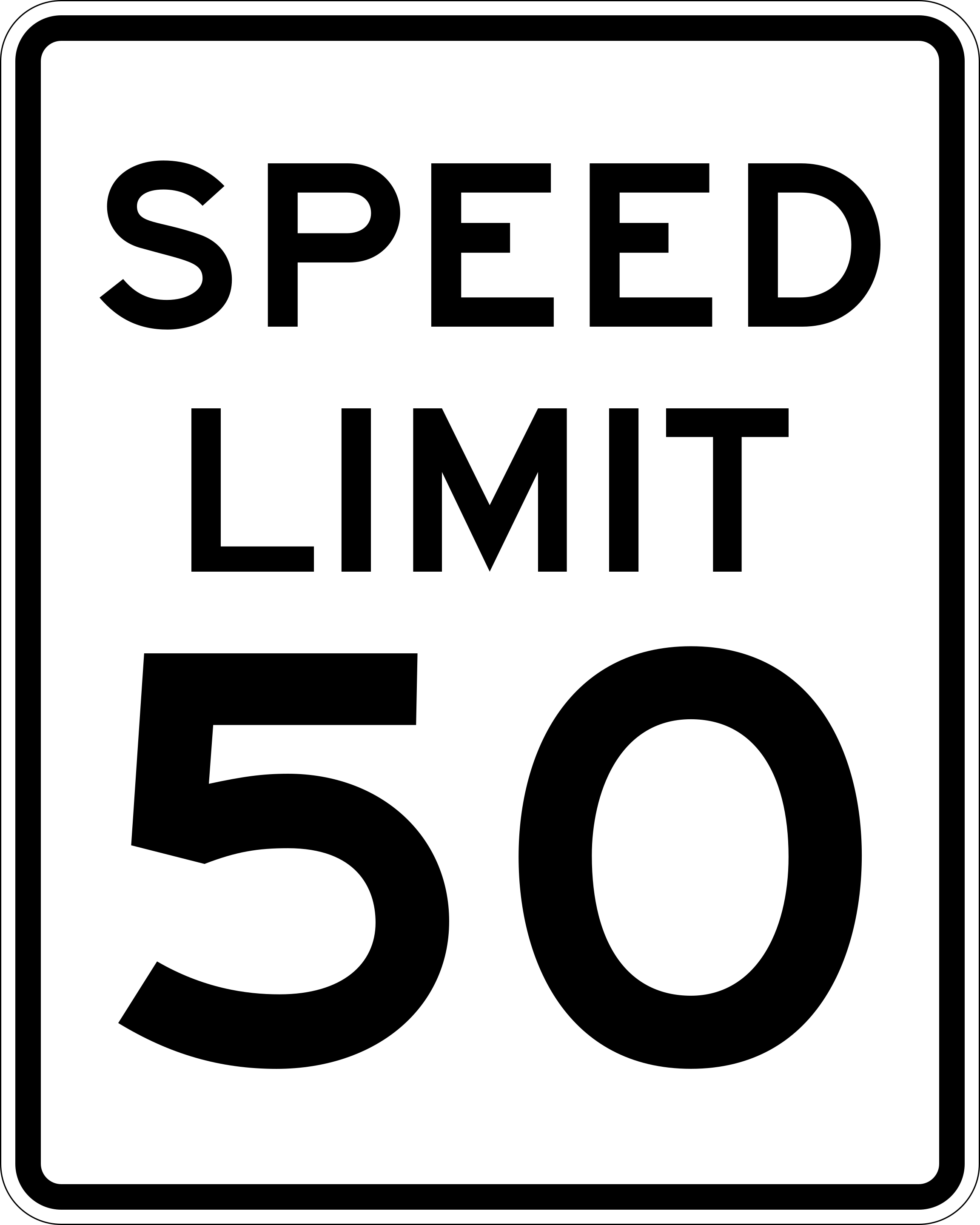
Speed limit 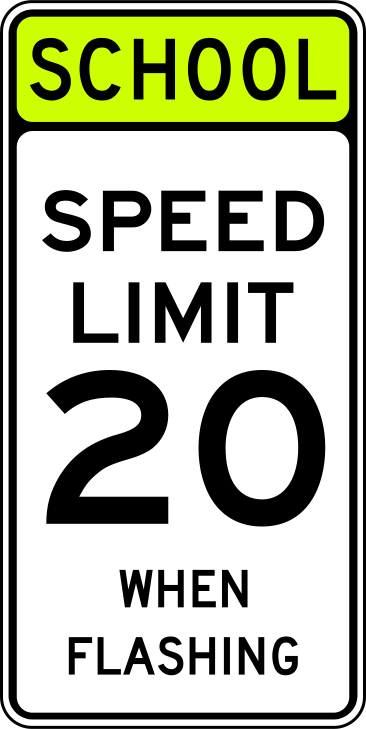
School speed limit
3 questions from the Nevada practice test
1. Which condition must a Nevada driver consider when applying the Basic Rule for speed?
- Only the number printed on the nearest speed-limit sign
- The color of the vehicle behind the driver
- The amount and type of traffic
- Whether the radio is tuned to a local station
Show answer
The amount and type of traffic. The Basic Rule is broader than reading a speed sign. Nevada tells drivers to consider traffic, weather, visibility, the road surface, and the type of road before deciding how fast to travel. The choice “Only the number printed on the nearest speed-limit sign” leaves out the conditions that can make a legal posted speed dangerous. For example, a narrow, crowded road calls for more caution than an empty straight roadway. Scan traffic and pavement as part of the speed decision, and remember that a safe speed may be below the posted maximum.
2. What does Nevada's Basic Rule say about driving speed?
- Never drive at a speed that endangers anyone
- Always drive exactly at the posted limit
- Drive faster when traffic is heavy
- Use the vehicle's maximum speed on straight roads
Show answer
Never drive at a speed that endangers anyone. Nevada's Basic Rule requires a driver to choose a speed that does not endanger the driver or anyone else. The posted limit is a normal-condition maximum, not a command to maintain that speed during every situation. Heavy traffic, poor visibility, or a slick surface can make a lower speed necessary. The choice about driving exactly at the posted limit is tempting because signs are important, but it ignores the conditions surrounding the vehicle. Use the roadway, traffic, weather, and visibility as active checks, then slow whenever the posted number would be unsafe.
3. When are Nevada school-zone speed limits generally in effect on school days?
- Only when a crossing guard is standing in the roadway
- Only while recess is taking place
- All day and night, including weekends
- From 30 minutes before school begins through 30 minutes after it ends
Show answer
From 30 minutes before school begins through 30 minutes after it ends. Nevada school-zone speed limits of 15 or 25 mph generally apply on school days from one-half hour before school begins until one-half hour after school ends, unless posted otherwise. Recess timing does not define the period, and the rule is not automatically a round-the-clock or weekend restriction. A crossing guard's presence is not the sole trigger. Drivers should read the signs, observe any flashing controls, and use the posted schedule when available. The half-hour buffer before and after school is the key timing cue.
Practice this topic
Lock it in with speed limits questions from the free Nevada practice test. Every answer comes with a plain English explanation.
Source: the Nevada Driver's Handbook, Chapter 3: Controlling Speed and School Areas. This lesson is a plain English summary, not the law itself; where it differs, the manual and the statute govern. Last checked 2026-09-27.