
Test 4 of 10 · 20 questions · Free 2026
NV Permit Practice Test 4
Jump to the test ↓A fixed 20 question set from the Nevada bank with answers and plain English explanations. The real NV exam is 25 questions, 80 percent to pass; take the full length version on the main practice page.
Question 1 of 20 · 0 right so far
All 20 questions in test 4
Every question below comes from the Nevada question bank on this page. Open a question to see the correct answer and the explanation. Nothing here is hidden behind a signup.
1. Where and how must a Nevada child under age two ride?
- Forward facing in the front seat
- In a booster seat anywhere
- Rear facing in the back seat
- On an adult's lap if the trip is short
Show answer
Rear facing in the back seat. Nevada requires children under two to be secured in a rear-facing child restraint system in the back seat. A forward-facing seat, a booster, or the front seat all break the rule, and the handbook says a child should never be held in a lap or share one belt with someone else. An airbag can strike a front seat infant seat at 200 mph, which is why infants never ride in front of one.
Study this in the handbook: Seat Belts, Children and Phone Laws
2. A Nevada teen lives more than 30 miles from any approved driver's education school and has no internet access for an online class. What must the teen complete instead?
- 100 hours of driving, 10 of them in the dark
- 50 hours of driving, all in daylight
- A 30 hour classroom course by mail
- Nothing; the requirement is waived
Show answer
100 hours of driving, 10 of them in the dark. When no approved school is within 30 miles and an online class is not possible, the teen must complete 100 hours of behind the wheel experience, 10 of them in the dark. For a motorcycle license, all 100 hours must be in daylight. The 50 hour figure is for teens near a school, a mail classroom course is not the alternative, and the requirement is not waived.
Study this in the handbook: Tests and Driver Education
3. A stop sign blocks your view of the cross street. What should you do before proceeding?
- Sound the horn and continue without checking
- Accelerate through because the sign already stopped you
- Move forward slowly until you can see whether it is safe
- Turn around before reaching the intersection
Show answer
Move forward slowly until you can see whether it is safe. A stop sign still requires a full stop behind the sign, crosswalk, or stop line. When the cross street cannot be seen, Nevada directs the driver to move forward slowly only far enough to determine when entering is safe. Accelerating through treats limited visibility as permission, and a horn does not replace checking for cross traffic or pedestrians. Turning around is unnecessary. The useful sequence is stop first, creep forward with control, check the roadway, then yield before crossing or turning.
Study this in the handbook: Stop, Yield, Regulatory, Warning and Work Zone Signs
4. When may a driver turn left at a red light in Nevada?
- Whenever the light has been red for more than five seconds
- When turning from a one-way street onto another one-way street moving left, after stopping and yielding
- From any two-way street when no vehicle is close
- Without signaling if the destination street is empty
Show answer
When turning from a one-way street onto another one-way street moving left, after stopping and yielding. Nevada permits a left turn on red only from a one-way street onto another one-way street carrying traffic to the left, unless a sign, arrow, or officer forbids it. The driver must signal, stop completely, and yield to pedestrians and other traffic moving as directed. Time spent waiting does not create permission, and an empty-looking road cannot change a two-way street into a one-way street. Verify both street directions before considering this exception.
Study this in the handbook: Traffic Signals and Arrows
5. Why should a driver create lane space and reduce speed near a stopped emergency vehicle?
- To avoid using the brakes until the next intersection
- To give the stopped vehicle permission to reverse into traffic
- To reserve the adjacent lane for emergency vehicles traveling at full speed
- To protect people attending to a vehicle repair or emergency beside the roadway
Show answer
To protect people attending to a vehicle repair or emergency beside the roadway. The rule protects anyone attending to a repair or emergency, not only the occupants of the stopped vehicle. Lower speed gives the approaching driver more time to react, and a nonadjacent lane provides separation when conditions allow. The rule does not authorize a stopped vehicle to reverse into traffic or reserve a lane for unrelated high-speed travel. Delaying braking would remove the very control the situation requires. Scan the shoulder early, ease off the accelerator, signal for space, and expect a person or piece of equipment near the lane.
Study this in the handbook: Emergency Vehicles and Stopped Service Vehicles
6. What duty does Nevada place on drivers nearing stopped emergency, utility, or service vehicles?
- Stop in the lane even when a safe path is open
- Keep the posted speed until directly beside the vehicle
- Pass on the shoulder without checking traffic
- Use a careful approach and follow the listed protective duties
Show answer
Use a careful approach and follow the listed protective duties. Nevada places several duties on a driver approaching a stopped emergency, utility, or service vehicle. The approach should be slower than the posted limit, cautious, and ready for a stop, with a move to a nonadjacent lane when conditions permit. Holding the posted speed removes the safety margin. A shoulder pass is not a substitute for checking traffic, and an unnecessary stop in the lane can create another hazard. Look ahead, reduce speed early, scan for workers, and create space only when the movement is safe.
Study this in the handbook: Emergency Vehicles and Stopped Service Vehicles
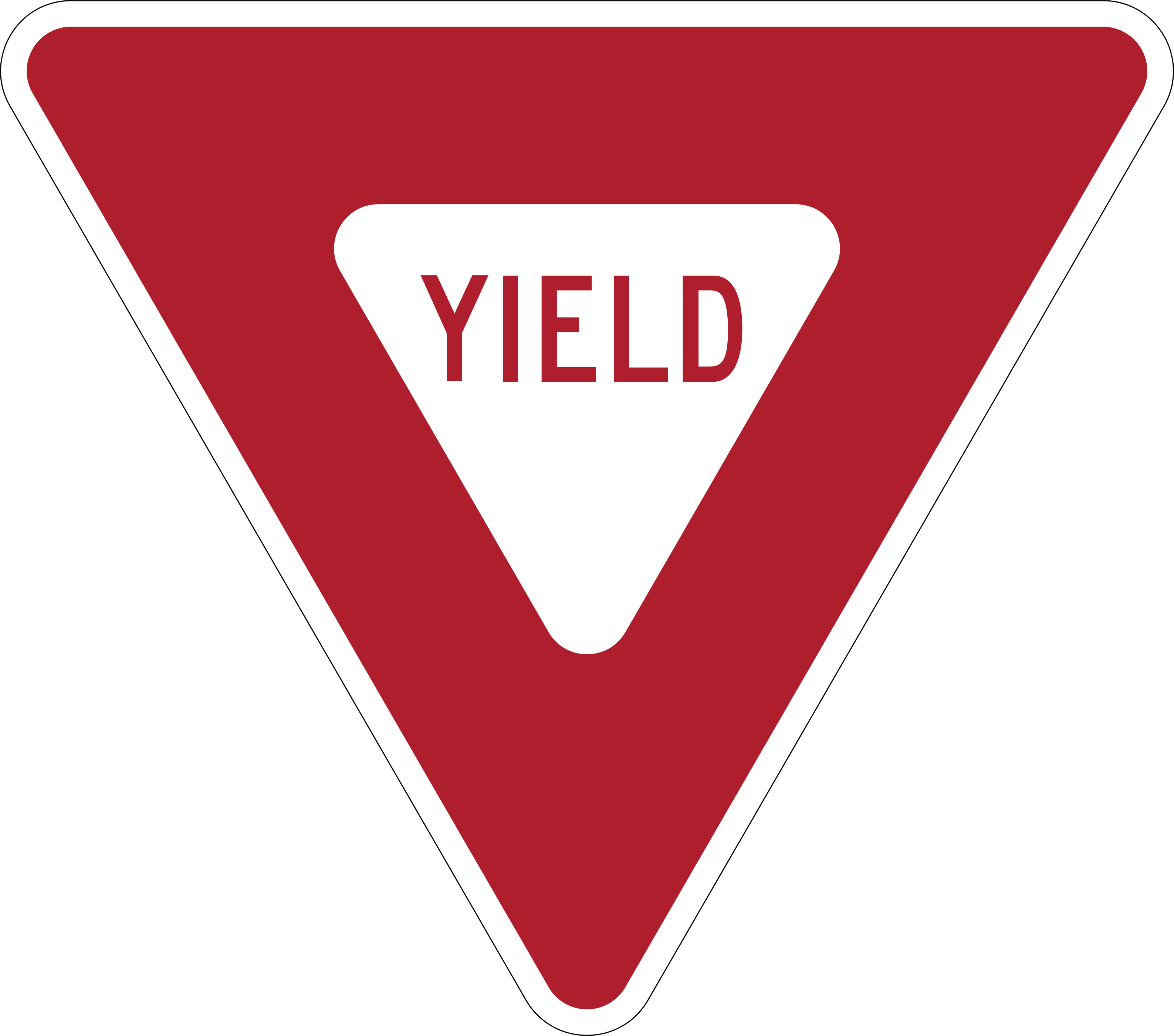
7. At the pictured YIELD sign, may you continue without a full stop?
- Yes, when it is safe and the required traffic has been yielded to
- No, a full stop is always mandatory
- Yes, but only when turning left
- No, unless another driver waves you through
Show answer
Yes, when it is safe and the required traffic has been yielded to. A YIELD sign permits a driver to proceed without a full stop when doing so is safe, but the driver must slow down and yield to pedestrians, through traffic, and drivers already on the highway. Saying that every approach requires a full stop applies STOP sign behavior to a different control. The sign does not limit the exception to left turns, and a wave from another driver cannot replace checking every direction. Slow before the intersection, look for crossing users and traffic, then stop only when safety or the traffic situation requires it.
Study this in the handbook: Stop, Yield, Regulatory, Warning and Work Zone Signs
8. A Nevada pedestrian sees a flashing Don't Walk signal without a countdown timer before stepping off the curb. What should happen?
- The pedestrian should start before the hand becomes steady
- The pedestrian must not begin crossing
- The pedestrian may cross if the nearest lane is empty
- The pedestrian should wait in the roadway for the next cycle
Show answer
The pedestrian must not begin crossing. A flashing Don't Walk or raised-hand indication without a countdown timer means a pedestrian may not begin crossing. Someone who entered lawfully may continue toward a curb, sidewalk, safety zone, or other safe place. The empty-lane choice ignores the signal, and waiting in the roadway creates a needless hazard. Starting before the hand becomes steady is also not the rule. Drivers should remain alert for people finishing a lawful crossing, while pedestrians should look for a WALK indication before entering.
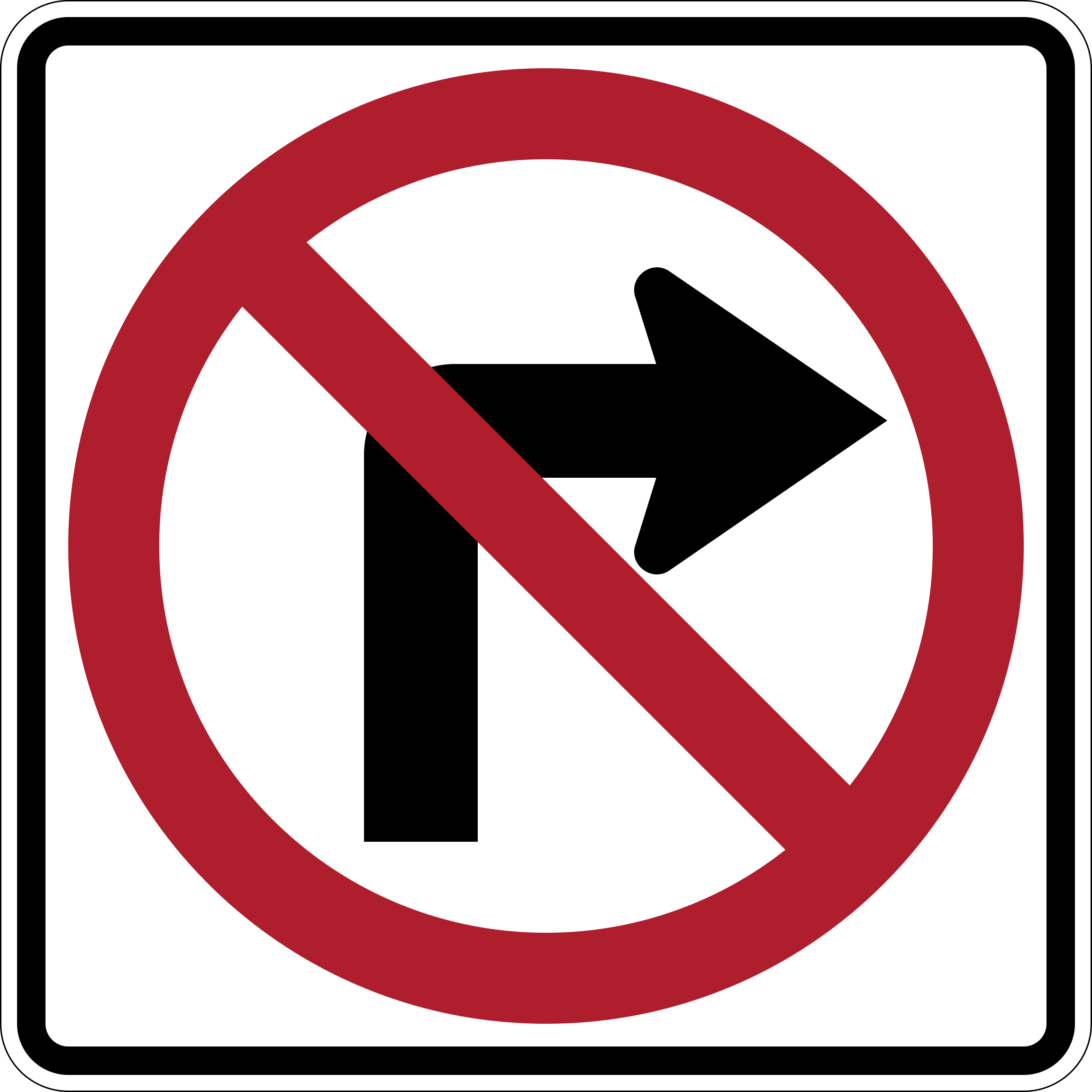
9. What do Nevada regulatory signs communicate?
- Traffic laws and regulations
- Only scenic information
- Warnings about every railroad crossing
- The location of private driveways
Show answer
Traffic laws and regulations. Nevada says regulatory signs inform drivers of traffic laws and regulations, and drivers must obey them. Scenic information and route guidance belong to other sign purposes, while railroad warnings identify a specific hazard rather than the general regulatory category. A private driveway is not what defines a regulatory sign. Use the sign's wording, symbol, shape, and color together, then follow the instruction even if the roadway appears empty. The key cue is the word regulatory: it signals a rule that controls driver behavior.
Study this in the handbook: Stop, Yield, Regulatory, Warning and Work Zone Signs
10. Which condition must a Nevada driver consider when applying the Basic Rule for speed?
- Only the number printed on the nearest speed-limit sign
- The color of the vehicle behind the driver
- The amount and type of traffic
- Whether the radio is tuned to a local station
Show answer
The amount and type of traffic. The Basic Rule is broader than reading a speed sign. Nevada tells drivers to consider traffic, weather, visibility, the road surface, and the type of road before deciding how fast to travel. The choice “Only the number printed on the nearest speed-limit sign” leaves out the conditions that can make a legal posted speed dangerous. For example, a narrow, crowded road calls for more caution than an empty straight roadway. Scan traffic and pavement as part of the speed decision, and remember that a safe speed may be below the posted maximum.
Study this in the handbook: Speed Limits and School Zones
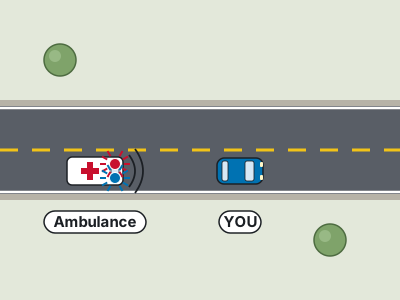
11. An emergency vehicle approaches a Nevada driver with its siren sounding. What should the driver do?
- Stop immediately in the middle of the intersection
- Drive to the right side, clear of the intersection, and stop
- Continue at the same speed if the emergency vehicle can pass
- Turn left across traffic to reach the nearest shoulder
Show answer
Drive to the right side, clear of the intersection, and stop. When an emergency vehicle uses a siren or flashing lights, Nevada requires other drivers to move immediately to the right side, clear of any intersection, and stop until it passes. Stopping in the intersection can block the emergency path and create another hazard. The same-speed choice leaves the driver moving when the law calls for a stop. Check mirrors often, signal the move, and keep the intersection exit open before pulling over. Resume only after the emergency vehicle has passed and the roadway is safe.
Study this in the handbook: Right of Way
12. How can a Nevada DUI offender have driving privileges reinstated immediately?
- By getting a license with an ignition interlock restriction and installing the device at their own expense
- By paying double fines
- By completing traffic school
- By waiting 30 days
Show answer
By getting a license with an ignition interlock restriction and installing the device at their own expense. Nevada allows DUI offenders' driving privileges to be reinstated immediately if they are issued a license with an ignition interlock restriction and install an interlock in any vehicle they drive, at their own expense. Paying extra fines or taking traffic school does not reinstate a DUI revocation, and there is no simple 30 day wait. Young drivers who become first time DUI offenders face the same penalties as drivers over 21.
Study this in the handbook: DUI Laws and Penalties
13. What speed-related danger does Nevada's handbook identify during heavy rainfall?
- Wet roads make stopping distances shorter
- Tires gain traction above 55 mph
- Hydroplaning occurs only below 15 mph
- Hydroplaning can begin between 35 and 55 mph
Show answer
Hydroplaning can begin between 35 and 55 mph. The handbook warns that many cars begin to lose traction and hydroplane between 35 and 55 mph in heavy rainfall. Once tires ride on water instead of gripping pavement, steering and braking control can disappear quickly. The higher-speed traction claim and the low-speed-only claim contradict that stated range. Wet pavement also lengthens stopping, rather than shortening it. When rain becomes heavy, lower speed before water gathers, avoid abrupt steering, and allow more space ahead so a loss of grip is less likely to become a collision.
Study this in the handbook: Night Driving, Bad Weather and Skids
14. What do orange highway signs generally identify?
- Construction or maintenance work areas
- Food and lodging services
- Route numbers and destinations
- A prohibition on every left turn
Show answer
Construction or maintenance work areas. Nevada lists orange as the standard sign color for road construction or repair warnings, and the handbook says construction and maintenance signs notify drivers of possible danger in or near work areas. Blue is the color for driver services such as food and lodging, while route information is shown on guide signs and route markers. An orange sign does not by itself prohibit every left turn. Slow down, read the posted directions, and follow any construction flagger who may be present.
Study this in the handbook: Sign Colors and Shapes
15. What must drivers do at a flashing yellow arrow?
- Stop and wait for a solid green arrow
- Yield to oncoming traffic and pedestrians before turning
- Turn immediately because the movement is protected
- Yield only to vehicles behind them
Show answer
Yield to oncoming traffic and pedestrians before turning. A flashing yellow arrow permits a turn only after the driver yields to oncoming traffic and pedestrians. The arrow does not protect the movement, even though the signal is yellow rather than red. Turning immediately can cut across a person in the crosswalk or an approaching vehicle. Slow enough to see the conflict area, yield to those with priority, and complete the turn only when the path is clear. Remember that the arrow flashes yellow because caution and yielding remain necessary.
Study this in the handbook: Traffic Signals and Arrows
16. Why are the shapes and colors of highway signs useful to drivers?
- They identify the vehicle owner
- They make every sign a speed limit
- They show that all intersections have signals
- They help drivers understand the message quickly
Show answer
They help drivers understand the message quickly. Nevada gives highway sign shapes and colors special meanings so drivers can understand a message quickly. This visual information is useful before a driver has time to read every word or symbol. It does not mean that every sign sets a speed limit, that every intersection has a signal, or that a sign identifies a vehicle owner. Learn the common patterns, then confirm the exact instruction from the sign itself. Recognizing the visual code early gives you more time to slow, yield, stop, or follow a route.
Study this in the handbook: Sign Colors and Shapes
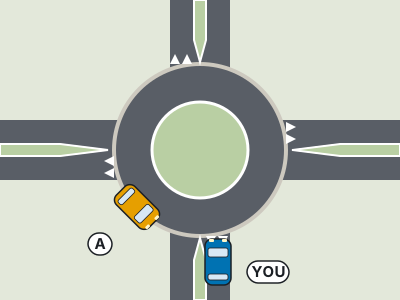
17. When entering a roundabout, how should you handle vehicles already circulating?
- Stop in the center island
- Enter immediately because entering traffic has priority
- Yield and wait for a gap
- Travel clockwise against the circulating flow
Show answer
Yield and wait for a gap. Vehicles already circulating in a roundabout have the right-of-way. Entering drivers must yield, reduce speed, and wait for a gap before joining the counterclockwise flow. Entering immediately could cut across an occupied path, while stopping in the center island is not a normal traffic maneuver. Clockwise travel would oppose the design of the circle. As you approach, select the proper lane, check the circulating traffic, and use the right turn signal when you leave the roundabout.
Study this in the handbook: Roundabouts
18. Unless traveling to or from a scheduled event, during what hours does Nevada's minor-driver curfew apply?
- 11 p.m. to 6 a.m.
- 8 p.m. to 4 a.m.
- 10 p.m. to 5 a.m.
- Midnight to 7 a.m.
Show answer
10 p.m. to 5 a.m.. Nevada's minor-driver curfew runs from 10 p.m. until 5 a.m., unless the minor is driving to or from a scheduled event. The handbook says the rule remains in effect until the driver turns 18, regardless of when the license was issued. Each alternate range shifts one or both endpoints and therefore describes a different restriction. A teen planning a late drive should check both the clock and the purpose of the trip: outside a trip to or from a scheduled event, driving between 10 p.m. and 5 a.m. is not allowed.
Study this in the handbook: Instruction Permits and Teen Restrictions
19. Which combination describes Nevada motorcycle instruction-permit practice?
- Any hour and any roadway if the permit holder wears a helmet
- Night practice allowed, one passenger required, and freeways preferred
- Daylight only, one passenger allowed, and freeways permitted
- Daylight only, no passengers, and no freeways or other high-speed roadways
Show answer
Daylight only, no passengers, and no freeways or other high-speed roadways. Nevada limits motorcycle instruction-permit practice to daylight hours, prohibits passengers, and bars freeways or other high-speed roadways. A helmet is required when riding a motorcycle, but helmet use does not cancel the permit limits. The other combinations each change at least one condition by allowing night riding, a passenger, or freeway travel. Permit holders must also ride under direct visual supervision of a qualified licensed motorcycle driver. The practical check is to confirm the time, passenger seat, roadway type, and supervising rider before starting.
20. What can happen to a Nevada young driver's license for a firearm violation under NRS 202.300?
- A $25 fine
- Suspension or delayed issuance for up to one year
- Nothing, it is unrelated to driving
- A 10 day suspension
Show answer
Suspension or delayed issuance for up to one year. A young driver's license can be suspended, or its issuance delayed, for up to one year for handling or possessing a firearm or having one under their control in violation of NRS 202.300. Repeated school related offenses under NRS 392.148 bring a suspension of at least 60 days and up to a year. Young first time DUI offenders face the same penalties as adults.
Study this in the handbook: Tests and Driver Education
QualitySpace is expanding to Nevada
We are a California-based independent insurance brokerage working on licensing in more states. We cannot help with Nevada insurance yet. Leave your email and we will let you know when we can.
Every question is written from the official Nevada Driver Handbook. Need paper? Printable NV practice test with answer key.
Last verified 2026-10-05. How we check every question · Study all 204 as flashcards
Frequently asked questions
How many questions are on this Nevada practice test?
This fixed set has 20 questions. It is test 4 of 10 from the 204 question Nevada bank. The real NV exam asks 25 questions and you need 20 correct.
What is the passing score for the real Nevada test?
80% (20 correct answers needed out of 25) That figure comes from the official Nevada source cited on the DMV facts page.
How does this fixed test relate to the full Nevada bank?
Each numbered test is a fixed set of questions in a fixed order, so you can retake the same test later and compare. Every test mixes road signs and the other topics in about the same proportion as the full bank. Tests 1 to 10 together cover 200 of the 204 questions in the Nevada bank, each once. The full practice page mixes the whole bank at random.
Last verified 2026-10-05. See the Nevada DMV facts page for sourced state details.