
Test 8 of 10 · 20 questions · Free 2026
MT Permit Practice Test 8
Jump to the test ↓A fixed 20 question set from the Montana bank with answers and plain English explanations.
Question 1 of 20 · 0 right so far
All 20 questions in test 8
Every question below comes from the Montana question bank on this page. Open a question to see the correct answer and the explanation. Nothing here is hidden behind a signup.
1. During the first-year restricted license period, what seatbelt rule applies to everyone in the vehicle?
- Every person must wear a seatbelt
- Only the teenage driver must buckle up
- Passengers may ride unrestrained in the back seat
- Seatbelts are required only between 11:00 p.m. and 5:00 a.m.
Show answer
Every person must wear a seatbelt. Montana applies the seatbelt requirement to every occupant while this restricted license is active. The driver cannot treat the rule as a personal requirement only, so the choice “Only the teenage driver must buckle up” leaves passengers outside the rule. The nighttime option confuses seatbelt use with the separate restricted-license driving-hours limit. A back-seat exception is not provided either. Before moving, the driver should check that each person is buckled in a properly adjusted belt. This is a trip-by-trip obligation, not something that changes with distance, daylight, or whether the road appears busy.
Study this in the handbook: Learner license and the teen GDL steps
2. How should you respond when this STOP AHEAD warning appears?

- Ignore it unless cross traffic is visible
- Stop immediately where the warning sign stands
- Accelerate to pass the upcoming stop sign before others arrive
- Begin slowing because a stop sign is ahead
Show answer
Begin slowing because a stop sign is ahead. STOP AHEAD is advance notice of a stop sign, so the driver should begin slowing and prepare for the required stop at the upcoming intersection. The warning sign itself is not the stop location, making an immediate stop beside it unnecessary unless conditions demand one. Accelerating to beat other traffic undermines the warning, and cross traffic does not determine whether the stop sign must be obeyed. Ease off the accelerator, identify the stop line or crosswalk, and arrive with enough control to stop completely before entering the intersection.
Study this in the handbook: Road signs by shape and color
3. What is one stated exception to the Montana first-year restricted license nighttime driving ban?
- Taking an optional late-night shopping trip
- A trip to any social event after midnight
- Driving for entertainment when a friend calls
- Travel to or from school, church, or work
Show answer
Travel to or from school, church, or work. Montana lists travel to and from school, church, or work among the limited exceptions to the 11:00 p.m. to 5:00 a.m. restriction. The other choices describe personal convenience or entertainment, which the manual does not identify as exceptions. This is a condition question: the destination and purpose matter, not simply whether the driver feels capable or has a passenger along.
Study this in the handbook: Learner license and the teen GDL steps
4. What do Montana regulatory signs communicate to drivers?
- A warning that a curve is approaching
- A scenic route and nearby recreation area
- A maximum speed or another required action
- An optional suggestion for courteous driving
Show answer
A maximum speed or another required action. Regulatory signs communicate obligations that govern how traffic must move. Montana describes them as signs showing the driver's maximum speed or another required action, and it directs drivers to obey the rules on all of them. A scenic route is guide information, while a curve warning identifies a hazard rather than a legal command. Treating the message as optional is especially dangerous because a regulatory sign can establish a speed ceiling or prohibit a movement. The visual cue is often a rectangular white sign with black words or symbols.
Study this in the handbook: Road signs by shape and color
5. What does the Montana manual count as one alcoholic drink?
- A 16 ounce beer
- Two shots
- 1.5 ounces of 80 proof liquor, 12 ounces of beer, or a 5 ounce glass of wine
- Any amount under 8 ounces
Show answer
1.5 ounces of 80 proof liquor, 12 ounces of beer, or a 5 ounce glass of wine. One alcoholic drink is 1.5 ounces of 80 proof liquor, one shot glass, straight or with a mixer; 12 ounces of commercial beer; or a 5 ounce glass of wine. The manual warns that microbrews and craft beers often contain more alcohol than a 12 ounce commercial beer, and specialty drinks can equal several normal drinks. The average person's body processes one drink in one hour, yet alcohol can still accumulate at that rate. The manual's best answer is simple: if you drink alcohol, do not drive.
Study this in the handbook: Alcohol, drugs and the law
6. While making a left turn at an intersection, which traffic must the driver yield to?
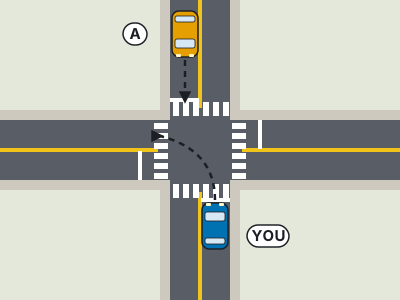
- Oncoming cars traveling straight ahead
- Only vehicles that arrive after the turning car
- Vehicles parked along the opposite curb only
- No traffic if the turn signal has been activated
Show answer
Oncoming cars traveling straight ahead. A left-turning vehicle crosses the path of oncoming traffic, so the driver must yield to an oncoming car going straight ahead. Signaling communicates intent but does not grant priority or make the opposing lane disappear. The arrival-order choice is unsafe because an approaching vehicle already has a direct path. Parked cars are not the central right-of-way conflict described by this rule. Wait until the oncoming lane and pedestrian path are clear, then complete the turn. The practical cue is turning left means crossing traffic, so yield before crossing.
Study this in the handbook: Who yields at intersections
7. How should a driver respond after seeing Montana's pennant-shaped no-passing sign?
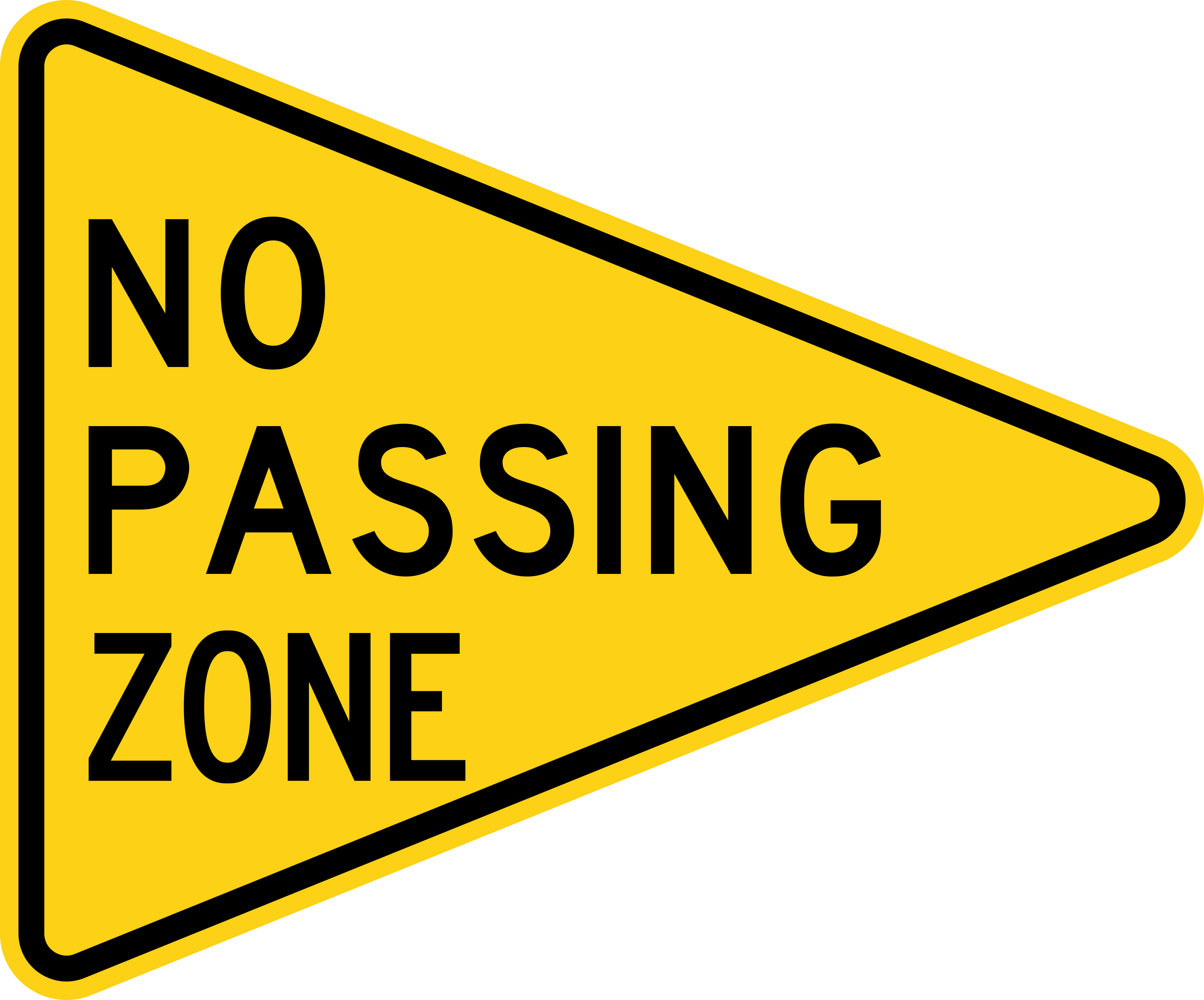
- Use the opposite lane whenever no vehicle is visible
- Pass only on the shoulder until the next intersection
- Do not pass vehicles traveling in the same direction in that area
- Resume passing immediately because the zone has ended
Show answer
Do not pass vehicles traveling in the same direction in that area. A no-passing warning marks an area where passing is prohibited, so a driver must not pass a vehicle moving in the same direction. The shoulder is not a substitute passing lane, and an empty view ahead does not cancel the restriction. The choice “Resume passing immediately because the zone has ended” reverses the meaning of the sign. Stay behind the vehicle, maintain a safe gap, and wait for a lawful passing opportunity after the restricted area.
Study this in the handbook: Road signs by shape and color
8. What must everyone in a Montana teen’s vehicle do during GDL Step 1?
- Fasten only the driver’s seatbelt
- Wear a helmet
- Wear a seatbelt
- Use the seatbelt only on highways
Show answer
Wear a seatbelt. Montana requires every person in the vehicle to wear a seatbelt during this permit stage. That includes the teen driver and each passenger, so fastening only the driver’s belt leaves the rule unmet. A helmet is not the restraint requirement for occupants of a car, and highway travel does not create the duty. Make belt use part of the start-up routine by checking every seat before moving.
Study this in the handbook: Learner license and the teen GDL steps
9. When a large animal appears near a Montana roadway, what should the driver do?
- Swerve sharply toward the other lane
- Slow down and be prepared to stop
- Accelerate so the animal cannot reach the road
- Honk continuously and maintain speed
Show answer
Slow down and be prepared to stop. The manual recommends slowing down and preparing to stop when an animal is seen. A sharp swerve can send the vehicle into oncoming traffic or a ditch, and acceleration does not make an unpredictable animal safer. Continuous horn use with unchanged speed ignores the need to create time and space. If stopping or avoiding is impossible, keeping control is safer than making a sudden steering move.
Study this in the handbook: Adjusting speed for roads, weather and sight distance
10. At a four-way stop in Montana, which driver generally proceeds first?
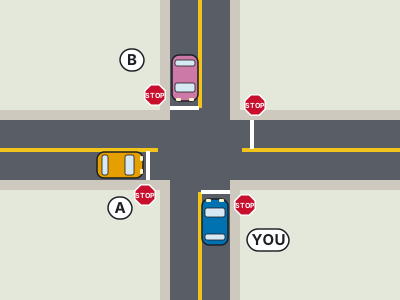
- The driver who reaches the intersection first and stops completely
- The driver in the largest vehicle
- The driver who flashes headlights first
- The driver turning left
Show answer
The driver who reaches the intersection first and stops completely. At a four-way stop, the driver who reaches the intersection first gets to go first after making a complete stop. Vehicle size, a headlight flash, and a left turn do not create priority under this rule. Arriving first is not permission to rush: check that the intersection is clear, then proceed while remaining alert for pedestrians and other road users.
Study this in the handbook: Who yields at intersections
11. What does Montana require when road or weather conditions make the posted speed unsafe?
- Keep the posted speed exactly
- Drive below the posted speed limit
- Increase speed to get through the bad conditions quickly
- Reduce speed only when police are present
Show answer
Drive below the posted speed limit. A posted speed limit is not a promise that the same speed is safe in every condition. Montana says to consider the road and weather and to drive below the limit when conditions are bad. Keeping the exact posted number can be too fast on ice, in rain, or when visibility is poor. Increasing speed makes control harder, and police presence does not determine when a reduction is needed. Use the limit as a ceiling, then choose a safe speed.
Study this in the handbook: Speed limits, passing and turning
12. A person whose license is suspended in another state applies for a Montana license. What does the manual say?
- Montana issues a restricted license for work travel only
- Montana issues a license once the applicant passes all three tests
- The person cannot apply for, be issued, or keep a Montana license while suspended or revoked elsewhere
- Montana ignores suspensions from other states
Show answer
The person cannot apply for, be issued, or keep a Montana license while suspended or revoked elsewhere. Montana will not let a driver escape a suspension by changing states. A person cannot apply for, be issued, or retain a Montana driver license while suspended or revoked in any other state or jurisdiction. Passing the vision, written, and road tests does not override that bar, and the manual describes no work travel license for this situation. The same rule appears in the GDL section and the renewal section, which shows how central it is. Resolve the other state's suspension first.
Study this in the handbook: Your Montana license, renewal and insurance
13. A Montana driver gets a license at age 17. When does that license expire?
- Eight years after it was issued
- On the driver's 18th birthday
- Four years after it was issued
- On the driver's 21st birthday
Show answer
On the driver's 21st birthday. Montana ties the expiration of a license issued to anyone under 21 to the 21st birthday, not to a fixed number of years. The eight year term applies to drivers between 21 and 75, and the four year term applies to drivers 75 and older, so neither fits a 17 year old. The 18th birthday can end the first-year restrictions, but the license itself stays valid until age 21, when the driver renews into an adult term.
Study this in the handbook: Learner license and the teen GDL steps
14. What happens when a Montana teen breaks a first-year restricted license restriction for a second time?
- Another 20 to 60 hours of community service
- The teen's driver license is suspended for six months
- The license is revoked until age 21
- The teen must restart the 50 hour practice log
Show answer
The teen's driver license is suspended for six months. The second offense is where Montana moves from community service to losing the license: the teen's driver license is suspended for six months. Community service of 20 to 60 hours is the first offense penalty, so repeating it misstates the escalation. The manual does not revoke the license until age 21 for a restriction violation, and it does not make the teen restart the supervised practice hours. Remember the two steps: service hours the first time, a six month suspension the second time.
Study this in the handbook: Learner license and the teen GDL steps
15. How much clear road does the Montana manual say you need to pass safely?
- About 200 feet
- Over 1,600 feet, about one third of a mile
- About 400 feet
- About five miles
Show answer
Over 1,600 feet, about one third of a mile. At 55 mph you travel over 800 feet in the roughly 10 seconds a pass takes, and so does an oncoming vehicle. That means you need over 1,600 feet, about one third of a mile, of clear road to pass safely. It is hard to judge the speed of oncoming vehicles at that distance, so if you are not sure, wait. You should also not start to pass within one third of a mile of a hill or a curve, because your view of oncoming traffic is blocked.
Study this in the handbook: Following distance, merging and passing
16. What action is required by Montana's eight sided STOP sign?
- Continue if the cross street appears empty
- Reduce speed and yield without stopping
- Stop only when a pedestrian is in the crosswalk
- Make a complete stop before entering the intersection
Show answer
Make a complete stop before entering the intersection. The octagonal shape identifies a STOP sign, and the required action is a complete stop before entering the intersection. If a crosswalk is present, the stop must occur before entering that crosswalk. After stopping, the driver yields to traffic close enough to be an immediate hazard. Merely slowing is the rule associated with a yield sign, not this shape. Use the eight sides as the quick visual cue, then stop at the line or at the proper point before the crossing.
Study this in the handbook: Road signs by shape and color
17. What is the maximum speed for driving in a Montana roundabout?
- 25 mph unless a sign says otherwise
- 15 mph or less
- 35 mph on the circular roadway
- The posted speed for the road before entering
Show answer
15 mph or less. Montana describes roundabouts as low speed circular intersections and directs drivers to travel at 15 mph or less. A driver should reduce speed before entry, look left for circulating traffic, and yield to vehicles already inside. The road’s approach speed does not automatically carry into the circle, so selecting the ordinary posted limit would be unsafe. The practical cue is the center island and curved path: slow before the yield line, keep control, and continue around until the desired exit.
Study this in the handbook: Traffic signals, roundabouts and railroad crossings
18. What should you do first when the engine keeps increasing speed because the gas pedal sticks?
- Quickly shift to neutral
- Pump the accelerator repeatedly
- Turn the steering wheel off the road before braking
- Open the hood while moving
Show answer
Quickly shift to neutral. A stuck accelerator requires the driver to separate engine power from the wheels while keeping control. The manual directs the driver to keep watching the road and quickly shift to neutral, then apply steady brake pressure, pull off safely, and turn off the engine. Repeatedly pumping the accelerator can preserve the problem. Steering away before slowing increases risk, and opening the hood is impossible to do safely while moving.
Study this in the handbook: Brake failure, blowouts and other vehicle emergencies
19. How must a driver respond to a flashing red traffic signal in Montana?
- Stop completely, yield, and continue only when it is safe
- Slow briefly and continue without yielding
- Wait for the signal to become a steady green
- Treat it as a protected green arrow
Show answer
Stop completely, yield, and continue only when it is safe. A flashing red signal carries the same stopping requirement as a stop sign. The driver must make a complete stop, check left, right, and ahead, yield to traffic and pedestrians, and proceed only after the path is safe. A brief slowdown is not a complete stop, while waiting for green invents a requirement that applies to a different signal display. A green arrow grants a protected movement and has the opposite meaning. The visual cue is red flashing still begins with a full stop, even though the light is not steady.
Study this in the handbook: Traffic signals, roundabouts and railroad crossings
20. When is a driver required to use headlights because visibility is limited?
- When the vehicle is parked with its engine off
- Only when the driver is traveling above 55 mph
- Only after another driver flashes high beams
- When persons or vehicles cannot be seen for 500 feet
Show answer
When persons or vehicles cannot be seen for 500 feet. Montana requires headlights when insufficient light makes people or vehicles invisible at a distance of 500 feet. The rule is tied to what the driver can see, not to a particular travel speed, another driver's signal, or a parked vehicle. Check visibility at dusk, in darkness, and in conditions such as dust or fog. Turn the lights on early enough for others to see your vehicle too.
Study this in the handbook: Scanning, blind spots and signaling
QualitySpace is expanding to Montana
We are a California-based independent insurance brokerage working on licensing in more states. We cannot help with Montana insurance yet. Leave your email and we will let you know when we can.
Every question is written from the official Montana Driver Manual. Need paper? Printable MT practice test with answer key.
Last verified 2026-10-05. How we check every question · Study all 212 as flashcards
Frequently asked questions
How many questions are on this Montana practice test?
This fixed set has 20 questions. It is test 8 of 10 from the 212 question Montana bank.
How does this fixed test relate to the full Montana bank?
Each numbered test is a fixed set of questions in a fixed order, so you can retake the same test later and compare. Every test mixes road signs and the other topics in about the same proportion as the full bank. Tests 1 to 10 together cover 200 of the 212 questions in the Montana bank, each once. The full practice page mixes the whole bank at random.
Last verified 2026-10-05. See the Montana DMV facts page for sourced state details.