
Printable MT Permit Practice Test
40 questions from the Montana question bank. Answer key on the last page. Last verified 2026-09-05 against the official Montana driver manual.
1. Who sets the speed limit for a Montana construction or work zone?
- The nearest school district
- The driver based on the normal highway speed
- The responsible transportation agency, local authority, utility, or contractor for that zone
- A single statewide work zone limit of 25 mph
2. How far before a turn should a Montana driver signal on a rural road?
- 300 feet
- 100 feet
- 200 feet
- 50 feet
3. What change in the roadway does this divided-highway warning announce?

- The divided roadway ends and opposing traffic will share one lane
- A median or divider ahead separates the highway into two one-way roadways
- A three-way intersection requires a left turn
- Vehicles may cross the median to make U-turns
4. A Montana court finds a driver responsible for crash damages, and the driver does not pay within 60 days. How long does the resulting suspension last?
- 30 days, then it ends automatically
- One year, whether or not the amount is paid
- Until the driver buys a new insurance policy
- Until the amount is paid or 6 years have passed
5. Which check is required immediately before changing lanes?
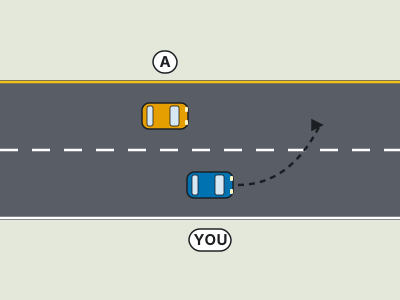
- Look over your shoulder for traffic in the blind spot
- Rely on the rearview mirror without turning your head
- Check only the lane ahead and ignore traffic behind
- Turn on hazard flashers and move without signaling
6. You are pulling from an alley onto a main road. What must you do before joining traffic?
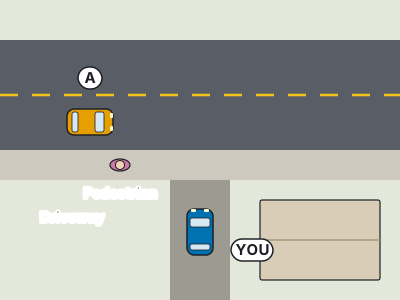
- Use the shoulder until traffic clears
- Accelerate into the first available gap without stopping
- Expect main-road traffic to yield
- Stop and yield to vehicles already on the main roadway
7. What should a Montana driver do when entering a roundabout?
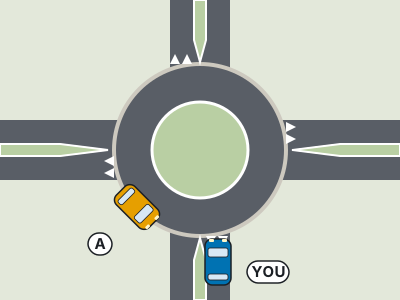
- Stop in the circle before choosing an exit
- Force circulating traffic to stop
- Drive left of the center island
- Yield to vehicles already in the roundabout
8. During the first-year restricted license period, what seatbelt rule applies to everyone in the vehicle?
- Every person must wear a seatbelt
- Only the teenage driver must buckle up
- Passengers may ride unrestrained in the back seat
- Seatbelts are required only between 11:00 p.m. and 5:00 a.m.
9. What is the fine for a Montana driver who violates the safety belt law?
- $20
- $100
- $500
- A warning only
10. What must a Montana driver do when a school bus is stopped with red lights flashing?
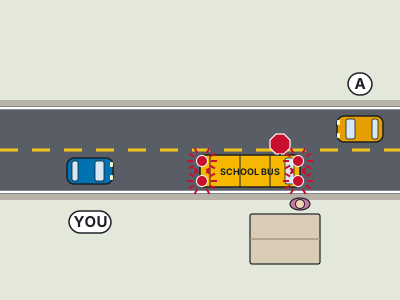
- Stop at least 30 feet from the bus
- Pass slowly within 10 feet
- Stop only if children are visible
- Continue if traveling in the opposite direction
11. Which warning sign is the exception to Montana's usual diamond shape?
- The sharp right turn sign
- The school ahead sign
- The winding road sign
- The railroad crossing ahead sign
12. What condition does Montana's sharp-right-turn warning sign identify?

- A four-way intersection ahead
- A sharp turn to the right in the road ahead
- A road that becomes one-way
- A railroad crossing immediately ahead
13. What does the red slash over the arrow on this sign tell a driver?
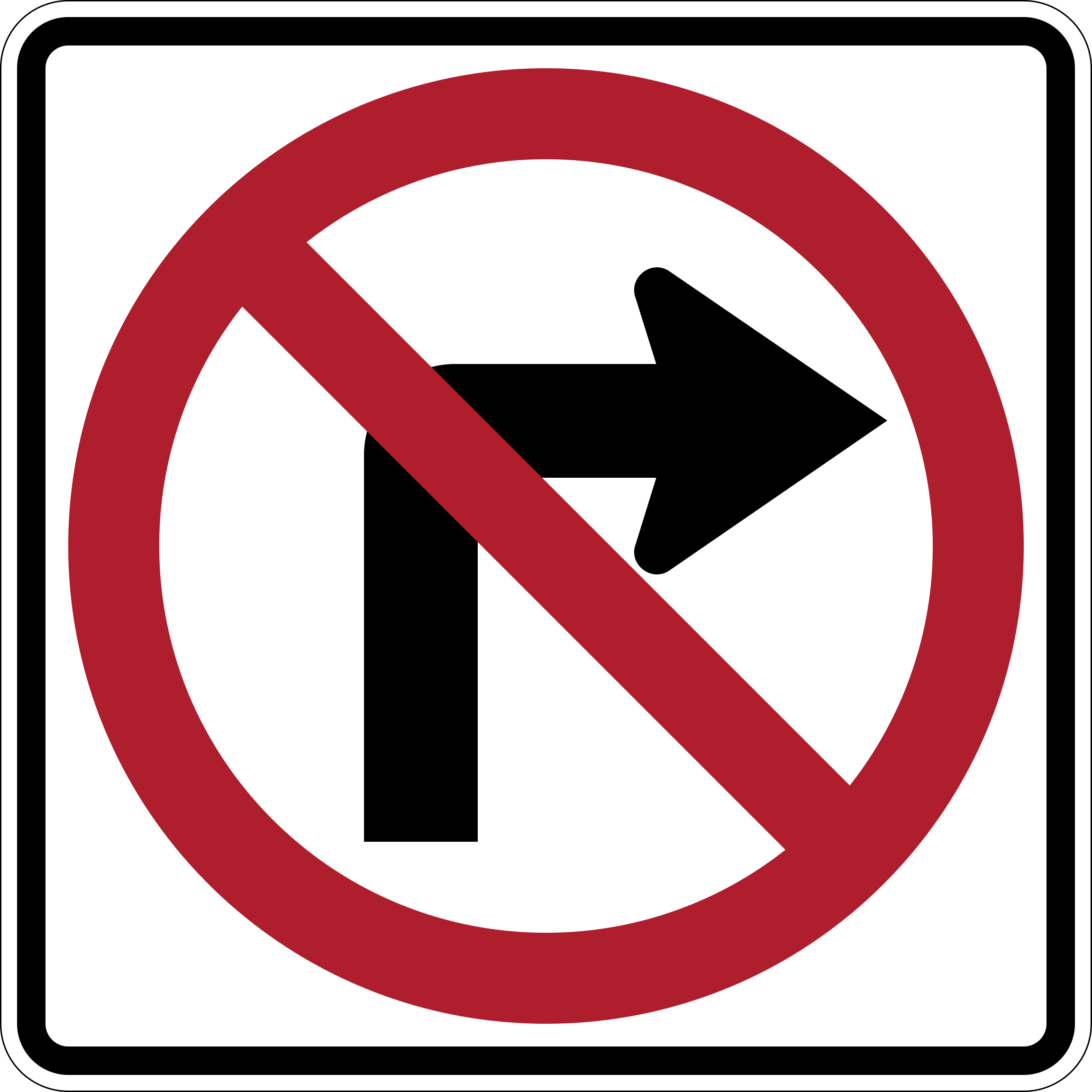
- Do not make the pictured right-turn movement
- Make the pictured turn only after accelerating
- The pictured turn has priority over oncoming traffic
- The turn is required at the next signal
14. What happens to traffic fines in a Montana highway work zone?
- They are the same as anywhere else
- They are doubled
- They are waived if no workers are present
- They are tripled only at night
15. How does Montana's Three-Second Rule help a driver judge following distance?
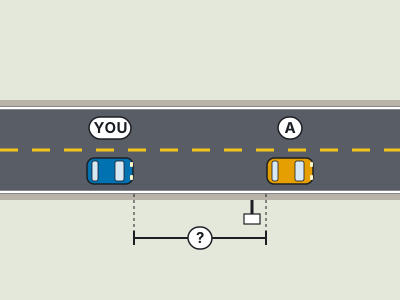
- It checks whether the vehicle reaches a reference point before three seconds pass
- It requires exactly three car lengths at every speed
- It applies only when traveling below 25 mph
- It measures the distance from the rear bumper to the curb
16. At what core body temperature does heatstroke begin, according to the Montana manual?
- About 104 degrees, with about 107 degrees being lethal
- About 99 degrees
- About 120 degrees
- About 95 degrees
17. How many months must a new Montana driver under 18 use a learner license before applying for a first-year restricted license?
- Three consecutive months
- Nine consecutive months
- Six consecutive months
- Twelve consecutive months
18. How should you respond when this STOP AHEAD warning appears?

- Ignore it unless cross traffic is visible
- Stop immediately where the warning sign stands
- Accelerate to pass the upcoming stop sign before others arrive
- Begin slowing because a stop sign is ahead
19. According to the Montana manual, what should you do if your windshield glass is damaged?
- Cover the damaged area with paper
- Have the windshield replaced
- Drive only below 15 mph
- Use high beams to see around it
20. How much supervised practice must a Montana teen complete during the instruction-permit step?
- At least 50 hours, including 10 hours at night
- At least 40 hours, including 5 hours at night
- At least 60 hours, with no nighttime requirement
- At least 25 hours, including 10 hours at night
21. On a multi-lane road, which lane is intended for passing slower vehicles?
- The left-most lane
- The lane nearest the right shoulder
- Any lane selected without signaling
- The center lane only, regardless of traffic
22. After a first alcohol driving conviction in Montana, how long is the license suspended?
- 30 days
- Three months
- Six months
- Two years
23. In a Montana work zone, what do large flashing or sequencing arrow panels tell drivers?
- A signal that all work-zone devices may be ignored
- A guarantee that the current lane will remain open
- A command to pass every vehicle on the left
- Traffic guidance into a lane because part of the road ahead may be closed
24. At a Montana railroad crossing where no signal is active, when must a driver still stop for an approaching train?
- Only when a crossing gate is down
- When the train is within 500 feet
- When the train is within 1,500 feet of the crossing or is clearly visible and an obvious hazard
- Only when the train sounds its horn
25. Why should a driver reduce speed where a Slippery When Wet sign is posted?
- The roadway will always be closed during rainfall
- The sign means the lane is reserved for emergency vehicles
- The sign authorizes a driver to brake harder than usual
- Wet pavement can be unusually slick and demands smoother control
26. After clearing an intersection for an approaching emergency vehicle, what should a Montana driver do?
- Continue through the next several intersections
- Pull to the right and remain stopped until the vehicle passes
- Stop immediately where the vehicle is blocking traffic
- Follow the emergency vehicle to keep the route clear
27. When may a Montana driver on a two-lane road exceed the speed limit by 10 mph?
- To overtake and pass another vehicle and return safely to the right lane
- Whenever traffic is light
- Only while descending a hill
- Whenever the driver is running late
28. What is one stated exception to the Montana first-year restricted license nighttime driving ban?
- Taking an optional late-night shopping trip
- A trip to any social event after midnight
- Driving for entertainment when a friend calls
- Travel to or from school, church, or work
29. What does a typical yellow diamond warning sign tell a Montana driver?
- All traffic must stop at the sign
- A legal speed limit is ending immediately
- A fuel or lodging service is available
- A dangerous condition lies ahead and extra caution is needed
30. How long is Montana's grace period to renew an expired license without retesting?
- 30 days
- 3 months after expiration, or 90 days after honorable discharge
- One year
- There is no grace period
31. What does Montana's School Crossing Ahead warning sign tell drivers to do?

- Maintain the ordinary highway speed unless a guard enters the road
- Slow down and watch for children at all times
- Stop only after a child steps into the lane
- Use the horn continuously while passing the crossing
32. A slow farm vehicle in Montana has traffic backing up behind it. When must it turn off the roadway?
- Only when a police officer orders it off
- When two vehicles are following
- Never, since farm vehicles have the right of way
- When four or more vehicles are slowed and there is room for a safe turnout
33. What may a Montana Class D license holder drive?
- Any vehicle including tractor trailers
- Motorcycles of any size
- Any non commercial vehicle under 26,000 pounds gross vehicle weight
- Only passenger cars
34. How far from a fire station driveway must a Montana driver park?
- 15 feet on either side of the street
- 50 feet on the same side and 100 feet across the street
- 30 feet on either side of the street
- 20 feet on the same side of the street, or 75 feet when parking on the other side
35. How low may a Montana school zone speed limit be set?
- No lower than 25 mph
- No lower than 20 mph
- 5 mph
- As low as 15 mph
36. How should a driver handle an emergency vehicle approaching from any direction?
- Continue normally if the emergency vehicle is using its siren
- Stop in the center of the roadway to make the vehicle go around
- Accelerate until the emergency vehicle is no longer visible
- Yield and, when safe, pull over and stop at the right edge
37. For the first six months of a Montana first-year restricted license, how many unrelated passengers under 18 are allowed without adult supervision?
- One
- None
- Two
- Three
38. What do Montana regulatory signs communicate to drivers?
- A warning that a curve is approaching
- A scenic route and nearby recreation area
- A maximum speed or another required action
- An optional suggestion for courteous driving
39. What does a red circle with a red slash over a symbol mean in Montana?
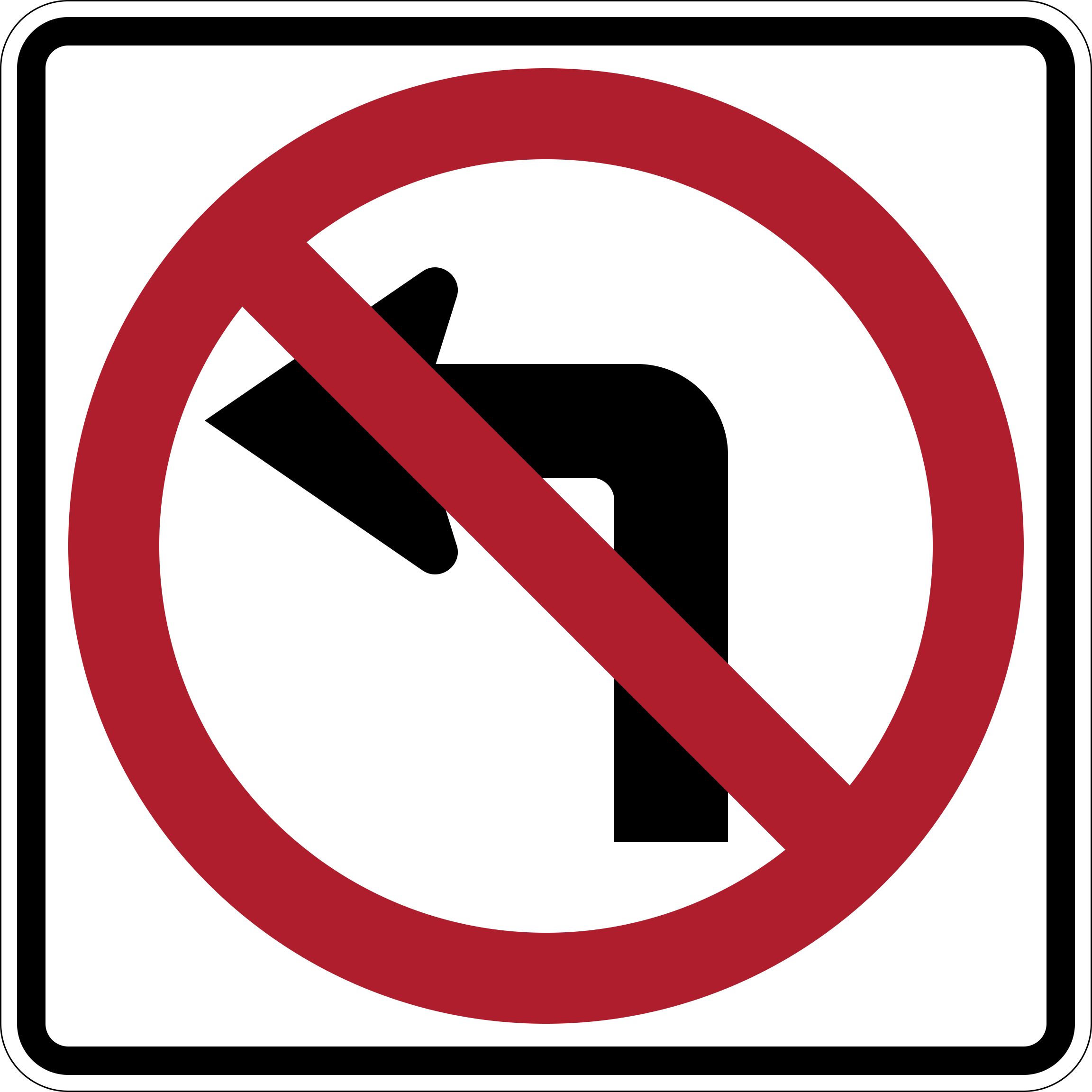
- The road is reserved for the symbol shown
- The action shown is recommended in the next block
- The action shown by the symbol is prohibited
- The symbol identifies a service area ahead
40. What should a driver prepare to do after seeing this round railroad warning sign?

- Stop on the tracks to inspect both rails
- Speed up so the vehicle clears the tracks before a signal changes
- Turn around immediately before reaching the crossing
- Slow down, look and listen, and be ready to stop at the crossing ahead
Answer key
- 1. C
- 2. A
- 3. B
- 4. D
- 5. A
- 6. D
- 7. D
- 8. A
- 9. A
- 10. A
- 11. D
- 12. B
- 13. A
- 14. B
- 15. A
- 16. A
- 17. C
- 18. D
- 19. B
- 20. A
- 21. A
- 22. C
- 23. D
- 24. C
- 25. D
- 26. B
- 27. A
- 28. D
- 29. D
- 30. B
- 31. B
- 32. D
- 33. C
- 34. D
- 35. D
- 36. D
- 37. A
- 38. C
- 39. C
- 40. D