
Test 10 of 10 · 20 questions · Free 2026
MT Permit Practice Test 10
Jump to the test ↓A fixed 20 question set from the Montana bank with answers and plain English explanations.
Question 1 of 20 · 0 right so far
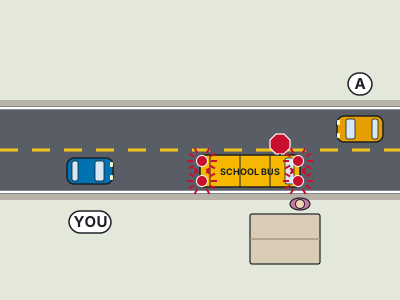
All 20 questions in test 10
Every question below comes from the Montana question bank on this page. Open a question to see the correct answer and the explanation. Nothing here is hidden behind a signup.
1. What must a Montana driver do when a school bus is stopped with red lights flashing?
- Stop at least 30 feet from the bus
- Pass slowly within 10 feet
- Stop only if children are visible
- Continue if traveling in the opposite direction
Show answer
Stop at least 30 feet from the bus. When meeting or passing a stopped school bus with red lights flashing, a driver must stop at least 30 feet away and wait until the red lights turn off. Children may be in the roadway, so seeing no child is not an exception. The opposite direction also generally must stop unless the bus is on a different road or in an adjacent loading zone where pedestrians cannot cross.
Study this in the handbook: Pedestrians, school buses, funerals and bicycles
2. How much supervised practice must a Montana teen complete during the instruction-permit step?
- At least 50 hours, including 10 hours at night
- At least 40 hours, including 5 hours at night
- At least 60 hours, with no nighttime requirement
- At least 25 hours, including 10 hours at night
Show answer
At least 50 hours, including 10 hours at night. The instruction-permit requirement combines a total and a nighttime minimum: at least 50 supervised hours, with 10 of those hours at night. The nighttime portion is included within the total, not added on top of it. Forty, 60 without a night component, and 25 hours each change a specific part of the requirement. Remember the pair as 50 total and 10 night during the supervised practice period.
Study this in the handbook: Learner license and the teen GDL steps
3. How long is Montana's grace period to renew an expired license without retesting?
- 30 days
- 3 months after expiration, or 90 days after honorable discharge
- One year
- There is no grace period
Show answer
3 months after expiration, or 90 days after honorable discharge. A driver has a grace period of 3 months after the expiration date, or 90 days after honorable discharge from the military, to renew and avoid the penalty of testing. After the grace period the applicant must pass the tests again. Renewals can be done online or by mail with an eye evaluation and medical evaluation form for eligible drivers.
Study this in the handbook: Your Montana license, renewal and insurance
4. What should a driver prepare to do after seeing this round railroad warning sign?

- Stop on the tracks to inspect both rails
- Speed up so the vehicle clears the tracks before a signal changes
- Turn around immediately before reaching the crossing
- Slow down, look and listen, and be ready to stop at the crossing ahead
Show answer
Slow down, look and listen, and be ready to stop at the crossing ahead. This round warning sign announces a railroad crossing ahead, so the driver should reduce speed, look and listen, and remain ready to stop. The manual says advance warning signs are located in advance of the crossings for exactly that purpose. Racing toward the tracks defeats the warning, turning around is not required, and stopping on the tracks creates a serious hazard. At the crossing itself, a crossbuck marks the public crossing, and a sign below it shows the number of tracks when there is more than one.
Study this in the handbook: Traffic signals, roundabouts and railroad crossings
5. What force does a 100 pound adult exert on a child in a 30 mph crash, according to the Montana manual?
- A 100 pound force
- A 300 pound force
- A 3,000 pound force
- No force if belted
Show answer
A 3,000 pound force. In a 30 mph crash, a 100 pound adult becomes a 3,000 pound force against the child, which is why the manual warns that holding a child while riding could crush the child during a crash. It also says never to place a rear-facing car seat in the front passenger seat with an active air bag, and that whenever possible children under age 13 should be secured in the backseat. Every occupant must be belted under Montana law.
Study this in the handbook: Required lights and equipment
6. On a Montana road with three or more lanes traveling in the same direction, which lane should a driver normally use?
- The left lane, except when turning
- The right lane except when preparing for a left turn
- The center lane unless traffic is heavy
- The right lane, except to pass
Show answer
The right lane, except to pass. Montana directs drivers on roads with three or more lanes going the same way to stay in the right lane except when passing. The manual adds that the center travel lane should be used when a lot of traffic is entering, so the center lane is a situational choice rather than the normal lane. Neither the left lane nor preparing for a left turn is the stated exception. Look ahead for entering traffic and change lanes smoothly when needed.
Study this in the handbook: Speed limits, passing and turning
7. At what BAC can a driver be arrested for driving with an unlawful alcohol concentration in Montana?
- 0.16% or more only
- 0.02% or more for every driver
- 0.08% or more
- 0.05% or more
Show answer
0.08% or more. Montana treats a BAC of 0.08% or more as enough for an arrest for driving with that alcohol concentration. The 0.02% figure belongs to drivers under 21, so it is not the general adult threshold. A reading of 0.16% is not needed before enforcement can begin, and 0.05% is below the stated adult threshold. On a test question, separate the ordinary adult number from the special under-21 rule before choosing.
Study this in the handbook: Alcohol, drugs and the law
8. At what distance must high beams be dimmed when meeting another vehicle?
- 1,000 feet
- 500 feet
- 350 feet
- 100 feet
Show answer
1,000 feet. Montana requires high beams to be dimmed when meeting an oncoming vehicle at 1,000 feet. That distance protects the other driver from glare while both vehicles approach. The 500 foot figure applies when overtaking another vehicle, which is a different relationship and direction of travel. Do not wait until the approaching headlights are close; recognize the meeting situation early, switch to low beam, and restore high beam only after the vehicles have safely passed and conditions allow it.
Study this in the handbook: Required lights and equipment
9. What does the posted number on this SPEED LIMIT sign represent?
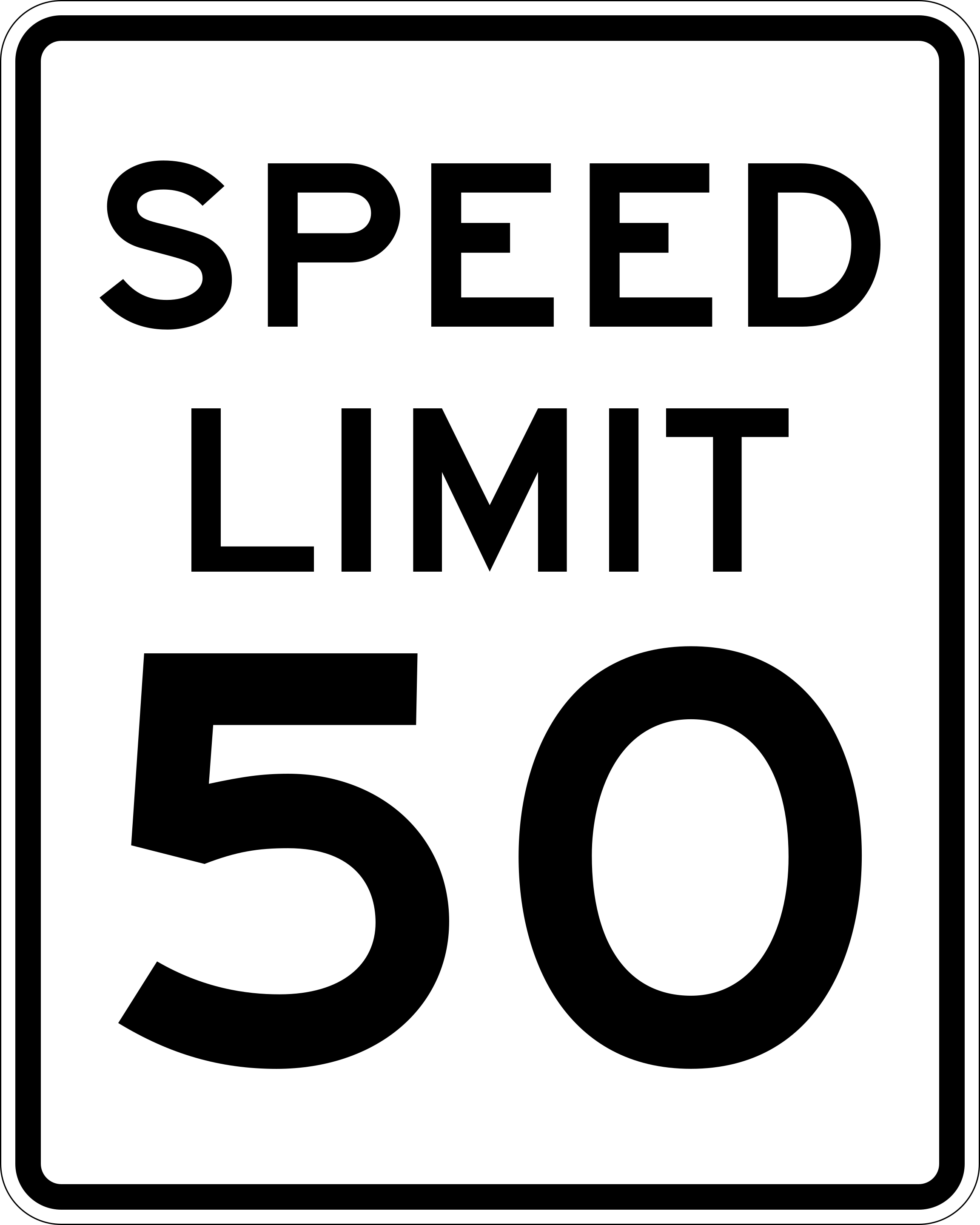
- The maximum speed allowed until a different speed sign is posted
- A minimum speed required in clear weather
- A suggested speed that applies only while passing
- The speed permitted only after dark
Show answer
The maximum speed allowed until a different speed sign is posted. The number on a SPEED LIMIT sign sets the maximum speed from that sign until another speed sign changes it. It is not a minimum, a passing-only suggestion, or a nighttime-only permission. Road, weather, visibility, and traffic conditions can still require a driver to travel below the posted maximum. Treat the displayed number as an upper boundary, then choose a safe speed for the actual conditions. A later sign, rather than a driveway or intersection, is what ends that posted limit.
Study this in the handbook: Road signs by shape and color
10. What does a dashed yellow line between opposing lanes of traffic permit?
- Changing direction without checking for traffic
- Crossing whenever the vehicle behind is close
- Passing only on the shoulder
- Crossing to pass when the maneuver is safe
Show answer
Crossing to pass when the maneuver is safe. A dashed yellow centerline separates traffic moving in opposite directions and may be crossed to pass when the driver has a safe opportunity. The marking does not promise that every pass is safe, so a following vehicle's impatience is not a reason to go. Passing on the shoulder is specifically prohibited, and a centerline never removes the need to check for oncoming traffic, hills, curves, or other hazards. The helpful visual rule is yellow separates opposing traffic, while dashed means the crossing may be allowed under safe conditions.
Study this in the handbook: Lane lines and pavement markings
11. Under Montana's Split the Difference Rule, how should you position your vehicle when passing between parked cars and an oncoming tractor-trailer?
- Leave a little more room on the side that the truck will pass
- Move closer to the truck to stay away from the parked cars
- Drive on the shoulder until the truck is gone
- Keep exactly equal distance from both hazards
Show answer
Leave a little more room on the side that the truck will pass. Montana's Split the Difference Rule says to steer a middle course between two hazards, such as oncoming and parked vehicles. However, if one is more dangerous than the other, leave a little more space on the danger side. The manual's own example is an oncoming tractor-trailer: leave a little more room on the side that the truck will pass. Moving toward the truck reduces that cushion, the shoulder is not a travel path, and rigidly equal spacing ignores the greater danger.
Study this in the handbook: Following distance, merging and passing
12. What do black and yellow warning signs tell a driver?
- Nearby fuel and food services are available
- A legal speed limit is being established
- Dangerous conditions may be ahead and extra caution is required
- Parking is permitted only for commercial vehicles
Show answer
Dangerous conditions may be ahead and extra caution is required. Black and yellow warning signs alert drivers to dangerous conditions ahead where extra caution is required. Their usual diamond shape reinforces the warning function, although the railroad crossing warning sign is a special round example. These signs do not set a speed limit by themselves, and they are not guide signs for services. When one appears, scan farther ahead, reduce speed as needed, and prepare for the specific condition shown, such as a curve, school, crossing, or narrowing roadway.
Study this in the handbook: Road signs by shape and color
13. If a pedestrian is already in a crosswalk when the DON'T WALK signal begins flashing, what should happen?
- The pedestrian must turn around and return to the curb
- The pedestrian should continue crossing the street
- The pedestrian should stop in the travel lane
- The pedestrian may begin a second crossing immediately
Show answer
The pedestrian should continue crossing the street. The flashing DON'T WALK display tells a person who has not started to wait, but it does not strand someone already in the crosswalk. That pedestrian should continue crossing the street and clear the roadway. Turning back can prolong exposure to traffic, and stopping in a lane creates an avoidable obstruction. Beginning another crossing is unrelated to the signal's instruction. Drivers should remain alert for people finishing their crossing. The visual cue is location matters: at the curb, wait; already in the crosswalk, finish safely.
Study this in the handbook: Traffic signals, roundabouts and railroad crossings
14. When are studded tires prohibited in Montana?
- Year round
- November through March
- June 1 through September 30
- Only on interstates
Show answer
June 1 through September 30. Studded tires are not allowed in Montana from June 1 through September 30. The manual explains that special studded tires are allowed in some areas with a lot of icy weather, but because these tires can cause road damage they are not allowed in many areas or on certain roads. The rule is seasonal rather than year round, and it does not match a November through March window or an interstate only limit. On ice, slow to a crawl.
Study this in the handbook: Adjusting speed for roads, weather and sight distance
15. What should a driver do when wet pavement, packed snow, or ice makes the road increasingly hazardous?
- Drive at the posted limit because the limit already accounts for weather
- Reduce speed as conditions worsen and increase the space ahead
- Maintain speed until the tires begin to slide
- Use the shoulder to avoid slowing traffic
Show answer
Reduce speed as conditions worsen and increase the space ahead. Montana's guidance connects speed to actual road and weather conditions, not merely to the number on the sign. Wet pavement, snow, and ice reduce traction and lengthen the distance needed to stop, so the driver should slow progressively and leave more room ahead. Waiting for a slide means waiting until control has already been lost. The posted-limit choice ignores the manual's warning that limits assume ideal conditions. Driving on the shoulder is neither a substitute for a safe speed nor a normal travel option. A simple cue is less grip means less speed and more cushion.
Study this in the handbook: Adjusting speed for roads, weather and sight distance
16. What must drivers do when an emergency vehicle uses a siren and flashing red or blue light?
- Keep speed steady so the emergency vehicle can predict your movement
- Yield, pull as far right as possible, and remain stopped until it passes
- Stop in the center of the nearest intersection
- Follow the emergency vehicle closely through traffic
Show answer
Yield, pull as far right as possible, and remain stopped until it passes. A siren or air horn paired with a flashing red or blue light signals that the emergency vehicle has priority. Montana requires other drivers to yield, move to the right edge or as near right as possible, and remain stopped until the vehicle has passed. Keeping speed or stopping in an intersection can obstruct the response route. Check mirrors promptly, signal the move when useful, clear an intersection first if you are already in it, and stay stopped until the emergency vehicle is safely beyond you.
Study this in the handbook: Who yields at intersections
17. A driver with a valid license from another state moves to Montana permanently. How long can the old license be used?
- Up to 30 consecutive days
- Up to 90 days
- Until it expires
- Up to 60 consecutive days
Show answer
Up to 60 consecutive days. A new Montana resident may drive on a valid license from the previous jurisdiction for up to 60 consecutive days, then must surrender it and qualify for a Montana license. The 30 day figure applies to commercial license holders, not a basic Class D driver. Ninety days is the military separation window, and the old license does not stay good until its own expiration date. A valid out of state license in the driver's possession can usually be exchanged without a written or road test.
Study this in the handbook: Your Montana license, renewal and insurance
18. What is the safest response when a driver sees a large animal near or on a Montana road?
- Swerve hard into oncoming traffic
- Accelerate and steer toward the shoulder
- Reduce speed and prepare to stop without swerving sharply
- Keep speed because animals always leave the lane
Show answer
Reduce speed and prepare to stop without swerving sharply. When an animal is near the roadway, slow down and be prepared to stop. If there is not enough time to stop or avoid it, do not swerve sharply. The manual explains that a driver's chance of serious injury is lower when the driver hits the animal and avoids swerving into oncoming traffic or rolling the vehicle over in the ditch. Deer, elk, and similar wildlife travel in herds, so seeing one animal is a cue to look for more, especially around sunrise and sunset.
Study this in the handbook: Adjusting speed for roads, weather and sight distance
19. When a railroad crossing's flashing lights begin, what must the driver do?
- Stop only if the crossing has more than one track
- Slow down, look both ways, and cross before the gate lowers
- Drive around the gate if no train is visible
- Stop and wait until every track is clear before crossing
Show answer
Stop and wait until every track is clear before crossing. Flashing railroad crossing lights mean a train is coming, so the driver must always stop when the lights begin to flash. If the crossing has more than one track, the manual says to make sure all tracks are clear before starting to cross. A driver may not race a gate, drive around it, or treat an unseen train as permission to continue. Where gates are used, remain stopped until the gates are raised and the lights stop flashing.
Study this in the handbook: Traffic signals, roundabouts and railroad crossings
20. What is the basic color used for construction and maintenance traffic control devices?
- Purple
- Orange
- Blue
- Brown
Show answer
Orange. Orange identifies the work-zone warning family in Montana's manual. Construction and maintenance devices guide drivers and pedestrians around unusual or potentially dangerous conditions, and signs may announce that workers or repairs are ahead. Blue is not the listed basic work-zone color, while purple and brown do not serve as the manual's answer. Seeing orange should prompt caution, attention to flaggers or panels, and compliance with the posted work-zone speed.
Study this in the handbook: Road signs by shape and color
QualitySpace is expanding to Montana
We are a California-based independent insurance brokerage working on licensing in more states. We cannot help with Montana insurance yet. Leave your email and we will let you know when we can.
Every question is written from the official Montana Driver Manual. Need paper? Printable MT practice test with answer key.
Last verified 2026-10-05. How we check every question · Study all 212 as flashcards
Frequently asked questions
How many questions are on this Montana practice test?
This fixed set has 20 questions. It is test 10 of 10 from the 212 question Montana bank.
How does this fixed test relate to the full Montana bank?
Each numbered test is a fixed set of questions in a fixed order, so you can retake the same test later and compare. Every test mixes road signs and the other topics in about the same proportion as the full bank. Tests 1 to 10 together cover 200 of the 212 questions in the Montana bank, each once. The full practice page mixes the whole bank at random.
Last verified 2026-10-05. See the Montana DMV facts page for sourced state details.