
Test 3 of 10 · 20 questions · Free 2026
MT Permit Practice Test 3
Jump to the test ↓A fixed 20 question set from the Montana bank with answers and plain English explanations.
Question 1 of 20 · 0 right so far

All 20 questions in test 3
Every question below comes from the Montana question bank on this page. Open a question to see the correct answer and the explanation. Nothing here is hidden behind a signup.
1. What change in the roadway does this divided-highway warning announce?
- The divided roadway ends and opposing traffic will share one lane
- A median or divider ahead separates the highway into two one-way roadways
- A three-way intersection requires a left turn
- Vehicles may cross the median to make U-turns
Show answer
A median or divider ahead separates the highway into two one-way roadways. A divided highway begins when a median or divider separates the route into two distinct one-way roadways. The driver should keep right of that divider and avoid treating it as a place to cross or turn around. The choice “The divided roadway ends and opposing traffic will share one lane” describes the opposite change, while the remaining choices invent an intersection or a U-turn permission. Reduce speed if the roadway layout is changing, identify the correct side of the median, and follow lane markings as the separate directions develop.
2. What does the red slash over the arrow on this sign tell a driver?
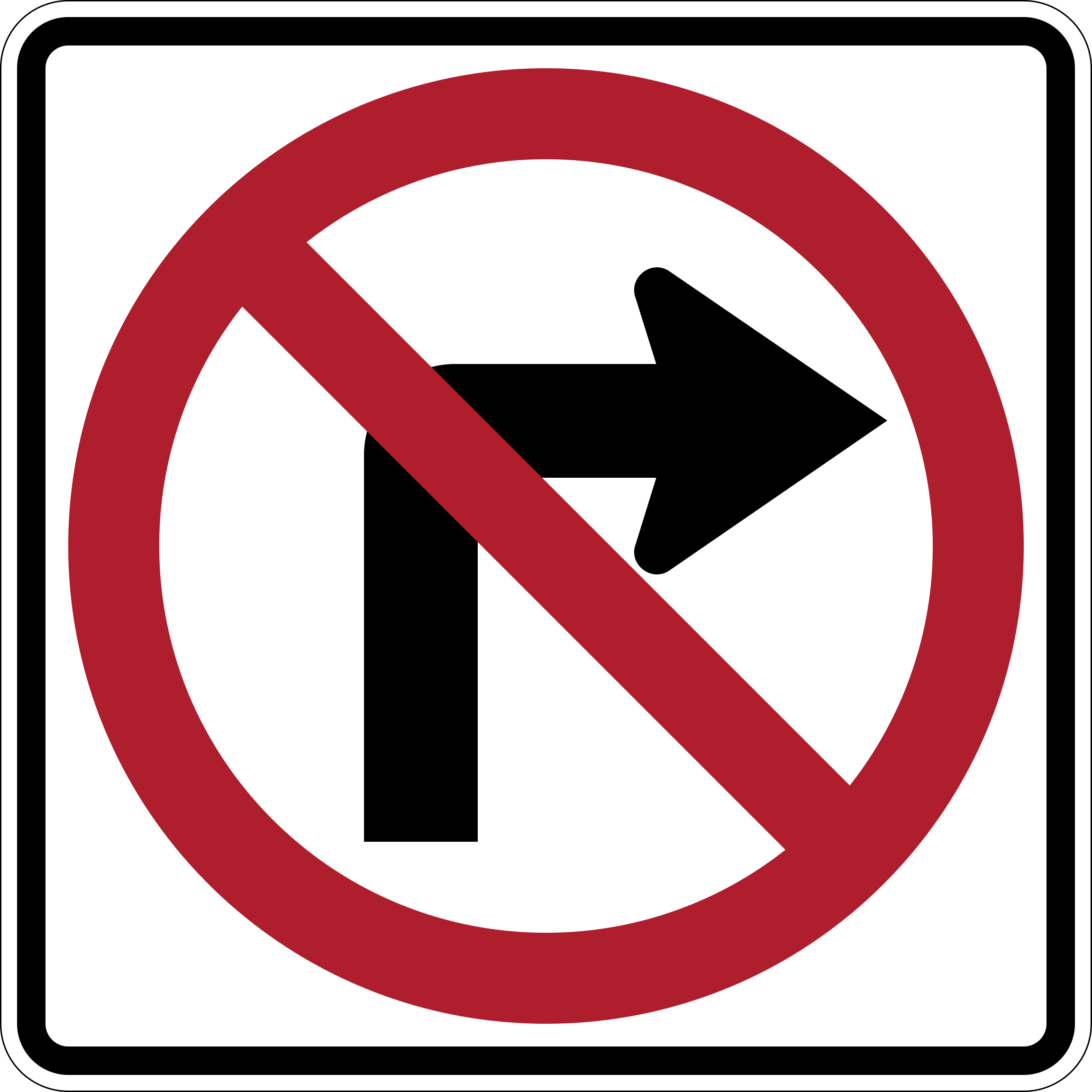
- Do not make the pictured right-turn movement
- Make the pictured turn only after accelerating
- The pictured turn has priority over oncoming traffic
- The turn is required at the next signal
Show answer
Do not make the pictured right-turn movement. A red circle and slash over an arrow means the pictured action is prohibited, so this sign rules out the right turn. It does not make the turn mandatory, give the turning driver priority, or create a special acceleration requirement. The driver should continue with a permitted movement and obey any separate signal or lane instruction. Reading the symbol literally is the key: the slash changes the arrow from an available movement into one that must not be made at that location.
Study this in the handbook: Road signs by shape and color
3. In a Montana work zone, what do large flashing or sequencing arrow panels tell drivers?
- A signal that all work-zone devices may be ignored
- A guarantee that the current lane will remain open
- A command to pass every vehicle on the left
- Traffic guidance into a lane because part of the road ahead may be closed
Show answer
Traffic guidance into a lane because part of the road ahead may be closed. Work zones may use large flashing or sequencing arrow panels during the day or night to guide drivers into certain traffic lanes and show that part of the road ahead is closed. This supports an early, controlled lane adjustment while watching cones, barricades, workers, and nearby traffic. The panel does not guarantee that the current lane stays open, authorize passing, or cancel other work-zone controls. Follow the displayed direction and merge when it is safe.
4. What may a Montana Class D license holder drive?
- Any vehicle including tractor trailers
- Motorcycles of any size
- Any non commercial vehicle under 26,000 pounds gross vehicle weight
- Only passenger cars
Show answer
Any non commercial vehicle under 26,000 pounds gross vehicle weight. A Class D basic driver license allows you to drive any non commercial vehicle under 26,000 pounds gross vehicle weight. Tractor trailers and other commercial vehicles fall outside that description, and a motorcycle of any size is not what the Class D description covers. Limiting the license to passenger cars is too narrow, because the rule is written by vehicle weight and commercial status rather than body style. Fees are listed in the fee section of the manual.
Study this in the handbook: Your Montana license, renewal and insurance
5. How much total distance does it take to react and stop from 50 mph, according to the Montana manual?
- About 50 feet
- About 1,600 feet
- About 100 feet
- About 400 feet with good tires, brakes and dry pavement
Show answer
About 400 feet with good tires, brakes and dry pavement. With good tires and brakes on dry pavement, at 50 mph it can take about 400 feet to react to something you see and bring the vehicle to a stop, about the length of a city block. At 30 mph it can take about 200 feet. The 1,600 foot figure appears elsewhere in the manual as the clear distance needed to pass at 55 mph, not a stopping distance. It takes much longer and farther to stop than many people think.
Study this in the handbook: Adjusting speed for roads, weather and sight distance
6. If an emergency vehicle approaches while you are in an intersection, what should you do under the Montana handbook?
- Accelerate and remain ahead of the emergency vehicle
- Stop immediately where you are in the intersection
- Turn left to create a path for the emergency vehicle
- Drive through the intersection, then pull right and stop
Show answer
Drive through the intersection, then pull right and stop. An emergency vehicle needs a predictable path, and stopping inside the intersection can block that path. Montana directs a driver already in the intersection to clear it before pulling to the right edge or as near right as possible. Then remain stopped until the vehicle passes. The immediate stop sounds cautious, but its location creates an obstruction and may leave the emergency driver unable to maneuver. Watch the mirrors, finish crossing safely, signal if needed, and stop where the response vehicle has room.
Study this in the handbook: Who yields at intersections
7. Under current Montana law, how must a child who is 2 years old but not yet 4 be restrained in a motor vehicle?
- With an adult lap belt only
- In a rear-facing or forward-facing child safety seat with an internal harness
- On an adult's lap in the back seat
- In any seat position without a restraint if under 60 pounds
Show answer
In a rear-facing or forward-facing child safety seat with an internal harness. Montana updated its child restraint law in 2021 and 2025, replacing the older rule based on age 6 and 60 pounds. Children under 2 must ride rear-facing, children from 2 up to 4 must use a rear-facing or forward-facing seat with an internal harness, and children from 4 up to 8 use a harness seat or a booster with a lap and shoulder belt. An adult's arms are never a substitute: in a 30 mph crash a 100 pound adult becomes a 3,000 pound force against a child held in the lap.
8. How close must a Montana vehicle be to the curb or shoulder when parked on a roadway?
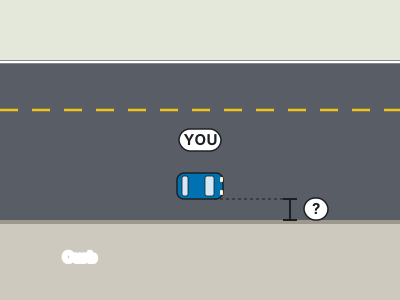
- Within 18 inches
- Within 12 inches
- Within 6 inches
- Within 3 feet
Show answer
Within 18 inches. A vehicle parked on a roadway must be within 18 inches, or 1.5 feet, of the curb or shoulder. One foot is closer than the required maximum but is not the stated rule, and three feet leaves the vehicle too far into the roadway. The visual cue is simple: park close enough that the vehicle does not interfere with moving traffic while staying beside the curb or shoulder.
9. What response does Montana's deer-crossing warning call for when a driver sees a deer?
- Turn sharply into the opposite lane
- Speed up before the deer reaches the road
- Be alert and slow down
- Stop only if another car is present
Show answer
Be alert and slow down. The deer-crossing warning tells drivers that deer often use the area, so alertness and reduced speed are the appropriate response. Speeding narrows reaction time, and a sharp turn can create a collision with another vehicle or a roadside object. Waiting for another car to appear misses the hazard entirely. Scan beyond the first animal too, because wildlife may travel together.
10. What should a Montana driver do before driving when snow and ice cover the windows?
- Clear the windshield but leave side windows covered
- Clear only the driver’s side window
- Remove the snow and ice from all windows
- Use the defroster while driving until visibility returns
Show answer
Remove the snow and ice from all windows. Snow and ice must be removed from all windows before driving so the driver has a clear view of the road. Cleaning only the driver’s side still leaves important blind areas, and a defroster used while moving delays the required visibility check. A partially cleared windshield is not enough. Before releasing the brake, clear every window and make sure the wipers can handle moisture that remains. This check also helps reveal pedestrians, cyclists, lane markings, and vehicles approaching from either side.
Study this in the handbook: Required lights and equipment
11. What hours are generally prohibited for a Montana teen with a first-year restricted license?
- 8:00 p.m. to 4:00 a.m.
- 11:00 p.m. to 5:00 a.m.
- 10:00 p.m. to 6:00 a.m.
- Midnight to 7:00 a.m.
Show answer
11:00 p.m. to 5:00 a.m.. The first-year restricted license bars teenage driving between 11:00 p.m. and 5:00 a.m., subject to limited exceptions such as emergencies, school, church, work, and certain parent-authorized purposes. The other time ranges change one or both endpoints and therefore do not state the restriction. When studying the rule, remember the overnight window as eleven at night through five in the morning.
Study this in the handbook: Learner license and the teen GDL steps
12. What does an upheld orange hand mean for a pedestrian who has not started crossing?
- Cross only halfway to the median
- Walk without checking traffic
- Do not walk
- Run before the hand disappears
Show answer
Do not walk. The manual identifies an upheld orange hand as a DON'T WALK indication. A person at the curb should wait for a WALK signal before starting. The display does not promise a safe crossing, authorize an unexamined walk, or direct anyone to stop at a median. Running is especially poor guidance because it reduces observation and control. Drivers should still watch for pedestrians who are already finishing a crossing. Remember the symbol's basic message: an orange hand is a hold signal, not an invitation to enter the street.
Study this in the handbook: Traffic signals, roundabouts and railroad crossings
13. Which drivers have the highest crash rate per mile after drivers under 24, according to the Montana manual?
- Drivers 30 to 40
- Drivers 65 and over
- Drivers 45 to 55
- Commercial drivers
Show answer
Drivers 65 and over. Aging affects vision, hearing and reaction time, which is one reason the accident rate of drivers 65 and over, in terms of miles traveled, is exceeded only by the rate of drivers under 24 years old. Frequently reported errors by older drivers include inattention, failure to drive in the proper lane, failure to signal or observe stop signs and signals, and unreasonably slow driving on busy highways. The manual suggests getting your doctor's advice about driving.
14. In a reversible lane, what does a green arrow displayed above the lane tell you?
- The lane is closed to all traffic
- The lane is reserved for buses
- The lane is changing and must be vacated
- The lane may be used in the direction shown
Show answer
The lane may be used in the direction shown. Reversible lanes change direction at different times, so drivers must read the overhead indication before entering. Montana describes a green arrow as permission to use the lane beneath it. A bus reservation is a separate control, and a changing-lane warning uses a steady yellow X. A red X closes the lane, so it is not interchangeable with the green arrow. Check the display again if conditions or lane controls change.
Study this in the handbook: Lane lines and pavement markings
15. When the dashed yellow line is on your side beside a solid yellow line, you may:
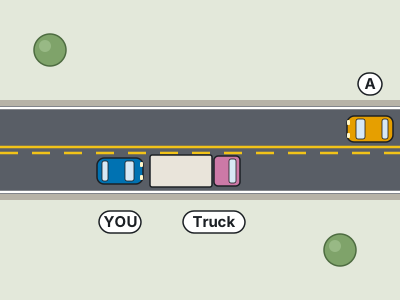
- Pass if it is safe to do so
- Pass only after dark
- Never cross the lines for any reason
- Use the opposing lane without checking traffic
Show answer
Pass if it is safe to do so. The side of the paired yellow lines matters. Montana allows a driver to pass when the dashed line is on that driver's side, but only if the movement is safe. A solid line on your own side would prohibit passing, while darkness does not create an exception. Even with the dashed marking, check sight distance, oncoming traffic, and the space needed to return before moving left.
Study this in the handbook: Lane lines and pavement markings
16. When may a Montana driver turn around on a roadway?
- When there is an unobstructed view of 500 feet in both directions and no vehicles are approaching
- Whenever no police officer is in sight
- When the driver can see 100 feet ahead
- On a curve or hill where traffic is moving slowly
Show answer
When there is an unobstructed view of 500 feet in both directions and no vehicles are approaching. Montana allows turning around on a roadway only where the driver has 500 feet of unobstructed view in both directions, almost two average city blocks, and no vehicles are approaching. One hundred feet of view ahead is not enough, and turning near a curve or hill is both illegal and dangerous. Whether police are nearby has nothing to do with the rule. Many city ordinances also ban U-turns in the middle of a block, and some ban them entirely.
Study this in the handbook: Speed limits, passing and turning
17. What information does Montana's Report A Drunk Driver program ask a caller to give?
- The caller's name, address, and driver license number
- A description of the vehicle and its direction of travel; the caller's name is not required
- The suspected driver's name and blood alcohol level
- A photo of the suspected driver taken while driving
Show answer
A description of the vehicle and its direction of travel; the caller's name is not required. Citizens who suspect someone of driving while intoxicated are asked to call local law enforcement or the Montana Highway Patrol and describe the vehicle and the direction it is traveling. The caller does not have to give a name, so the choice demanding the caller's personal details is wrong. Nobody expects a caller to know the other driver's name or BAC, and photographing a driver while you are driving adds a dangerous distraction. The toll free number is 1-800-525-5555.
Study this in the handbook: Alcohol, drugs and the law
18. Within how many days of a reportable Montana crash must the accident report be filed?
- 24 hours
- 5 days
- 10 days
- 30 days
Show answer
10 days. The manual sets a 10 day deadline to file the accident report after a reportable crash, such as one where someone is injured or killed. Twenty four hours and five days are shorter than the stated deadline, and thirty days is too late. Report forms are available at law enforcement agencies and from most insurance agents. If the driver is injured and cannot complete the report, someone else can file it for the driver, so an injury does not cancel the duty to report.
Study this in the handbook: Crashes, emergency vehicles and traffic stops
19. What fine range does Montana set for a first offense of driving without valid liability insurance?
- A fine of $250 to $500
- A $50 fine with no other consequence
- A mandatory one year license revocation
- A fine of at least $1,000
Show answer
A fine of $250 to $500. Driving on Montana roads without a valid liability policy is a misdemeanor, and a first offense is punishable by a fine of at least $250 and no more than $500, or up to 10 days in the county jail, or both. It also puts 5 points on the driving record. A $50 fine understates the offense, and the manual lists no automatic one year revocation for a first offense. A fine of $1,000 or more is well above the stated maximum, and repeat offenses carry heavier penalties.
Study this in the handbook: Your Montana license, renewal and insurance
20. What path does this KEEP RIGHT sign require around the obstruction?
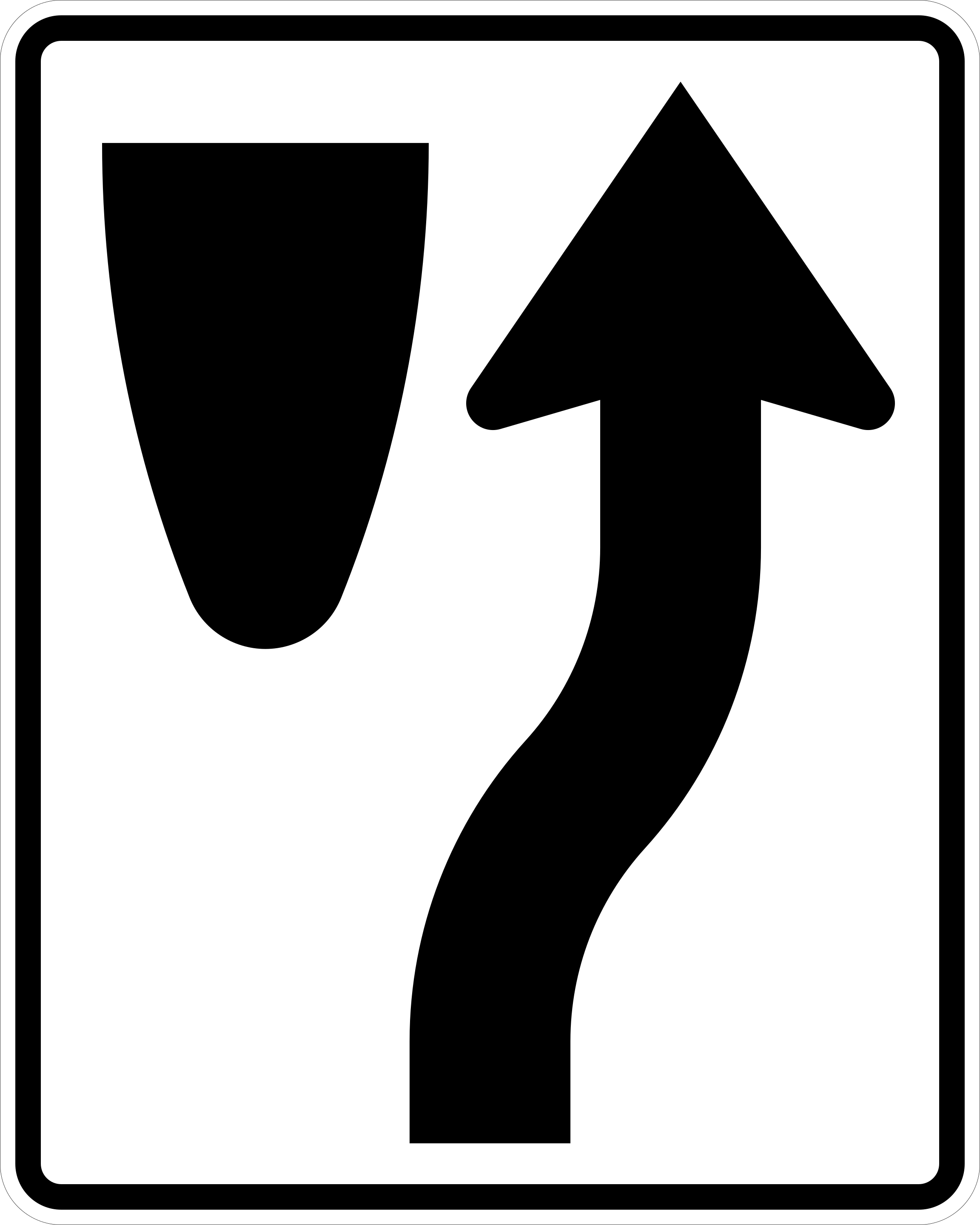
- Use either side as long as the vehicle stays on pavement
- Pass to the left of the obstruction
- Stop before the obstruction and wait for a flagger
- Pass to the right of the obstruction
Show answer
Pass to the right of the obstruction. KEEP RIGHT directs traffic to the right side of an obstruction. The left-side choice reverses the instruction, while stopping for a flagger is not the message of this sign unless a separate work-zone control requires it. Staying on pavement alone does not make either side acceptable, so the choice “Use either side as long as the vehicle stays on pavement” ignores the required direction. Reduce speed, watch for other vehicles and workers, and pass the obstruction on its right as the sign indicates. A divider, island, or work-area object may be the reason for the restriction.
Study this in the handbook: Road signs by shape and color
QualitySpace is expanding to Montana
We are a California-based independent insurance brokerage working on licensing in more states. We cannot help with Montana insurance yet. Leave your email and we will let you know when we can.
Every question is written from the official Montana Driver Manual. Need paper? Printable MT practice test with answer key.
Last verified 2026-10-05. How we check every question · Study all 212 as flashcards
Frequently asked questions
How many questions are on this Montana practice test?
This fixed set has 20 questions. It is test 3 of 10 from the 212 question Montana bank.
How does this fixed test relate to the full Montana bank?
Each numbered test is a fixed set of questions in a fixed order, so you can retake the same test later and compare. Every test mixes road signs and the other topics in about the same proportion as the full bank. Tests 1 to 10 together cover 200 of the 212 questions in the Montana bank, each once. The full practice page mixes the whole bank at random.
Last verified 2026-10-05. See the Montana DMV facts page for sourced state details.