
Test 10 of 25 · 20 questions · Free 2026
KY Permit Practice Test 10
Jump to the test ↓A fixed 20 question set from the Kentucky bank with answers and plain English explanations.
Question 1 of 20 · 0 right so far
All 20 questions in test 10
Every question below comes from the Kentucky question bank on this page. Open a question to see the correct answer and the explanation. Nothing here is hidden behind a signup.
1. What must a driver expect from a vehicle carrying hazardous materials when it reaches a railroad crossing?
- It may bypass the crossing on the shoulder
- It may continue if no train is visible
- It stops only at crossings with gates
- It must stop at every railroad crossing
Show answer
It must stop at every railroad crossing. The manual tells drivers that vehicles carrying hazardous materials must stop at all railroad crossings. A driver should therefore anticipate a full stop even when no train is visible and should not pass on the shoulder or assume gates are required. The safest cue is the vehicle’s hazardous-materials marking combined with the approaching crossing. Increase following distance, remain patient, and be prepared for the carrier to stop before the tracks.
Study this in the handbook: Railroad crossings
2. What visual acuity does Kentucky's bioptic driving program require with corrective lenses?
- Any acuity with the device
- 20/40 in each eye
- 20/20 in the better eye
- 20/200 or better in the better eye, and 20/60 with the bioptic device
Show answer
20/200 or better in the better eye, and 20/60 with the bioptic device. The bioptic driving program's minimum standards are distance acuity of 20/200 or better with corrective lenses in the better eye, 20/60 or better using the bioptic telescopic device, and a visual field of 120 degrees horizontally and 80 degrees vertically in the better eye, with no diagnosis suggesting significant deterioration. Applicants who qualify may drive with a bioptic restriction after training.
3. How fast does an air bag deploy, according to the Kentucky manual?
- In about one second
- In about one twentieth of a second, faster than a blink
- In about five seconds
- In about half a second
Show answer
In about one twentieth of a second, faster than a blink. The entire air bag deployment process takes about one twentieth of a second, faster than the blink of an eye, and side impact bags deploy even faster. Because of that force, seat belts must always be worn even in air bag equipped vehicles, and the powder that fills the cabin afterward is only a drying agent, not smoke. Sit at least 10 inches from the wheel.
Study this in the handbook: Required equipment, safety belts, air bags and child seats
4. What action is required at an octagonal red stop sign?
- Yield only to vehicles approaching from the left
- Reduce speed and continue without stopping if the road looks clear
- Come to a complete stop before proceeding
- Stop after entering the crosswalk so the view is wider
Show answer
Come to a complete stop before proceeding. The octagon is reserved for a stop command. Stop before the crosswalk or stop line, then proceed only after checking the intersection and yielding as required. The clear-road choice turns a mandatory stop into a suggestion, and traffic direction does not limit the duty to stop. Stopping beyond the line can put the vehicle into the pedestrian or crossing area. Brake early, stop at the marked location, and make a deliberate visual check. The shape cue is immediate: octagon means complete stop.
Study this in the handbook: Pavement markings, crosswalks and lane use
5. If changing lanes around a stopped emergency vehicle is unsafe, how should you proceed?
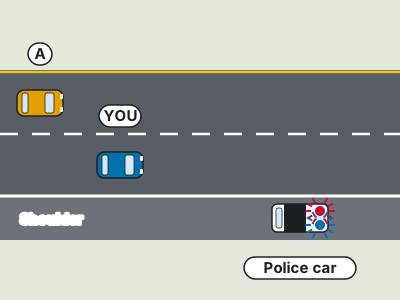
- Keep the posted speed and pass close to the vehicle
- Slow down and continue cautiously at a safe speed for conditions
- Stop beside the emergency vehicle until traffic disappears
- Use the shoulder to avoid the lane beside the vehicle
Show answer
Slow down and continue cautiously at a safe speed for conditions. The manual gives a fallback when traffic or safety conditions prevent a lane change: slow down and proceed with caution while maintaining a safe speed for the conditions. Keeping the posted speed may still be too fast near responders. Stopping beside the vehicle can obstruct the scene, and the shoulder may contain personnel or equipment. The key driving cue is to evaluate the lane change first, then reduce speed and pass with ample care when moving over cannot be done safely.
Study this in the handbook: The move over law and traffic stops
6. A school bus is stopped with its stop arm and signal lights activated. When is a driver approaching from the opposite direction not required to stop?
- Whenever the bus is more than 100 feet away from your vehicle
- On a highway of four or more lanes divided by an elevated barrier or unpaved median
- On any highway with four or more lanes, even with no median or barrier
- Whenever no children appear to be getting on or off the bus
Show answer
On a highway of four or more lanes divided by an elevated barrier or unpaved median. Kentucky amended KRS 189.370 effective July 15, 2026. Drivers approaching a stopped school or church bus from any direction must stop, and the only exception is for traffic coming from the opposite direction on a highway of four or more lanes divided by an elevated barrier or an unpaved median. Lane count alone no longer excuses a stop, so an undivided four lane road, or one split only by painted lines or a center turn lane, still requires opposing traffic to stop. Distance from the bus and whether children appear to be aboard do not create an exception. Check the stop arm, the lights, and the physical divider before continuing.
Study this in the handbook: Emergency vehicles and school buses
7. What does the Kentucky manual suggest doing before a short nap to fight fatigue?
- Consume caffeine first to get the benefits of both
- Turn up the radio
- Drink water only
- Exercise vigorously
Show answer
Consume caffeine first to get the benefits of both. The manual suggests consuming caffeine before taking a short nap to get the benefits of both. If you start feeling tired, stop driving and pull off at the next exit or rest area for a 15 to 20 minute nap, or find a place to sleep for the night. The manual also advises trying not to drive late at night and says the best way to avoid fatigue is to get plenty of rest. Turning up the radio, drinking only water, or exercising hard are not among its suggestions.
Study this in the handbook: Fatigue, distraction and emotions
8. For a person under 21 in Kentucky, which alcohol-related conduct does the manual identify as illegal?
- Drinking only in a parked vehicle
- Purchasing, possessing, and drinking alcoholic beverages
- Purchasing alcohol only with a passenger present
- Possessing alcohol only after midnight
Show answer
Purchasing, possessing, and drinking alcoholic beverages. The manual states that people under 21 may not purchase, possess, or drink alcoholic beverages. The rule is about the person’s age and the listed conduct, not whether the vehicle is moving, whether another passenger is present, or what time it is. Treating a parked car as an exception would still miss the possession and drinking restrictions. If a young driver is around alcohol, the safest response is not to buy, hold, or consume it.
Study this in the handbook: Alcohol, other drugs and the BAC limits
9. Which farm drivers are exempt from Kentucky's commercial license requirement?
- Drivers of rented farm trucks anywhere in the state
- All drivers of trucks over 26,001 pounds
- Any driver hauling livestock
- Drivers of vehicles used exclusively in farm to market transportation, owned and operated by the farmer, within 150 miles of the point of origin
Show answer
Drivers of vehicles used exclusively in farm to market transportation, owned and operated by the farmer, within 150 miles of the point of origin. A driver of vehicles used exclusively in farm to market agricultural transportation, owned and operated by the farmer or the farmer's employees and used within 150 miles of the point of origin, does not need a commercial license, nor do operators of recreational vehicles not used for commerce. Outside those limits, the vehicle's weight and cargo determine the license class.
Study this in the handbook: License classes and the tests
10. What practice log is required for eligibility for a Kentucky intermediate license?
- At least 60 practice hours, including 10 at night
- At least 30 daytime hours
- At least 60 nighttime hours
- At least 180 hours with no night driving
Show answer
At least 60 practice hours, including 10 at night. Before an intermediate license, the manual requires a Practice Driving Log with at least 60 hours of practice, including 10 hours completed at night. The requirement is not limited to 30 daytime hours and does not demand 60 nighttime hours. The 180 figure belongs to the permit holding period, not the practice total. Track the hours in the certified log and make sure the nighttime portion is included rather than assumed.
Study this in the handbook: The learner's permit phase for teens
11. When this curved-arrow warning sign appears, the driver should:

- Adjust speed so the vehicle can stop within the visible roadway
- Brake hard after entering the curve
- Maintain the same speed regardless of visibility
- Move across the center line to improve the view
Show answer
Adjust speed so the vehicle can stop within the visible roadway. A curve limits the distance a driver can see and changes the vehicle’s path, so speed should be reduced before the bend. The manual warns that braking after entry can cause the tires to lose traction. Holding speed without considering visibility ignores the hazard, and crossing the center line creates a direct conflict with oncoming traffic. Use the sign as an early reminder to slow smoothly, stay in your lane, and enter at a speed that leaves enough control to stop if something is hidden around the bend.
Study this in the handbook: Kentucky speed limits
12. At an intersection, what must a driver do at a flashing red light?
- Treat it as a green light if cross traffic is absent
- Slow briefly and continue without stopping
- Come to a full stop, then proceed only when the way is clear
- Stop only when a pedestrian is visible
Show answer
Come to a full stop, then proceed only when the way is clear. Kentucky treats a flashing red light as a stop requirement. Bring the vehicle to a complete stop, check for vehicles and pedestrians, and continue only after the intersection is clear. Merely slowing does not satisfy the rule, and a flashing red indication never becomes green because cross traffic happens to be absent. Waiting for a pedestrian is also too narrow because vehicles can approach from any direction. The reliable cue is red plus flashing: stop fully first, then make a cautious decision about proceeding.
Study this in the handbook: Traffic lights and arrows
13. Before entering a Kentucky roundabout, which direction should traffic move around the center island?
- Straight across the island
- Clockwise
- Counterclockwise
- In whichever direction the first vehicle chooses
Show answer
Counterclockwise. Kentucky directs drivers to enter a roundabout in a counterclockwise direction. Clockwise travel would oppose the designed circulation, and vehicles do not cross the raised center island or choose a direction independently. Reduce speed, yield to traffic already in the circle, select the appropriate exit, signal intent, and then leave the circle. The strongest visual cue is the raised center island: follow the circulating roadway around it counterclockwise rather than cutting across the middle.
Study this in the handbook: Roundabouts and traffic circles
14. What minimum score must an applicant earn to pass Kentucky's written driver test?
- 70%
- 80%
- 75%
- 90%
Show answer
80%. Applicants need at least 80 percent to pass the written test. The 70 percent and 75 percent options set lower thresholds, while 90 percent demands more than the manual requires. The test covers driving rules, regulations, procedures, and highway signs, so studying the manual is the preparation cue. An applicant who cannot read English may receive an oral test under the stated process, but the passing percentage remains the minimum score given here.
Study this in the handbook: License classes and the tests
15. A Kentucky driver transporting a child 40 inches tall or less must use:
- A child restraint system meeting federal motor vehicle safety standards
- An adult lap belt without any child restraint
- A booster seat only when the child is over 57 inches tall
- No restraint if the trip is on a city street
Show answer
A child restraint system meeting federal motor vehicle safety standards. Kentucky requires a child who is 40 inches in height or less to be properly secured in a child restraint system that meets federal motor vehicle safety standards. An adult belt alone does not satisfy that specific requirement, and a booster seat is addressed for a different height and age range. The rule applies on roadways, streets, and highways, so a city trip is not exempt. Measure the child’s height before travel and use the approved restraint correctly rather than choosing equipment based only on the trip length.
Study this in the handbook: Required equipment, safety belts, air bags and child seats
16. When turning left on a green circular traffic light, whom must the driver yield to?
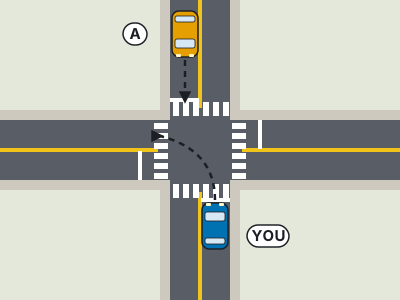
- Through traffic approaching from the opposite direction
- Only vehicles stopped behind the driver
- No one, because a green light gives an unconditional turn
- Only pedestrians walking away from the intersection
Show answer
Through traffic approaching from the opposite direction. A green circular signal permits movement only after the driver yields to traffic and pedestrians lawfully in the intersection. For a left turn, the important opposing movement is through traffic coming toward the driver. The choice “Only vehicles stopped behind the driver” concerns vehicles behind you, while the choice “No one, because a green light gives an unconditional turn” ignores the required yield. The choice “Only pedestrians walking away from the intersection” is too narrow because pedestrians in the intersection also matter regardless of which way they walk. Before turning, check the opposing lane and the crosswalk, then proceed through a clear gap.
Study this in the handbook: Traffic lights and arrows
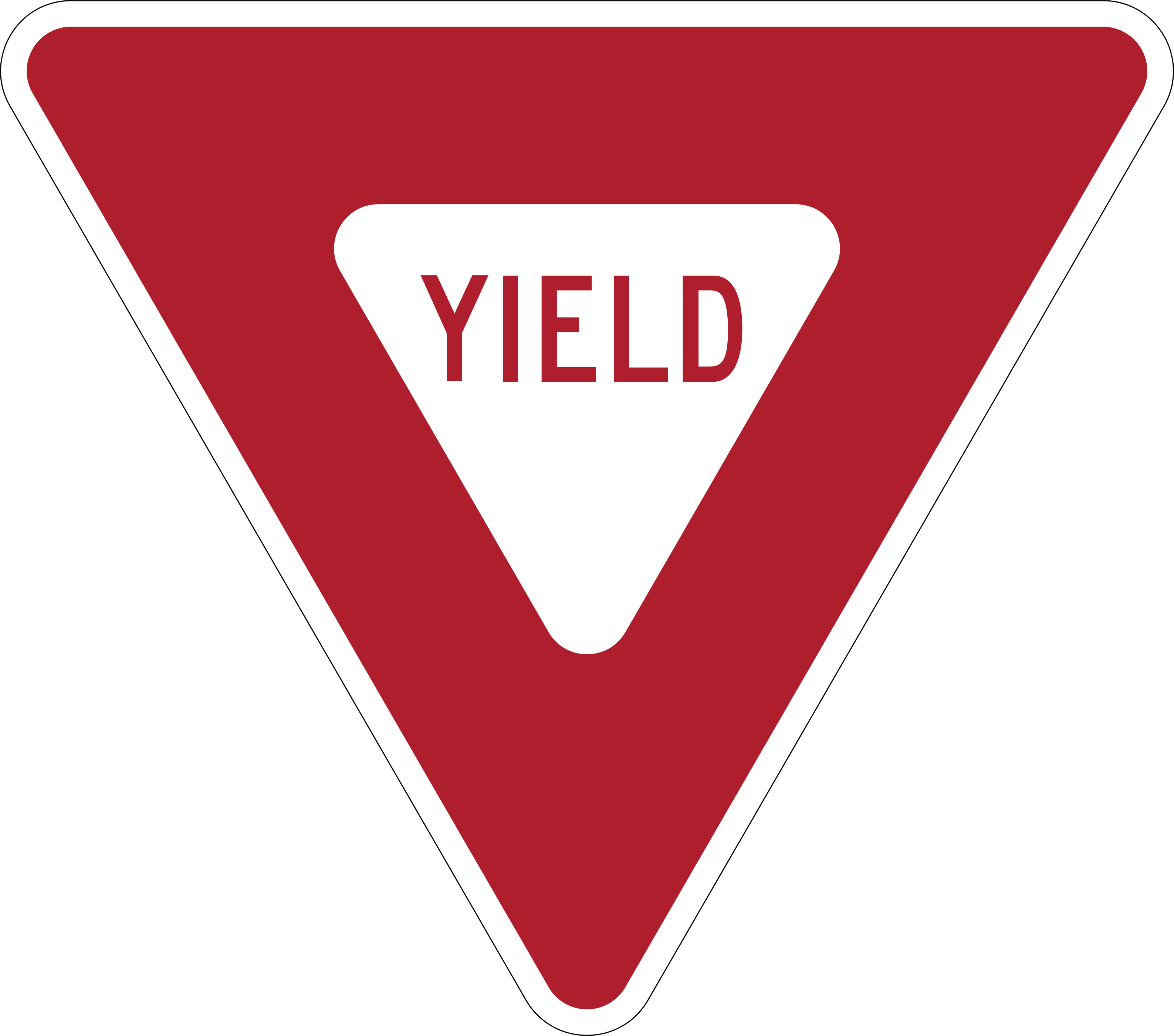
17. What action does the pictured downward-pointing YIELD sign require before entering?
- Enter without checking because the sign applies only to trucks
- Stop every time, even when no traffic is present
- Accelerate so crossing traffic must wait
- Slow down and allow right-of-way traffic to cross first
Show answer
Slow down and allow right-of-way traffic to cross first. A Kentucky yield sign tells the driver to slow down and allow traffic with the right of way to cross before entering. It does not impose an automatic stop in every empty-road situation, although stopping may be necessary when traffic or pedestrians require it. Accelerating reverses the intended priority and increases conflict. The sign applies to the approaching driver regardless of vehicle type. Reduce speed early, identify who has priority, and stop if that is needed to yield safely.
Study this in the handbook: Regulatory signs
18. Which of these can get a Kentucky license suspended or revoked?
- Renewing your license six months early
- Registering a car in another county
- Using a driver's license fraudulently to try to buy alcohol
- Carrying a paper insurance card
Show answer
Using a driver's license fraudulently to try to buy alcohol. Kentucky's list of reasons for suspension or revocation includes fraudulent use of a driver's license to purchase or attempt to purchase alcoholic beverages, along with failing to keep insurance, failing to pay child support, three reckless driving convictions in 12 months, DUI, and refusing a chemical test. Renewing up to six months early is allowed. Registering a car is lawful, and a paper insurance card is valid proof of coverage.
Study this in the handbook: Renewal, registration and insurance
19. The parent who signed a Kentucky minor's application withdraws responsibility. What happens?
- Nothing, once a license is issued
- The minor pays a fine and keeps driving
- The license becomes an intermediate license
- The license is canceled, and the minor must wait until 18 unless another application is signed
Show answer
The license is canceled, and the minor must wait until 18 unless another application is signed. If you are under 18, the parent or legal guardian who signed your application can withdraw responsibility, which cancels your license. You then have to wait until 18 to get a permit and license, unless another application is signed. The withdrawal form is filed at a Transportation Cabinet Regional Office. An issued license is not protected, a fine does not replace the cancellation, and nothing is converted to another license type.
Study this in the handbook: The point system and losing your license
20. A Kentucky applicant fails the road skills test. How long must they wait to try again?
- The next business day
- 30 days
- At least one week from the date of the failure
- Six months
Show answer
At least one week from the date of the failure. If you fail the Kentucky road skills test, you must wait at least one week from the date of the failure before attempting it again, and you are encouraged to practice in that time. The next business day is too soon. Thirty days and six months are longer than the rule. Remember that you cannot drive yourself to the test unless a licensed driver 21 or older is in the front passenger seat.
Study this in the handbook: License classes and the tests
QualitySpace is expanding to Kentucky
We are a California-based independent insurance brokerage working on licensing in more states. We cannot help with Kentucky insurance yet. Leave your email and we will let you know when we can.
Every question is written from the official Kentucky Driver Manual. Need paper? Printable KY practice test with answer key.
Last verified 2026-10-05. How we check every question · Study all 500 as flashcards
Frequently asked questions
How many questions are on this Kentucky practice test?
This fixed set has 20 questions. It is test 10 of 25 from the 500 question Kentucky bank.
How does this fixed test relate to the full Kentucky bank?
Each numbered test is a fixed set of questions in a fixed order, so you can retake the same test later and compare. Every test mixes road signs and the other topics in about the same proportion as the full bank. Tests 1 to 25 together cover every question in the Kentucky bank once. The full practice page mixes the whole bank at random.
Last verified 2026-10-05. See the Kentucky DMV facts page for sourced state details.
Return to the full Kentucky practice test · Study road signs