
Test 4 of 25 · 20 questions · Free 2026
KY Permit Practice Test 4
Jump to the test ↓A fixed 20 question set from the Kentucky bank with answers and plain English explanations.
Question 1 of 20 · 0 right so far
All 20 questions in test 4
Every question below comes from the Kentucky question bank on this page. Open a question to see the correct answer and the explanation. Nothing here is hidden behind a signup.
1. When Kentucky work zone signs state that fines are double, what additional condition must exist for that rule?
- The work must occur only at night
- The road must be closed completely
- At least one bona fide worker must be present
- A police car must be parked at the entrance
Show answer
At least one bona fide worker must be present. Kentucky allows doubled fines in a highway work zone when signs announce that fines are double and at least one bona fide worker is present. A total road closure, nighttime work, or a parked police vehicle is not the extra condition stated in the manual. Slow down in every work zone even when workers are not visible, but recognize the fine enhancement by checking both the warning sign and the worker condition. Orange signs and changing lanes are cues to expect hazards.
Study this in the handbook: Funeral processions
2. What does the online version of Kentucky's graduated licensing course cost?
- $12.50, while the classroom version is free
- $50
- Both versions are free
- $100
Show answer
$12.50, while the classroom version is free. Kentucky's July 2026 driver manual lists the acceptable ways to complete graduated licensing training: the classroom version is free for Kentucky drivers, the online version now costs $12.50, and a high school driver education course or a private course at an approved driver training school also qualifies. Earlier editions listed the online course at $11, so that figure is out of date. Completing one of these programs is required before a young driver can move to the full, unrestricted license. Choose the format that fits the family schedule, and keep proof of completion for the licensing appointment.
Study this in the handbook: The intermediate license and full license
3. What penalties does Kentucky list for a first DUI conviction within ten years?
- A $200 to $500 fine, 48 hours to 30 days in jail, and a 4 to 6 month suspension
- A $1,000 fine and 1 year in jail
- A warning and a class
- A 30 day suspension only
Show answer
A $200 to $500 fine, 48 hours to 30 days in jail, and a 4 to 6 month suspension. For a first alcohol conviction within a ten year period, the Kentucky manual lists a fine of $200 to $500 plus court costs, 48 hours to 30 days in the county jail, and a license suspension of four to six months. These penalties come from KRS 189A.010, and second or later convictions within ten years bring much worse penalties. A driver under 18 may get a longer suspension. A $1,000 fine with a year in jail overstates the first offense, and a warning or a 30 day suspension understates it.
Study this in the handbook: Implied consent and DUI penalties
4. How should a driver respond as rain, snow, sleet, or ice makes the roadway slippery?
- Accelerate so the tires cross the slippery area quickly
- Maintain speed until the tires begin to skid
- Brake hard immediately while turning the steering wheel
- Reduce speed at the first sign of those conditions
Show answer
Reduce speed at the first sign of those conditions. The manual calls for an early speed reduction when traction begins to deteriorate from rain, snow, sleet, or ice. Lower speed gives the tires more opportunity to grip and leaves more distance for stopping and turning. Maintaining speed waits for a skid to develop, and hard braking while turning can worsen loss of traction. Acceleration does not restore grip. A practical cue is the first change in pavement or weather: ease off promptly instead of waiting for the vehicle to slide.
Study this in the handbook: Adjusting to darkness, curves and wet roads
5. What does a downward-pointing red and white triangular sign tell a driver to do?
- Stop and wait for a green signal at every intersection
- Slow down and let right-of-way traffic cross before entering
- Speed up to merge ahead of traffic already in the roadway
- Follow the sign to a nearby hospital or service station
Show answer
Slow down and let right-of-way traffic cross before entering. This triangle is the yield sign, which requires a slower approach and allows vehicles and pedestrians that have priority to clear the intersection before the driver enters. It does not impose an automatic stop at every intersection, so the signal choice adds a condition not stated. Accelerating would make yielding harder, and hospitals or service stations are identified by guide signs. Use the sign as an instruction to look, judge the crossing traffic, and stop only if needed to give that traffic priority.
Study this in the handbook: Pavement markings, crosswalks and lane use
6. How far before an intersection turn should a driver signal?
- 25 feet
- 100 feet
- Only after entering the intersection
- Only when another vehicle is directly behind
Show answer
100 feet. Kentucky's turning guidance calls for a signal 100 feet before an intersection turn. That advance notice gives pedestrians and other drivers time to understand the intended movement and adjust. Waiting until the intersection is reached gives too little warning. The manual does not set the distance at 25 feet, and the duty is not limited to situations where a vehicle happens to be behind you. Signal early, maintain the signal through the maneuver, and cancel it afterward.
Study this in the handbook: Headlights, turn signals and night driving
7. If you are angry or worried before driving, what does the manual advise?
- Follow closely so other drivers notice your concern
- Drive faster to finish the trip before emotions grow
- Use the vehicle to vent frustration at another driver
- Stay off the road until the symptoms have passed
Show answer
Stay off the road until the symptoms have passed. Strong emotions can interfere with attention, judgment, and information processing. The manual advises giving yourself time to cool off and staying off the road until the symptoms have passed, with a short walk or nap if needed. Speeding, venting through the vehicle, and following closely add danger rather than solving the emotional problem. If another driver is involved, remain calm and careful, and postpone the trip or have someone else drive until you regain control.
Study this in the handbook: Fatigue, distraction and emotions
8. How much classroom training must a private driver training course include to satisfy Kentucky's full license requirement?
- Thirty hours
- One hour
- Four hours
- Eight hours
Show answer
Four hours. Kentucky's acceptable driver training options include the free classroom course, an online course, a high school driver education course, or a private driver training course at an approved school, which must include four hours of classroom training. Thirty, one and eight hours are not the stated requirement. Drivers whose permits were issued under 18 must enroll before turning 18 and finish before moving to the full license phase.
Study this in the handbook: The intermediate license and full license
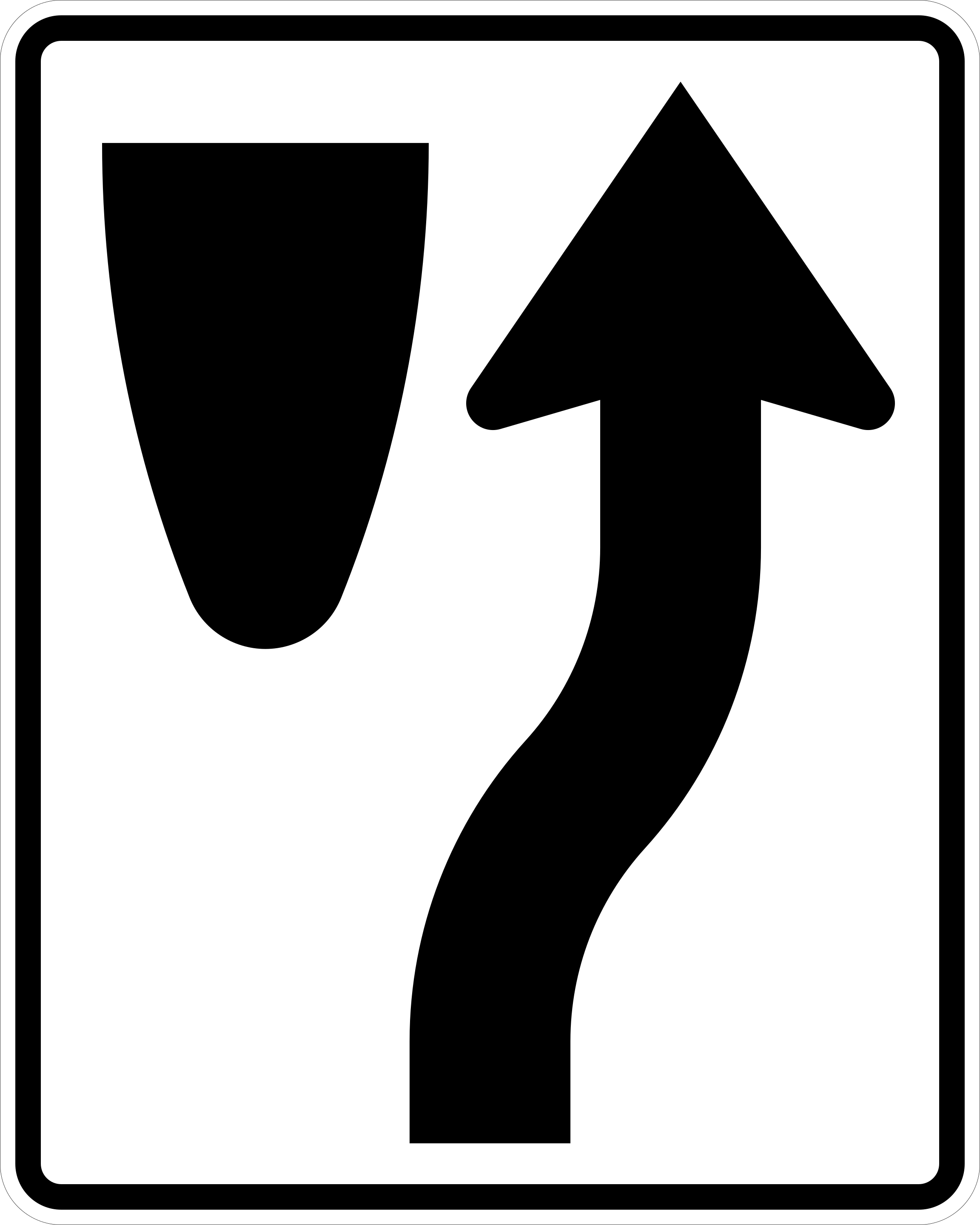
9. What kinds of information can traffic signs provide to a driver?
- Only the names of nearby businesses
- Traffic rules, hazards, roadway directions, and service locations
- Only the legal speed for the roadway
- Only directions from a police officer
Show answer
Traffic rules, hazards, roadway directions, and service locations. Traffic signs can communicate rules, hazards, roadway location, roadway directions, and the location of services. That broad range is why a driver should read both the sign’s design and its wording instead of assuming every sign gives a command. The business-only choice is too narrow, and speed limits or police directions are only particular categories of road information. As you approach any sign, scan its shape, color, symbols, and words, then adjust position or speed to the message it conveys.
Study this in the handbook: Traffic lights and arrows
10. Who may increase the speed limit of specific Kentucky highways to 70 mph?
- The driver who uses the highway most often
- The secretary of transportation
- The county clerk for the county where the highway is located
- A business owner whose property borders the highway
Show answer
The secretary of transportation. Kentucky allows the secretary of transportation to increase the speed limit of specific highways to 70 mph. That authority concerns selected highways, so it does not make 70 mph the automatic limit everywhere. A driver's familiarity, a county clerk, or a neighboring business owner cannot change the posted legal limit through personal choice. Before relying on a higher number, look for an official sign on that highway. The useful cue is the named authority and the word specific: this is a limited administrative increase, not a blanket rule for every Kentucky road.
Study this in the handbook: Kentucky speed limits
11. What point level can get a Kentucky driver under 18 suspended during the permit or intermediate phase?
- More than six points
- More than twelve points
- More than two points
- Any single point
Show answer
More than six points. The graduated licensing section warns that a driver under the age of 18 who accumulates more than six points may have the driving privilege suspended. The point system itself sets 7 points in two years for drivers under 18 and 12 points for drivers 18 or older as the hearing trigger. Twelve is the adult figure. Two points and a single point are not thresholds in the manual.
Study this in the handbook: The learner's permit phase for teens
12. What fine can a Kentucky driver receive for failing to yield to a blind pedestrian?
- Up to $250
- $25
- $1,000
- No fine, only points
Show answer
Up to $250. Drivers must yield to a pedestrian carrying a clearly visible white cane or accompanied by an assistance dog, and failure to yield the right of way to a blind pedestrian can result in a fine up to $250. Drive up to the crosswalk so the person can hear your vehicle, and do not give verbal directions, since the pedestrian listens to traffic sounds before deciding to cross.
Study this in the handbook: Pedestrians and blind pedestrians
13. At what distances should a driver dim headlights for oncoming traffic and a vehicle being followed?
- Within 300 feet of oncoming traffic and 500 feet of a vehicle being followed
- Within 500 feet of oncoming traffic and 300 feet of a vehicle being followed
- Within 100 feet of either vehicle
- Only when the other driver flashes headlights first
Show answer
Within 500 feet of oncoming traffic and 300 feet of a vehicle being followed. The manual gives two separate nighttime distances: dim for an oncoming vehicle within 500 feet, and dim within 300 feet of a vehicle ahead that you are following. The choice “Within 300 feet of oncoming traffic and 500 feet of a vehicle being followed” swaps those measurements, which would delay the change for approaching traffic. One hundred feet is not the stated rule, and waiting for another driver to signal first risks glare. Watch both directions and change to low beams early enough to protect other drivers' vision.
Study this in the handbook: Headlights, turn signals and night driving
14. What may happen to a Kentucky driver’s license after the driver refuses a requested breath, blood, or urine test?
- Only the vehicle registration is renewed
- The license is automatically upgraded
- The refusal has no legal consequence
- The license may be suspended by the court
Show answer
The license may be suspended by the court. The manual explains that refusal of a requested breath, blood, or urine test may result in suspension of the driver’s license by the court. It also notes that a DUI conviction can produce a suspension by the Transportation Cabinet. Refusal therefore is not consequence-free, and it does not simply affect registration or licensing status in a favorable way. The roadside cue is that a test request can create separate consequences from the underlying impairment case.
Study this in the handbook: Alcohol, other drugs and the BAC limits
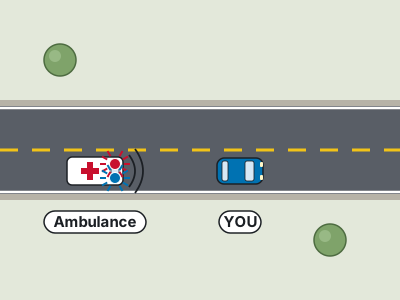
15. What should you do when an emergency vehicle approaches with its flashing lights and siren on?
- Race ahead before it reaches your position
- Follow it closely to move through traffic
- Stop in the center of the intersection
- Pull to the edge of the road so it can pass
Show answer
Pull to the edge of the road so it can pass. A driver must yield to an emergency vehicle displaying flashing lights and using its siren by pulling toward the edge of the road. Avoid blocking an intersection, because the emergency vehicle needs a clear path. Following closely is unlawful and dangerous, while stopping in the intersection blocks traffic from more than one direction. Speeding ahead does not yield the right of way. Move right, stop when clear of the intersection, and remain stopped until the vehicle passes unless directed otherwise.
Study this in the handbook: Emergency vehicles and school buses
16. How many people are injured each year in work zone crashes, according to the Kentucky manual?
- About 5,000
- About 500
- Approximately 40,000
- About 1 million
Show answer
Approximately 40,000. Approximately 40,000 people per year are injured as a result of motor vehicle crashes in work zones, which have become increasingly dangerous for workers and drivers. Reduce speed, increase following distance, watch the traffic around you and be prepared to stop, and use extreme caution at night whether or not workers are present. Adjust your lane position to allow space for workers and construction vehicles, and obey the posted work zone signs until you see End Road Work.
Study this in the handbook: Work zones and towing a trailer
17. The pennant-shaped sign on the left side of the roadway marks the beginning of a:
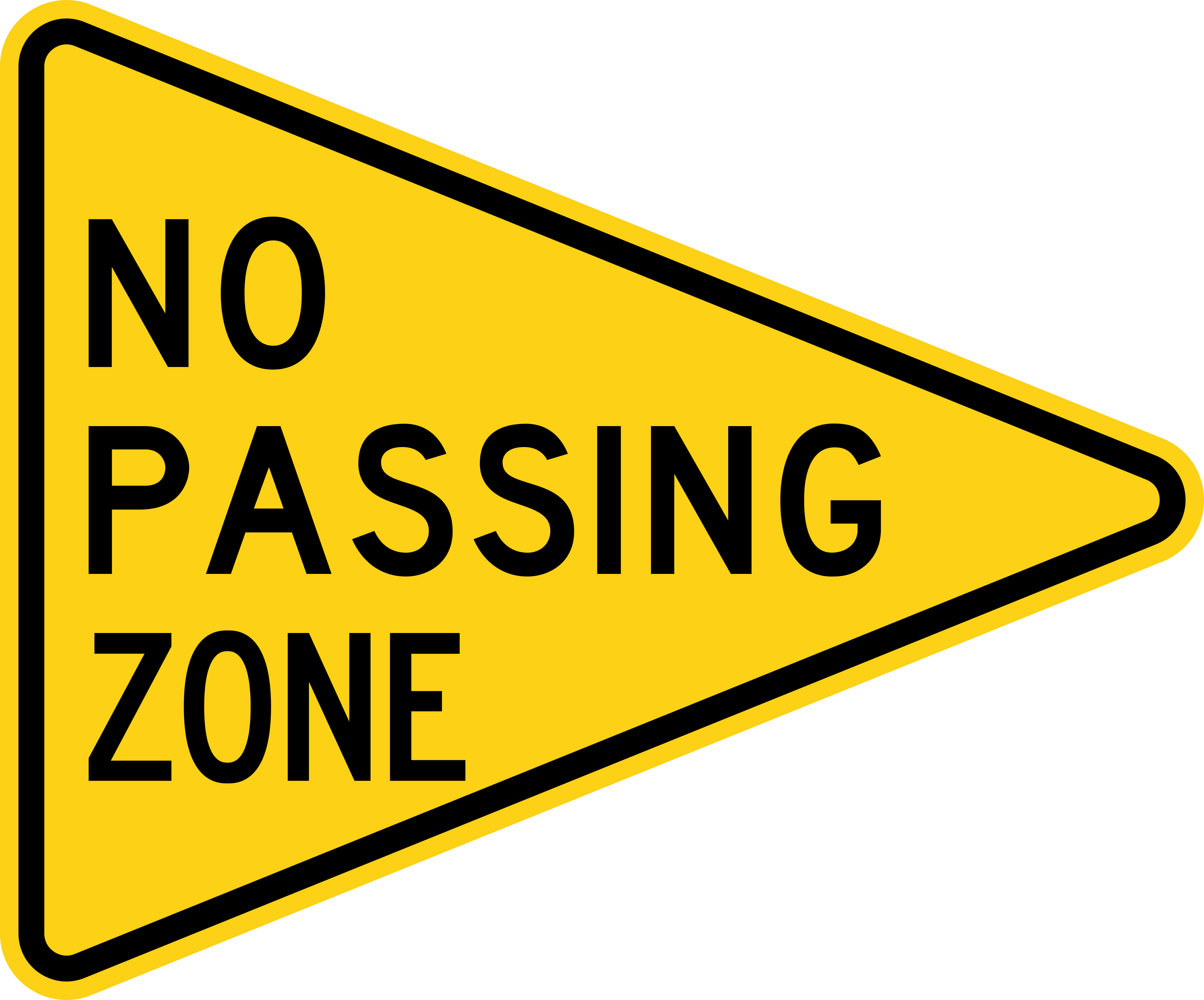
- No passing zone
- Passing lane for slower traffic
- School loading area
- Route for emergency vehicles
Show answer
No passing zone. The pennant shape is used to mark a no passing zone. A driver should complete any pass before reaching that zone and should not remain in the left lane as the restriction begins. The sign does not create a passing lane, identify a school loading area, or reserve pavement for emergency vehicles. Kentucky also sets a two hundred foot limit involving an approaching vehicle, so a pass must be planned early. The distinctive sideways pennant on the left is the cue to end the maneuver before the posted restriction.
Study this in the handbook: Pavement markings, crosswalks and lane use
18. What should a driver expect after seeing a yellow warning sign?
- A route number identifying the road classification
- A posted maximum speed that replaces all other limits
- A service location selected for overnight parking
- A possible danger or special roadway situation ahead
Show answer
A possible danger or special roadway situation ahead. Warning signs identify a possible danger, hazard, or special situation ahead. They tell the driver to slow down and be prepared to stop if necessary, rather than granting a new speed or identifying a service. Route numbers communicate roadway type and guide information. When the yellow warning appears, look beyond the sign for the condition it describes, check mirrors and surrounding traffic, and prepare a controlled response. The sign is an advance cue that conditions may change, not a promise that the roadway remains normal.
Study this in the handbook: Traffic lights and arrows
19. If a vehicle breaks down on a highway, what should the driver do first to make it visible to others?
- Stop just beyond a hill so approaching drivers cannot see the vehicle
- Leave the vehicle in the travel lane with no lights showing
- Pull completely off the road if possible and turn on the emergency flashers
- Turn off all lights and wait inside without warning other road users
Show answer
Pull completely off the road if possible and turn on the emergency flashers. A disabled vehicle should be removed from the roadway completely when possible, and its emergency flashers should be turned on to show that it is disabled. The other choices hide the vehicle or leave it where moving traffic may strike it. The manual also advises choosing a place visible from a distance, lifting the hood, and using flares behind the vehicle when available. The immediate cue is visibility: get right and off the road, then signal the problem.
Study this in the handbook: Brake failure, blowouts and other vehicle failures
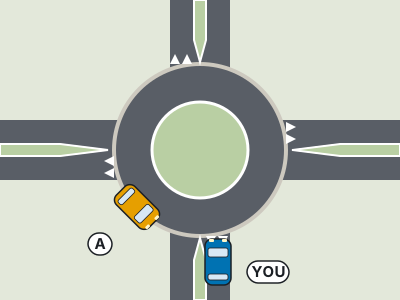
20. What must entering traffic do at a Kentucky roundabout?
- Enter first because circulating traffic must yield
- Claim the center by stopping inside the circle
- Yield to vehicles already circulating
- Travel clockwise around the center island
Show answer
Yield to vehicles already circulating. At a roundabout, vehicles already circulating have priority over vehicles approaching the entrance. Entering traffic should slow down, yield to the traffic in the circle, travel counterclockwise, and proceed to the appropriate exit. Stopping in the circle obstructs the flow, and entering first reverses the required yielding relationship. Clockwise travel is also contrary to the design. Reduce speed before the entry, identify a safe gap, yield, then maintain the counterclockwise path until signaling for the selected exit.
Study this in the handbook: Roundabouts and traffic circles
QualitySpace is expanding to Kentucky
We are a California-based independent insurance brokerage working on licensing in more states. We cannot help with Kentucky insurance yet. Leave your email and we will let you know when we can.
Every question is written from the official Kentucky Driver Manual. Need paper? Printable KY practice test with answer key.
Last verified 2026-10-05. How we check every question · Study all 500 as flashcards
Frequently asked questions
How many questions are on this Kentucky practice test?
This fixed set has 20 questions. It is test 4 of 25 from the 500 question Kentucky bank.
How does this fixed test relate to the full Kentucky bank?
Each numbered test is a fixed set of questions in a fixed order, so you can retake the same test later and compare. Every test mixes road signs and the other topics in about the same proportion as the full bank. Tests 1 to 25 together cover every question in the Kentucky bank once. The full practice page mixes the whole bank at random.
Last verified 2026-10-05. See the Kentucky DMV facts page for sourced state details.
Return to the full Kentucky practice test · Study road signs