
Test 9 of 25 · 20 questions · Free 2026
KY Permit Practice Test 9
Jump to the test ↓A fixed 20 question set from the Kentucky bank with answers and plain English explanations.
Question 1 of 20 · 0 right so far
All 20 questions in test 9
Every question below comes from the Kentucky question bank on this page. Open a question to see the correct answer and the explanation. Nothing here is hidden behind a signup.
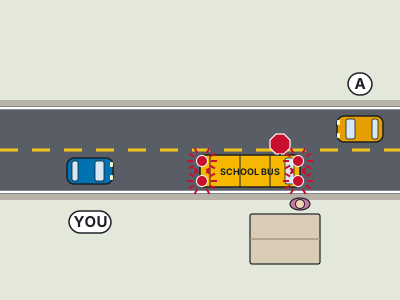
1. On a two-lane road, when may an approaching vehicle proceed after a school bus finishes loading or unloading?
- After waiting five seconds even if the bus remains stopped
- As soon as the driver sees no child nearby
- After the bus is in motion
- Before the bus finishes receiving or discharging passengers
Show answer
After the bus is in motion. On a two-lane road, a vehicle approaching a stopped school or church bus must remain stopped until the bus has completed receiving or discharging passengers and is in motion. A driver cannot use a visual check for children or a five-second count as a substitute for the bus moving. Proceeding before the loading activity ends places people near the bus at risk. Watch the bus itself, wait for the stop activity to finish, and move only after it begins traveling again.
Study this in the handbook: Roundabouts and traffic circles
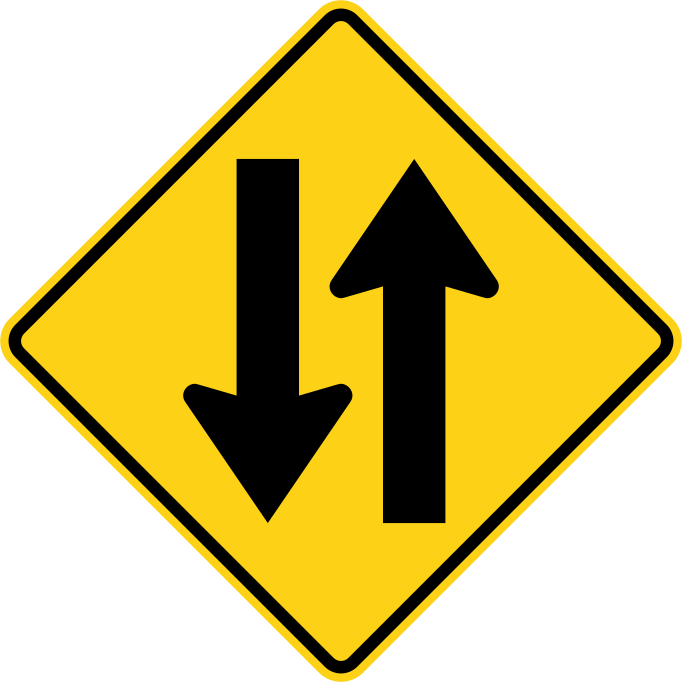
2. What response do warning signs encourage when a hazard may be ahead?
- Ignore the sign until another driver stops
- Accelerate so the hazard is passed immediately
- Slow down and be prepared to stop if necessary
- Change lanes without checking nearby traffic
Show answer
Slow down and be prepared to stop if necessary. The manual tells drivers that warning signs should prompt slower driving and readiness to stop when necessary. That response creates time to identify the hazard and choose a safe path. Accelerating reduces the margin available, while ignoring the sign transfers responsibility to another driver. An unchecked lane change can create a second conflict beside the original hazard. Read warning signs early, ease off the accelerator, scan the roadway, and stop if the developing situation requires it.
Study this in the handbook: Traffic lights and arrows
3. A school bus is stopped on a two-lane road to load or unload passengers. What must approaching drivers do?
- Continue if the opposite lane appears empty
- Pass slowly if no child is visible
- Stop only when traveling behind the bus
- Stop and remain stopped until people are clear and the bus moves
Show answer
Stop and remain stopped until people are clear and the bus moves. A stopped school bus loading or unloading passengers requires a complete stop. Remain stopped until all people are clear of the roadway and the bus is moving. Visibility of children does not cancel the protection, and an empty opposite lane does not authorize passing on a two-lane road. The behind-only choice overlooks that traffic approaching from either direction can endanger passengers. Watch for the bus’s stop arm and signal lights, brake before reaching it, and wait through the entire loading event. The cue is stopped bus plus passenger activity.
Study this in the handbook: Emergency vehicles and school buses
4. During what period must Kentucky drivers illuminate their vehicle headlights?
- Only when the driver is traveling on an interstate
- Only from sunset until midnight
- From one hour before sunset until one hour after sunrise
- From one-half hour after sunset to one-half hour before sunrise
Show answer
From one-half hour after sunset to one-half hour before sunrise. Kentucky requires headlights from thirty minutes after sunset until thirty minutes before sunrise. That period is broader than the midnight-only option and starts later than one hour before sunset. The rule applies to roadway travel generally, not just interstate driving. Headlights also help others see your vehicle in rain, snow, fog, darkness, or glare, so using them outside the required window can still be prudent. Think of the half-hour boundaries as the legal timing cue.
Study this in the handbook: Headlights, turn signals and night driving
5. In about what share of fatal crashes are alcohol and other impairing drugs involved, according to the Kentucky manual?
- About 5 percent
- Approximately 40 percent
- About 90 percent
- About 15 percent
Show answer
Approximately 40 percent. Alcohol and other impairing drugs are involved in approximately 40 percent of all traffic crashes in which someone is killed each year, and thousands of people die nationally in alcohol related collisions. Kentucky applies zero tolerance to drivers under 21, and a refusal to take the breath, blood or urine test can be used against you in court as evidence of DUI.
Study this in the handbook: Alcohol, other drugs and the BAC limits
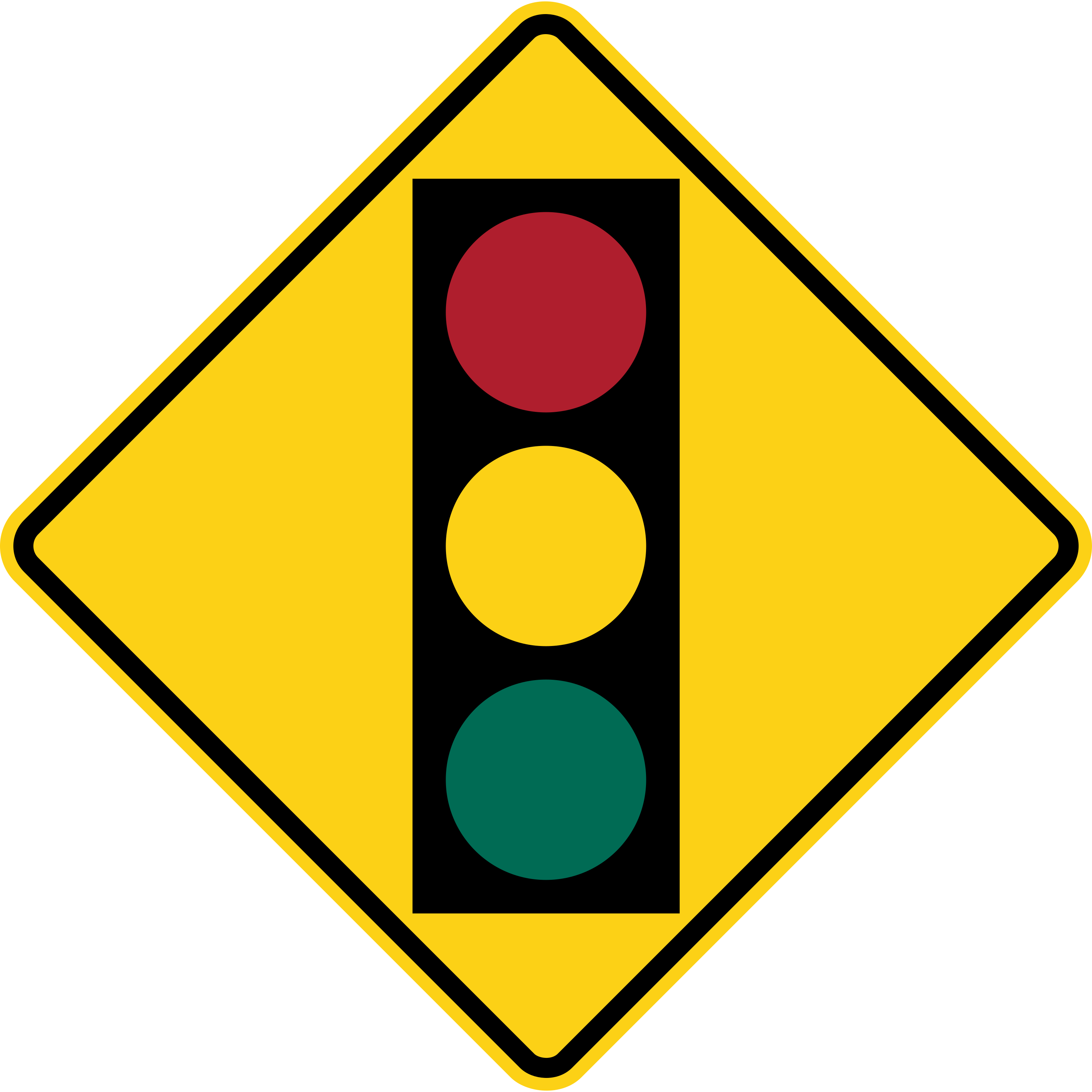
6. What do the shape, color, symbols, and words on traffic signs help a driver identify?
- The weather expected later that day
- The mechanical condition of nearby vehicles
- The exact arrival time of a traffic signal
- The type of information the sign provides
Show answer
The type of information the sign provides. The shape, color, symbols, and words on a traffic sign give clues about the type of information it provides. A sign cannot diagnose nearby vehicles, predict the exact signal timing, or forecast later weather. Use those visual features to recognize whether the sign warns, regulates, guides, or identifies a roadway service. Then read the message and adjust speed or position before reaching the condition. The practical cue is to interpret the sign as a communication tool, combining its appearance with its words instead of relying on color alone.
Study this in the handbook: Traffic lights and arrows
7. Which vehicles does Kentucky's seat belt law cover?
- Only vehicles built after 2000
- Vehicles manufactured after 1981, with the driver and all passengers belted
- Only the front seat of any vehicle
- Only commercial vehicles
Show answer
Vehicles manufactured after 1981, with the driver and all passengers belted. A person shall not operate a motor vehicle manufactured after 1981 on public roadways unless the driver and all passengers are wearing a properly adjusted and fastened seat belt. Belts must be worn even in air bag equipped vehicles, since an air bag deploys in about one twentieth of a second and works with the belt, not instead of it. Both driver and examiner must buckle up on the road test.
Study this in the handbook: Required equipment, safety belts, air bags and child seats
8. A Kentucky license expired more than 5 years ago. What must the driver do?
- Renew with no testing
- Pay a late fee only
- Take only a vision test
- Start over as a new driver
Show answer
Start over as a new driver. No testing is required for a person whose credential expired less than 5 years ago, but any driver whose credential is expired more than 5 years must start over as a new driver. So renewing with no testing applies only under the 5 year mark. A late fee or a vision test alone does not replace the full process. Kentucky licenses run four or eight years, with eight years available only for new standard licenses and REAL IDs.
Study this in the handbook: Renewal, registration and insurance
9. When does a Kentucky license issued to a driver under 21 expire?
- On the 18th birthday
- 90 days after the driver's 21st birthday
- 31 days after the 21st birthday
- Four years after issue, regardless of age
Show answer
90 days after the driver's 21st birthday. If the driver is under 21, the Kentucky license expires 90 days after the driver's 21st birthday. For drivers 21 and older, the license expires 31 days after the birthday and may be renewed up to six months early, so 31 days is the adult rule. The 18th birthday is not an expiration point. The four or eight year terms apply to standard licenses, not to the under 21 credential's end date.
Study this in the handbook: Renewal, registration and insurance
10. What minimum following interval does the Kentucky manual recommend trying to keep?
- One second whenever the road is dry
- Four seconds between your vehicle and the vehicle ahead
- Two car lengths at every speed
- A half-second gap on a divided highway
Show answer
Four seconds between your vehicle and the vehicle ahead. The manual recommends trying to keep at least four seconds between your vehicle and the one ahead. Time is more dependable than a fixed number of car lengths because speed and vehicle size change the distance needed. The one-second and half-second choices remove the reaction margin, while two car lengths may be generous at one speed and dangerously short at another. Choose a reference point, count after the vehicle ahead passes it, and enlarge the interval in poor conditions. Your cue is measured time, not bumper spacing.
Study this in the handbook: Sharing the road with bicycles, motorcycles and trucks
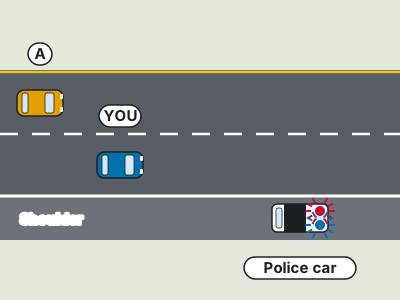
11. When approaching an authorized emergency vehicle stopped on the roadside, what lane change should you make if conditions permit?
- Stop in the lane next to the emergency vehicle
- Move onto the shoulder beside the emergency vehicle
- Change into a lane that is not next to the emergency vehicle
- Pass without changing lanes if your speed is low
Show answer
Change into a lane that is not next to the emergency vehicle. Kentucky drivers should slow and yield by changing into a lane that is not next to the stopped authorized emergency vehicle whenever safety and traffic conditions permit. The shoulder is not a substitute lane and may be where responders or equipment are working. Remaining beside the vehicle exposes people to passing traffic. If a lane change would be unsafe, slow down and continue cautiously at a safe speed for conditions. Look early, signal, and create lateral space.
Study this in the handbook: The move over law and traffic stops
12. What colors and shapes are commonly used for Kentucky regulatory signs?
- White with black, red, or green letters or symbols, often square or rectangular
- Yellow with orange letters, always circular
- Blue with white letters, always diamond shaped
- Green with black letters, always octagonal
Show answer
White with black, red, or green letters or symbols, often square or rectangular. Kentucky regulatory signs are commonly square or rectangular, or they may have a special shape, with white backgrounds and black, red, or green letters or symbols. Their appearance helps distinguish legal instructions from yellow warning signs, green guide signs, and orange work zone signs. The yellow, blue, and green choices describe other sign families or shapes, not regulatory signs. Use the sign’s wording, symbol, and color together because shape alone is not the only identifying feature. A regulatory sign communicates an instruction or restriction that drivers must obey.
Study this in the handbook: Pavement markings, crosswalks and lane use
13. When no sign posts another number, what is the Kentucky speed limit on interstate highways and parkways?
- 55 mph
- 60 mph
- 65 mph
- 70 mph
Show answer
65 mph. The unposted Kentucky limit for interstate highways and parkways is 65 mph. The 55 mph figure belongs to other state highways, while 60 mph is not the listed default. Although the manual allows an authorized increase to 70 mph on specific highways, that possibility does not change the ordinary number asked here. Identify the road as an interstate or parkway, check for a posted sign, and then use 65 mph only when no different limit controls.
Study this in the handbook: Kentucky speed limits
14. When do points assessed under Kentucky’s point system expire?
- Immediately after payment of a fine
- Two years from the conviction date
- Five years from the conviction date
- At the next license renewal
Show answer
Two years from the conviction date. Points assessed under Kentucky’s system expire two years from the date of conviction. That does not mean the entire conviction entry disappears at the same time. The manual separately keeps the entry on the driver’s record for five years. Paying a fine or renewing a license does not control the expiration date. Keep two timelines in mind: the point period is shorter, while the record retention period lasts longer.
Study this in the handbook: The point system and losing your license
15. When a police officer directs traffic at an intersection, what should a driver do?
- Follow the officer’s instruction regardless of traffic-control devices or signs
- Continue only if the traffic signal is green
- Ignore the officer when a stop sign is present
- Wait for another driver to decide which way to move
Show answer
Follow the officer’s instruction regardless of traffic-control devices or signs. A police officer directing an intersection has priority over ordinary traffic-control devices and signs. The driver should follow the officer’s instruction even when a signal or stop sign appears to say something different. Waiting for a green light, ignoring the officer because of a sign, or copying another driver can leave the vehicle in conflict with the person managing traffic. Look toward the intersection as you approach, identify the officer’s signal, and proceed only in the direction and at the time indicated.
Study this in the handbook: Yielding the right of way
16. When approaching an authorized emergency vehicle stopped on the roadside, a driver should:
- Pass on the shoulder without reducing speed
- Maintain speed in the lane beside the vehicle
- Stop in the lane immediately behind the vehicle
- Slow down and change into a lane not next to the vehicle when safe
Show answer
Slow down and change into a lane not next to the vehicle when safe. Kentucky’s move-over guidance calls for caution, reduced speed, and a lane change away from an authorized emergency vehicle when traffic and safety conditions permit. Staying beside the vehicle exposes roadside workers and responders to passing traffic. Stopping directly behind it can create a new collision hazard, while using the shoulder at unchanged speed ignores the required caution. If a lane change cannot be made safely, slow down and continue carefully at a speed suitable for conditions. Look early for a safe gap and leave room around the stopped vehicle.
Study this in the handbook: The move over law and traffic stops
17. What kind of information do regulatory signs provide?
- Specific laws that drivers must obey
- Optional suggestions for scenic routes
- Weather forecasts for the next roadway segment
- Historical facts about the community
Show answer
Specific laws that drivers must obey. Regulatory signs communicate specific laws that drivers must obey. They govern actions such as traffic direction, lane use, turns, speed, parking, and other special situations. A regulatory sign is not an optional scenic suggestion, a weather report, or a community history marker. Look for the required action or restriction before entering the controlled lane, turn, or parking area. The sign’s legal instruction remains in force whether traffic is light or heavy, so do not treat the sign as general advice that can be ignored when the road appears empty.
Study this in the handbook: Pavement markings, crosswalks and lane use
18. What does the Kentucky manual say about open bridge gratings and steel bridges?
- They improve traction in rain
- They are safe at any speed
- They can reduce traction, so slow down, add following distance and keep a firm grip on the wheel
- They require chains
Show answer
They can reduce traction, so slow down, add following distance and keep a firm grip on the wheel. Open bridge gratings or steel bridges can reduce your traction, so reduce speed, increase following distance and maintain a firm grip on the steering wheel. Rural roads bring other hazards such as blind corners in wooded areas, narrow bridges where the first driver to arrive generally has the right of way, and unmarked intersections. Adjust speed to what you can see.
Study this in the handbook: Rural roads, farm equipment and slow vehicles
19. A Kentucky permit holder under 18 gets a moving violation. How does that affect the intermediate license?
- It adds at least 180 days from the date of the violation before applying
- Nothing, as long as the fine is paid
- It adds 30 days
- The permit is upgraded early
Show answer
It adds at least 180 days from the date of the violation before applying. Violations of the permit restrictions, moving violations under KRS 189, and DUI violations under KRS 189A are not allowed for permit holders under 18. If one occurs, it adds an additional minimum of one hundred eighty days from the date of the violation before the driver may apply for an intermediate license. Paying the fine does not avoid this. Thirty days understates it, and a violation never speeds up licensing.
Study this in the handbook: The learner's permit phase for teens
20. Which situation is an exception to a Kentucky funeral procession's intersection right of way?
- A vehicle in the procession is directed otherwise by a police or safety officer
- Another driver has been waiting longer
- The procession is moving below the speed limit
- A driver turns on high beams
Show answer
A vehicle in the procession is directed otherwise by a police or safety officer. The procession rule yields when an emergency vehicle requires the right of way, when a police or safety officer directs the vehicles otherwise, or when a train or locomotive controls the crossing. The waiting time of another driver, the procession's speed, and a high beam signal do not create listed exceptions. When approaching a procession, watch for official direction and crossing hazards rather than trying to negotiate priority yourself. A train or emergency vehicle must be allowed to control the intersection.
Study this in the handbook: Funeral processions
QualitySpace is expanding to Kentucky
We are a California-based independent insurance brokerage working on licensing in more states. We cannot help with Kentucky insurance yet. Leave your email and we will let you know when we can.
Every question is written from the official Kentucky Driver Manual. Need paper? Printable KY practice test with answer key.
Last verified 2026-10-05. How we check every question · Study all 500 as flashcards
Frequently asked questions
How many questions are on this Kentucky practice test?
This fixed set has 20 questions. It is test 9 of 25 from the 500 question Kentucky bank.
How does this fixed test relate to the full Kentucky bank?
Each numbered test is a fixed set of questions in a fixed order, so you can retake the same test later and compare. Every test mixes road signs and the other topics in about the same proportion as the full bank. Tests 1 to 25 together cover every question in the Kentucky bank once. The full practice page mixes the whole bank at random.
Last verified 2026-10-05. See the Kentucky DMV facts page for sourced state details.
Return to the full Kentucky practice test · Study road signs