
Key points
Pavement markings are lines, arrows, words or symbols painted on the road to give directions or warnings.
Source: Handbook p. 39
“Pavement markings are lines, arrows, words, or symbols painted on the roadway to give you directions or warnings.”
Kentucky Driver Manual, Handbook p. 39They divide lanes, show when you may pass or change lanes, mark turn lanes and walkways, and show where to stop.
Source: Handbook p. 39
“They are used to divide lanes, tell you when you may pass other vehicles or change lanes, tell you which lanes to use for turns, define pedestrian walkways, and show where you must stop for signs or traffic signals.”
Kentucky Driver Manual, Handbook p. 39When a sign or signal requires a stop, stop behind the stop line or crosswalk and yield to pedestrians in it.
Source: Handbook p. 39
“When required to stop because of a sign or signal, you must stop behind the stop line, crosswalk, or stop sign or signal. You must yield to pedestrians entering or in a crosswalk.”
Kentucky Driver Manual, Handbook p. 39Not all crosswalks are marked. If none is visible, stop before entering the intersection.
Source: Handbook p. 39
“Not all crosswalks are marked. Be alert for pedestrians when crossing intersections. If crosswalks are not apparent, then you must stop before entering the intersection.”
Kentucky Driver Manual, Handbook p. 39If a stop line comes before the crosswalk, stop at the stop line first.
Source: Handbook p. 39
“If there is a stop line before the crosswalk, the stop line must be obeyed first.”
Kentucky Driver Manual, Handbook p. 39Do not pass when the solid line is on your side. You may pass when the solid yellow line is on the left side of the broken yellow line.
Source: Handbook p. 47
“You may not pass when there is a solid line on your side of the broken line of the road. You may pass if there is a solid yellow line on the left side of the broken yellow line.”
Kentucky Driver Manual, Handbook p. 47A shared center lane is only for left turns from either direction, never for through traffic or passing.
Source: Handbook p. 38
“This sign tells you where a lane is reserved for the use of left turning vehicles from either direction and is not to be used for through traffic or passing other vehicles.”
Kentucky Driver Manual, Handbook p. 38Remaining in the left lane on a limited access highway is illegal.
Source: Handbook p. 46
“Remaining in the left lane on a limited access highway is illegal.”
Kentucky Driver Manual, Handbook p. 46With three or more lanes in one direction, the middle lanes are for through traffic.
Source: Handbook p. 46
“If there are three or more lanes in one direction, the middle lane or lanes are for through traffic.”
Kentucky Driver Manual, Handbook p. 46
Numbers to know
| Number | What it means | Manual |
|---|---|---|
| 3 or more lanes | roads where the middle lanes are for through traffic | Handbook p. 46 |
Recognize these signs
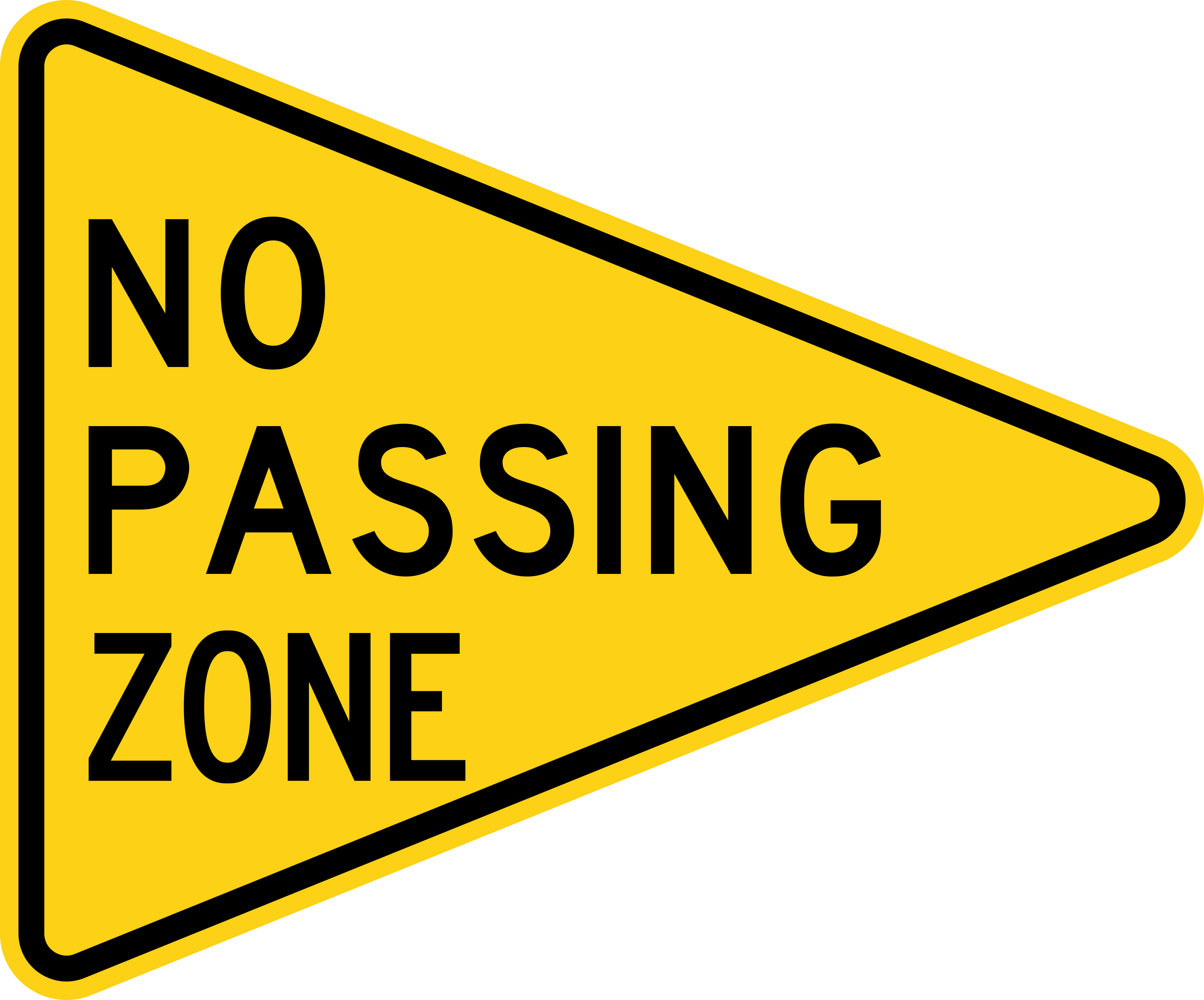
No passing zone
3 questions from the Kentucky practice test
1. What information can pavement markings provide to drivers?
- A guarantee that all cross traffic will stop
- Only the names of nearby towns
- The mechanical condition of every vehicle ahead
- Directions, warnings, and places where stopping is required
Show answer
Directions, warnings, and places where stopping is required. Pavement markings communicate roadway guidance through lines, arrows, words, and symbols. They can divide lanes, identify permitted passing or lane changes, designate turning lanes, define pedestrian walkways, and show where a stop is required. They do not provide town names, diagnose vehicles, or guarantee that another road user will obey. Read markings together with signs and signals, then adjust lane position and speed before reaching the marked area. A painted line is an active traffic-control cue, not merely decoration on the pavement.
2. Where must a driver stop when a stop line appears before a crosswalk?
- At the stop line before reaching the crosswalk
- On the crosswalk so the front bumper is visible
- Past the crosswalk near the intersection center
- At the nearest driveway beyond the intersection
Show answer
At the stop line before reaching the crosswalk. When a sign or signal requires a stop and a stop line comes before the crosswalk, the stop line must be obeyed first. Stopping on or beyond the crosswalk can block the pedestrian area and place the vehicle farther into the conflict zone. The driveway choice has no role in the stopping rule. Scan for the line before reaching the crossing, stop behind it, and remain alert for pedestrians, including at intersections where the crosswalk may not be visibly painted.
3. What is a shared center lane marked for left turns reserved for?
- Vehicles accelerating onto an interstate
- Passing traffic traveling straight through
- Parking while waiting for a signal
- Left-turning vehicles from either direction
Show answer
Left-turning vehicles from either direction. A shared center lane marked for left turns serves vehicles turning left from either direction. It is not a through lane and should not be used to pass. Parking there creates a hazard for traffic approaching from both sides, and an interstate acceleration lane is a separate roadway feature. Before entering, check opposing traffic, use the lane only for the intended turn, and leave it promptly once the turn is completed. The arrows and yellow lane boundaries provide the visual cue that this space is for turning, not cruising.
Practice this topic
Lock it in with signals and markings questions from the free Kentucky practice test. Every answer comes with a plain English explanation.
Source: the Kentucky Driver Manual, Section Six: Rules of the Road. This lesson is a plain English summary, not the law itself; where it differs, the manual and the statute govern. Last checked 2026-10-02.