
Key points
Warning signs are usually yellow diamonds with black letters. School and pedestrian signs may be fluorescent yellow.
Source: Handbook p. 35
“These signs are usually yellow with black lettering or symbols and are diamond shaped. Some warning signs may be fluorescent yellow, such as school zones, school crossing, and pedestrian crossing.”
Kentucky Driver Manual, Handbook p. 35Warning signs alert you to possible danger ahead, so slow down and be ready to stop.
Source: Handbook p. 35
“These signs tell a driver of possible danger that might be ahead, and alert the driver to slow down and be prepared to stop if necessary.”
Kentucky Driver Manual, Handbook p. 35Work zone signs are generally diamond or rectangular, orange with black letters or symbols.
Source: Handbook p. 37
“These are generally diamond or rectangular shaped and orange with black letters or symbols.”
Kentucky Driver Manual, Handbook p. 37They warn of workers, reduced speed, detours, construction equipment and rough road surfaces.
Source: Handbook p. 37
“These warnings include workers ahead, reduced speed, detours, slow-moving construction equipment, and poor or suddenly changing road surfaces.”
Kentucky Driver Manual, Handbook p. 37Guide signs are green, brown or blue and show intersecting roads, towns and points of interest.
Source: Handbook p. 38
“These signs are square and rectangular and are green, brown, or blue. They give information on intersecting roads, help direct you to cities and towns, and show points of interest along the highway.”
Kentucky Driver Manual, Handbook p. 38Guide signs also help you find hospitals, service stations, restaurants and hotels.
Source: Handbook p. 38
“Guide signs can also help you find hospitals, service stations, restaurants, and hotels.”
Kentucky Driver Manual, Handbook p. 38The shape and color of a route sign tell you if it is an interstate, U.S., state or local road.
Source: Handbook p. 39
“The shape and color of route number signs indicate the type of roadway: interstate, U.S., state, city, county, or local road.”
Kentucky Driver Manual, Handbook p. 39The equilateral triangle shape is used only for yield signs.
Source: Handbook p. 41
“Equilateral Triangle Used only for yield signs.”
Kentucky Driver Manual, Handbook p. 41
Recognize these signs

Stop ahead 
Slippery when wet 
School zone 
Pedestrian crossing 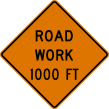
Road work ahead 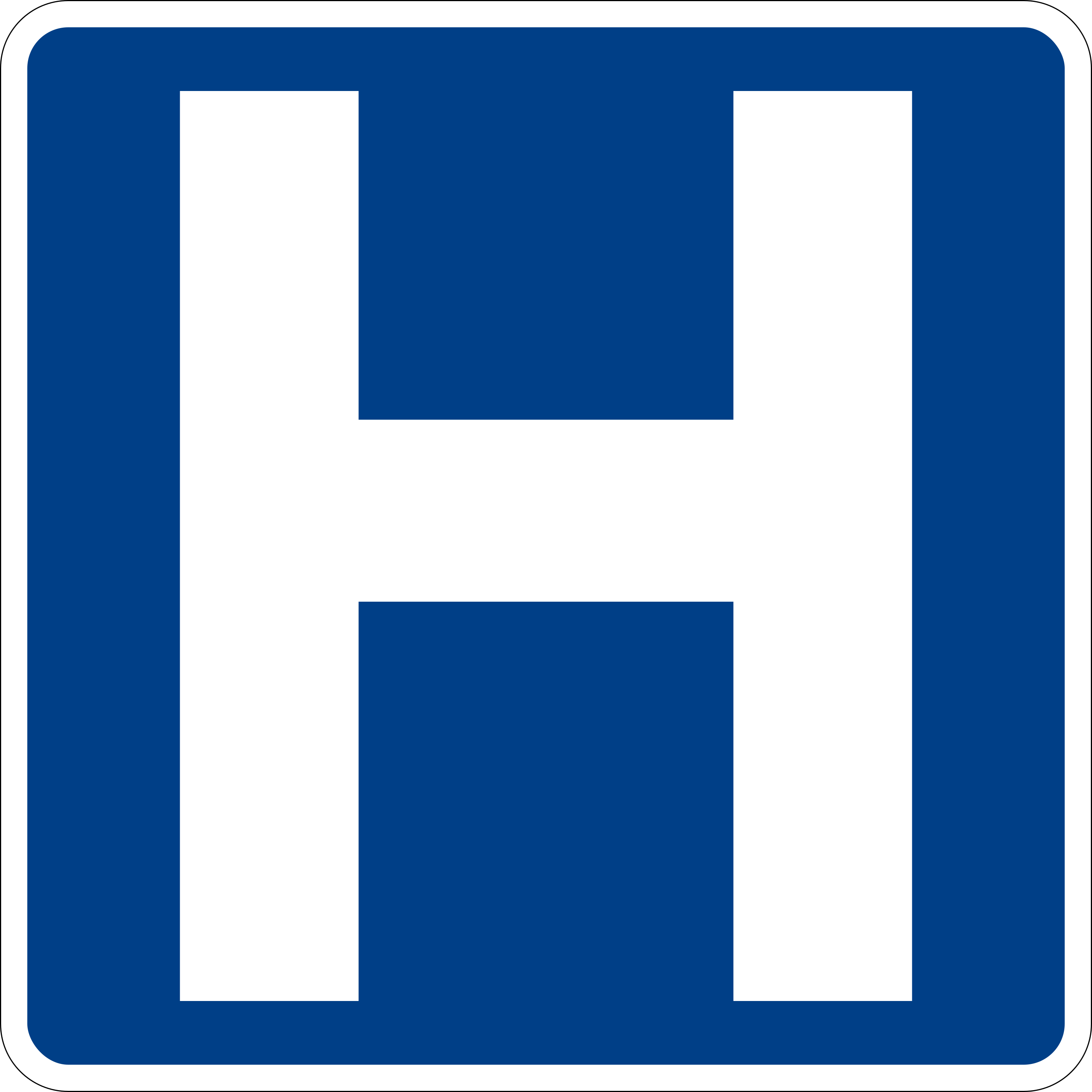
Hospital
3 questions from the Kentucky practice test
1. What is the usual appearance of a Kentucky warning sign?
- White with green letters and rectangular
- Yellow with black lettering or symbols and diamond shaped
- Blue with white symbols and circular
- Orange with red letters and octagonal
Show answer
Yellow with black lettering or symbols and diamond shaped. Most warning signs use a yellow background with black lettering or symbols and a diamond shape. That visual pattern distinguishes an advance warning from a regulatory instruction, route marker, or service sign. White rectangular panels commonly carry rules, while blue or green signs generally provide guide information. Orange signs are associated with work zones, not the ordinary warning-sign appearance described here. Use the color and shape as an early cue, then read the symbol and prepare for the roadway condition ahead.
2. What colors and symbols are used on work zone signs?
- An orange background with black letters or symbols
- A blue background with white service symbols
- A green background with route numbers only
- A red background with white emergency text
Show answer
An orange background with black letters or symbols. Work zone signs use an orange background with black letters or symbols. That visual combination warns of roadwork, changing lanes, workers, equipment, or rough pavement ahead. Blue service signs and green route signs serve different purposes, while a red background is not the work zone pattern described here. Treat orange and black as a cue to reduce speed, increase following distance, and search actively for people and equipment near the roadway.
3. What kind of information can guide signs provide?
- Intersecting roads, cities, towns, and highway points of interest
- The legal blood alcohol limit for the driver
- A command to stop at every intersection
- A warning that a railroad gate is descending
Show answer
Intersecting roads, cities, towns, and highway points of interest. Guide signs help drivers navigate by identifying intersecting roads, directing travel toward cities and towns, and showing points of interest along a highway. They may also identify services, but they are not substitutes for regulatory commands or hazard warnings. A blood alcohol limit belongs to law and licensing information, while stop commands and railroad alerts use other traffic-control signs. Use guide information early to choose the proper route and lane, then continue obeying the separate signs that control speed, movement, and stopping.
Practice this topic
Lock it in with road signs questions from the free Kentucky practice test. Every answer comes with a plain English explanation.
Source: the Kentucky Driver Manual, Section Six: Rules of the Road. This lesson is a plain English summary, not the law itself; where it differs, the manual and the statute govern. Last checked 2026-10-02.