
Key points
Always turn right from the right-most part of your lane.
Source: Handbook p. 42
“Always turn right from the right-most portion of your lane.”
Kentucky Driver Manual, Handbook p. 42For a left turn, yield to oncoming traffic and turn from the left-most part of your lane.
Source: Handbook p. 42
“When making a left turn, yield to oncoming traffic. Always turn left from the left-most portion of your lane.”
Kentucky Driver Manual, Handbook p. 42Look left, then right, then left again before entering an intersection.
Source: Handbook p. 43
“Look left and then right and left again before entering the intersection.”
Kentucky Driver Manual, Handbook p. 43Do not rely on others to obey signals or signs. They may not yield.
Source: Handbook p. 43
“Do not rely on others to obey traffic control signals or signs. They may not yield the right of way. Be prepared to avoid a crash.”
Kentucky Driver Manual, Handbook p. 43Drivers on a minor road must yield to drivers on a main road.
Source: Handbook p. 34
“Drivers on a minor road must yield to drivers on a main road.”
Kentucky Driver Manual, Handbook p. 34Before changing lanes, check your blind spots by turning your head and looking over your shoulder.
Source: Handbook p. 46
“Check your "blind spots," or areas around your vehicle that cannot be seen by other vehicles, by turning your head and looking over your shoulder in the direction you plan to move.”
Kentucky Driver Manual, Handbook p. 46When merging onto a highway, traffic already on it has the right of way.
Source: Handbook p. 47
“The existing traffic has the right of way, so make sure it is clear before you merge.”
Kentucky Driver Manual, Handbook p. 47Finish passing before coming within 200 feet of an oncoming vehicle.
Source: Handbook p. 47
“and that a pass be completed before coming within two hundred (200) feet of an oncoming vehicle.”
Kentucky Driver Manual, Handbook p. 47Treat a hill or curve as an oncoming vehicle. Do not start a pass approaching one.
Source: Handbook p. 48
“Treat a curve or a hill as an oncoming vehicle. Do not start to pass when approaching a hill or a curve.”
Kentucky Driver Manual, Handbook p. 48When being passed, Kentucky law requires you to give way to the right.
Source: Handbook p. 48
“Kentucky law requires the operator of a vehicle about to be overtaken and passed shall give way to the right in favor of the overtaking vehicle.”
Kentucky Driver Manual, Handbook p. 48
Numbers to know
| Number | What it means | Manual |
|---|---|---|
| 200 feet | finish passing before this close to an oncoming vehicle | Handbook p. 47 |
Recognize these signs
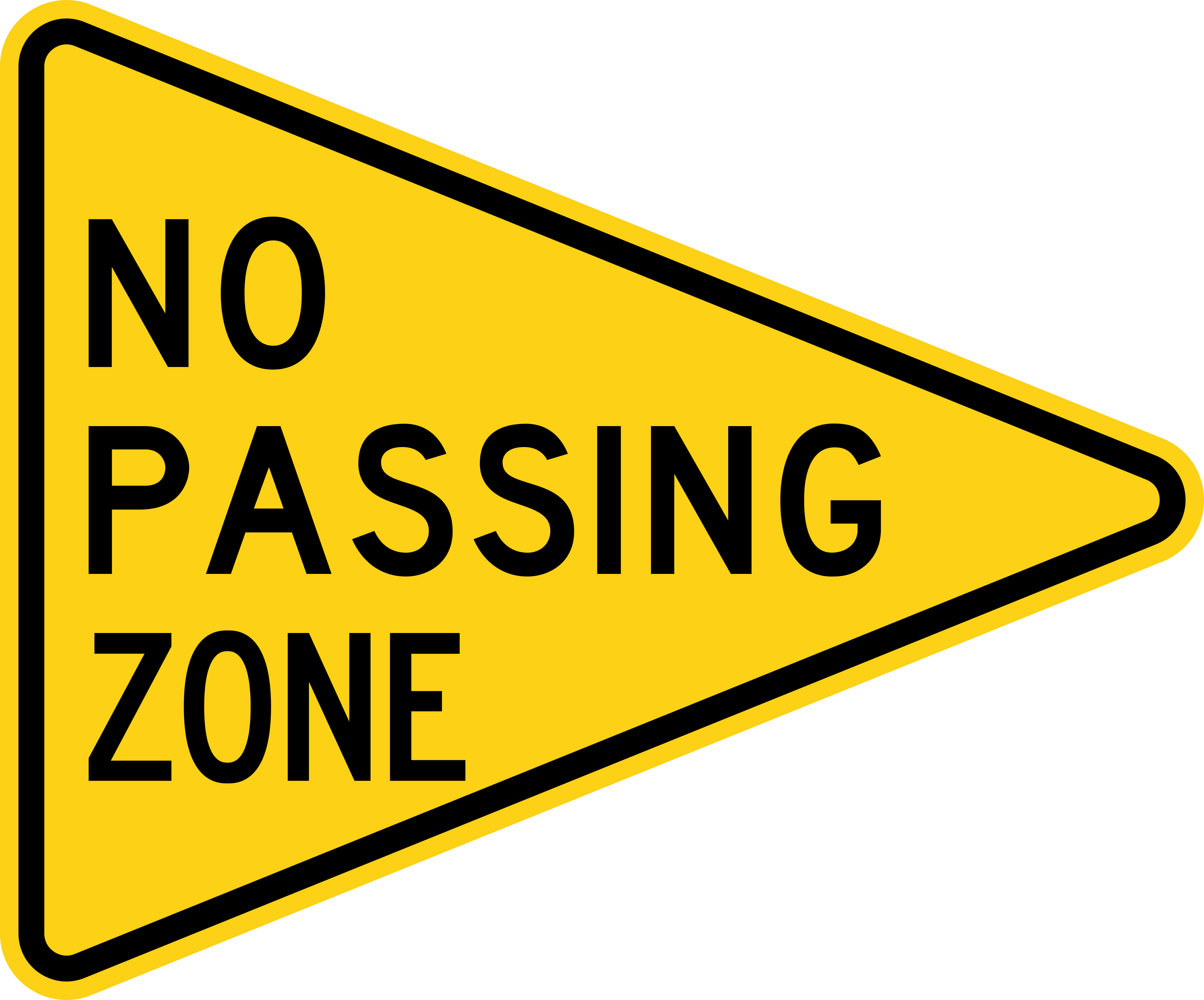
No passing zone
3 questions from the Kentucky practice test
1. Should a driver assume another road user will always yield the right of way?
- No, the intersection’s situation and circumstances must be considered
- Yes, a right-of-way rule guarantees the path is clear
- Yes, if the driver reached the intersection first
- No, right-of-way rules never apply at intersections
Show answer
No, the intersection’s situation and circumstances must be considered. Kentucky presents right-of-way rules as guidance, not a guarantee that other people will behave as expected. Even when a rule appears to favor you, consider the actual intersection, visibility, pedestrians, and other traffic before moving. The first-arrival rule does not make the path automatically safe, and right-of-way rules do apply at intersections. The useful cue is uncertainty: if another driver may not yield, slow or wait rather than assert priority. Avoiding a collision is more important than proving that another person was supposed to stop.
2. On a main road and a minor road, which driver must yield?
- The driver who reaches the center line first
- The driver on the main road
- The driver traveling below the speed limit
- The driver on the minor road
Show answer
The driver on the minor road. Kentucky assigns the yield duty to the driver on the minor road when traffic meets a main road. The main-road driver does not lose priority because the other vehicle is larger, faster, or reaches the center line first. Scan for the roadway hierarchy before entering, then slow or stop so the main-road traffic can continue safely. A minor road may be a side street or another less prominent route, so use signs, lane arrangement, and the intersection layout together rather than guessing from vehicle size or arrival speed.
3. Before moving into another lane, which sequence is required for a safe lane change?
- Check mirrors and the blind spot, find a gap, signal, look again, and move when safe
- Signal only after crossing the lane line
- Rely on the inside mirror without turning your head
- Use emergency flashers and let surrounding traffic decide
Show answer
Check mirrors and the blind spot, find a gap, signal, look again, and move when safe. A safe lane change combines observation, communication, and a suitable opening. Check mirrors, look over the shoulder into the planned lane’s blind spot, identify a gap in traffic, signal, look again in the direction of the lane change, adjust speed, and steer into the lane. The mirror-only answer misses an area mirrors cannot show, while late signaling gives others less time. Hazard flashers are not a substitute for a turn signal or a traffic check. The cue is a shoulder check before commitment, followed by a second look as the vehicle begins moving.
Practice this topic
Lock it in with safe driving questions from the free Kentucky practice test. Every answer comes with a plain English explanation.
Source: the Kentucky Driver Manual, Section Seven: General Driving. This lesson is a plain English summary, not the law itself; where it differs, the manual and the statute govern. Last checked 2026-10-02.