
Test 5 of 10 · 20 questions · Free 2026
RI Permit Practice Test 5
Jump to the test ↓A fixed 20 question set from the Rhode Island bank with answers and plain English explanations.
Question 1 of 20 · 0 right so far
All 20 questions in test 5
Every question below comes from the Rhode Island question bank on this page. Open a question to see the correct answer and the explanation. Nothing here is hidden behind a signup.
1. Your vehicle stalls on railroad tracks and you know a train is approaching. What should you do?
- Push the vehicle along the tracks toward the crossing
- Remain inside while repeatedly trying the ignition
- Get everyone out and move as far from the tracks as possible
- Wait for the train to sound its horn before leaving
Show answer
Get everyone out and move as far from the tracks as possible. When a car stalls on the rails with a train coming, the manual says to get yourself and any passengers out of the vehicle and off the tracks, and move as far from the tracks as possible. To avoid being hit by debris, run far from the tracks in the opposite direction from which the train is moving, because the debris field travels the same way the train does. Staying inside to restart the engine, pushing the car along the rails, or waiting for a horn all keep you in the path of the train.
Study this in the handbook: Skids, brake failure, blowouts and other emergencies
2. After an emergency vehicle passes, what should you do before re-entering the traffic flow?
- Re-enter immediately without signaling because the lane is open
- Signal, check over your shoulder, and confirm another emergency vehicle is not coming
- Follow the emergency vehicle at a close distance
- Remain stopped indefinitely at the roadside
Show answer
Signal, check over your shoulder, and confirm another emergency vehicle is not coming. The first emergency vehicle may not be the only one responding. Before returning to traffic, activate the turn signal and glance over the shoulder to check for another emergency vehicle. Moving immediately can place the vehicle in the path of a second responder, while following closely ignores the manual's advice to always drive 500 feet behind emergency vehicles. Once the shoulder and lane are clear, merge smoothly and resume a lawful speed.
Study this in the handbook: Licenses, insurance, phones and other laws
3. When must motorists stop for a school bus with flashing red lights?
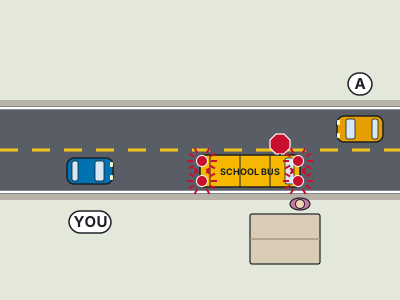
- Only when following the bus on a two-lane road
- When approaching from either direction, until the red lights stop flashing
- Only if children are visible in the roadway
- Never when the bus is stopped on a private road
Show answer
When approaching from either direction, until the red lights stop flashing. Flashing red lights on a school bus require motorists approaching from either direction to make a full stop and remain stopped until the red lights no longer flash. The rule applies on public highways, private roads, and parking lots. A divided highway exception exists when the bus is opposite your vehicle and the directions are separated, but that is not the ordinary two-way approach described here. Do not wait for children to appear. The cue is red bus lights, which mean stop and wait.
Study this in the handbook: Pedestrians, school buses and bicyclists
4. What does Rhode Island law prohibit a driver from wearing while operating a motor vehicle on a public highway?
- Earphones or headsets
- Prescription eyeglasses
- A winter hat with ear flaps
- A hands-free microphone attached to clothing
Show answer
Earphones or headsets. The listed Rhode Island law prohibits operating a motor vehicle on a public highway while wearing earphones or headsets. It does not create a ban on ordinary vision correction, winter clothing, or every hands-free accessory. The important distinction is what is worn over or in the ears, not whether the device is being used for a phone call. Treat the rule as a public-highway equipment restriction and apply it while the vehicle is being operated.
Study this in the handbook: Licenses, insurance, phones and other laws
5. A Rhode Island driver age 19 has a BAC of 0.04%. Which alcohol offense category applies?
- No offense because the BAC is below 0.08%
- Driving while impaired, for ages 18 through 20 and BAC at least 0.02% but below 0.08%
- Adult DUI at the 0.15% or above level
- Chemical-test refusal automatically applies
Show answer
Driving while impaired, for ages 18 through 20 and BAC at least 0.02% but below 0.08%. Rhode Island places drivers age 18 through 20 in this DWI category when BAC is at least 0.02% but below 0.08%. A 19-year-old with 0.04% falls inside that range, so the adult threshold in the choice “No offense because the BAC is below 0.08%” is not the only relevant rule. The 0.15% category is far higher, and refusal is a separate event that requires declining a chemical test. For an under-21 question, check age first, then compare the measured BAC with the dedicated DWI band.
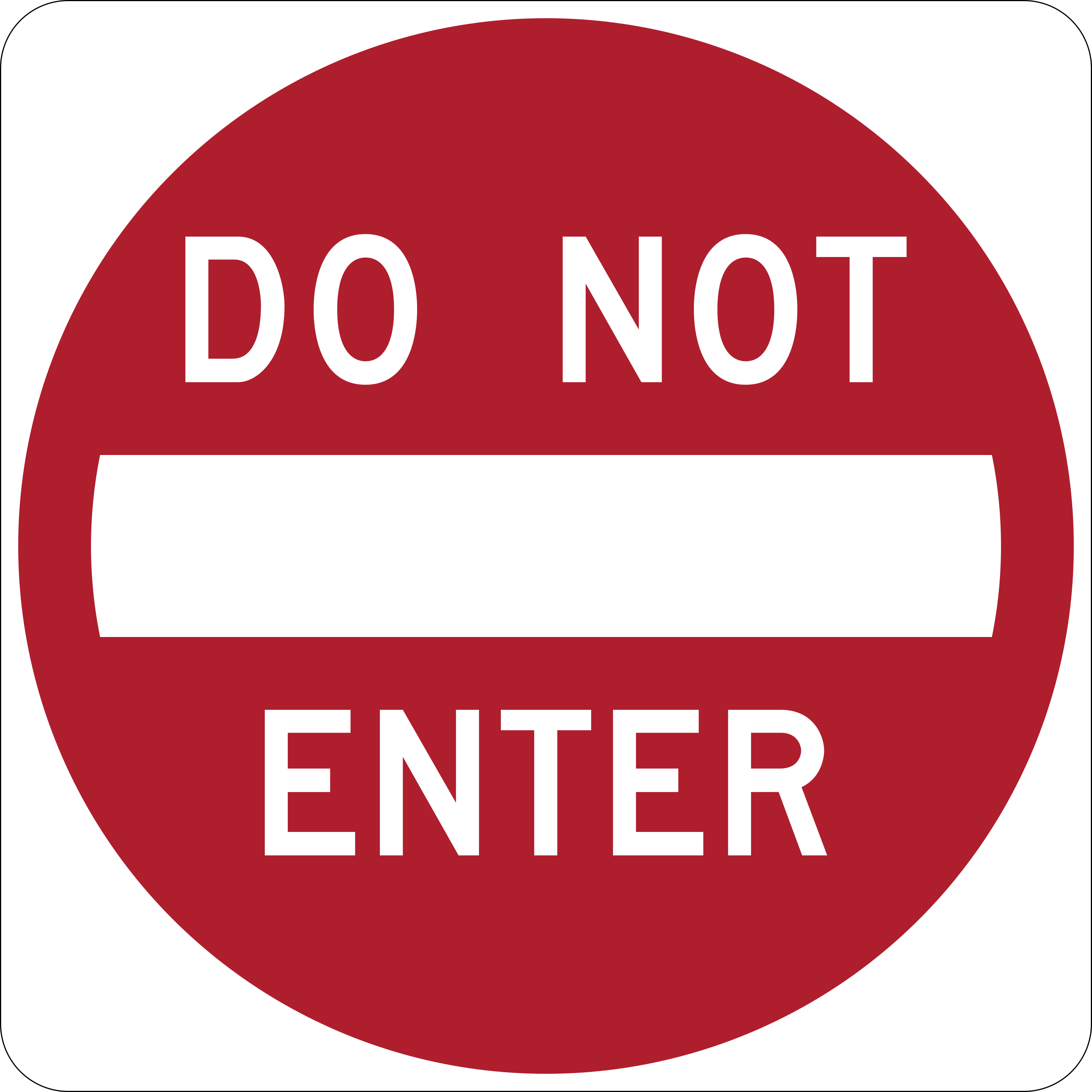
6. What does this DO NOT ENTER sign tell a driver?
- Continue straight but reduce speed for a work zone
- Parking is allowed only on the side displaying the sign
- The road is a two-way street with priority traffic
- Do not proceed into that roadway or ramp entrance
Show answer
Do not proceed into that roadway or ramp entrance. DO NOT ENTER is listed among Rhode Island's regulatory signs, which state rules a driver must obey rather than offer advice. It prohibits entering the roadway or ramp from the side where the sign faces you. It is not a parking instruction, a two way priority notice, or a work zone speed warning. A driver who sees it should not cross the point of entry, even if the pavement beyond appears open and empty. Find a lawful route around the blocked direction before continuing.
7. What speed range does the Rhode Island manual give for most highways?
- 50 to 65 miles per hour
- 25 to 35 miles per hour
- 35 to 45 miles per hour
- 70 to 85 miles per hour
Show answer
50 to 65 miles per hour. The manual's summary describes most highway speeds as 50 to 65 miles per hour. That range is distinct from the 25 mph residential reference and does not create a blanket permission to drive at the top number. Posted limits govern particular roads, and weather or traffic can require a slower pace under the Basic Speed Law. When reading a speed question, distinguish the road type and the stated range, then adjust for conditions before choosing a safe speed.
Study this in the handbook: Licenses, insurance, phones and other laws
8. A Rhode Island 18-year-old is caught possessing an alcoholic beverage for the first time. Besides a fine, what license consequence does the law set?
- A 5 year revocation
- No license consequence
- Suspension until age 21
- A minimum 60 day license suspension
Show answer
A minimum 60 day license suspension. Under the underage possession law, anyone under 21 who possesses an alcoholic beverage is fined $150 to $750 for a first offense and is subject to a minimum 60 day suspension of the driver's license. Community service may also be required, and a second offense may bring a substance abuse assessment. The law does attach a license penalty, so a choice with no license penalty is wrong. Suspension until 21 and a 5 year revocation come from other parts of the penalty tables, not this possession law.
Study this in the handbook: Refusal and DUI penalties
9. What does Level 3 status change for a Rhode Island driver?
- It adds a permanent midnight curfew
- It permits driving only with a parent
- It removes Level 1 and 2 restrictions on driving time and supervision
- It removes the duty to use seat belts
Show answer
It removes Level 1 and 2 restrictions on driving time and supervision. A Level 3 Full Operator’s License permits driving without the earlier restrictions concerning time of driving and supervision. It does not create a parent-only condition, add a new curfew, or cancel the continuing rules for safety belts and child restraints. The license therefore expands independence while leaving general road laws in force. The memory cue is narrow: Level 3 removes the graduated licensing limits named in the manual, not every safety obligation that applies to ordinary driving.
Study this in the handbook: Licenses, insurance, phones and other laws
10. What must a driver do when a pedestrian using a white cane or guide dog is crossing ahead?
- Turn right on red after stopping
- Sound the horn and continue through first
- Stop completely before the intersection and yield
- Yield only if the pedestrian enters a marked crosswalk
Show answer
Stop completely before the intersection and yield. A white cane or guide dog signals a blind or low vision pedestrian who requires special care. The driver must bring the vehicle to a complete stop before reaching the intersection and yield the right of way. A horn does not replace stopping, and a marked crosswalk is not required for this protection. Even a right turn on red can be dangerous because the pedestrian may use engine sound to judge traffic. The cue is cane or guide dog: stop early, wait, and let the pedestrian cross safely.
Study this in the handbook: Turn signals and roadway markings
11. How should a driver respond to a flashing yellow arrow for a left turn?
- Turn immediately because the arrow guarantees protection
- Proceed in the arrow's direction only after yielding to oncoming traffic and pedestrians
- Stop and wait until a solid green arrow appears
- Turn only after yielding to vehicles behind you
Show answer
Proceed in the arrow's direction only after yielding to oncoming traffic and pedestrians. A flashing yellow arrow permits the indicated left turn, but it is not a protected movement. The turning driver must first yield to oncoming traffic and pedestrians. The choice promising guaranteed protection confuses this signal with a green arrow, and waiting for a solid green arrow is more restrictive than the stated rule. Vehicles facing the arrow should scan across the intersection and the crosswalk before turning. The practical cue is yellow permission paired with a yield obligation: go only after conflicting road users are clear.
Study this in the handbook: Traffic lights and roundabouts
12. What does the Rhode Island manual say about passing when a solid yellow line is on your side?
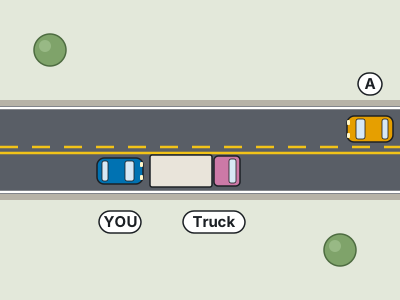
- Do not cross it to pass
- Pass only motorcycles across it
- Pass if the vehicle ahead is below the speed limit
- Cross it whenever the opposite lane looks empty
Show answer
Do not cross it to pass. A solid yellow center line on the driver’s side marks a no passing condition. The line is a roadway restriction, so an empty opposing lane or a slow vehicle does not authorize crossing it. The motorcycle and speed based exceptions in the other choices are not stated by this marking rule. Drivers should wait for a permitted passing section and maintain a safe following distance meanwhile. The visual cue is the uninterrupted yellow line beside the vehicle: solid means stay in lane for passing decisions, unlike a broken line that may permit a maneuver when safe.
Study this in the handbook: Turn signals and roadway markings
13. What speed principle applies when snow, rain, sleet, ice, or construction changes road conditions?
- Adjust speed to conditions because the posted limit is a maximum for ideal conditions
- Drive at the posted limit regardless of surface or visibility
- Use the posted limit only when the road is icy
- Increase speed to spend less time in a work zone
Show answer
Adjust speed to conditions because the posted limit is a maximum for ideal conditions. Rhode Island’s Basic Speed Law requires a speed that matches the road and traffic conditions. A posted limit represents the maximum for ideal conditions, not a promise that the same speed is safe during rain, snow, sleet, ice, or construction. The limit does not become relevant only on ice, and speeding through a work zone adds risk. Read the surface and visibility continuously, then slow enough to remain safe for pedestrians, traffic, and the roadway.
Study this in the handbook: Licenses, insurance, phones and other laws
14. What is a permitted way to obtain Rhode Island Driver's Manual information for current procedures and fees?
- Use a vehicle's registration sticker
- Rely only on an old printed fee table
- Ask another driver's guess
- Check the DMV website
Show answer
Check the DMV website. The manual directs readers to the Rhode Island DMV website for up-to-date changes in laws, fees, and procedures. An old printed table can become inaccurate because fees and requirements change. Another driver's recollection is not an official source, and a registration sticker identifies a vehicle rather than explaining DMV procedure. When a question involves a current transaction, use the manual as background and verify the live instruction through the DMV site before visiting an office.
15. When a solid yellow line is on a driver's side of a two-way roadway, what does it indicate?
- Crossing is allowed whenever the driver uses a turn signal
- Passing is required before the next intersection
- The line separates lanes traveling in the same direction
- The driver should not pass another vehicle or cross the solid line
Show answer
The driver should not pass another vehicle or cross the solid line. A solid yellow line on the driver's side means that direction should not pass another vehicle or cross the solid line. The manual notes limited emergency and legal-turn exceptions, but a turn signal alone does not authorize an ordinary crossing. Yellow separates opposing traffic, so it is not a same-direction lane divider. Treat the solid marking as a no-passing warning and look for a lawful, safe reason before crossing it.
Study this in the handbook: Turn signals and roadway markings
16. In the Rhode Island manual's warning sign panel, the Added lane sign carries a label for the side the new lane joins from. Which side does it name?
- From the right
- From the center median
- From the left
- From both sides at once
Show answer
From the left. The warning sign panel at the back of the Rhode Island manual labels the Road Narrows sign "from right" and the Added lane sign "from left." So the manual's added lane warning shows a new lane joining from the left, while the right side label belongs to the narrowing road sign. Expect traffic entering from that side and adjust your speed or position smoothly. Do not mix up the two signs: one takes road space away, the other adds it.
17. What do white roadway lines separate in Rhode Island?
- Traffic moving in the same direction
- Traffic moving in opposite directions only
- Pedestrian sidewalks from buildings
- Railroad tracks from crossing gates
Show answer
Traffic moving in the same direction. White lines separate traffic moving in the same direction. A broken white line generally allows a driver to pass another vehicle or change lanes when safe, while a solid white line restricts those movements and is commonly found at an outer edge or special lane boundary. Yellow lines carry the opposing-direction meaning, so the choice “Traffic moving in opposite directions only” confuses the color roles. Use the color first to understand traffic flow, then inspect whether the line is broken or solid before changing position.
Study this in the handbook: Turn signals and roadway markings
18. How does the Rhode Island manual say to guard against hydroplaning?
- Use cruise control on wet roads
- Brake hard when you feel the tires float
- Drive in the center of the road where water is deepest
- Keep tire pressure at the manufacturer's standard, reduce speed, and be careful in rain
Show answer
Keep tire pressure at the manufacturer's standard, reduce speed, and be careful in rain. Hydroplaning happens when tires ride on a film of water and lose steering capability. The manual says to guard against it by keeping tire pressure inflated to the manufacturer's recommended standard, reducing speed, and being careful while driving in the rain, and to avoid areas where water pools. Cruise control and hard braking on a floating tire both invite a skid. Roads are especially slippery when rain first starts, as oil, rubber and dirt mix with water.
Study this in the handbook: Stopping, turning and passing
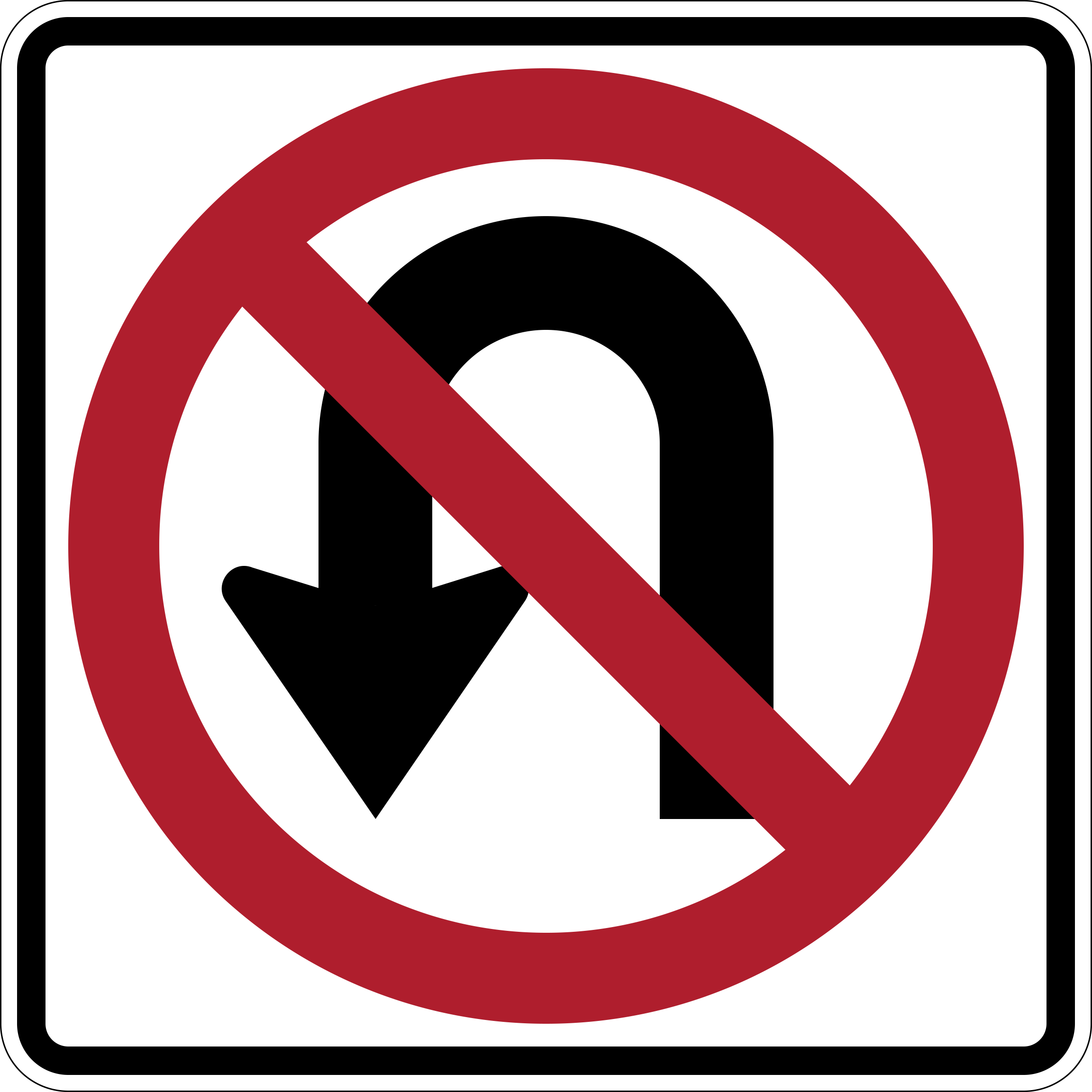
19. What does a Rhode Island sign labeled NO U-TURN prohibit?
- Making a legal right turn at the next intersection
- Turning the vehicle around to travel in the opposite direction
- Stopping briefly at a marked stop line
- Following a guide sign toward an exit
Show answer
Turning the vehicle around to travel in the opposite direction. No U-Turn is a regulatory sign that prohibits reversing direction through a U-shaped turn at the posted location. It does not ban every right turn, a lawful stop, or following a route toward an exit. Read the exact maneuver shown or named by the sign and obey it where posted. If you need to reverse direction, continue until you reach a location where the roadway markings and signs allow that movement. The visual cue is the U-turn symbol with the prohibition marking, which targets a turnaround rather than ordinary turning.
20. In Rhode Island, which child must ride in a rear seat in a federally approved child restraint system?
- Any child under 12 regardless of size
- Only an infant under one year old
- A child under 8 who is less than 57 inches tall and less than 80 pounds
- A child under 8 who is 60 inches tall
Show answer
A child under 8 who is less than 57 inches tall and less than 80 pounds. Rhode Island law requires a child under age 8, less than 57 inches in height and less than 80 pounds, to ride in a rear seating position in an approved child restraint system. A child under 8 who is at least 57 inches or at least 80 pounds uses a safety belt in a rear seat instead, which is why the 60 inch child does not need a restraint seat. The rule is not limited to infants, and it does not extend to every child under 12.
Study this in the handbook: Seat belts, child seats and headlights
QualitySpace is expanding to Rhode Island
We are a California-based independent insurance brokerage working on licensing in more states. We cannot help with Rhode Island insurance yet. Leave your email and we will let you know when we can.
Every question is written from the official Rhode Island Driver's Manual. Need paper? Printable RI practice test with answer key.
Last verified 2026-10-05. How we check every question · Study all 200 as flashcards
Frequently asked questions
How many questions are on this Rhode Island practice test?
This fixed set has 20 questions. It is test 5 of 10 from the 200 question Rhode Island bank.
How does this fixed test relate to the full Rhode Island bank?
Each numbered test is a fixed set of questions in a fixed order, so you can retake the same test later and compare. Every test mixes road signs and the other topics in about the same proportion as the full bank. Tests 1 to 10 together cover every question in the Rhode Island bank once. The full practice page mixes the whole bank at random.
Last verified 2026-10-05. See the Rhode Island DMV facts page for sourced state details.
Return to the full Rhode Island practice test · Study road signs