
Test 1 of 10 · 20 questions · Free 2026
RI Permit Practice Test 1
Jump to the test ↓A fixed 20 question set from the Rhode Island bank with answers and plain English explanations.
Question 1 of 20 · 0 right so far
All 20 questions in test 1
Every question below comes from the Rhode Island question bank on this page. Open a question to see the correct answer and the explanation. Nothing here is hidden behind a signup.
1. During the first twelve months of a Limited Provisional License, how many unrelated passengers under 21 may ride?
- Any number during daylight
- No more than two
- Up to four if belted
- No more than one
Show answer
No more than one. For the first twelve months of a Limited Provisional License, Rhode Island permits no more than one licensed passenger younger than 21. Immediate family and household members are exempt, so the rule is about the number of other young passengers rather than every young person in the vehicle. Two passengers and a larger belted group exceed the stated limit, while daylight does not change it. The study cue is one young passenger for the first year, with the family and household exception kept separate from the basic count.
Study this in the handbook: The three levels of Rhode Island's graduated license
2. What does a red arrow displayed at a traffic light require?
- Stop and do not proceed in the direction of the arrow
- Turn in the arrow's direction after yielding to pedestrians
- Continue straight until the arrow becomes flashing yellow
- Treat the arrow as permission to pass the intersection
Show answer
Stop and do not proceed in the direction of the arrow. A red arrow controls movement in the direction it points. The driver must stop and may not proceed that way until the signal changes. Yielding alone is not enough, because the instruction is a stop and prohibition rather than a permissive turn. A flashing yellow arrow has a different rule, allowing a turn after yielding to oncoming traffic and pedestrians. When the red arrow appears, remain stopped in the marked turn lane and wait for a permitted signal.
Study this in the handbook: Traffic lights and roundabouts
3. A Rhode Island driver under 21 has a BAC of .05%. What charge applies?
- Nothing, .05% is under the legal limit
- Only a parking-level infraction
- Driving Under the Influence, the same as .08%
- Driving While Impaired, because .02% to under .08% is impaired for drivers under 21
Show answer
Driving While Impaired, because .02% to under .08% is impaired for drivers under 21. Rhode Island uses two thresholds. Any person of any age with a BAC of .08% or more is intoxicated and charged with drunk driving, DUI. Any person under 21 with a BAC of .02% but less than .08% is impaired and will be charged with Driving While Impaired, DWI. A .05% reading is above the .02% line, so the under 21 driver faces a DWI charge even though an adult at .05% would not face DUI.
Study this in the handbook: Alcohol, BAC limits and implied consent
4. How far from a stop sign, traffic light, or flashing signal must a Rhode Island driver park?
- At least 8 feet
- At least 20 feet
- At least 30 feet
- At least 50 feet
Show answer
At least 30 feet. Rhode Island lists places where you may not park or stop, and one of them is within 30 feet of a flashing red or yellow light, a stop sign, or a traffic light. The other distances in the same list belong to different features: 8 feet from a fire hydrant, 20 feet from a crosswalk at an intersection or a fire station driveway, and 50 feet from the nearest rail of a railroad crossing. Where parking is permitted on a two lane road, the right wheels must be no more than twelve inches from the right side of the road or curb.
Study this in the handbook: Where you may not park or stop
5. Why should a driver leave substantial space behind a large truck or semi-tractor-trailer?
- Tailgating can be fatal, and at least 50 feet helps the truck driver see you
- The truck's legal speed requires every car to stay 100 feet back
- Following close prevents airflow from moving the car
- A truck's rear blind spot is always exactly 20 feet
Show answer
Tailgating can be fatal, and at least 50 feet helps the truck driver see you. Large trucks have substantial blind areas, and a close-following car may disappear from the driver’s view. The manual warns that tailgating a semi-tractor-trailer can be fatal and recommends staying at least 50 feet back when you expect the driver to see you. The distance is not a universal legal speed rule, and close positioning does not control airflow safely. A useful visual check is whether you can see the truck’s side-view mirrors while maintaining space.
Study this in the handbook: Following distance, trucks and motorcycles
6. How should a driver control a vehicle as it begins to skid?
- Press the accelerator hard and turn opposite the skid
- Let off the gas and turn in the direction you want the vehicle to go
- Lock the brakes and hold the wheel straight
- Shift to park before steering
Show answer
Let off the gas and turn in the direction you want the vehicle to go. The manual's skid procedure starts by letting off the gas and keeping your foot away from the brake pedal and clutch, then letting the vehicle slow gradually and turning in the direction you want the vehicle to go. Be prepared to steer left and right a few times until the vehicle is completely under control. Hard acceleration, locked brakes, or shifting to park all work against that recovery. The manual adds that techniques can vary with front, rear, or all wheel drive, so check your owner's manual.
Study this in the handbook: Skids, brake failure, blowouts and other emergencies
7. On a Rhode Island Level One permit, where must the supervising driver sit?
- In the rear seat behind the permit holder
- Beside the permit holder in the front seat
- In any seat, as long as the driver is over 21
- Outside the vehicle during practice
Show answer
Beside the permit holder in the front seat. Level One practice requires the supervising driver to sit beside the permit holder in the front seat while the vehicle is moving. That position allows the supervisor to monitor the road and take control during an emergency. Sitting behind the learner or choosing any seat would not satisfy the stated condition, even if the adult meets the age and licensing qualifications. Before moving, confirm the supervisor is properly seated, everyone is restrained, and no other person occupies the remaining front-seat position.
Study this in the handbook: The three levels of Rhode Island's graduated license
8. What minimum total visible light transmittance must Rhode Island vehicle windows keep under the window tint law?
- 35%
- 50%
- 70%
- 20%
Show answer
70%. Rhode Island follows the federal motor vehicle safety standard of a total visible light transmittance of not less than 70 percent, and the fine for violating the window tint law is $250. The 35%, 50%, and 20% choices would all allow darker film than Rhode Island permits. The road test rules also say a test vehicle may have only the legal amount of window tint, and a rejected vehicle means the road test must be rescheduled.
9. How does Rhode Island law classify an adult's second breath test refusal violation within a ten year period?
- A first-offense civil warning
- A misdemeanor, because it falls within the ten year period
- A license renewal issue with no violation class
- A felony only when the refusal follows a crash
Show answer
A misdemeanor, because it falls within the ten year period. Rhode Island's refusal statute counts prior violations over a ten year period. A second refusal violation within ten years is a misdemeanor, with up to six months in jail, a fine of $600 to $1,000, 60 to 100 hours of community restitution, and a license suspension of one to two years. Refusing a blood test is treated differently: a repeat blood test refusal is a civil offense with its own penalties. The driver's manual still prints a five year window, but the statute controls. The civil warning and renewal choices remove the violation class entirely, and the felony choice invents a crash condition the law does not use.
10. At a Rhode Island rotary, who has the right-of-way over a vehicle approaching the entrance?
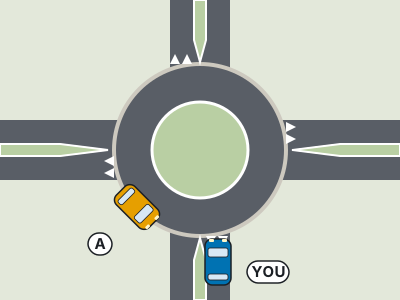
- The vehicle traveling at the highest speed
- The vehicle entering from the right
- Vehicles already in the rotary
- The vehicle that sounds its horn first
Show answer
Vehicles already in the rotary. A vehicle approaching a rotary must yield to all vehicles already circulating in it. The entering driver therefore waits for a safe gap instead of assuming that an approach from the right creates priority. Speed and horn use do not establish right-of-way. Reduce speed, identify circulating traffic, and enter only after yielding. This rule also explains why an apparently open entry can still require patience when a vehicle is approaching within the rotary.
Study this in the handbook: Right of way at intersections, rotaries and driveways
11. If a vehicle must stop on a Rhode Island freeway because of mechanical trouble, where should the driver move it when possible?
- Into the breakdown lane
- Across the nearest travel lane
- Onto the center median facing traffic
- Directly beside the left passing lane
Show answer
Into the breakdown lane. For a mechanical or other difficulty on a freeway, the manual advises signaling and moving the vehicle into the breakdown lane if possible. The breakdown lane separates the disabled vehicle from moving traffic and gives approaching drivers a clearer warning. Crossing into a travel lane or positioning near the passing lane creates additional exposure, while the median choice is not the stated procedure. Signal early and remain alert for vehicles that may misuse the breakdown lane.
Study this in the handbook: Speed limits and freeway driving
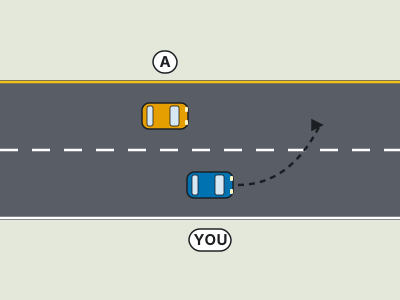
12. Before changing lanes, which sequence best follows the manual’s guidance?
- Signal only after crossing the lane line
- Give a signal, check mirrors and over the shoulder, then move when clear
- Rely on the rearview mirror without checking beside the vehicle
- Turn on hazard lights and move immediately
Show answer
Give a signal, check mirrors and over the shoulder, then move when clear. For starting from the curb or making a safe lane change, the manual's first step is to signal your intent with enough time to warn other motorists. Next, check your mirrors and look over your shoulder to make sure the blind spots of the mirrors are clear and no other vehicle has entered your intended path. Signaling only after crossing the line gives no warning, mirrors alone cannot show the blind spots, and hazard lights are not a turn signal. Move over only when the checks show the lane is clear.
Study this in the handbook: Stopping, turning and passing
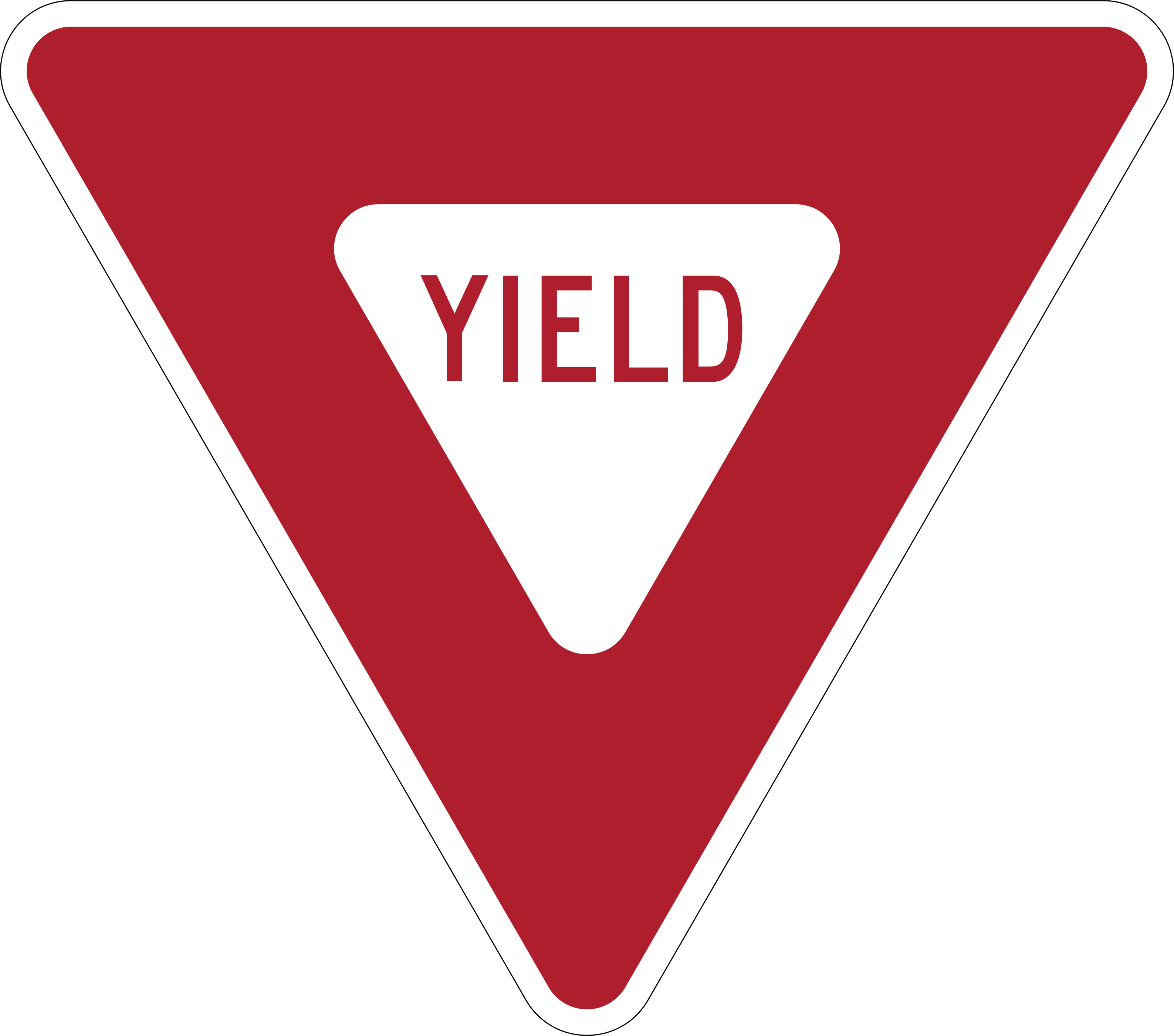
13. You face this YIELD sign and a bicyclist is approaching on the cross road. Must you yield to the bicyclist in Rhode Island?
- Only if the bicyclist is in a marked bike lane
- No, bicycles must always yield to cars
- Yes, a bicycle is a vehicle with equal rights and responsibilities
- Only if the bicyclist is a child
Show answer
Yes, a bicycle is a vehicle with equal rights and responsibilities. Bicyclists have a legal right to ride on the roadway, and under Rhode Island law a bicycle is considered a vehicle with equal rights and responsibilities. A yield sign therefore requires you to give way to an approaching bicyclist on the cross road exactly as you would to a car. The duty does not depend on a bike lane or the rider's age. Riders 15 and younger must wear a certified helmet, but that rule is about the rider, not your right of way.
Study this in the handbook: Pedestrians, school buses and bicyclists
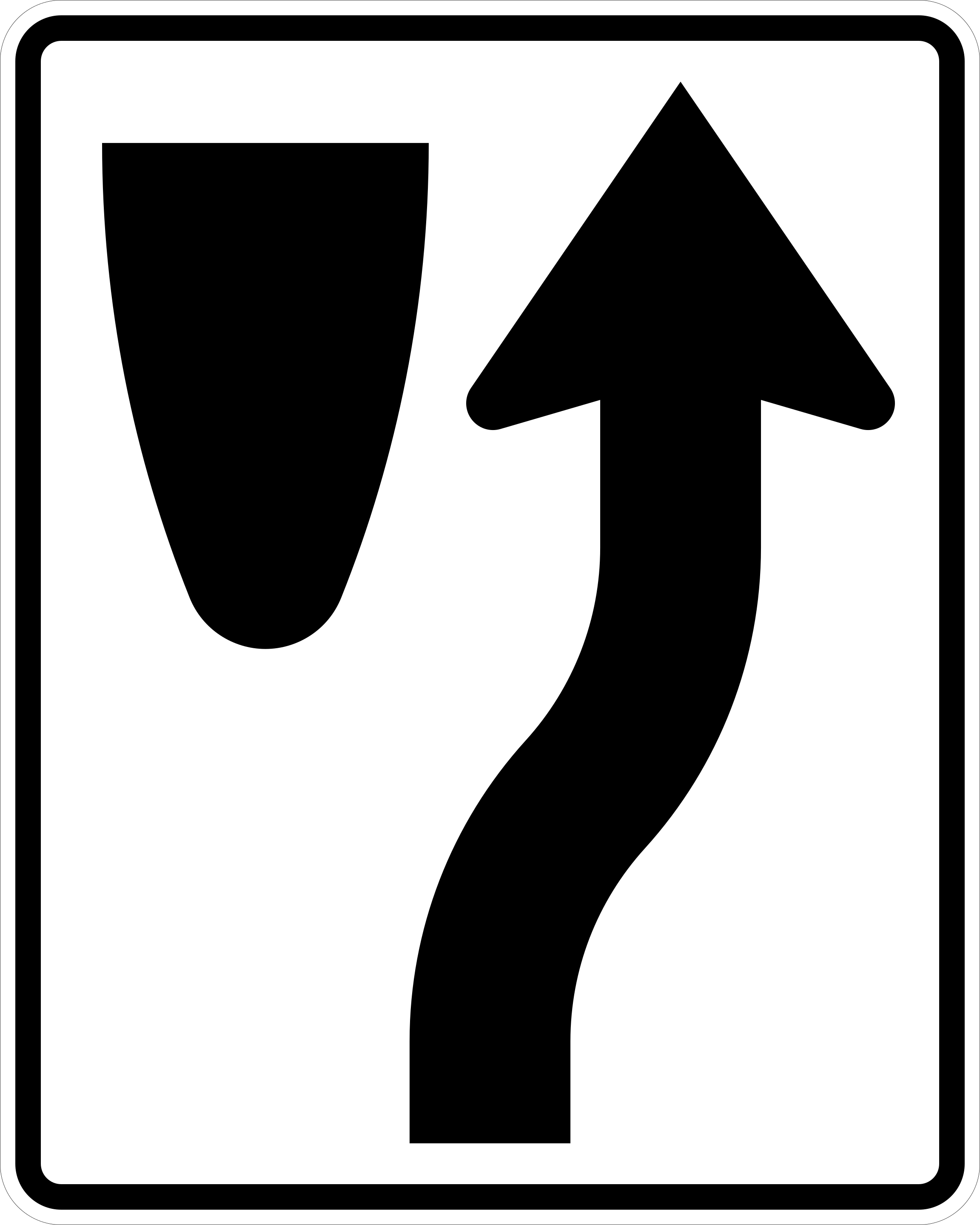
14. When this KEEP RIGHT sign marks an obstruction, which side should you use?
- Use the shoulder on whichever side is open
- Pass to the left regardless of pavement markings
- Stop and wait for a police escort
- Pass to the right of the divider or obstruction
Show answer
Pass to the right of the divider or obstruction. KEEP RIGHT directs traffic around a divider or obstruction on its right side. The driver should follow the indicated path and remain within the usable roadway. Passing left ignores the arrow, while stopping for an escort or using an open shoulder invents conditions not shown by the sign. Reduce speed if the obstruction narrows the route, then keep the vehicle right of the marker.
15. What movement does this crossed left-turn arrow prohibit?
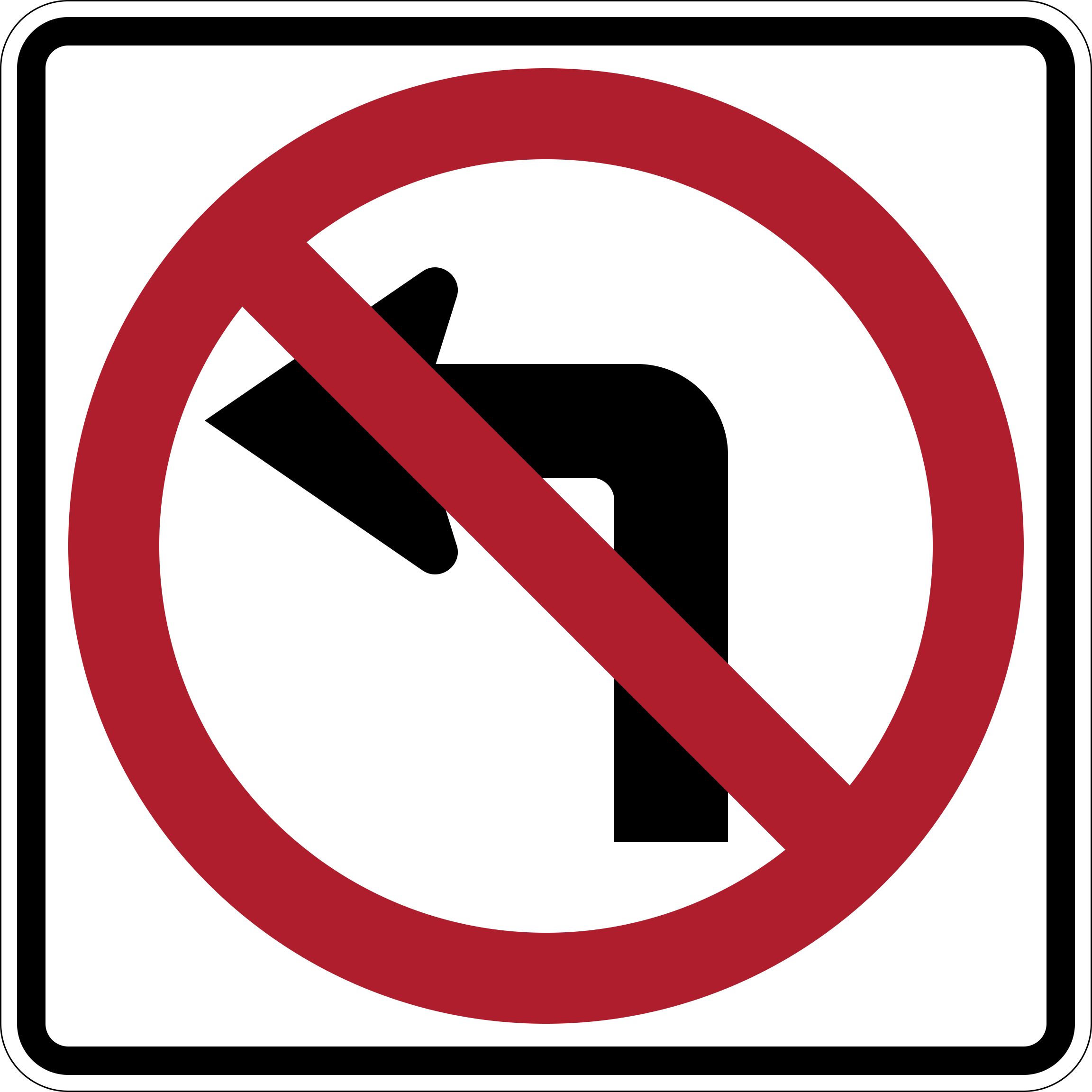
- Parking on the left shoulder only
- Making a U-turn at every intersection
- Driving straight through the intersection
- Turning left at the posted location
Show answer
Turning left at the posted location. The crossed left arrow means left turns are prohibited where the sign is posted. It does not automatically prohibit U-turns everywhere, going straight, or parking on a shoulder. The restriction is tied to the displayed maneuver and location. A driver who needs to travel left should continue to a permitted intersection rather than turning against the sign’s instruction. Check the arrow before committing to the turn.
16. Where does the Rhode Island manual direct readers to find its warning-sign illustrations?
- On the vehicle registration card
- On the inside of the back cover
- Only in the organ donation section
- At the bottom of every traffic signal
Show answer
On the inside of the back cover. The manual’s opening sign material presents regulatory and guide signs, then directs readers to the inside of the back cover for warning signs. That location is a reference point in the manual, not a roadway instruction. The registration card, organ donation pages, and traffic signals do not contain the referenced warning-sign collection. When studying for the knowledge test, use the back-cover panel to review symbols such as curves, crossings, road work, and changing roadway conditions. The cue is the manual’s explicit cross-reference after the initial sign lists.
17. After stopping at a red light in Rhode Island, what must a driver do before making a permitted right turn?
- Sound the horn twice before entering the intersection
- Wait for a green arrow even when no sign restricts the turn
- Turn immediately if the cross street is empty
- Yield to all oncoming traffic and pedestrians
Show answer
Yield to all oncoming traffic and pedestrians. Rhode Island allows a right turn at red after a full stop unless a no turn on red sign is posted, but the driver must first yield to all oncoming traffic and pedestrians. An empty looking cross street does not remove the duty to yield, and a green arrow is not required when no sign restricts the turn. Sounding the horn is not part of the rule at all. Stop completely, check every approach and crosswalk, yield, and then turn only when the way is clear.
Study this in the handbook: Licenses, insurance, phones and other laws
18. What pedestrian-signal rule does the manual state for Walk and Don’t Walk indications?
- Ignore Don’t Walk if the crosswalk is marked
- Cross whenever a vehicle is stopped nearby
- Always obey both Walk and Don’t Walk signals
- Use the signal only at night
Show answer
Always obey both Walk and Don’t Walk signals. Pedestrian signals control when a person should enter a crosswalk, so both indications must be obeyed. A stopped vehicle does not make crossing safe from every direction, and painted markings do not override a Don’t Walk display. The rule applies during daylight as well as at night. Pause before the curb, identify the displayed symbol, and enter only when the signal authorizes the movement and the surrounding traffic is also clear.
Study this in the handbook: Turn signals and roadway markings
19. If another driver is tailgating you on a highway, what response does the manual recommend?
- Change lanes when possible and avoid speeding up or braking suddenly
- Brake hard to make the tailgater increase distance
- Speed up so the other driver cannot pass
- Call attention to the driver with repeated horn use
Show answer
Change lanes when possible and avoid speeding up or braking suddenly. A tailgater reduces the margin for stopping, but provoking that driver can turn a problem into a road rage event. The manual advises changing lanes when possible, staying calm, and avoiding sudden braking or acceleration. Increasing speed is not a safe solution because the following vehicle remains too close at a higher speed. Keep looking ahead, create room around your own vehicle, and let the impatient driver pass when a safe opening exists.
Study this in the handbook: Licenses, insurance, phones and other laws
20. In Rhode Island, what fine applies when a child is in a child restraint or seat belt but is not riding in a rear seating position?
- $100.00
- $85.00
- $40.00
- $250.00
Show answer
$100.00. Rhode Island's schedule of traffic violations sets a $100 fine when a child is restrained by a child restraint or seat belt but is not in any rear seating position, the same amount listed for having no child restraint at all. The older $85 figure printed in the driver's manual no longer matches the schedule. A $40 fine is the separate amount for a passenger or operator who is not wearing a seat belt. Under the child restraint law, a child under eight who is shorter than 57 inches and lighter than 80 pounds rides in a rear seat in an approved restraint, and a front seat is allowed only when the vehicle has no back seat or every rear position is already used by other children.
QualitySpace is expanding to Rhode Island
We are a California-based independent insurance brokerage working on licensing in more states. We cannot help with Rhode Island insurance yet. Leave your email and we will let you know when we can.
Every question is written from the official Rhode Island Driver's Manual. Need paper? Printable RI practice test with answer key.
Last verified 2026-10-05. How we check every question · Study all 200 as flashcards
Frequently asked questions
How many questions are on this Rhode Island practice test?
This fixed set has 20 questions. It is test 1 of 10 from the 200 question Rhode Island bank.
How does this fixed test relate to the full Rhode Island bank?
Each numbered test is a fixed set of questions in a fixed order, so you can retake the same test later and compare. Every test mixes road signs and the other topics in about the same proportion as the full bank. Tests 1 to 10 together cover every question in the Rhode Island bank once. The full practice page mixes the whole bank at random.
Last verified 2026-10-05. See the Rhode Island DMV facts page for sourced state details.
Return to the full Rhode Island practice test · Study road signs