
Key points
Regulatory devices tell you to stop, go a certain way or limit speed, and failing to obey can bring a penalty.
Source: Handbook p. 33
“Regulatory Devices instruct you to stop, proceed in a certain direction, or limit your speed. All regulatory devices indicate action required by you. Failure to comply is subject to penalty.”
Hawaii Driver's Manual, Handbook p. 33Warning devices advise you of hazardous or possibly hazardous conditions.
Source: Handbook p. 33
“Warning Devices advise you of hazardous conditions or the possibility of hazardous conditions.”
Hawaii Driver's Manual, Handbook p. 33Guide and information signs help you find your way or make your trip more comfortable.
Source: Handbook p. 33
“Guide and Information Signs assist you in finding your way safely or provide information to make your trip more comfortable.”
Hawaii Driver's Manual, Handbook p. 33A reduced speed ahead sign warns that a lower limit begins at the next speed limit sign.
Source: Handbook p. 45
“These signs inform you that you should begin to reduce your speed. The new speed limit begins at the next speed limit sign.”
Hawaii Driver's Manual, Handbook p. 45The yellow pennant no passing zone sign is on the left side and points to where the zone begins.
Source: Handbook p. 45
“NO PASSING ZONE SIGNS are pennant-shaped yellow and black signs that supplement the "Do Not Pass" signs. The pennant is located at the left side of the road and points to the beginning of the no-passing zone.”
Hawaii Driver's Manual, Handbook p. 45A Pass With Care sign marks the end of a no passing zone.
Source: Handbook p. 46
“PASS WITH CARE SIGNS are rectangular, black and white signs indicating the end of a no-passing zone.”
Hawaii Driver's Manual, Handbook p. 46Warning signs are usually diamond shaped with a black legend on a yellow background.
Source: Handbook p. 47
“Warning signs are usually diamond-shaped with a black legend and border on a yellow background.”
Hawaii Driver's Manual, Handbook p. 47Orange is the basic color for construction and maintenance devices.
Source: Handbook p. 49
“Orange is the basic color for these devices.”
Hawaii Driver's Manual, Handbook p. 49The slow moving vehicle emblem is an 18 inch reflective triangle on vehicles designed for 25 mph or less.
Source: Handbook p. 30
“This highly reflective 18 inch (46cm) triangular emblem is required to be displayed on the rear of vehicles designed to operate at speeds of 25 mph (40 km/h) or less.”
Hawaii Driver's Manual, Handbook p. 30
Numbers to know
| Number | What it means | Manual |
|---|---|---|
| 18 inch | size of the slow moving vehicle emblem | Handbook p. 30 |
| 25 mph | vehicles designed for this speed or less display the emblem | Handbook p. 30 |
Recognize these signs
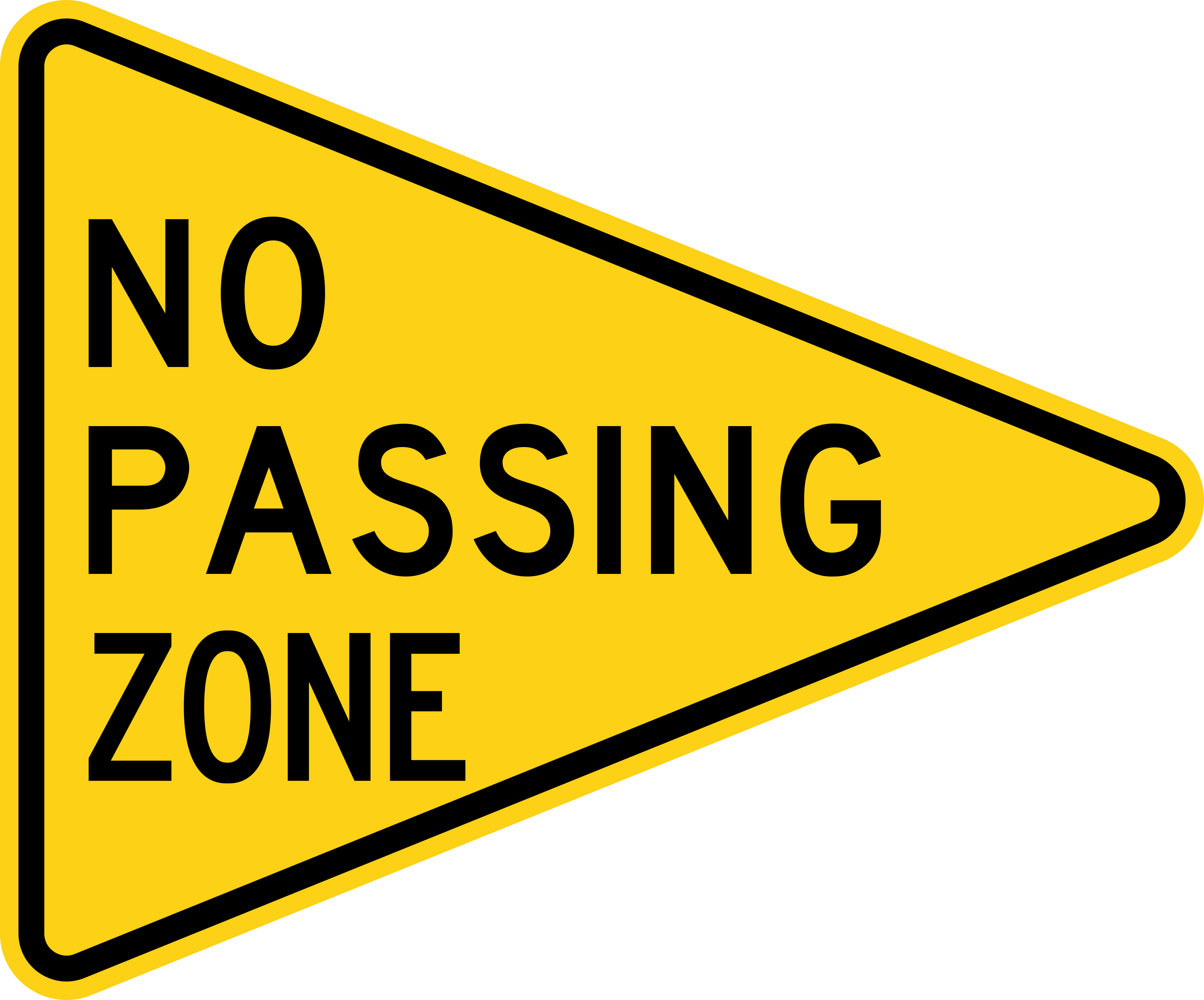
No passing zone 
Slippery when wet 
Divided highway 
Pedestrian crossing 
Hill 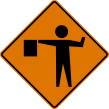
Flagger ahead 
Slow moving vehicle
3 questions from the Hawaii practice test
1. What does the yellow pennant-shaped sign identify?
- The end of a no-passing zone
- The beginning of a no-passing zone
- A place where passing is required
- A roadside recreation area
Show answer
The beginning of a no-passing zone. The pennant is placed on the left side of the road and points to the beginning of a no-passing zone. The driver should stay behind the vehicle ahead and obey the restriction rather than treating the sign as an invitation to overtake. The end of a zone uses different information, and neither passing nor recreation is required by this warning. Even after the restriction ends, visibility and traffic conditions still determine whether a pass is safe.
2. Which category of traffic device tells a driver that an action is required and failure may bring a penalty?
- Decorative roadside markers
- Warning devices
- Guide and information signs
- Regulatory devices
Show answer
Regulatory devices. Regulatory devices establish commands or restrictions, such as stopping, traveling in a direction, or limiting speed. Ignoring one can bring a penalty because the device requires action. Warning devices describe hazards, while guide and information signs help with navigation or trip information. Decorative markers have no role in the manual's three categories. On a test question, look for the phrase action required: that points to the regulatory category rather than a caution or destination message.
3. What does Hawaii's slow moving vehicle emblem look like, and which vehicles must display it?
- A round red sign on all trucks
- A reflective 18 inch triangular emblem on vehicles designed for 25 mph or less
- A blue triangle on tractors only
- A square yellow sign on buses
Show answer
A reflective 18 inch triangular emblem on vehicles designed for 25 mph or less. The slow moving vehicle emblem is a highly reflective 18 inch, or 46 centimeter, triangular emblem required on the rear of vehicles designed to operate at speeds of 25 mph or less. When you see this emblem, the manual says to reduce speed and approach cautiously. A vehicle that slow closes the gap quickly, so begin easing off as soon as the triangle comes into view. The emblem is not a round red sign, a blue tractor marker, or a square yellow bus sign.
Practice this topic
Lock it in with road signs questions from the free Hawaii practice test. Every answer comes with a plain English explanation.
Source: the Hawaii Driver's Manual, Chapter VI: Traffic Signs, Signals and Markings. This lesson is a plain English summary, not the law itself; where it differs, the manual and the statute govern. Last checked 2026-09-27.