
Key points
When two vehicles arrive at the same time, yield to the car on the right.
Source: Handbook p. 32
“Yield to the car on the right when vehicles approach at the same time.”
Hawaii Driver's Manual, Handbook p. 32When turning left, yield to all oncoming traffic close enough to be a hazard.
Source: Handbook p. 32
“Yield to all oncoming traffic that is so close as to be a hazard when turning left.”
Hawaii Driver's Manual, Handbook p. 32Stop and yield to all traffic on the protected route.
Source: Handbook p. 32
“Stop and yield to all traffic on the protected route.”
Hawaii Driver's Manual, Handbook p. 32When the light turns green, yield to pedestrians and cars still caught in the intersection.
Source: Handbook p. 32
“Yield to pedestrians and cars caught in intersection when light turns green.”
Hawaii Driver's Manual, Handbook p. 32Stop and yield when entering a public road from an alley, driveway or farmyard.
Source: Handbook p. 32
“Stop and yield when entering any public street or road from alley, driveway or farmyard.”
Hawaii Driver's Manual, Handbook p. 32Funeral processions and convoys have the right of way at intersections.
Source: Handbook p. 29
“Funeral processions and convoys have the right of way at intersections.”
Hawaii Driver's Manual, Handbook p. 29At a roundabout, entering traffic must yield to traffic already circulating.
Source: Handbook p. 65
“A roundabout is a one-way circular intersection in which entering traffic must yield the right-of-way to circulating traffic.”
Hawaii Driver's Manual, Handbook p. 65In a roundabout, drive to the right of the central island in a counterclockwise direction.
Source: Handbook p. 65
“Drive to the right of the central island and proceed in a counterclockwise direction.”
Hawaii Driver's Manual, Handbook p. 65
Recognize these signs
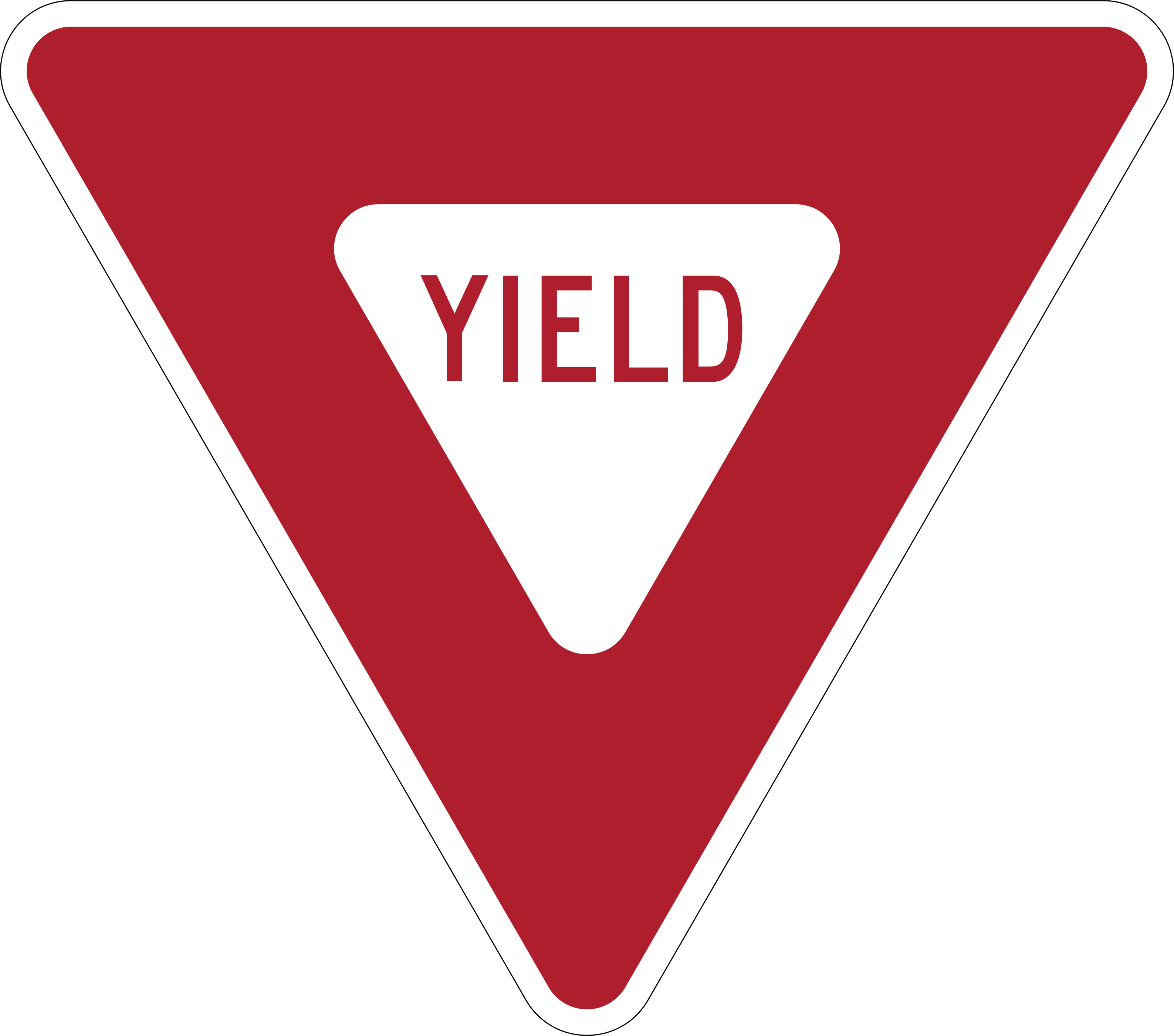
Yield 
Roundabout
3 questions from the Hawaii practice test
1. If two vehicles reach an intersection at the same time, which vehicle generally has priority?
- The vehicle that signals first
- The vehicle on the left
- The vehicle with the larger engine
- The vehicle on the right
Show answer
The vehicle on the right. When vehicles arrive simultaneously, Hawaii's general priority rule gives way to the vehicle on the right. Engine size does not create right of way, and using a turn signal communicates an intended movement without deciding who proceeds first. The vehicle on the left should wait and allow the right side vehicle to move. A good scan habit is to check both sides whenever arrival timing is close, then yield rather than accelerate to claim the space.
2. Before turning left at an intersection, which traffic must you yield to?
- Vehicles already stopped on a side street behind you
- Only vehicles approaching from behind
- No traffic, because the turn signal grants priority
- Oncoming traffic close enough to create a hazard
Show answer
Oncoming traffic close enough to create a hazard. A left turn crosses the path of opposing traffic, so the turning driver must yield to oncoming vehicles that are close enough to be a hazard. Signaling communicates an intention but does not grant the right-of-way. Traffic behind you is not the principal conflict described by this rule, and stopped vehicles on a side street do not cancel the duty to check the opposing lane. Wait for a safe opening, keep pedestrians in view, and complete the turn without forcing an approaching driver to brake or swerve. The practical cue is the distance and speed of the oncoming vehicle.
3. When approaching a roundabout, to whom must an entering driver yield?
- Only vehicles entering from the left
- Vehicles waiting behind the entry line
- Traffic already circulating in the roundabout
- No one, because entering traffic has priority
Show answer
Traffic already circulating in the roundabout. An entering vehicle must yield to traffic already circulating in the roundabout. The circulating stream has priority, so the approaching driver should slow down, look to the left for traffic, and enter only when there is a safe gap. Yielding to vehicles waiting behind you does not address the conflict inside the circle, and entering traffic never has priority. The left-only option is too narrow, because the manual says to yield to all traffic, including bicyclists, already in the roundabout. Think of it as joining a flow that is already moving.
Practice this topic
Lock it in with right of way questions from the free Hawaii practice test. Every answer comes with a plain English explanation.
Source: the Hawaii Driver's Manual, Chapter V: Traffic Laws and Regulations. This lesson is a plain English summary, not the law itself; where it differs, the manual and the statute govern. Last checked 2026-09-27.