
Key points
At a red light, stop at the stop line, or if there is none, before the crosswalk or intersection.
Source: Handbook p. 5
“At a red light, come to a complete stop at the stop line or, if there is no stop line, before entering the intersection or before reaching the crosswalk.”
Virginia Driver's Manual, Handbook p. 5You may not turn right on red where a No Turn on Red sign is posted or a red arrow points right.
Source: Handbook p. 5
“You may not turn right on red if signs are posted at the intersection that read “No Turn on Red,” or if a red arrow pointing to the right is displayed.”
Virginia Driver's Manual, Handbook p. 5You may turn left on red only from a one way street onto another one way street.
Source: Handbook p. 5
“You may turn left at a red light if you are on a one-way street and turning left onto another one-way street while the traffic signal displays a red light.”
Virginia Driver's Manual, Handbook p. 5Virginia law prohibits right and left turns at red arrow lights.
Source: Handbook p. 5
“Virginia law prohibits right and left turns at red arrow lights.”
Virginia Driver's Manual, Handbook p. 5At a flashing red light, stop completely and yield; go when the way is clear.
Source: Handbook p. 5
“At a flashing red light, come to a complete stop and yield to oncoming vehicles and pedestrians. You may go when the way is clear.”
Virginia Driver's Manual, Handbook p. 5At a yellow light, stop if you have not entered the intersection unless stopping is unsafe; do not speed up to beat it.
Source: Handbook p. 5
“If you have not entered the intersection, stop; or, if unsafe to stop, cautiously go through it. If you are already in the intersection, go through it cautiously. Do not speed up to beat the light.”
Virginia Driver's Manual, Handbook p. 5At a flashing yellow arrow, you may turn in the arrow's direction if the way is clear.
Source: Handbook p. 5
“At a flashing yellow arrow, you may turn in the direction of the arrow, if the way is clear.”
Virginia Driver's Manual, Handbook p. 5When signals are out and show no lights, stop and treat the intersection as an all way stop.
Source: Handbook p. 6
“you are required to stop, proceeding through the intersection as though it were an all-way stop.”
Virginia Driver's Manual, Handbook p. 6Never drive in a lane marked with a red X lane use signal.
Source: Handbook p. 6
“Never drive in a lane marked with a red X signal.”
Virginia Driver's Manual, Handbook p. 6Always follow a police officer's directions over signs and signals.
Source: Handbook p. 5
“Obey all signs and signals unless directed by a police officer; always follow the officer’s direction.”
Virginia Driver's Manual, Handbook p. 5
Recognize these signs
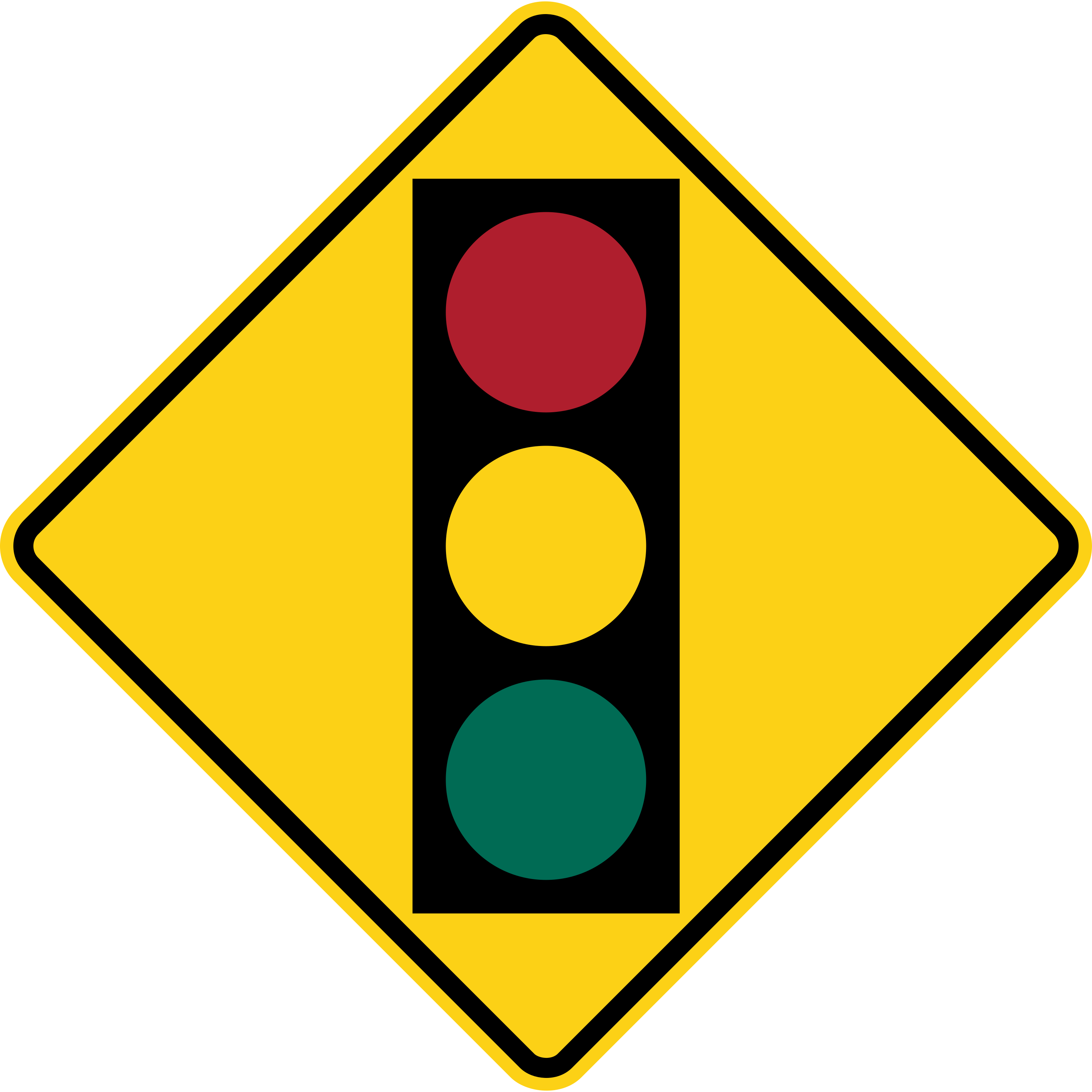
Signal ahead 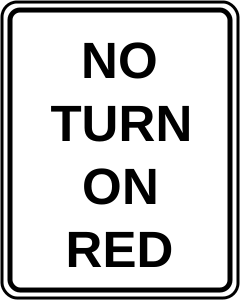
No turn on red
3 questions from the Virginia practice test
1. What should you do at a steady yellow light if you have not entered the intersection?
- Speed up to beat the red light
- Treat it exactly like a green signal
- Stop only if another driver honks
- Stop, unless stopping would be unsafe
Show answer
Stop, unless stopping would be unsafe. A steady yellow light warns that the signal is about to change. If you have not entered the intersection, stop; if stopping would be unsafe, proceed cautiously. Speeding up is specifically contrary to the manual's instruction, and yellow is not equivalent to green. A horn from another driver does not determine the duty. Look ahead early, ease off the accelerator, and judge whether a controlled stop can be made before the line without creating a hazard behind you.
2. What must you do when traffic signals are out of service and displaying no lights?
- Stop and wait until a steady green appears
- Continue normally because no light means no rule
- Stop and proceed as though the intersection were an all-way stop
- Yield only to traffic approaching from the left
Show answer
Stop and proceed as though the intersection were an all-way stop. When a signal is dark because of a power outage or another problem, Virginia treats the intersection as an all-way stop. Every approach must stop and then proceed according to right-of-way rules. Stopping and treating the intersection as an all-way stop is the required action, while continuing normally assumes the absence of a light removes control. Yielding only to the left invents a one-sided yield rule. Look for an officer or portable stop signs, because those instructions replace the all-way-stop treatment when they are present.
3. When may a driver in Virginia turn left on a red light?
- From any two-way street onto a one-way street without stopping
- Only after waiting for a green arrow, even between one-way streets
- From a one-way street onto a two-way street whenever traffic is light
- From a one-way street onto another one-way street, after stopping and yielding
Show answer
From a one-way street onto another one-way street, after stopping and yielding. Virginia permits a left turn on red only when the driver is on a one-way street and turning left onto another one-way street. The vehicle must first stop completely, look both ways, and yield to pedestrians and traffic. A two-way origin or destination does not satisfy the street pattern, and light traffic does not waive the stop. A green arrow is not required for this permitted turn unless another sign or red arrow prohibits it.
Practice this topic
Lock it in with signals and markings questions from the free Virginia practice test. Every answer comes with a plain English explanation.
Source: the Virginia Driver's Manual, Section 2: Signals, Signs and Pavement Markings. This lesson is a plain English summary, not the law itself; where it differs, the manual and the statute govern. Last checked 2026-09-27.