
Key points
Always stop at stop signs, red lights, flashing red signals, and railroad crossings with flashing signals.
Source: Handbook p. 15
“at all stop signs, red traffic lights and flashing red signals when entering a street or crossing over a sidewalk from a driveway, alley, building or parking lot at railroad crossings with flashing signals”
Virginia Driver's Manual, Handbook p. 15Fleeing an officer's signal to stop, when the officer is killed in the pursuit, is a Class 4 felony.
Source: Handbook p. 15
“If you don’t obey a law enforcement officer’s signal to stop and the officer pursues you and is killed as a direct result of the pursuit, you will be guilty of a Class 4 felony.”
Virginia Driver's Manual, Handbook p. 15Stop for a stopped school bus with flashing red lights and an extended stop sign from any direction, and stay stopped until everyone is clear and the bus moves.
Source: Handbook p. 15
“You must stop for stopped school buses with flashing red lights and an extended stop sign when you approach from any direction on a highway, private road or school driveway. Stop and remain stopped until all persons are clear and the bus moves again.”
Virginia Driver's Manual, Handbook p. 15You must also stop if the bus is loading or unloading and its signals are not on.
Source: Handbook p. 15
“You must also stop if the bus is loading or unloading passengers and the signals are not on.”
Virginia Driver's Manual, Handbook p. 15You need not stop when traveling the opposite way on a road divided by a median or barrier.
Source: Handbook p. 15
“You do not have to stop if you are traveling in the opposite direction on a roadway with a median or barrier dividing the road and the bus is on the opposite side of the median or barrier.”
Virginia Driver's Manual, Handbook p. 15Stopping distance depends on perception time, reaction distance and braking distance.
Source: Handbook p. 15
“Three factors determine the distance that it takes to stop your vehicle: perception time, reaction distance and braking distance.”
Virginia Driver's Manual, Handbook p. 15Wet pavement can double your braking distance.
Source: Handbook p. 15
“For example, wet pavement can double your braking distance.”
Virginia Driver's Manual, Handbook p. 15Never pump antilock brakes.
Source: Handbook p. 15
“Check your vehicle owner’s manual and practice braking before you go out on the road. Remember, never pump antilock brakes.”
Virginia Driver's Manual, Handbook p. 15If you veer off the road, slow gradually, look where you want to go, and steer back slowly.
Source: Handbook p. 18
“Gradually reduce your speed, look in the direction you want to go, slowly steer back onto the roadway.”
Virginia Driver's Manual, Handbook p. 18
Numbers to know
| Number | What it means | Manual |
|---|---|---|
| Class 4 felony | charge for fleeing an officer who is killed in the pursuit | Handbook p. 15 |
Recognize these signs
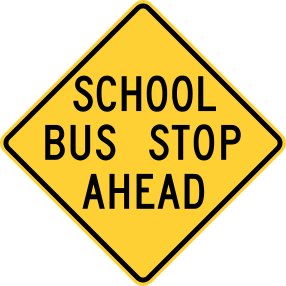
School bus stop ahead
3 questions from the Virginia practice test
1. When a school bus displays flashing red lights and an extended stop sign, who must stop?
- Vehicles approaching from any direction on the highway, private road, or school driveway
- Only vehicles approaching from behind the bus
- Only vehicles traveling in the bus's lane
- No one if the bus is on a private road
Show answer
Vehicles approaching from any direction on the highway, private road, or school driveway. A stopped school bus with flashing red lights and an extended stop sign requires traffic approaching from any direction to stop on a highway, private road, or school driveway. The rule is broader than stopping only behind the bus or only in its lane. A private road does not remove the stopping requirement. Remain stopped until all people are clear of the roadway and the bus moves again. Look for children who may cross unexpectedly after leaving the bus.
2. A stopped school bus displays flashing red lights and an extended stop sign. When may you resume driving?
- After all persons are clear and the bus moves again
- After waiting ten seconds, even if the bus remains stopped
- As soon as the nearest child reaches the sidewalk
- When traffic behind you begins passing
Show answer
After all persons are clear and the bus moves again. Drivers approaching from any direction on a highway, private road, or school driveway must stop for the specified school bus. The stop continues until every person is clear of the roadway and the bus moves again. A child's reaching the sidewalk is not enough if other people remain near the roadway, and a timed pause cannot replace the bus's movement. Traffic behind you also does not change the requirement. Watch the bus, keep the vehicle stopped, and use the bus beginning to move plus the roadway being clear as the practical release cue.
3. What does braking distance describe?
- The time needed to notice a hazard
- The distance the car travels after the brakes are applied
- The distance traveled before the driver reacts
- The width of the lane during a stop
Show answer
The distance the car travels after the brakes are applied. Braking distance begins after the driver applies the brakes and continues until the vehicle stops. Perception time comes earlier, when the driver recognizes a hazard, and reaction distance covers the travel before the pedal is applied. The lane width is unrelated. Wet pavement can lengthen the braking portion substantially, so maintain a larger cushion and reduce speed before a slick area. Separating these three parts of stopping distance helps explain why a late response can still produce a collision even when the brakes work properly.
Practice this topic
Lock it in with safe driving questions from the free Virginia practice test. Every answer comes with a plain English explanation.
Source: the Virginia Driver's Manual, Section 3: Safe Driving. This lesson is a plain English summary, not the law itself; where it differs, the manual and the statute govern. Last checked 2026-09-27.