
Key points
Yellow center lines mean two way traffic flowing in opposite directions.
Source: Handbook p. 11
“Yellow center lines mean two-way traffic, flowing in opposite directions.”
Virginia Driver's Manual, Handbook p. 11Broken yellow center lines allow passing on the left in either direction when the way ahead is clear.
Source: Handbook p. 11
“Broken yellow center lines mean that passing on the left is allowed in either direction when the way ahead is clear.”
Virginia Driver's Manual, Handbook p. 11With a broken yellow line beside a solid one, you may pass only from the broken line side.
Source: Handbook p. 11
“A broken yellow line alongside a solid yellow line means that passing is allowed from the side of the broken line, but not from the side of the solid line.”
Virginia Driver's Manual, Handbook p. 11Double solid yellow lines mean no passing in either direction; cross them only to turn left or to pass pedestrians, bicyclists, scooters or skateboards when safe.
Source: Handbook p. 11
“You may not cross the lines unless you are making a left turn or passing pedestrians, bicyclists, and riders of scooters or skateboards, when the opposite lane is clear and you can pass safely.”
Virginia Driver's Manual, Handbook p. 11Broken white lines separate lanes going the same direction, and you may change lanes with caution.
Source: Handbook p. 11
“Broken white lines separate lanes of traffic going in the same direction. You may change lanes with caution.”
Virginia Driver's Manual, Handbook p. 11Red reflectors on the pavement mark areas not to be entered or used.
Source: Handbook p. 11
“Red reflectors on the pavement show areas not to be entered or used.”
Virginia Driver's Manual, Handbook p. 11On an unmarked two lane road, you may pass a slow vehicle on the left if no signs prohibit passing and the way is clear.
Source: Handbook p. 11
“On an unmarked two-lane road, you may pass a slow moving vehicle on the left side if there are no signs prohibiting passing. Make sure that the way is clear.”
Virginia Driver's Manual, Handbook p. 11Dotted white lines mark the opening of a turn lane and entrance and exit lanes at interchanges.
Source: Handbook p. 11
“Dotted white lines are also used to denote the opening of a turn lane at an intersection and entrance/exit lanes at interchanges.”
Virginia Driver's Manual, Handbook p. 11
Recognize these signs
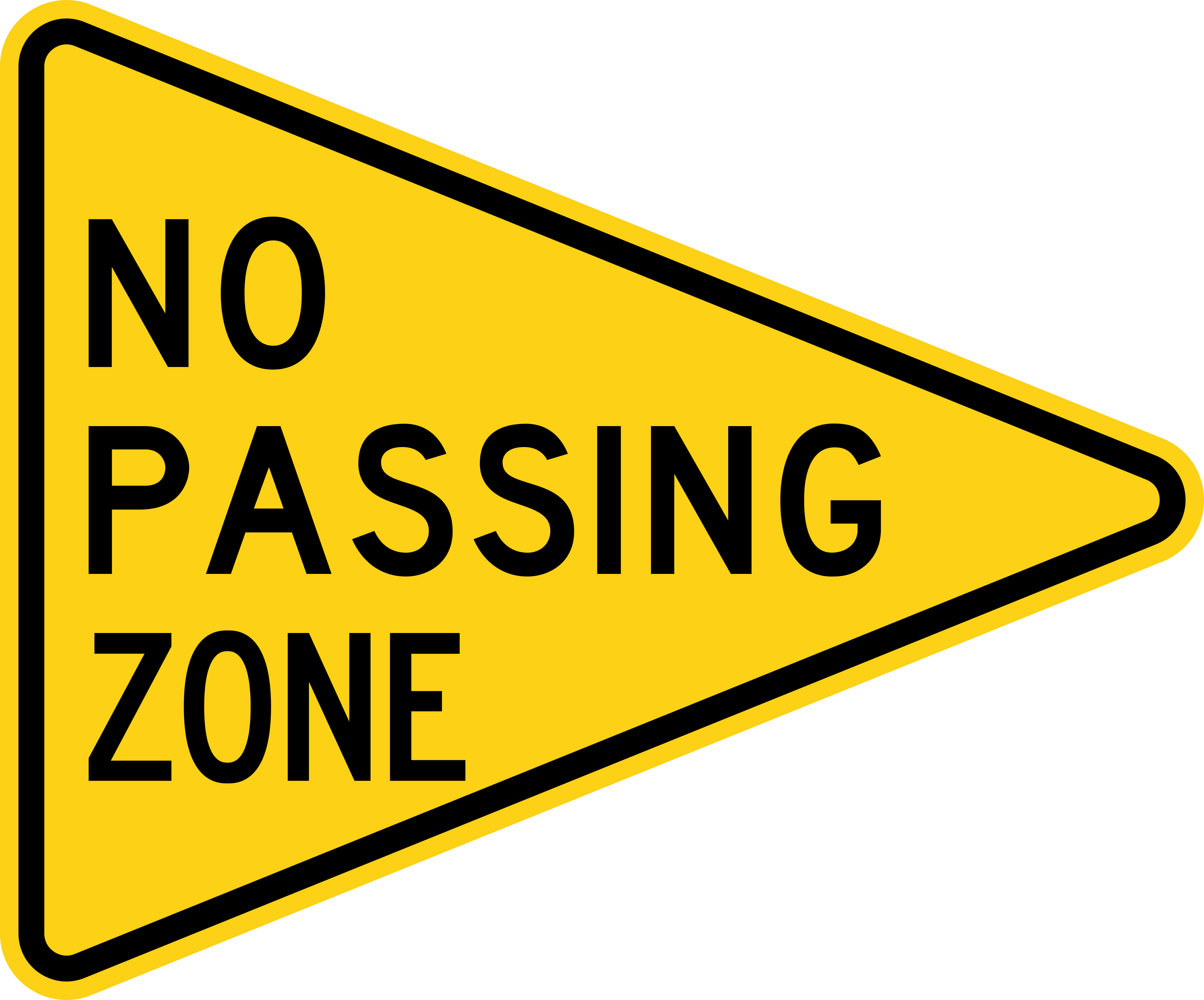
No passing zone
3 questions from the Virginia practice test
1. What do yellow center lines indicate about traffic on the road?
- They separate lanes traveling in the same direction
- They separate traffic traveling in opposite directions
- They mark a lane reserved for bicycles
- They show where parking is permitted
Show answer
They separate traffic traveling in opposite directions. Yellow center lines divide traffic moving in opposite directions. They help establish which side of the roadway carries opposing vehicles, while white lines generally separate lanes moving in the same direction. The same-direction choice confuses the two marking colors, and neither bicycle use nor parking is established by a yellow center line. Keep right of the center marking, watch for additional broken or solid patterns, and never cross simply because the road looks empty.
2. What do double solid yellow center lines indicate?
- Passing is allowed for traffic on both sides
- Only nighttime passing is prohibited
- Passing is not allowed in either direction
- The center of the road may be used as a turn lane
Show answer
Passing is not allowed in either direction. Double solid yellow lines divide opposing traffic and prohibit passing in either direction. The two-line marking is stronger than a broken yellow line, which can permit passing when the way is clear. Do not use the center area as a travel lane or assume darkness changes the restriction. Stay on your side, watch for legal turning openings and pedestrians, and obey any additional signs or pavement markings that control the road.
3. When a broken yellow line is beside a solid yellow line, from which side is passing allowed?
- From the side with the solid line
- From the side with the broken line
- From both sides at all times
- From neither side, even for a left turn
Show answer
From the side with the broken line. The paired center marking assigns different passing rules to the two directions. Passing is allowed from the side next to the broken yellow line, while the side next to the solid yellow line may not pass. This is not a blanket permission: the driver still needs a clear opposite lane and a safe opportunity. The solid-line driver cannot borrow the broken-line rule simply because the other direction is permitted to pass. Look down at the line nearest your lane before deciding, then check traffic, visibility, and distance before moving left.
Practice this topic
Lock it in with signals and markings questions from the free Virginia practice test. Every answer comes with a plain English explanation.
Source: the Virginia Driver's Manual, Section 2: Signals, Signs and Pavement Markings. This lesson is a plain English summary, not the law itself; where it differs, the manual and the statute govern. Last checked 2026-09-27.