
Key points
A speed limit is the maximum legal speed under ideal conditions; you may drive slower if you do not impede traffic.
Source: Handbook p. 14
“A speed limit is the maximum legal speed you can travel on a road under ideal conditions. You may drive slower than the speed limit, as long as you don’t impede the normal movement of traffic”
Virginia Driver's Manual, Handbook p. 14By law you must drive slower in school or work zones with posted limits, or when construction or bad weather makes the posted speed unsafe.
Source: Handbook p. 14
“By law you must drive slower where signs indicate a school zone speed limit or work zone speed limit is in effect, and/or if conditions such as road construction or bad weather make the posted speed unsafe.”
Virginia Driver's Manual, Handbook p. 14Without a sign, the limit is 25 mph in school, business and residential areas, 35 mph on unpaved roads and 55 mph elsewhere.
Source: Handbook p. 15
“the maximum speed limit for passenger vehicles and motorcycles is 25 MPH for school, business and residential areas; 35 MPH for unpaved roads and 55 MPH for all other roads.”
Virginia Driver's Manual, Handbook p. 15Driving 20 mph or more over the limit, or over 85 mph, can be charged as reckless driving.
Source: Handbook p. 14
“if you are driving 20 or more miles per hour (MPH) above the speed limit, or over 85 MPH, a law enforcement officer may charge you with reckless driving”
Virginia Driver's Manual, Handbook p. 14Reckless driving is a misdemeanor criminal offense that can bring a fine, license suspension or jail.
Source: Handbook p. 14
“It is considered a misdemeanor criminal offense if convicted of reckless driving. The court may require a fine, suspend your driving privilege and/or impose a jail sentence.”
Virginia Driver's Manual, Handbook p. 14Driving 81 to 85 mph in a 65 mph zone adds a $100 fine.
Source: Handbook p. 14
“You are subject to an additional $100 fine if convicted of driving between 81 and 85 MPH in a 65-MPH zone.”
Virginia Driver's Manual, Handbook p. 14It is illegal to use radar detectors in Virginia.
Source: Handbook p. 14
“It is illegal to use radar detectors in Virginia.”
Virginia Driver's Manual, Handbook p. 14Some school zones use automated photo speed enforcement.
Source: Handbook p. 15
“Some school zones may have automated photo enforcement, as indicated by signs with the message “Speed Photo Enforced” or similar.”
Virginia Driver's Manual, Handbook p. 15
Numbers to know
| Number | What it means | Manual |
|---|---|---|
| 25 mph | default limit in school, business and residential areas | Handbook p. 15 |
| 35 mph | default limit on unpaved roads | Handbook p. 15 |
| 55 mph | default limit on all other roads | Handbook p. 15 |
| 20 mph over | speed above the limit that can bring a reckless driving charge | Handbook p. 14 |
| 85 mph | speed above which you can be charged with reckless driving regardless of the limit | Handbook p. 14 |
| $100 at 81 to 85 mph in a 65 mph zone | extra fine for that speed range | Handbook p. 14 |
Recognize these signs
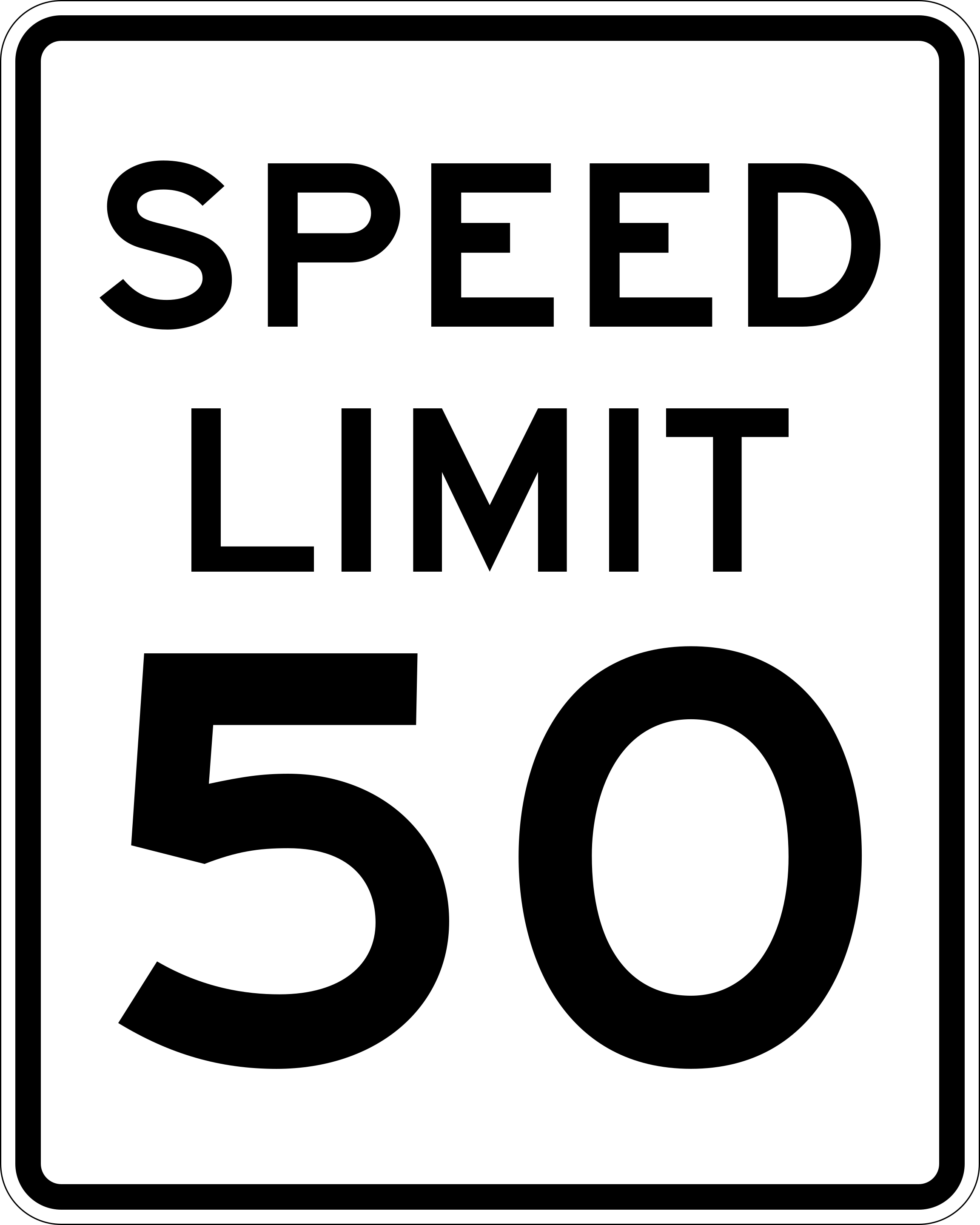
Speed limit
3 questions from the Virginia practice test
1. Unless a sign says otherwise, what is the maximum speed for passenger vehicles and motorcycles in Virginia school, business, and residential areas?
- 35 MPH
- 45 MPH
- 55 MPH
- 25 MPH
Show answer
25 MPH. The default maximum for passenger vehicles and motorcycles in school, business, and residential areas is 25 MPH. The 35 MPH choice belongs to unpaved roads, and 55 MPH is the default for all other roads. Forty-five MPH is not the listed statewide default for these areas. A posted limit can change the applicable maximum. Even at that limit, drivers must slow for weather, construction, or another condition that makes the speed unsafe.
2. What is the default speed limit for an unpaved road when no Virginia speed-limit sign states otherwise?
- 25 MPH
- 35 MPH
- 45 MPH
- 55 MPH
Show answer
35 MPH. Virginia lists 35 MPH as the default for unpaved roads when no sign supplies a different limit. Twenty-five MPH applies to school, business, and residential areas, while 55 MPH covers all other roads. The 45 MPH option is not one of those categories. Read the road description before choosing a number. A posted sign controls when present, and bad weather or hazards can require travel below the legal maximum.
3. At least how far above the posted speed limit may support a Virginia reckless-driving charge based on speed?
- 10 MPH
- 15 MPH
- 20 MPH
- 5 MPH
Show answer
20 MPH. Virginia identifies 20 miles per hour above the posted limit as one speed based threshold for a possible reckless-driving charge. The phrase at least includes an excess of exactly 20 MPH, not just amounts greater than 20. A 10, 15, or 5 MPH increase falls below that particular threshold, although unsafe driving can still create other legal problems. Compare the vehicle speed with the limit shown for that road, especially where a lower temporary limit applies. A useful check is to subtract the posted number from the speedometer reading before deciding whether the gap has reached 20.
Practice this topic
Lock it in with speed limits questions from the free Virginia practice test. Every answer comes with a plain English explanation.
Source: the Virginia Driver's Manual, Section 3: Safe Driving. This lesson is a plain English summary, not the law itself; where it differs, the manual and the statute govern. Last checked 2026-09-27.