
Key points
Red with white means stop, yield, do not, and no.
Source: Handbook p. 6
“Red used with white conveys stop, yield, do not, and no.”
Virginia Driver's Manual, Handbook p. 6Black with white gives regulatory information.
Source: Handbook p. 6
“Black used with white conveys regulatory information.”
Virginia Driver's Manual, Handbook p. 6Yellow green with black warns of school zone, pedestrian or bicycle activity.
Source: Handbook p. 6
“A specialized class of warning signs uses a strong yellow/green color with black to advise of school zone, pedestrian and/or bicyclist activities.”
Virginia Driver's Manual, Handbook p. 6Green signs give destination information and blue signs show motorist services.
Source: Handbook p. 6
“The green sign is used to provide destination types of information, while the blue sign is used to inform regarding motorists services.”
Virginia Driver's Manual, Handbook p. 6Orange signs are used in construction areas and pink signs in incident areas.
Source: Handbook p. 6
“Orange and black and pink and black signs are used to advise and warn in construction (orange) and incident (pink) areas.”
Virginia Driver's Manual, Handbook p. 6The eight sided octagon always means stop at the sign, stop line, crosswalk or curb.
Source: Handbook p. 6
“This eight-sided shape always means stop. You must come to a complete stop at the sign, stop line, pedestrian crosswalk or curb.”
Virginia Driver's Manual, Handbook p. 6At an all way stop, if you arrive at the same time as another vehicle, the driver on the left yields to the driver on the right.
Source: Handbook p. 6
“If you get to the intersection at the same time as other vehicles, the driver on the left must yield to the driver on the right.”
Virginia Driver's Manual, Handbook p. 6At a yield triangle, slow down, be ready to stop, and let vehicles, pedestrians or bicyclists pass.
Source: Handbook p. 6
“You must slow down as you come to the intersection. Be prepared to stop. Let any vehicles, pedestrians or bicyclists safely pass before you proceed.”
Virginia Driver's Manual, Handbook p. 6Diamond signs warn of special conditions or hazards ahead.
Source: Handbook p. 7
“Diamond (Warning): These signs warn you of special conditions or hazards ahead.”
Virginia Driver's Manual, Handbook p. 7The five sided pentagon marks school zones and school crossings.
Source: Handbook p. 7
“This five-sided shape marks school zones and warns you about school crossings.”
Virginia Driver's Manual, Handbook p. 7
Numbers to know
| Number | What it means | Manual |
|---|---|---|
| 8 sides | octagon stop sign | Handbook p. 6 |
| 5 sides | pentagon school sign | Handbook p. 7 |
Recognize these signs
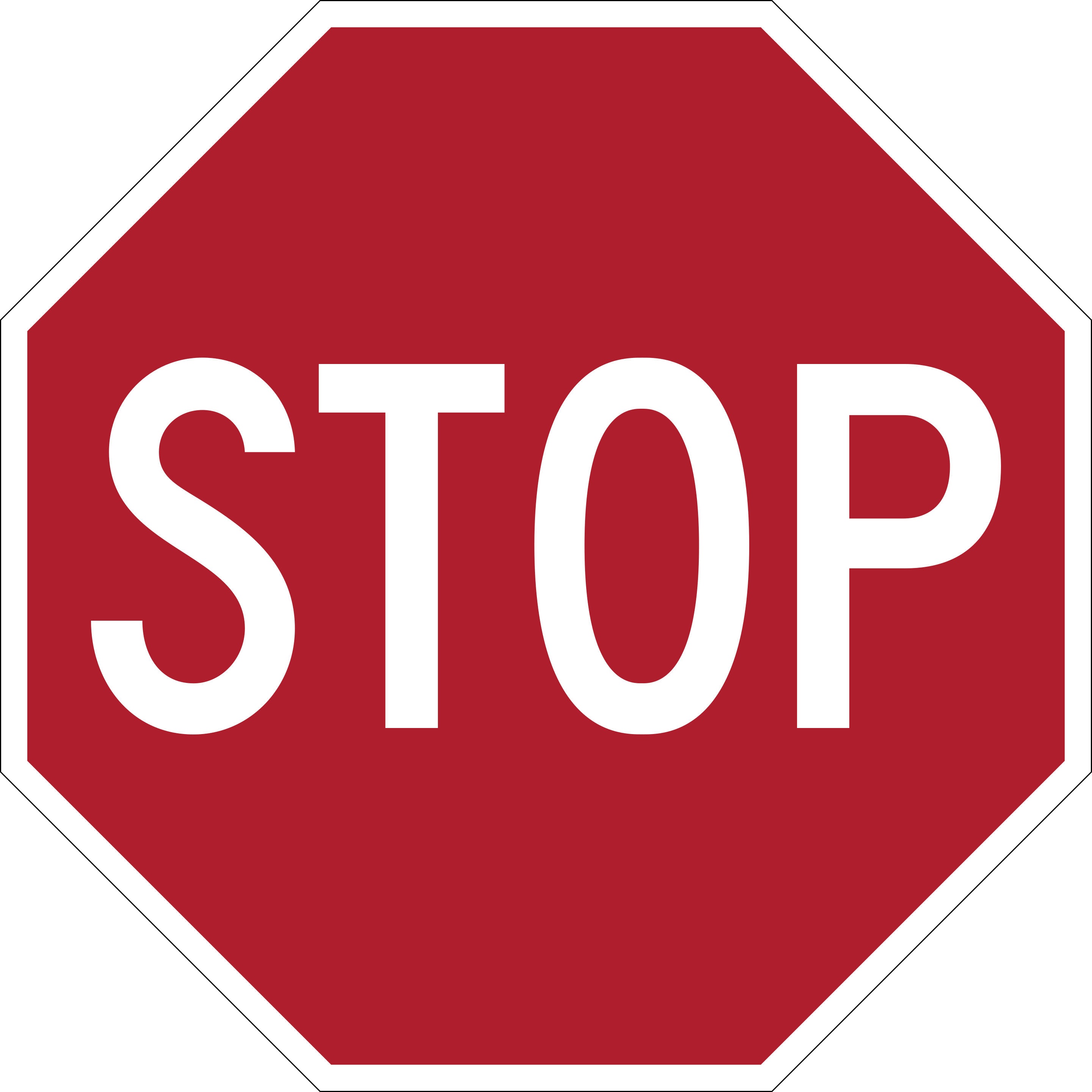
Stop 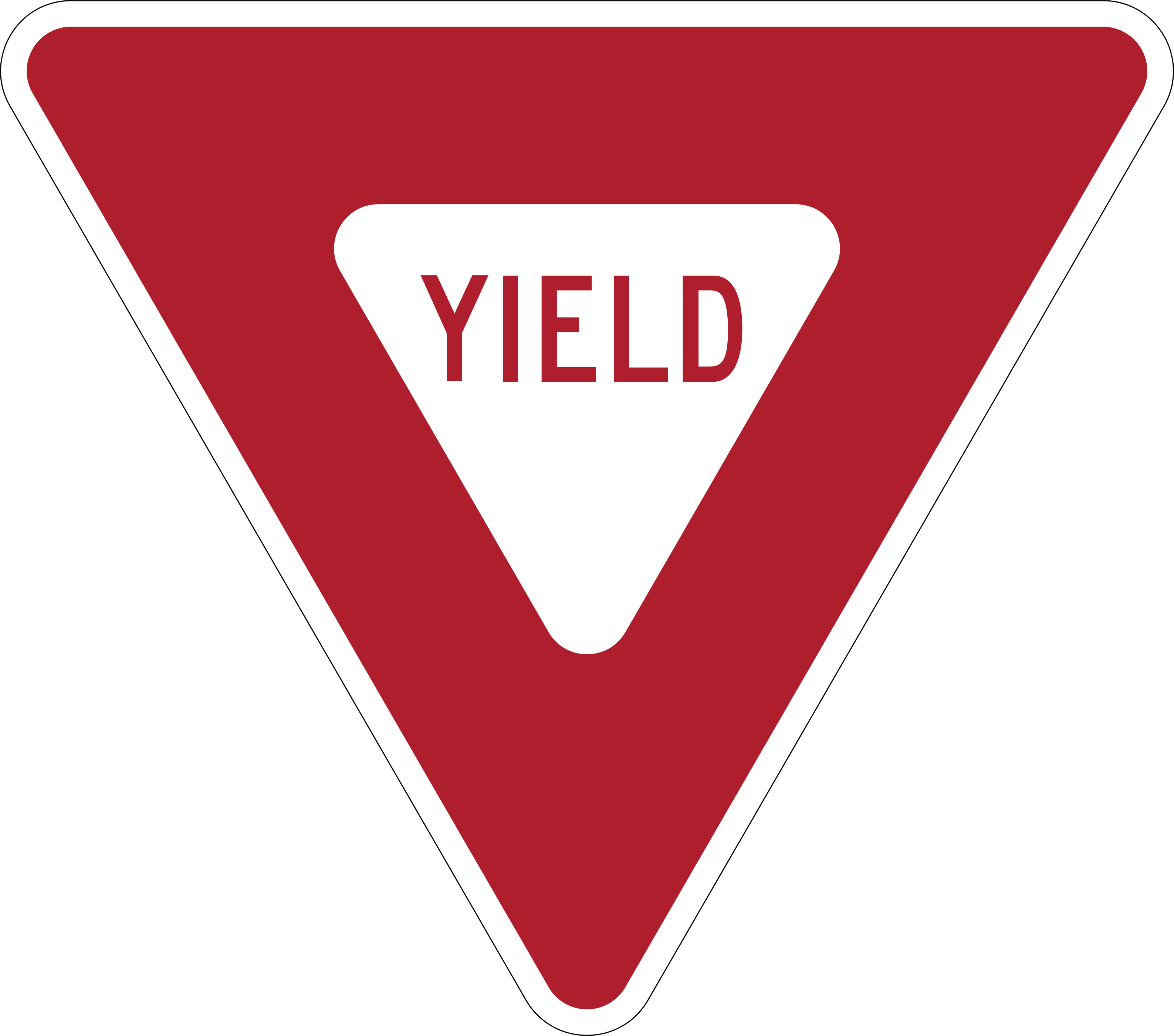
Yield 
School 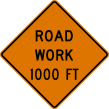
Road work ahead
3 questions from the Virginia practice test
1. What does the eight-sided sign require before you enter the intersection?
- Come to a complete stop at the sign, line, crosswalk, or curb
- Slow to walking speed and continue without stopping
- Stop only when another vehicle is approaching
- Yield only to vehicles approaching from the left
Show answer
Come to a complete stop at the sign, line, crosswalk, or curb. Virginia assigns one meaning to the octagon: stop. The required stop may be at the sign, stop line, pedestrian crosswalk, or curb, so an empty-looking intersection does not remove the duty. Waiting lets vehicles and pedestrians clear your path. The left-side priority choice is also wrong because an all-way stop can require every approach to stop, followed by right-of-way rules. Use the red octagon as your immediate cue to halt fully before checking traffic.
2. At a triangular sign, how should you approach the intersection?
- Accelerate to claim the intersection first
- Slow down, prepare to stop, and let traffic, pedestrians, or bicyclists pass
- Stop in every case before reaching the sign
- Proceed without checking if your lane is clear
Show answer
Slow down, prepare to stop, and let traffic, pedestrians, or bicyclists pass. The inverted triangle identifies a yield instruction. Virginia expects a driver to reduce speed on approach, remain ready to stop, and allow vehicles, pedestrians, or bicyclists to pass safely before proceeding. A complete stop is not automatically required when the way is open, which makes the always-stop option too broad. Treat the triangle as a request for caution and a right-of-way check, not as permission to roll through without looking.
3. What does red used with white convey on a Virginia traffic sign?
- Motorist services only
- A destination or route distance
- Stop, yield, do not, and no
- A historical or cultural interest
Show answer
Stop, yield, do not, and no. Red used with white conveys stop, yield, do not, and no on Virginia traffic signs. That color combination is a quick warning that the sign carries a restriction or required response, such as stopping, yielding, or avoiding a movement. Green, blue, and brown have different information roles, including destinations, motorist services, and historical or cultural interests. The choice naming a route distance confuses sign colors with guide information. When red and white appear together, read the symbol and wording carefully, slow as needed, and follow the instruction before entering the controlled area.
Practice this topic
Lock it in with road signs questions from the free Virginia practice test. Every answer comes with a plain English explanation.
Source: the Virginia Driver's Manual, Section 2: Signals, Signs and Pavement Markings. This lesson is a plain English summary, not the law itself; where it differs, the manual and the statute govern. Last checked 2026-09-27.