
Key points
When vehicles arrive at different times, the first to arrive goes first.
Source: Handbook p. 16
“When vehicles from different directions arrive at an intersection at different times, the vehicle that arrives first goes first.”
Virginia Driver's Manual, Handbook p. 16When vehicles arrive at the same time where there are no signs or signals, the driver on the left lets the driver on the right go first.
Source: Handbook p. 16
“When vehicles from different directions arrive at the same time at an intersection with no signs or signals, the driver on the left must allow the driver on the right to go first.”
Virginia Driver's Manual, Handbook p. 16Drivers entering an interstate from a ramp yield to traffic already on the highway.
Source: Handbook p. 16
“Drivers entering an interstate from an entrance ramp must yield the right-of-way to traffic already on the highway.”
Virginia Driver's Manual, Handbook p. 16When entering a road from a private road or driveway, stop and yield to all traffic and pedestrians.
Source: Handbook p. 16
“When entering a roadway from a private road or driveway, you must stop and yield to all traffic and pedestrians.”
Virginia Driver's Manual, Handbook p. 16Yield to pedestrians or bicyclists crossing in a marked crosswalk or at an unmarked intersection.
Source: Handbook p. 16
“You must yield to pedestrians or bicyclists who are crossing a street within a clearly marked crosswalk or at an unmarked intersection.”
Virginia Driver's Manual, Handbook p. 16Do not cut through, join or interfere with a funeral procession.
Source: Handbook p. 16
“You must yield to funeral processions. Do not cut through, join or interfere with a funeral procession.”
Virginia Driver's Manual, Handbook p. 16At a roundabout, yield to pedestrians and to traffic already in the circle.
Source: Handbook p. 16
“Entering traffic must yield the right-of-way to pedestrians, and to traffic already in the circle.”
Virginia Driver's Manual, Handbook p. 16To turn right at a roundabout, stay right as you enter; to go straight on a two lane roundabout, either lane is fine.
Source: Handbook p. 16
“If you plan to turn right, stay to the right as you enter the roundabout. If you plan to go straight, you may stay in either lane”
Virginia Driver's Manual, Handbook p. 16You must fully stop for pedestrians lawfully crossing; failing to stop and causing serious injury or death can be a Class 1 misdemeanor.
Source: Handbook p. 20
“Drivers are required to come to a full stop for pedestrians who are lawfully crossing a roadway. Failing to stop and causing serious bodily damage or death can result in a Class 1 misdemeanor.”
Virginia Driver's Manual, Handbook p. 20Come to a full stop for a pedestrian using a cane or guide dog.
Source: Handbook p. 20
“Drivers are required to come to a full stop for a pedestrian using a cane or guide dog, as this indicates blindness or vision impairment.”
Virginia Driver's Manual, Handbook p. 20
Numbers to know
| Number | What it means | Manual |
|---|---|---|
| Class 1 misdemeanor | charge for failing to stop for a lawfully crossing pedestrian and causing serious injury or death | Handbook p. 20 |
Recognize these signs
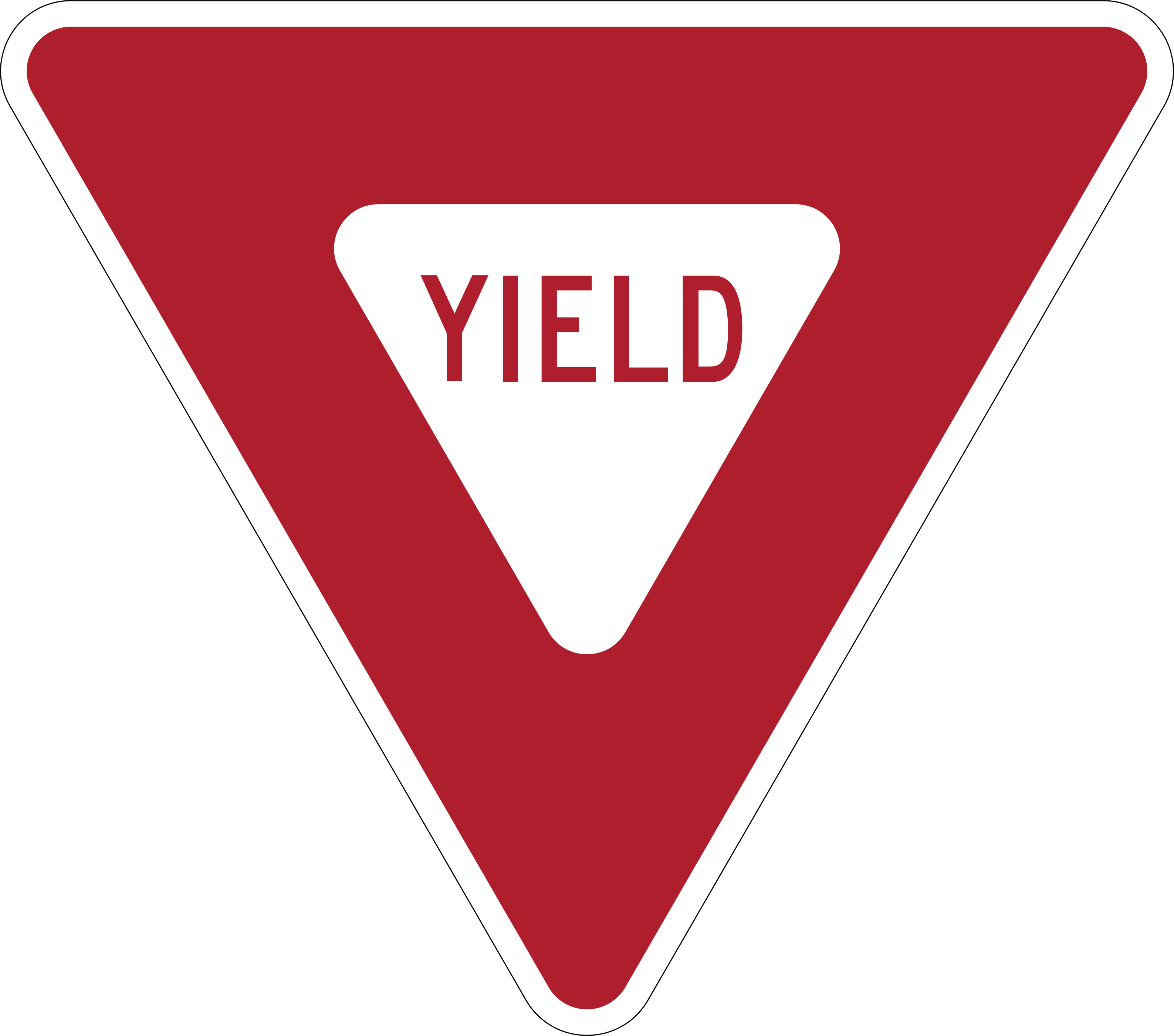
Yield 
Roundabout ahead 
Pedestrian crossing
3 questions from the Virginia practice test
1. When entering a Virginia roundabout, to whom must the entering driver yield?
- Pedestrians and traffic already in the circle
- Only vehicles signaling a turn
- No one, because entering traffic has priority
- Only vehicles approaching from the left
Show answer
Pedestrians and traffic already in the circle. Entering traffic yields to pedestrians and to traffic already circulating in the roundabout. The rule is not limited to vehicles approaching from one side, and a turn signal does not create priority. Entering drivers should slow, read the yield sign, and wait for a safe gap. Picture the circle as already occupied: people crossing and vehicles in the circle go first, then the entering vehicle joins counter-clockwise.
2. What must a Virginia driver do before entering a roadway from a private driveway?
- Stop and yield to all traffic and pedestrians
- Slow down but continue if no car is nearby
- Yield only to vehicles traveling on the road
- Sound the horn and enter before approaching traffic
Show answer
Stop and yield to all traffic and pedestrians. A driver leaving a private road or driveway must stop and yield to all traffic and pedestrians. The obligation is broader than watching for vehicles, so the choice that excludes pedestrians is incomplete. Merely slowing, checking one direction, or sounding the horn does not replace the required stop and yield. Treat the driveway edge as a controlled entry point, and wait until both roadway users and people walking can move safely.
3. What must a driver do for a pedestrian lawfully crossing a roadway?
- Slow slightly and pass before the pedestrian reaches the lane
- Honk so the pedestrian moves faster
- Come to a full stop and remain stopped until the pedestrian has cleared the lane
- Stop only if the pedestrian is using a cane
Show answer
Come to a full stop and remain stopped until the pedestrian has cleared the lane. A driver must come to a full stop for pedestrians who are lawfully crossing a roadway. The vehicle stays stopped until the pedestrian has passed the lane in which the vehicle is stopped. Slowing without stopping leaves the person exposed, and a horn does not replace the required protection. The cane choice is too narrow because the full stop rule applies to lawful roadway crossings generally. Scan ahead before turning or proceeding, and wait until the pedestrian has safely cleared your lane before moving again.
Practice this topic
Lock it in with right of way questions from the free Virginia practice test. Every answer comes with a plain English explanation.
Source: the Virginia Driver's Manual, Section 3: Safe Driving. This lesson is a plain English summary, not the law itself; where it differs, the manual and the statute govern. Last checked 2026-09-27.