
Key points
Obey a law enforcement officer directing traffic at all times, even if told to do something that would normally be against the law.
Source: Handbook p. 25
“You must obey a law enforcement officer at all times when they are directing traffic even if he/she is telling you to do something which is ordinarily considered against the law.”
Texas Driver Handbook, Handbook p. 25At a steady red light, stop before the crosswalk or intersection. You may then turn right unless prohibited.
Source: Handbook p. 25
“Steady Red Light (Stop) Stop before entering the crosswalk or intersection. You may turn right unless prohibited by law.”
Texas Driver Handbook, Handbook p. 25You may also turn left on red if both streets are one way, unless prohibited.
Source: Handbook p. 25
“You may also turn left if both streets are one way, unless prohibited by law.”
Texas Driver Handbook, Handbook p. 25At a flashing red light, stop completely and go when safe. Cross traffic may not have to stop.
Source: Handbook p. 25
“A Flashing Red Light Stop completely before entering the crosswalk or intersection, then proceed when you can do so safely. Vehicles on the intersecting road may not have to stop.”
Texas Driver Handbook, Handbook p. 25A steady yellow light means the light is about to turn red. Stop before the crosswalk if you can do so safely.
Source: Handbook p. 25
“A steady yellow light warns drivers to use caution and to alert them the light is about to change to red. You must STOP before entering the nearest crosswalk at the intersection if you can do so safely.”
Texas Driver Handbook, Handbook p. 25A flashing yellow light means slow down and proceed with caution.
Source: Handbook p. 25
“A flashing yellow light warns drivers to slow down and proceed with caution.”
Texas Driver Handbook, Handbook p. 25A flashing yellow arrow lets you turn left, but you must yield to oncoming traffic.
Source: Handbook p. 25
“A flashing yellow arrow allows a driver to turn left, but the driver must yield the right-of-way to oncoming traffic.”
Texas Driver Handbook, Handbook p. 25A green arrow shown with a red light lets you go in the arrow's direction after yielding.
Source: Handbook p. 25
“A green arrow displayed at the same time as a red light means the driver can proceed carefully in the direction of the arrow after yielding the right-of-way to other vehicles and pedestrians.”
Texas Driver Handbook, Handbook p. 25You can turn left on a green light, but you must yield to oncoming traffic first.
Source: Handbook p. 25
“You can turn left on a green light. However, you must yield the right-of-way to all traffic that is approaching from the opposite direction before turning.”
Texas Driver Handbook, Handbook p. 25
Recognize these signs
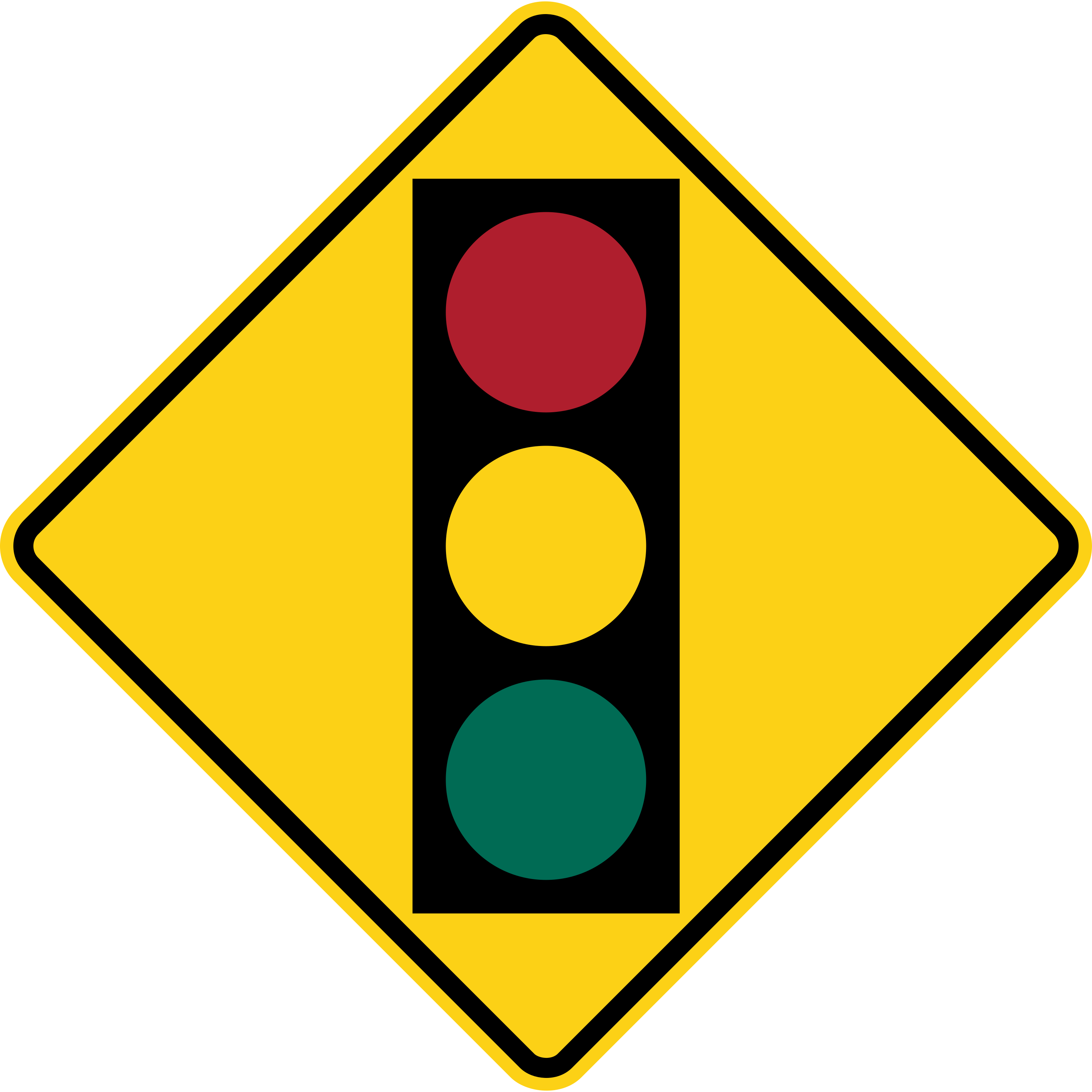
Signal ahead
3 questions from the Texas practice test
1. How should a driver respond to a flashing red traffic signal?
- Slow slightly and continue without stopping
- Wait until the signal becomes a steady green
- Treat it as a flashing yellow signal
- Stop completely, then proceed when safe
Show answer
Stop completely, then proceed when safe. A flashing red signal requires a complete stop before the crosswalk or intersection, followed by movement only when it is safe. Cross traffic may not have to stop, so checking both directions remains essential after stopping. The slow-and-continue choice describes neither the required stop nor the conflict check. A driver does not wait for a green light, and a flashing red is not interchangeable with a flashing yellow. Approach it as a stop control, then yield to vehicles and pedestrians that have the right of way.
2. What does a steady yellow traffic light warn drivers about?
- The intersection must remain closed
- A protected turn is active
- The signal grants unlimited passage
- The light is about to change to red
Show answer
The light is about to change to red. A steady yellow light warns drivers to use caution and alerts them that the signal is about to change to red. When a safe stop can be made, the driver must stop before entering the nearest crosswalk. The yellow display is not a protected-turn indication, does not grant unlimited passage, and does not mean the intersection is permanently closed. Watch the distance to the stop line and the traffic behind you, then decide whether stopping can be completed safely. If it cannot, proceed cautiously before the light turns red.
3. What must a driver do when a flashing yellow arrow permits a left turn?
- Turn immediately before opposing traffic moves
- Yield only to vehicles turning right
- Stop until a steady green arrow appears
- Yield to oncoming traffic before turning
Show answer
Yield to oncoming traffic before turning. A flashing yellow arrow allows a driver to turn left only after yielding the right-of-way to oncoming traffic. The arrow signals that the turn may be made, but it does not remove conflicts with vehicles approaching from the opposite direction. Turning immediately can cut across that traffic, and waiting for a steady green arrow is more restrictive than the handbook rule. The signal also does not limit the yield duty to vehicles turning right. Slow, look through the turn path, identify opposing traffic, and complete the turn only after yielding.
Practice this topic
Lock it in with signals and markings questions from the free Texas practice test. Every answer comes with a plain English explanation.
Source: the Texas Driver Handbook, Chapter 5: Signals, Signs, and Markers. This lesson is a plain English summary, not the law itself; where it differs, the manual and the statute govern. Last checked 2026-09-27.