
Key points
If another driver does not follow the rules, give them the right of way. Right of way is something given, not taken.
Source: Handbook p. 20
“if the other driver doesn’t follow these rules, give him/her the right-of-way. Remember, in every situation, right-of-way is something given, not taken.”
Texas Driver Handbook, Handbook p. 20Failing to yield and causing bodily injury brings a fine of $500 to $2,000.
Source: Handbook p. 20
“Driver commits any traffic offense of which failure to yield the right-of-way to another vehicle is an element and causes bodily injury to another. A fine of $500 to $2,000.”
Texas Driver Handbook, Handbook p. 20From a single or two-lane road, yield to traffic on a divided road or one with three or more lanes.
Source: Handbook p. 20
“If you are driving on a single or two lane road that intersects with a divided road or road with three (3) or more lanes, you must yield the right-of-way to vehicles traveling on the divided or three (3) or more lane road.”
Texas Driver Handbook, Handbook p. 20From an unpaved road, yield to vehicles on the paved road.
Source: Handbook p. 20
“If you are driving on an unpaved road that intersects with a paved road, you must yield the right-of-way to vehicles traveling on the paved road.”
Texas Driver Handbook, Handbook p. 20At an intersection with no signs, signals or multi-lane road, yield to any vehicle on your right.
Source: Handbook p. 20
“yield the right-of-way to any vehicle that has entered or is approaching the intersection on your right.”
Texas Driver Handbook, Handbook p. 20When turning left, always yield to vehicles coming straight through from the other direction.
Source: Handbook p. 20
“When turning left, always yield the right-of-way to any vehicle coming straight through from the other direction.”
Texas Driver Handbook, Handbook p. 20Leaving a private road, alley or driveway, stop before the sidewalk and yield to all vehicles and pedestrians.
Source: Handbook p. 20
“you must stop prior to the sidewalk and yield the right-of-way to all approaching vehicles and pedestrians.”
Texas Driver Handbook, Handbook p. 20At a T-intersection, traffic on the street that ends must stop and yield to the through street.
Source: Handbook p. 20
“you must stop and yield the right-of-way to vehicles on the through street.”
Texas Driver Handbook, Handbook p. 20At an all-way stop, if two vehicles arrive at the same time, yield to the vehicle on your right.
Source: Handbook p. 31
“If two vehicles arrive at the same time, yield to the vehicle on your right.”
Texas Driver Handbook, Handbook p. 31Always be on the lookout for pedestrians, whether they have the right of way or not.
Source: Handbook p. 23
“You should always be on the lookout for individuals who are on foot (pedestrians) whether they have the right-of-way or not.”
Texas Driver Handbook, Handbook p. 23
Numbers to know
| Number | What it means | Manual |
|---|---|---|
| $500 to $2,000 | fine for failing to yield and causing injury | Handbook p. 20 |
| 3 lanes | a single or two lane road yields to a divided road or one with this many or more lanes | Handbook p. 20 |
Recognize these signs

Stop 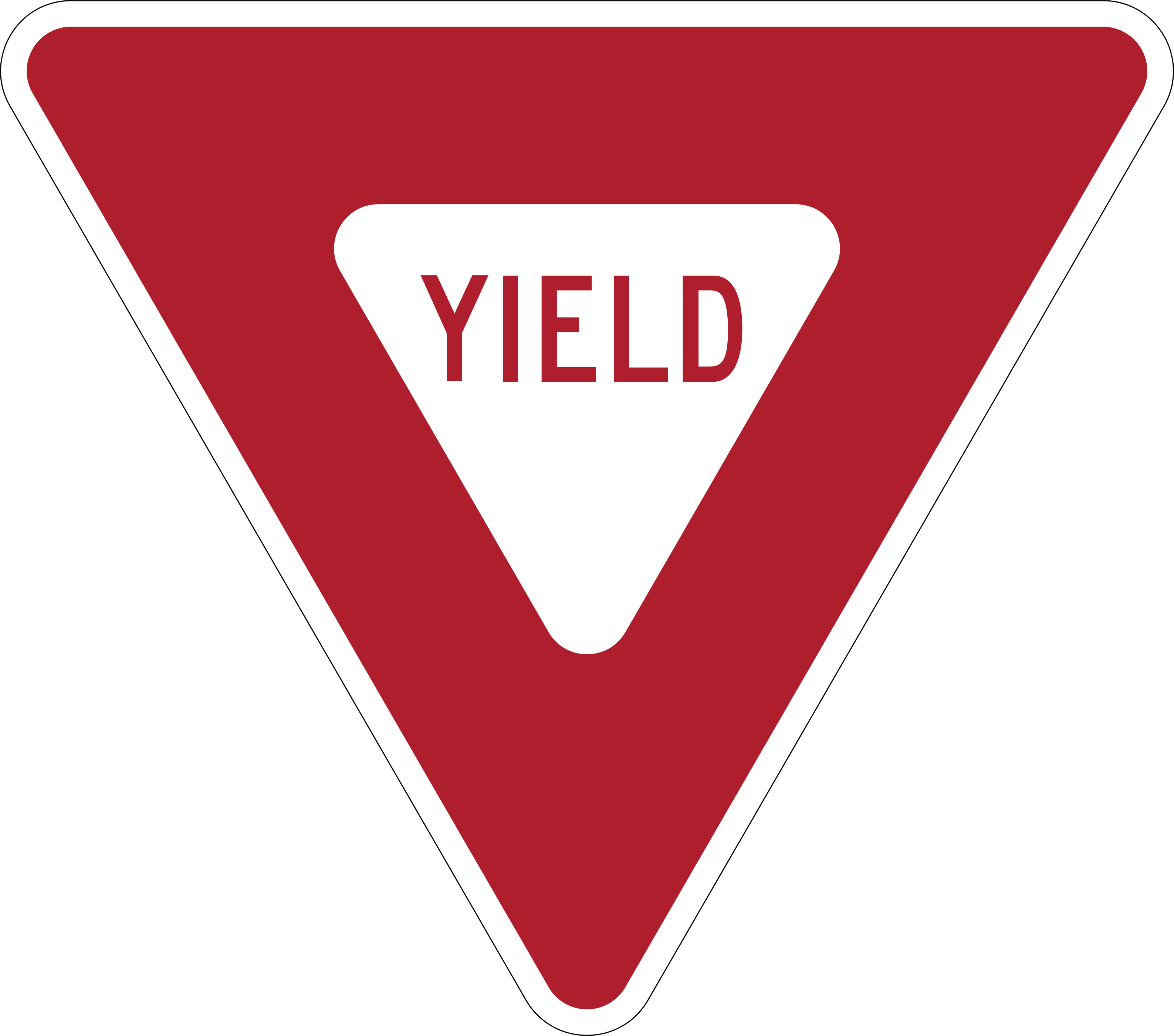
Yield
3 questions from the Texas practice test
1. At an uncontrolled intersection, to which vehicle must a driver yield?
- A vehicle that has entered or is approaching from the driver's right
- A vehicle approaching from the left in every case
- The vehicle with the larger engine
- Only a vehicle displaying a turn signal
Show answer
A vehicle that has entered or is approaching from the driver's right. At an intersection without signs, signals, multiple-lane priority, or pavement priority, Texas directs a driver to yield to a vehicle that has entered or is approaching from the right. The driver should also confirm that the other road is clear and that the other motorist yields before proceeding. Vehicle size and engine power do not establish priority. A vehicle from the left does not automatically go first, and a turn signal is not the condition stated by the rule. Slow down early and check both directions.
2. When turning left, to whom must a driver yield the right-of-way?
- Only a vehicle entering from the same street
- A vehicle waiting behind the turning driver
- A vehicle coming straight through from the other direction
- No one if the turn signal is on
Show answer
A vehicle coming straight through from the other direction. A left turn crosses the path of traffic coming straight from the opposite direction, so the handbook requires the turning driver to yield to that vehicle. A turn signal communicates intent but does not grant priority. The vehicle behind is not the specific conflict described, and traffic from the same street is too broad to state the rule accurately. Before turning, look for oncoming traffic, wait for a safe opening, and complete the turn only after the opposing path is clear.
3. How should drivers watch for pedestrians, whether or not the pedestrian has the right-of-way?
- Look only for pedestrians at traffic lights
- Always remain alert for individuals on foot
- Watch only after a horn is sounded
- Assume pedestrians will yield to vehicles
Show answer
Always remain alert for individuals on foot. The handbook says drivers should always look out for pedestrians whether those pedestrians have the right-of-way or not. A traffic light or horn does not eliminate the need to scan the road, and drivers should not assume a person on foot will yield. Slow near crossings, driveways, transit stops, and crowded sidewalks, and be ready to stop when a pedestrian enters the vehicle path. Alert observation is the first protection for people outside vehicles.
Practice this topic
Lock it in with right of way questions from the free Texas practice test. Every answer comes with a plain English explanation.
Source: the Texas Driver Handbook, Chapter 4: Right-of-Way. This lesson is a plain English summary, not the law itself; where it differs, the manual and the statute govern. Last checked 2026-09-27.