
Key points
At 30 mph or less, keep at least 2 seconds behind the car ahead in good conditions.
Source: Handbook p. 45
“For speeds 30 mph or less, the minimum time between your car and the one in front of you is 2 seconds with good road conditions.”
Texas Driver Handbook, Handbook p. 45Above 30 mph, keep a 4 second gap in good conditions.
Source: Handbook p. 45
“For speeds above 30 mph, maintain a 4 second gap between cars during good road conditions.”
Texas Driver Handbook, Handbook p. 45It takes the average person 1-1/2 seconds to think, react and brake.
Source: Handbook p. 45
“It takes the average person 1-1/2 seconds to think, react and apply the brakes.”
Texas Driver Handbook, Handbook p. 45The Texas speed limits table sets 30 mph for an urban district and 15 mph for an alley.
Source: Handbook p. 46
“Table 22: Speed Limits Type of Roadway Speed (MPH) Urban District 30 Alley 15”
Texas Driver Handbook, Handbook p. 46Many limited access highways have limits of 75 up to 85 mph.
Source: Handbook p. 46
“Many limited access highways have speed limits of 75 up to 85 mph.”
Texas Driver Handbook, Handbook p. 46You must adjust speed and following distance in heavy traffic, bad weather or low visibility.
Source: Handbook p. 46
“During periods of heavy traffic, bad weather, low visibility, or other poor driving conditions, you must adjust your speed and following distance to help avoid crashes.”
Texas Driver Handbook, Handbook p. 46Speed limits must be the same for daytime and nighttime.
Source: Handbook p. 46
“Entities that establish or alter a speed limit must establish the same speed limit for daytime and nighttime.”
Texas Driver Handbook, Handbook p. 46Always be able to stop within the distance you can see ahead, and do not overdrive your range of vision in the dark or in bad weather.
Source: Handbook p. 45
“You should always be able to stop within the distance you can see ahead of your car. In the dark or in bad weather, do not over-drive your range of vision.”
Texas Driver Handbook, Handbook p. 45
Numbers to know
| Number | What it means | Manual |
|---|---|---|
| 2 seconds | minimum gap at 30 mph or less | Handbook p. 45 |
| 30 mph | speed that divides the two following gap rules | Handbook p. 45 |
| 4 seconds | gap above 30 mph | Handbook p. 45 |
| 1-1/2 seconds | average reaction time | Handbook p. 45 |
| 30 mph | urban district limit | Handbook p. 46 |
| 15 mph | alley limit | Handbook p. 46 |
| 75 to 85 mph | limit range on many limited access highways | Handbook p. 46 |
Recognize these signs
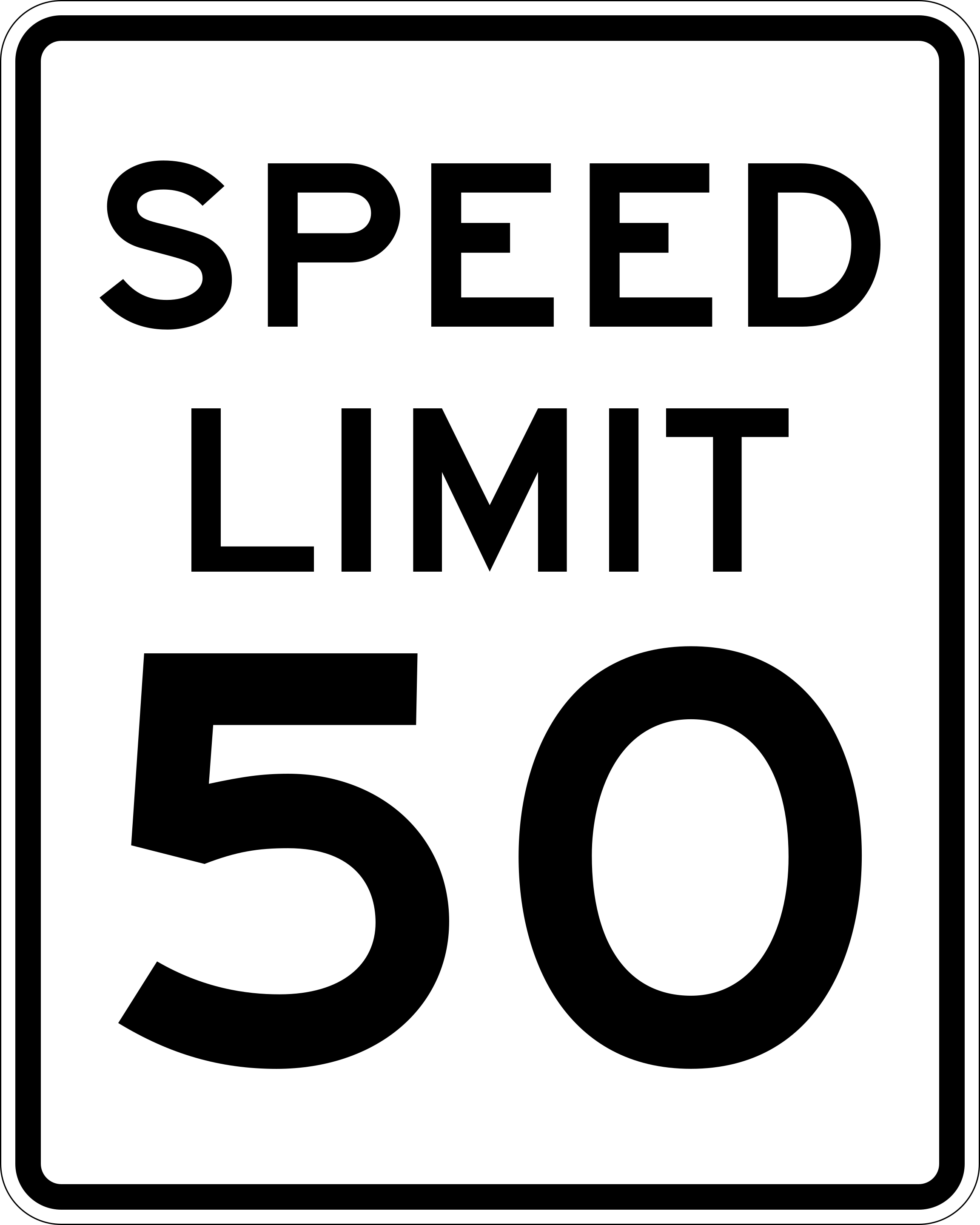
Speed limit
3 questions from the Texas practice test
1. On a Texas road above 30 mph in good conditions, what minimum following gap does the handbook recommend?
- Four seconds
- Two seconds
- Ten seconds
- One second
Show answer
Four seconds. For speeds above 30 mph during good road conditions, Texas recommends a four-second gap between your vehicle and the one ahead. The two-second choice applies to speeds of 30 mph or less, so it is the most tempting alternative when the speed threshold is overlooked. One second leaves little room for perception and braking, and ten seconds is not the handbook minimum for this setting. Increase the interval when weather, traffic, visibility, or the road surface reduces available traction or reaction time.
2. What speed range may appear on many limited access highways in Texas?
- 45 to 55 mph
- 55 to 65 mph
- 75 to 85 mph
- 90 to 100 mph
Show answer
75 to 85 mph. Many limited access highways in Texas have posted speed limits from 75 up to 85 mph. This is a range describing certain highways, not a statewide permission to drive at either number everywhere. The lower alternatives confuse these roads with slower roadway categories, and 90 to 100 mph exceeds the range stated in the handbook. Drivers must still obey the particular posted limit and adjust for traffic, weather, visibility, and other conditions. Read the sign on the road you are using rather than relying on a general maximum remembered from another highway.
3. Unless posted otherwise, what is the Texas speed limit in an urban district?
- 25 mph
- 30 mph
- 35 mph
- 45 mph
Show answer
30 mph. The Texas speed limits table sets 30 mph in an urban district and 15 mph in an alley. Twenty five mph is below the Texas table figure of 30. Thirty five and 45 mph are not the urban district figure. Cities and counties can change these limits, and posted signs control where they appear. Whatever the limit, drivers must slow down in heavy traffic, bad weather, or low visibility.
Practice this topic
Lock it in with speed limits questions from the free Texas practice test. Every answer comes with a plain English explanation.
Source: the Texas Driver Handbook, Chapter 8: Speed and Speed Limits. This lesson is a plain English summary, not the law itself; where it differs, the manual and the statute govern. Last checked 2026-09-27.