
Key points
Most warning signs are black on yellow and diamond shaped; they warn of an unexpected condition, and you may need to slow down or take other action.
Source: Handbook p. 49
“Most warning signs are black on yellow and diamond-shaped. They also include the fluorescent yellow/green school warning signs. These signs warn you about an unexpected condition. You may need to slow down or take other action.”
Idaho Driver's Handbook, Handbook p. 49An Open Range sign means livestock have the right of way and may roam freely and unfenced.
Source: Handbook p. 49
“You are traveling in an area where livestock have the right-of-way and are allowed to roam freely and unfenced.”
Idaho Driver's Handbook, Handbook p. 49At a 3 way T intersection, stop and yield to drivers from the other two directions.
Source: Handbook p. 49
“You are approaching a 3-way “T” intersection and will have to turn either to the right or the left. You must stop and yield to drivers approaching from the other two directions.”
Idaho Driver's Handbook, Handbook p. 49A Lane Ends sign means two lanes will soon become one, and merging traffic must yield.
Source: Handbook p. 50
“Two lanes of traffic will soon become one lane of traffic. Merging traffic must yield.”
Idaho Driver's Handbook, Handbook p. 50At a School Crossing sign, watch for children, reduce speed and obey crossing guards; the sign may be yellow or fluorescent yellow green.
Source: Handbook p. 51
“Watch out for children, reduce speed, and obey crossing guard signals. The color of this sign may be yellow or fluorescent yellow/green.”
Idaho Driver's Handbook, Handbook p. 51At a Pedestrian Crossing sign, pedestrians have the right of way and you may have to stop.
Source: Handbook p. 51
“Pedestrians have the right-of-way, and you may have to stop for them.”
Idaho Driver's Handbook, Handbook p. 51A Hill sign warns of a steep downhill; check your brakes first.
Source: Handbook p. 52
“This sign is a warning to all vehicles that the road goes down a steep hill. You should check your brakes before going down the hill.”
Idaho Driver's Handbook, Handbook p. 52The pennant shaped No Passing Zone sign is on the left side of the road.
Source: Handbook p. 52
“This pennant-shaped sign will be on the left-hand side of the road or highway”
Idaho Driver's Handbook, Handbook p. 52
Numbers to know
| Number | What it means | Manual |
|---|---|---|
| 3-way | at a 3 way T intersection, stop and yield to the other two directions | Handbook p. 49 |
Recognize these signs

Intersection or crossroad 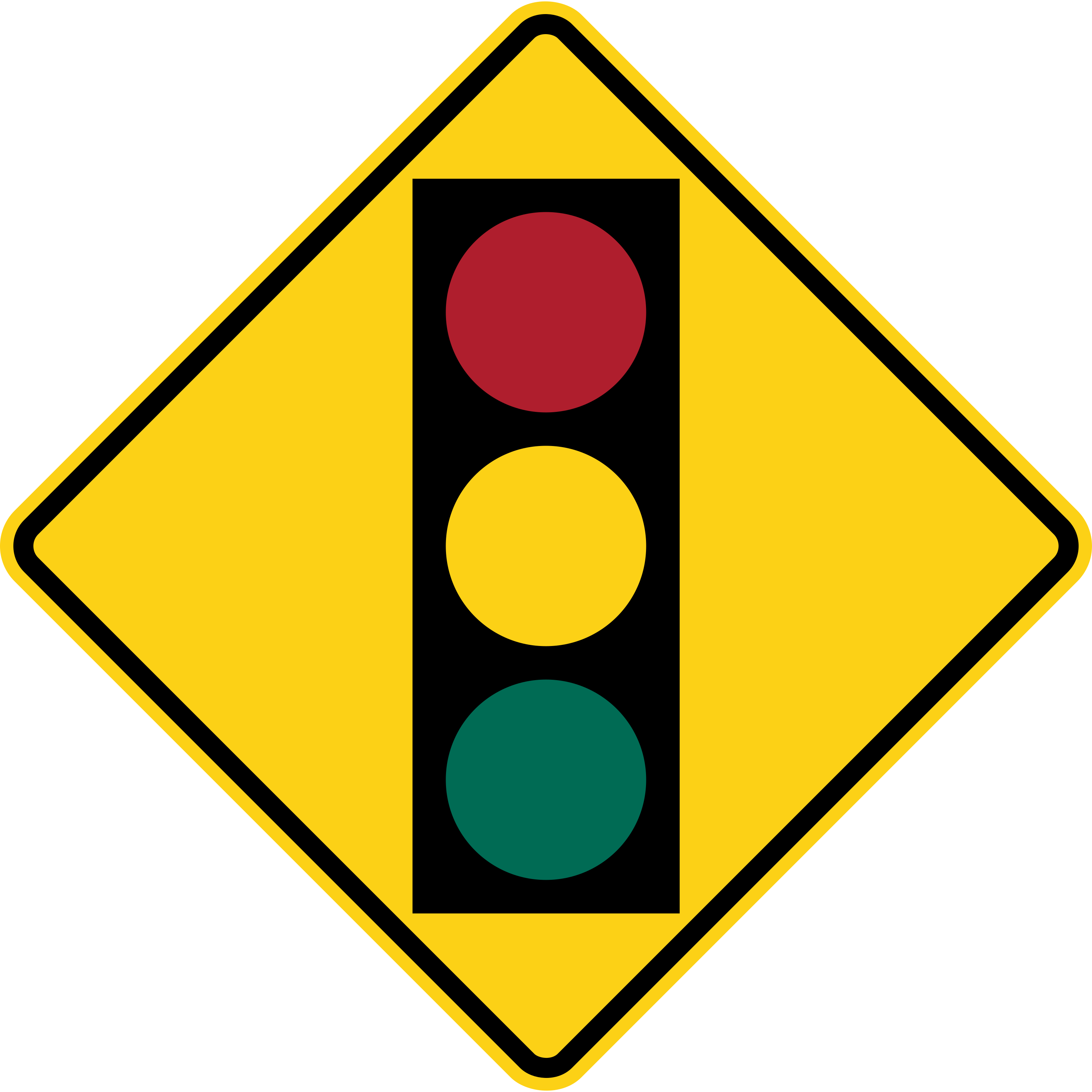
Traffic signal ahead 
Merging traffic 
Lane ends 
Added lane 
School zone 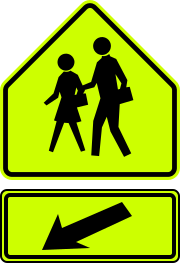
School crossing 
Pedestrian crossing 
Divided highway begins 
Divided highway ends 
Slippery when wet 
Hill 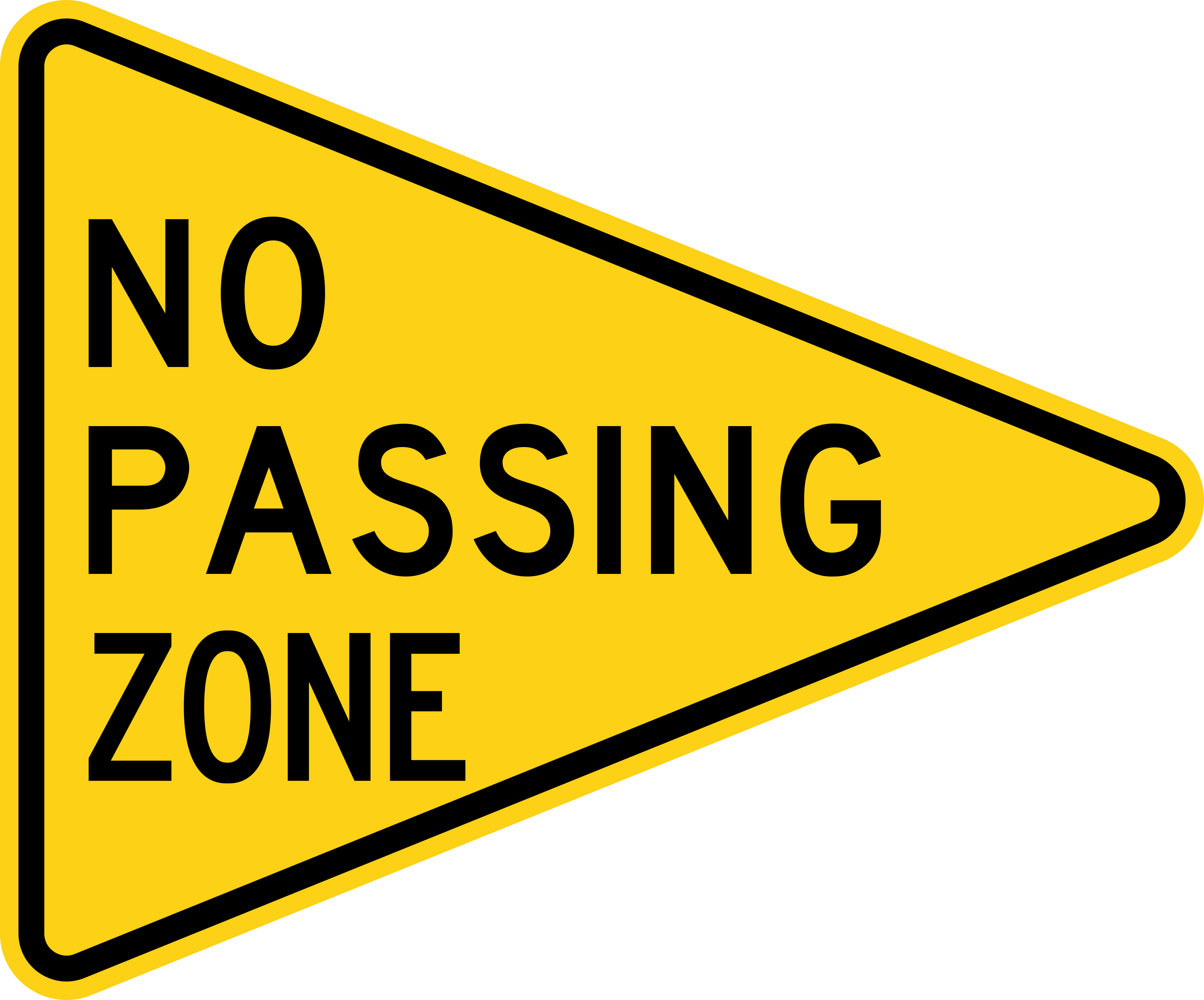
No passing zone 
Railroad crossing ahead 
Animal crossing
3 questions from the Idaho practice test
1. What shape and color identify most warning signs in Idaho?
- Black lettering on white rectangles
- White lettering on green rectangles
- Black symbols or lettering on yellow, usually diamond-shaped
- Blue symbols on circular signs
Show answer
Black symbols or lettering on yellow, usually diamond-shaped. Most Idaho warning signs use black on yellow and a diamond shape. This visual combination alerts drivers that an unexpected condition may be ahead, so they should look for the hazard and prepare to slow or take another safe action. Green rectangles normally provide guide information, white regulatory signs communicate rules, and blue signs commonly identify services. The diamond is the quick recognition cue. Read the symbol or wording next, then adjust speed before reaching the condition described.
2. What lane change should be anticipated at the pictured Lane Ends warning?
- A new lane will appear on the shoulder
- Two traffic lanes will soon become one
- All traffic must stop before the merge
- The right lane becomes a passing-only lane
Show answer
Two traffic lanes will soon become one. The Lane Ends warning indicates that two traffic lanes will soon become one lane. Drivers should identify the remaining lane, check surrounding traffic, signal, and merge when a safe gap is available. The sign does not add a shoulder lane, turn the lane into a passing-only facility, or automatically require every vehicle to stop. Merging traffic must yield where the handbook says so, making early awareness and a controlled lane change safer than waiting until the taper forces a sudden move.
3. Which colors may a School Crossing warning sign use?
- Red or purple
- Blue or white
- Orange or black
- Yellow or fluorescent yellow-green
Show answer
Yellow or fluorescent yellow-green. The handbook says the School Crossing sign may be yellow or fluorescent yellow-green. Those colors make the warning visible while the sign alerts drivers to children and a crossing area. Blue and white identify other sign purposes, orange and black commonly mark work zones, and red or purple is not the listed combination here. Do not treat the color detail as permission to maintain speed. The same sign still calls for attention, reduced speed, and obedience to crossing guard signals when they are present.
Practice this topic
Lock it in with road signs questions from the free Idaho practice test. Every answer comes with a plain English explanation.
Source: the Idaho Driver's Handbook, Highway & Vehicle Knowledge. This lesson is a plain English summary, not the law itself; where it differs, the manual and the statute govern. Last checked 2026-09-27.