
Key points
Idaho's basic rule requires a speed that is reasonable and prudent at all times.
Source: Handbook p. 68
“Idaho law has a basic rule requiring you to drive at a speed that is “reasonable and prudent” at all times.”
Idaho Driver's Handbook, Handbook p. 68Driving so slowly that you impede traffic violates the basic rule, even under the limit.
Source: Handbook p. 68
“If you drive too slow for existing conditions and are impeding the safe flow of traffic (even if under the posted speed limit), you are violating the “basic rule” law.”
Idaho Driver's Handbook, Handbook p. 68The maximum is 75 mph on interstates unless posted, and 80 may be allowed where posted.
Source: Handbook p. 68
“75 miles per hour on interstates unless otherwise posted. (80 may be allowed where posted).”
Idaho Driver's Handbook, Handbook p. 68On state highways the maximum is 65 mph, and 70 may be allowed where posted.
Source: Handbook p. 68
“Vehicles shall not exceed 65 miles per hour on state highways (70 may be allowed where posted).”
Idaho Driver's Handbook, Handbook p. 68In residential, business or urban districts, the maximum is 35 mph unless posted.
Source: Handbook p. 68
“Maximum speed in any residential, business, or urban district is 35 miles per hour unless otherwise posted.”
Idaho Driver's Handbook, Handbook p. 68Where designated and as weather permits, vehicles may travel up to 80 mph on rural interstates and up to 65 mph on urban interstates.
Source: Handbook p. 83
“Where designated and as weather conditions permit, vehicles may travel at speeds up to 80 miles per hour on rural interstates, and up to 65 on urban interstate highways”
Idaho Driver's Handbook, Handbook p. 83You may not stay in the far left lane if it impedes traffic moving at a lawful speed.
Source: Handbook p. 69
“You may not operate a vehicle in the extreme left-hand lane for a period of time that impedes the flow of other traffic”
Idaho Driver's Handbook, Handbook p. 69Violating a posted work zone speed limit can bring an enhanced fixed penalty.
Source: Handbook p. 69
“Violating a work zone speed limit can result in an enhanced, fixed penalty.”
Idaho Driver's Handbook, Handbook p. 69
Numbers to know
| Number | What it means | Manual |
|---|---|---|
| 75 mph (80 where posted) | interstate maximum | Handbook p. 68 |
| 65 mph (70 where posted) | state highway maximum | Handbook p. 68 |
| 35 mph | residential, business or urban district maximum | Handbook p. 68 |
| 80 and 65 mph | possible limits on rural and urban interstates | Handbook p. 83 |
Recognize these signs
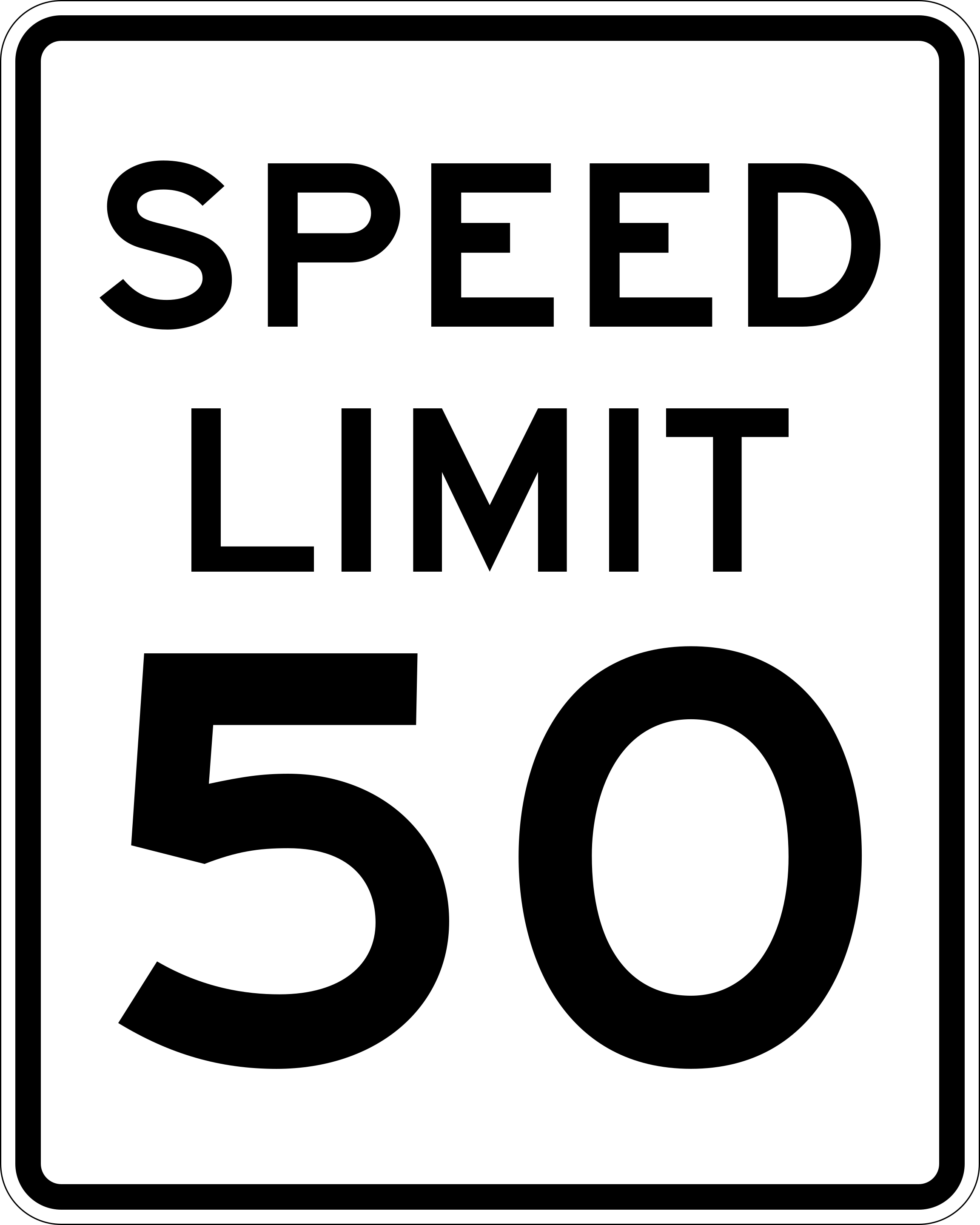
Speed limit
3 questions from the Idaho practice test
1. Under Idaho's basic rule, which driving behavior can violate the law even when the vehicle is below the posted limit?
- Driving at the posted limit during clear weather
- Driving 5 mph below the limit on an empty road
- Driving slowly enough to impede the safe flow of traffic
- Driving below the limit while leaving extra space
Show answer
Driving slowly enough to impede the safe flow of traffic. Idaho treats speed as a safety judgment, not merely a comparison with a sign. A driver can violate the basic rule by moving so slowly that existing traffic cannot flow safely, even though the speedometer is below the limit. The choice “Driving 5 mph below the limit on an empty road” changes the rule into a five mile per hour threshold that the handbook never creates. Watch the traffic behind you, the surface, visibility, intersections, and other hazards, then choose a speed that remains reasonable and prudent for the whole situation.
2. What maximum speed may be posted for travel on an urban interstate in Idaho?
- 65 miles per hour
- 55 miles per hour
- 70 miles per hour
- 80 miles per hour
Show answer
65 miles per hour. Idaho permits travel up to 65 miles per hour on urban interstate highways when the road is designated for that speed and conditions permit, unless a different limit is posted. The 80 mile per hour option belongs to rural interstates, so it changes the roadway type. A 70 mile per hour choice is not the urban interstate figure stated here, and 55 miles per hour is lower than the handbook maximum. Identify the road category first, then check the posted sign and weather before treating the number as safe.
3. Unless another limit is posted, what is the maximum speed in an Idaho residential, business, or urban district?
- 25 mph
- 35 mph
- 30 mph
- 45 mph
Show answer
35 mph. Idaho sets the maximum speed in any residential, business, or urban district at 35 miles per hour unless a different limit is posted. Twenty five and thirty miles per hour are lower than the Idaho default for these districts. Forty five is faster than the Idaho default. The basic rule still applies, so conditions may require driving slower than 35.
Practice this topic
Lock it in with speed limits questions from the free Idaho practice test. Every answer comes with a plain English explanation.
Source: the Idaho Driver's Handbook, Traffic Laws & the Rules of the Road. This lesson is a plain English summary, not the law itself; where it differs, the manual and the statute govern. Last checked 2026-09-27.