
Key points
Signal at least 100 feet ahead in business or residential areas, or 5 seconds ahead on freeways or highways.
Source: Handbook p. 72
“Signals must start at least 100 feet (in business or residential areas) or five seconds (on freeways or highways) before you turn or change lanes.”
Idaho Driver's Handbook, Handbook p. 72Arm signals: straight out for left, upward for right, downward for slow or stop.
Source: Handbook p. 72
“Left: Your arm and hand extended straight out the window. Right: Your arm and hand extended upward out the window. Slow or Stop: Your arm and hand extended downward out the window”
Idaho Driver's Handbook, Handbook p. 72For a right turn, watch for bicycles between your vehicle and the curb, and do not swing wide.
Source: Handbook p. 73
“Watch for bicycles that are approaching from the right between your vehicle and the curb. Then turn into the right-hand lane of the cross street. Do not swing wide.”
Idaho Driver's Handbook, Handbook p. 73For a left turn, yield to pedestrians and oncoming vehicles and do not cut the corner.
Source: Handbook p. 73
“Yield the right-of-way to pedestrians and oncoming vehicles. When safe, turn into the nearest lane where traffic moves in the direction you want to go. Do not cut the corner.”
Idaho Driver's Handbook, Handbook p. 73U turns may not be made on curves or near hilltops where you cannot be seen within 500 feet, or in a no passing zone.
Source: Handbook p. 73
“U-turns may not be made on any curve, or the approach of or near the crest of a hill, where the vehicle cannot be seen by approaching vehicles from either direction within 500 feet, or a no passing zone.”
Idaho Driver's Handbook, Handbook p. 73You may not travel in a shared center turn lane.
Source: Handbook p. 58
“You may not travel in the shared turn lanes or interfere with another vehicle preparing to make a turn from the center turn lane.”
Idaho Driver's Handbook, Handbook p. 58When turning right at an intersection, you may occupy the bike lane in the dashed line area.
Source: Handbook p. 100
“When turning right at an intersection, you may occupy the bike lane in the dashed line area.”
Idaho Driver's Handbook, Handbook p. 100
Numbers to know
| Number | What it means | Manual |
|---|---|---|
| 100 feet or 5 seconds | minimum signal distance in business or residential areas, and time on freeways or highways | Handbook p. 72 |
| 500 feet | no U turn where you cannot be seen within this distance | Handbook p. 73 |
Recognize these signs
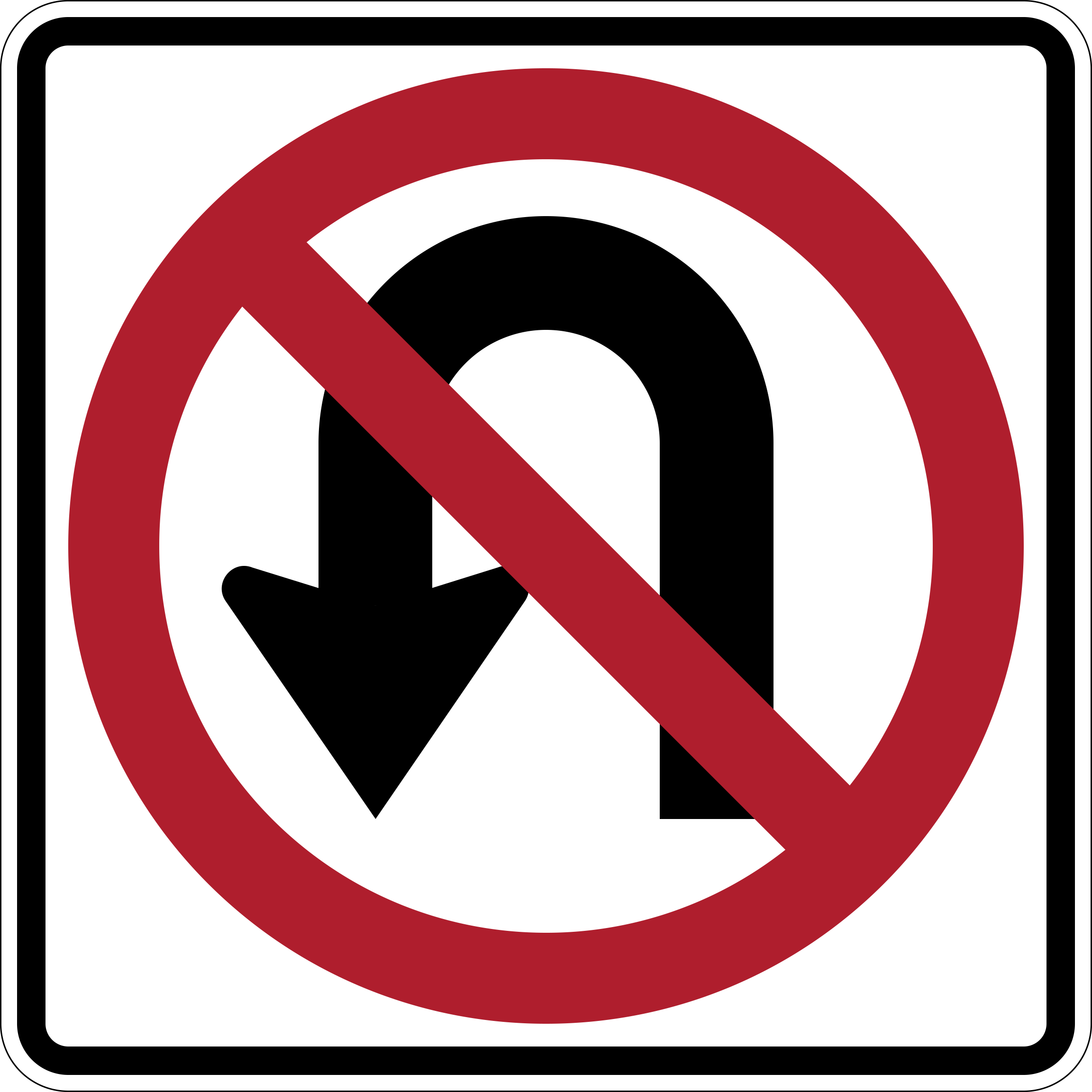
No U turn
3 questions from the Idaho practice test
1. How far before a turn or lane change must a signal begin in a business or residential area?
- Only after the front wheels begin turning
- At least 25 feet before the movement
- At least 100 feet before the movement
- Exactly five seconds before the movement in every area
Show answer
At least 100 feet before the movement. Idaho requires a turn signal to start at least 100 feet before a turn or lane change in a business or residential area. On freeways or highways, the handbook uses a five-second measure instead, so the location matters. Waiting until the wheels begin turning gives other road users no useful advance notice, and 25 feet is shorter than the stated urban distance. Signal before the decision point, keep the signal active through the movement, and cancel it after the vehicle is established in its new path.
2. At an intersection, what do dashed bike lane lines indicate to a driver turning right?
- Bicyclists must stop and dismount before the dashed section begins
- The lane is reserved for parked vehicles until the next signal
- The driver must turn without entering the marked area under any circumstance
- The driver may merge into that area but must first check for bicyclists and yield if one is there
Show answer
The driver may merge into that area but must first check for bicyclists and yield if one is there. Dashed bike lane lines identify a place where a merging movement is allowed and expected. A right turning driver may occupy the area, but must check for bicyclists first and yield when a bicyclist is already there. The parking choice misreads a travel lane, and the absolute no-entry choice ignores the intended turn movement. Idaho also expects both road users to notice one another, so signal early, look beside the vehicle, and cross only when the merge is safe.
3. What is a shared center lane reserved for?
- Straight-through travel when traffic is congested
- Left turns, and permitted U-turns, from either direction
- Merging into it to continue straight past a backup
- Waiting there while a passenger enters the vehicle
Show answer
Left turns, and permitted U-turns, from either direction. A shared center lane is a turning space, not an extra travel lane. Drivers from either direction may use it for a left turn and for a U-turn when that movement is permitted. Driving straight through, passing, or waiting there would place a vehicle in the path of people preparing to turn. The handbook also warns against interfering with another vehicle using the center turn lane. Enter only far enough to complete the planned turn, scan for opposing users, and leave the lane promptly once the maneuver is finished.
Practice this topic
Lock it in with signals and markings questions from the free Idaho practice test. Every answer comes with a plain English explanation.
Source: the Idaho Driver's Handbook, Traffic Laws & the Rules of the Road. This lesson is a plain English summary, not the law itself; where it differs, the manual and the statute govern. Last checked 2026-09-27.