
Key points
Red is for stop, yield, do not enter or wrong way signs.
Source: Handbook p. 34
“Red Stop, yield, do not enter or wrong way.”
Nebraska Driver's Manual, Handbook p. 34Yellow is used on warning signs for unexpected conditions.
Source: Handbook p. 34
“Yellow Used on warning signs to call attention to unexpected conditions.”
Nebraska Driver's Manual, Handbook p. 34Green is guide information, blue is motorist services, white is regulatory, orange is road work, and brown is recreation.
Source: Handbook p. 34
“Green Guide information, such as distance or direction. Blue Motorist services, such as rest areas or hospitals. White Regulatory, such as speed limits. Orange Alert to road workers, construction area. Brown Recreation and cultural interest areas.”
Nebraska Driver's Manual, Handbook p. 34The eight sided octagon always means stop.
Source: Handbook p. 35
“The octagonal (eight-sided) shape always means stop.”
Nebraska Driver's Manual, Handbook p. 35The three sided triangle always means yield.
Source: Handbook p. 35
“The triangle (three-sided) shape always means yield.”
Nebraska Driver's Manual, Handbook p. 35A diamond warns of special conditions or hazards ahead.
Source: Handbook p. 35
“These signs warn you of special conditions or hazards ahead. Slow and proceed with caution.”
Nebraska Driver's Manual, Handbook p. 35A vertical rectangle usually gives instructions or the law; a horizontal one gives directions or information.
Source: Handbook p. 35
“When vertical, signs are generally used to give instructions or tell you the law. When horizontal, signs give directions or information.”
Nebraska Driver's Manual, Handbook p. 35A pennant marks a no passing zone.
Source: Handbook p. 35
“Pennant: NO PASSING ZONE Signs indicate a no passing zone.”
Nebraska Driver's Manual, Handbook p. 35A crossbuck means look both ways, listen for and yield to trains, and be ready to stop.
Source: Handbook p. 35
“It means look both ways, listen for and yield to trains and be prepared to stop if a train is approaching.”
Nebraska Driver's Manual, Handbook p. 35
Recognize these signs
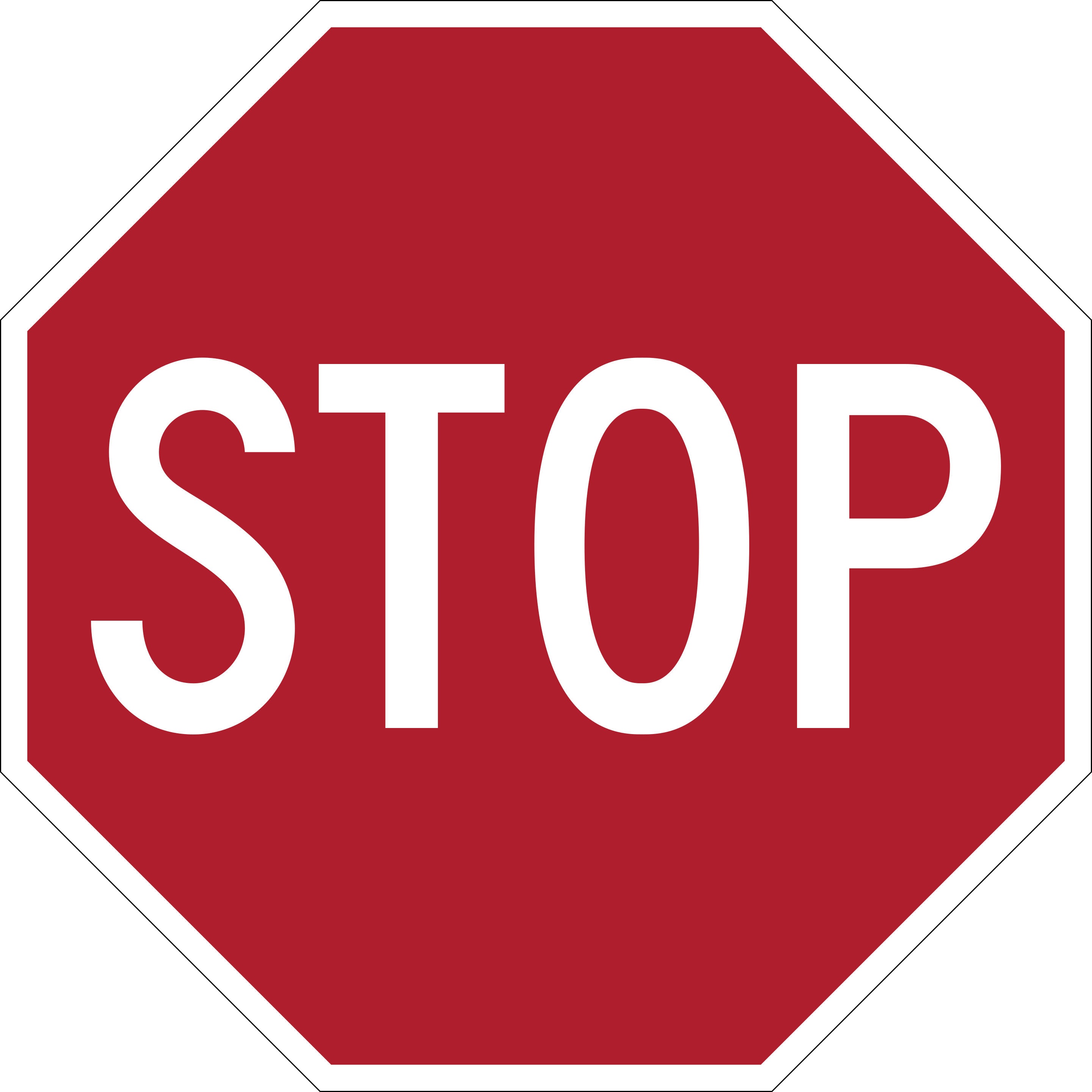
Stop 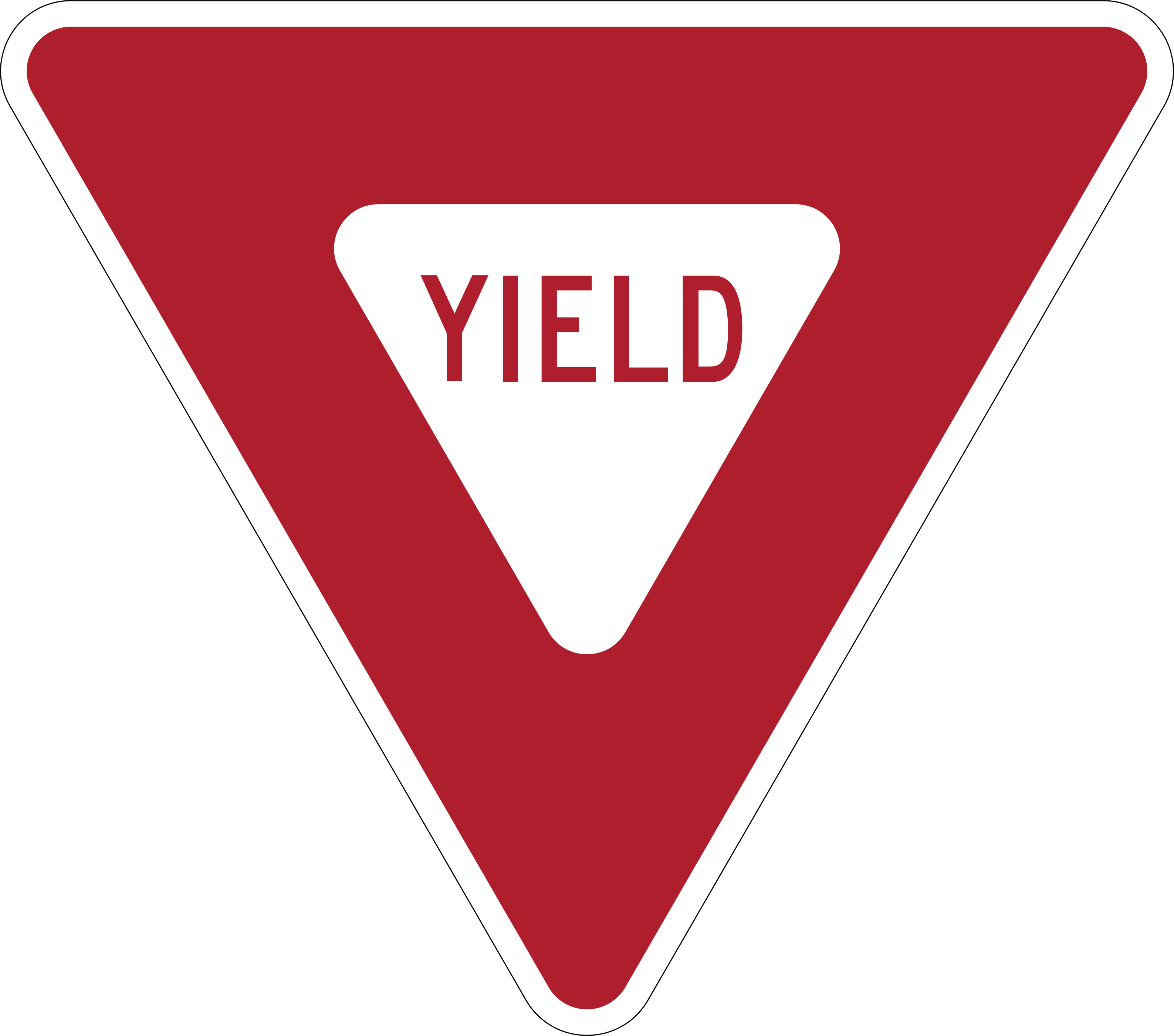
Yield 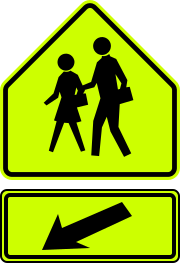
School crossing 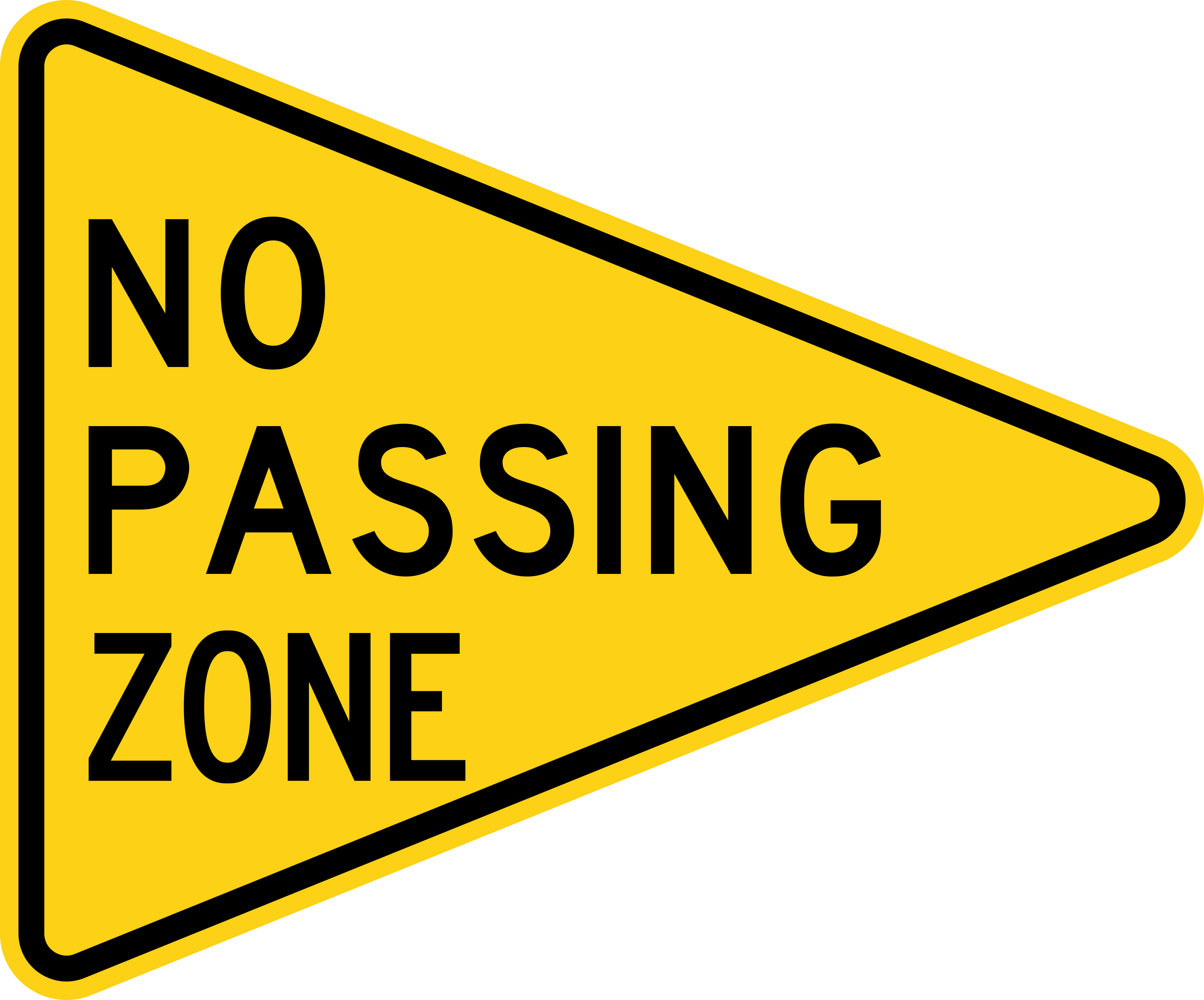
No passing zone 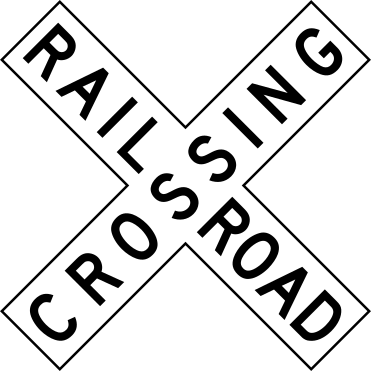
Railroad crossbuck 
Railroad crossing ahead
3 questions from the Nebraska practice test
1. What does the eight-sided shape of a Nebraska roadway sign always mean?
- Yield
- Stop
- Warning
- No passing zone
Show answer
Stop. The octagon is reserved for the stop message, making it recognizable even when distance, weather, or the sign's lettering makes reading difficult. A yield sign uses a triangle, general warnings use a diamond, and a no-passing-zone sign uses a pennant. Shape recognition gives the driver an early cue to reduce speed and prepare for the required action. At an octagonal sign, make a complete stop at the stop line when one is present, or before the crosswalk or intersection as the surrounding roadway rules require.
2. What message is conveyed by the triangular shape of a roadway sign?
- Stop
- Yield
- Railroad crossing
- No passing zone
Show answer
Yield. The triangle is Nebraska's shape cue for yielding. It does not command the same action as an octagon, which identifies a stop sign. A railroad warning uses a crossbuck or circle, while a pennant marks a no passing zone. When the triangular sign appears, reduce speed, look for conflicting road users, and give them priority as required by the intersection. Shape recognition helps when a sign is partly obscured, seen at an angle, or encountered before its lettering can be read.
3. What type of information does a white roadway sign generally provide?
- A warning about unexpected road conditions
- Motorist services, such as food or lodging
- Regulatory information, such as a speed limit
- Directions to recreation and cultural areas
Show answer
Regulatory information, such as a speed limit. White signs generally provide regulatory information, including speed limits. Regulatory signs communicate traffic laws and their instructions must be obeyed. Blue signs identify motorist services, yellow signs warn about unexpected conditions, and brown signs identify recreation or cultural interest areas. Color is an early classification cue, so read the wording and symbol for the actual rule. A white sign may regulate speed, movement, parking, or another roadway action, rather than merely offering optional guidance.
Practice this topic
Lock it in with road signs questions from the free Nebraska practice test. Every answer comes with a plain English explanation.
Source: the Nebraska Driver's Manual, Section 3: Signs, Signals and Markings. This lesson is a plain English summary, not the law itself; where it differs, the manual and the statute govern. Last checked 2026-09-27.