
Key points
Warning signs prepare drivers for upcoming road conditions and hazards.
Source: Handbook p. 29
“Warning signs prepare drivers for upcoming road conditions and hazards.”
Indiana Driver's Manual, Handbook p. 29Orange construction signs warn you to be careful approaching work zones.
Source: Handbook p. 30
“Orange highway construction traffic signs warn drivers to be careful when approaching construction zones.”
Indiana Driver's Manual, Handbook p. 30The slow moving vehicle emblem marks a vehicle that cannot exceed 25 mph.
Source: Handbook p. 30
“indicates a slow-moving vehicle which cannot exceed 25 miles per hour.”
Indiana Driver's Manual, Handbook p. 30Speed advisory signs may accompany some warning signs.
Source: Handbook p. 31
“Speed advisory signs may accompany some warning signs.”
Indiana Driver's Manual, Handbook p. 31Traffic regulation signs regulate speed and movement and show rules you must obey.
Source: Handbook p. 31
“Traffic regulation signs regulate traffic speed as well as movement and display rules which drivers must obey.”
Indiana Driver's Manual, Handbook p. 31Plaques under stop signs tell you which directions must stop.
Source: Handbook p. 32
“Supplemental plaques are sometimes added to the bottom of stop signs to indicate directions in which the intersection must stop.”
Indiana Driver's Manual, Handbook p. 32Guidance signs show the type of road, highway entrances and exits, and distances.
Source: Handbook p. 32
“Traffic guidance signs provide drivers with information about the type of road they are traveling on, upcoming highway entrances and exits, and distances to various destinations.”
Indiana Driver's Manual, Handbook p. 32Driver services and recreation signs show nearby amenities, parks and recreation areas.
Source: Handbook p. 33
“Driver services and recreation signs provide drivers with information about nearby amenities, parks and recreational areas.”
Indiana Driver's Manual, Handbook p. 33
Numbers to know
| Number | What it means | Manual |
|---|---|---|
| 25 mph | top speed of a vehicle with the slow moving emblem | Handbook p. 30 |
Recognize these signs
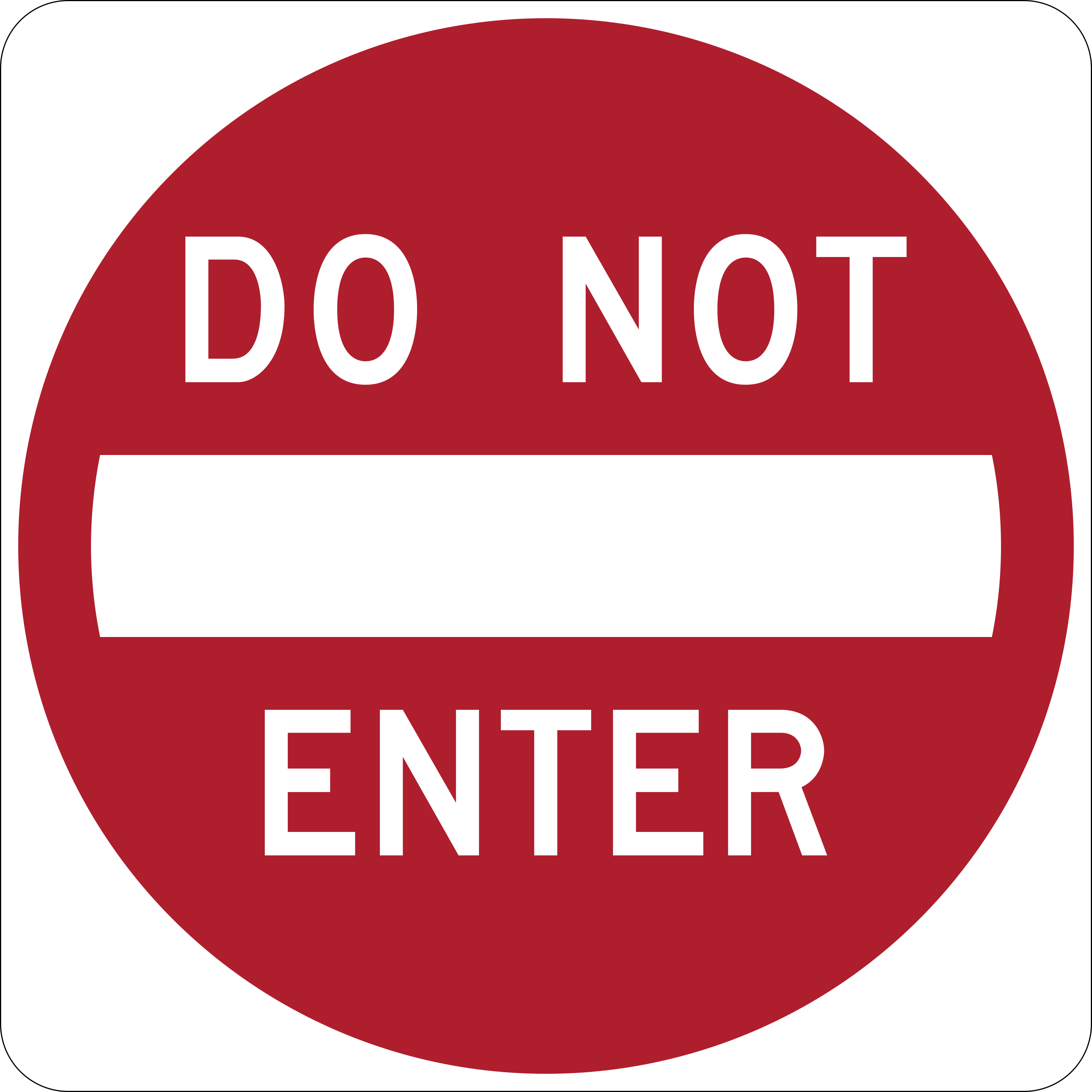
Do not enter 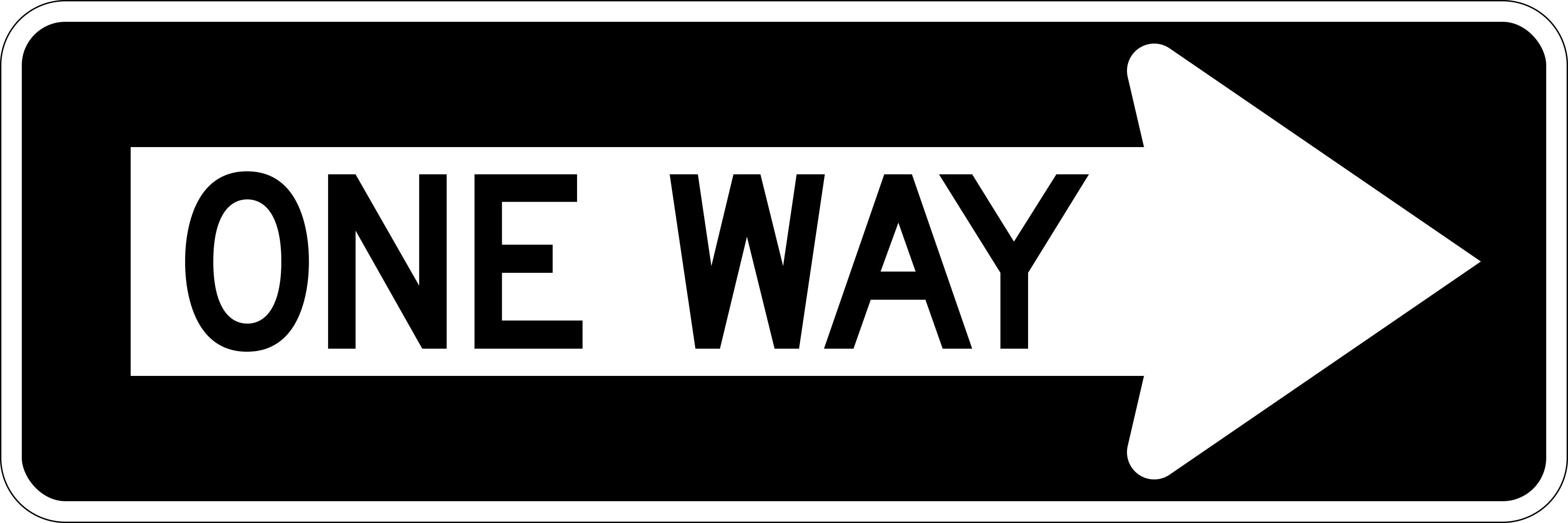
One way 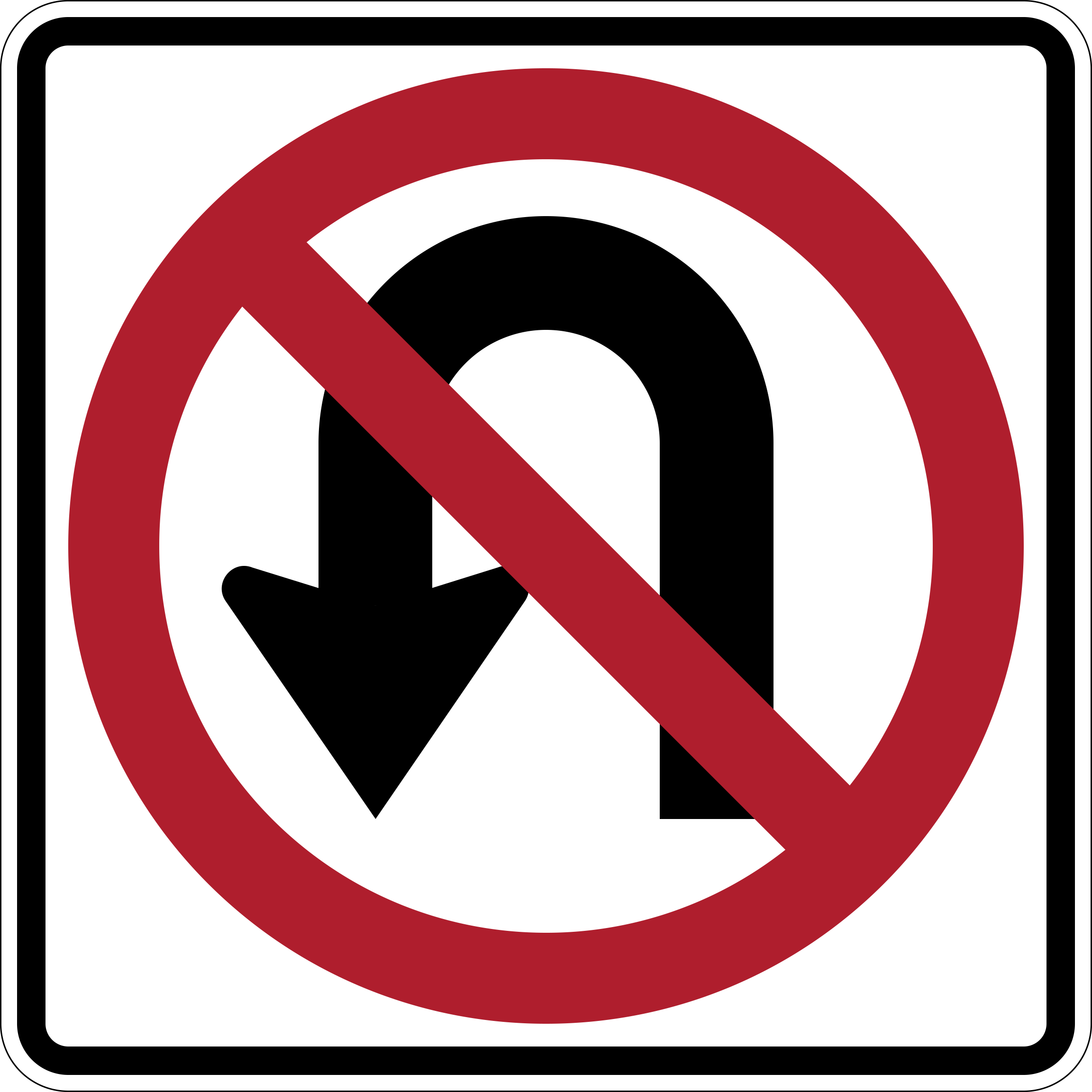
No U turn 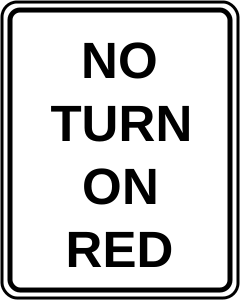
No turn on red 
Slow moving vehicle 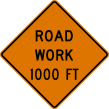
Road work ahead 
Intersection ahead 
Winding road 
Stop ahead
3 questions from the Indiana practice test
1. What does the slow-moving vehicle emblem indicate?
- A vehicle carrying an oversized load over four feet high
- A vehicle that cannot exceed 25 miles per hour
- A vehicle that must stop at every railroad crossing
- A vehicle traveling at least 45 miles per hour
Show answer
A vehicle that cannot exceed 25 miles per hour. The slow-moving vehicle emblem identifies a vehicle that cannot exceed 25 miles per hour. Its orange fluorescent center and red reflective borders are meant to be recognized from a distance, giving following drivers time to close the speed gap safely. It does not describe a load dimension, guarantee a railroad stop, or indicate a minimum speed. When the emblem appears ahead, ease off the accelerator early, avoid passing without a legal and safe opportunity, and expect the vehicle to travel substantially below ordinary highway speed.
2. What must a driver do when a regulatory sign says DO NOT ENTER?
- Stay out of the roadway or ramp marked by the sign
- Use the lane only to make a U-turn
- Proceed after stopping and yielding to pedestrians
- Enter slowly if no vehicle is approaching
Show answer
Stay out of the roadway or ramp marked by the sign. Indiana's manual lists Do Not Enter among its traffic regulation signs, and regulation signs display rules that drivers must obey about traffic speed and movement. The sign therefore prohibits entering the roadway it marks. An empty lane does not make entry legal, stopping first does not convert the sign into a yield instruction, and the sign gives no permission to use the lane for a U-turn. If you see the sign facing you, do not enter; find a lawful route instead. Never treat the absence of another vehicle as permission to ignore a regulation sign.
3. What do warning signs do for a driver?

- Prepare the driver for upcoming road conditions and hazards
- Authorize the driver to exceed the posted speed limit
- Guarantee that the road ahead is free of pedestrians
- Replace all traffic signals at the next intersection
Show answer
Prepare the driver for upcoming road conditions and hazards. Warning signs prepare drivers for road conditions and hazards that are coming up. They do not grant permission to speed, promise that the roadway is clear, or replace a signal. A driver should use the advance notice to adjust speed, position, and attention before reaching the condition shown. For example, a pedestrian or slippery-road symbol calls for active scanning and smooth control. Treat the warning as an early cue, then obey the separate regulation, signal, or person controlling traffic at the location.
Practice this topic
Lock it in with road signs questions from the free Indiana practice test. Every answer comes with a plain English explanation.
Source: the Indiana Driver's Manual, Chapter 6: Traffic Signs and Signals. This lesson is a plain English summary, not the law itself; where it differs, the manual and the statute govern. Last checked 2026-09-27.