
Key points
Red signs convey regulations that require immediate action, like Wrong Way.
Source: Handbook p. 27
“Red traffic signs convey traffic regulations that require drivers to take immediate action to avoid threats to traffic safety. A “Wrong Way” sign is an example of a traffic sign with a red background.”
Indiana Driver's Manual, Handbook p. 27Yellow or fluorescent yellow green signs warn of road conditions, hazards and school zones.
Source: Handbook p. 27
“Yellow or fluorescent yellow-green signs prepare drivers for specific road conditions and hazards ahead, and alert drivers to nearby school zones.”
Indiana Driver's Manual, Handbook p. 27White signs display regulations such as speed limits.
Source: Handbook p. 27
“White Traffic signs display traffic regulations, such as speed limits, that drivers must obey”
Indiana Driver's Manual, Handbook p. 27Orange signs warn of temporary conditions, often construction or maintenance.
Source: Handbook p. 27
“Orange traffic signs warn drivers of temporary traffic conditions. These signs are often used to warn drivers of conditions ahead due to highway constructions and maintenance projects.”
Indiana Driver's Manual, Handbook p. 27Brown signs show nearby recreational and cultural sites.
Source: Handbook p. 27
“Brown traffic signs indicate nearby recreational and cultural interest sites.”
Indiana Driver's Manual, Handbook p. 27Circular signs warn of an upcoming railroad crossing.
Source: Handbook p. 28
“Circular traffic signs alert drivers to upcoming railroad crossings.”
Indiana Driver's Manual, Handbook p. 28Triangle signs mean slow down near an intersection and be ready to come to a complete stop.
Source: Handbook p. 28
“Traffic signs with three sides of equal length warn drivers to slow down when approaching an intersection, and to be prepared to come to a complete stop”
Indiana Driver's Manual, Handbook p. 28Pennant signs are on the left side of two way roads and warn you not to pass.
Source: Handbook p. 28
“Pennant-shaped traffic signs are posted on the left-hand side of twoway roads to warn drivers not to pass other vehicles on the left.”
Indiana Driver's Manual, Handbook p. 28Five sided signs mark an area near a school where children may cross.
Source: Handbook p. 28
“Five-sided traffic signs warn drivers that they are entering an area near a school in which children may be crossing the road.”
Indiana Driver's Manual, Handbook p. 28Eight sided signs mean stop and yield the appropriate right of way.
Source: Handbook p. 28
“Eight-sided traffic signs warn drivers that they must stop and yield the appropriate right of way at an intersection.”
Indiana Driver's Manual, Handbook p. 28
Numbers to know
| Number | What it means | Manual |
|---|---|---|
| 7 colors | common sign colors | Handbook p. 27 |
| 7 shapes | common sign shapes | Handbook p. 28 |
Recognize these signs
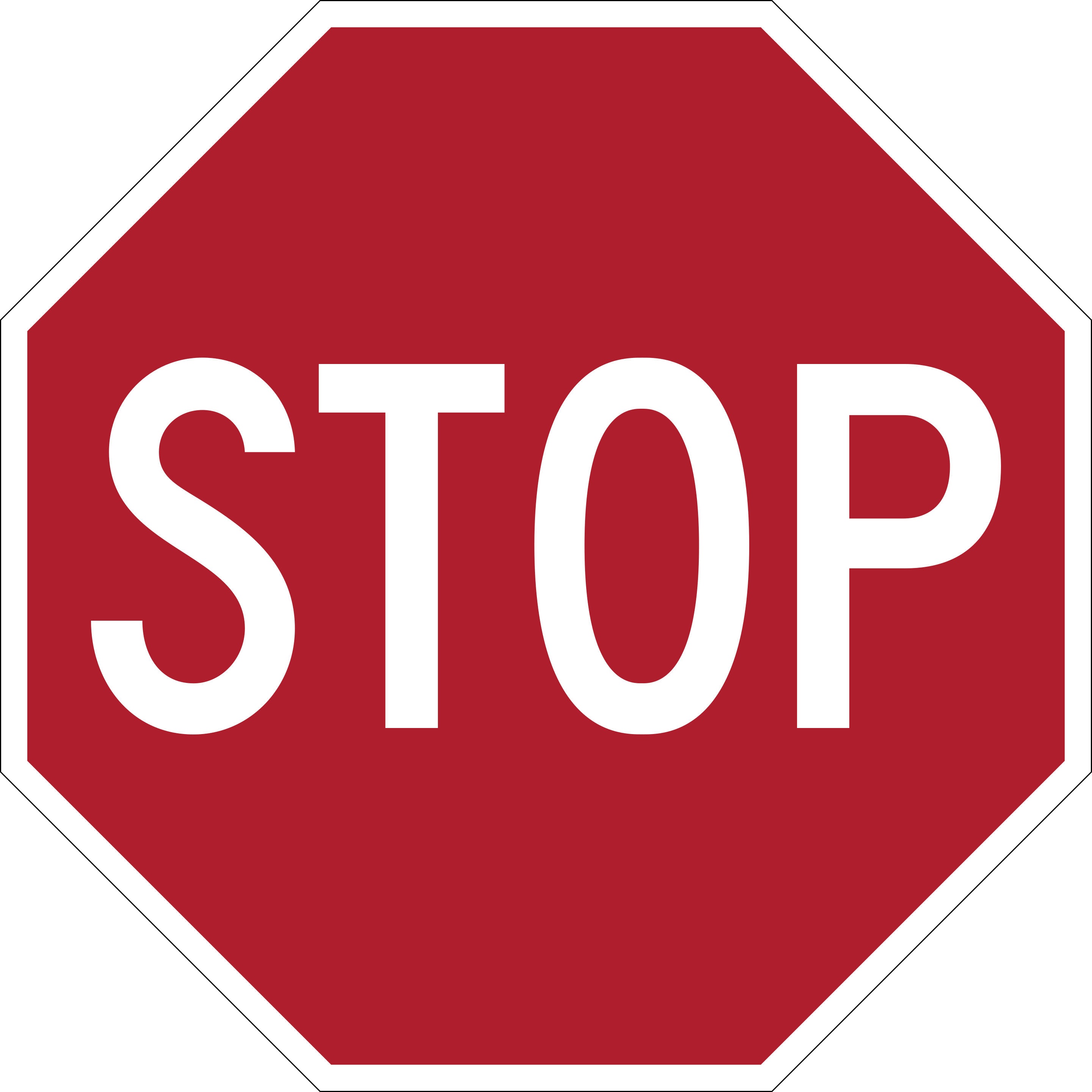
Stop 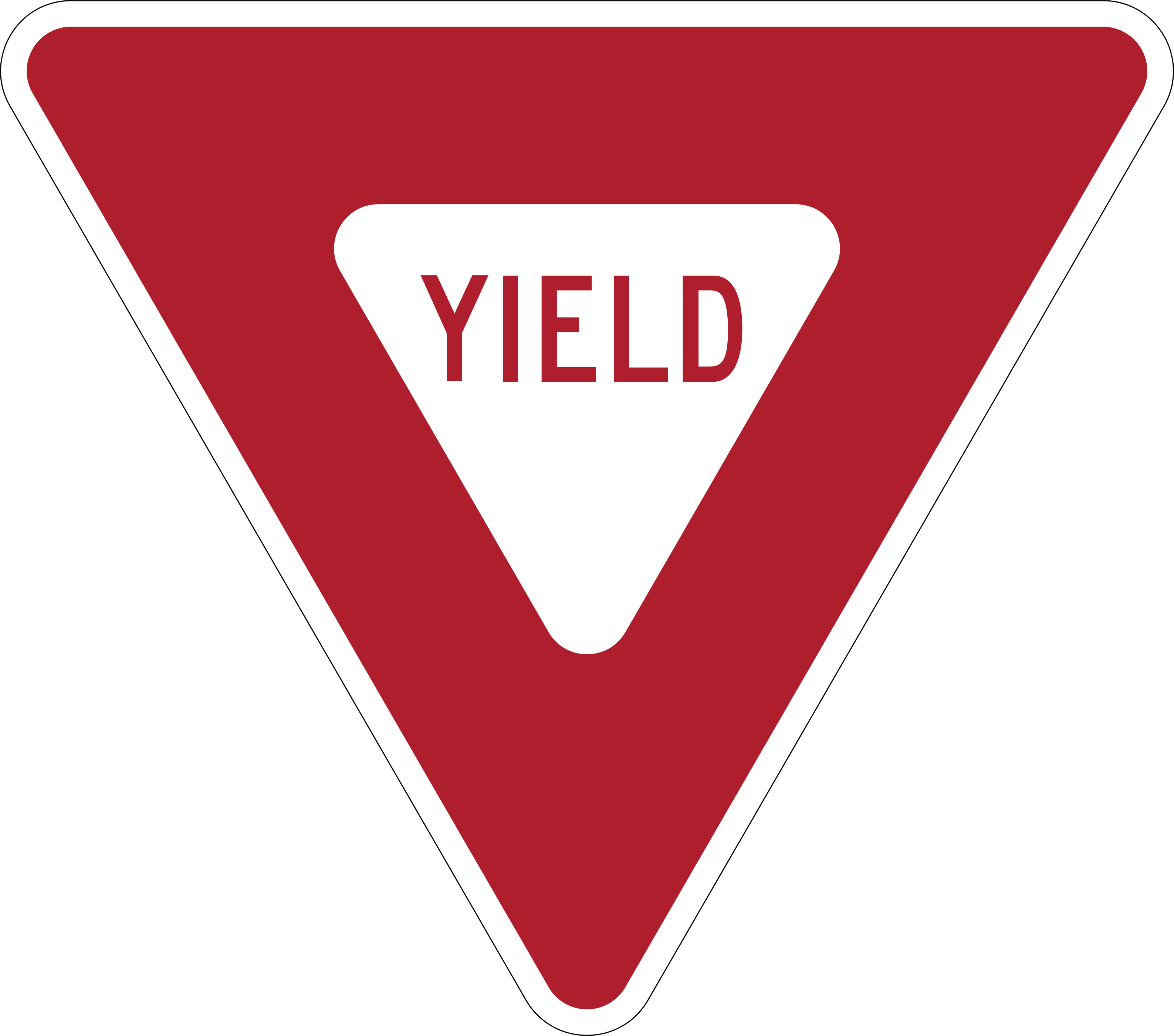
Yield 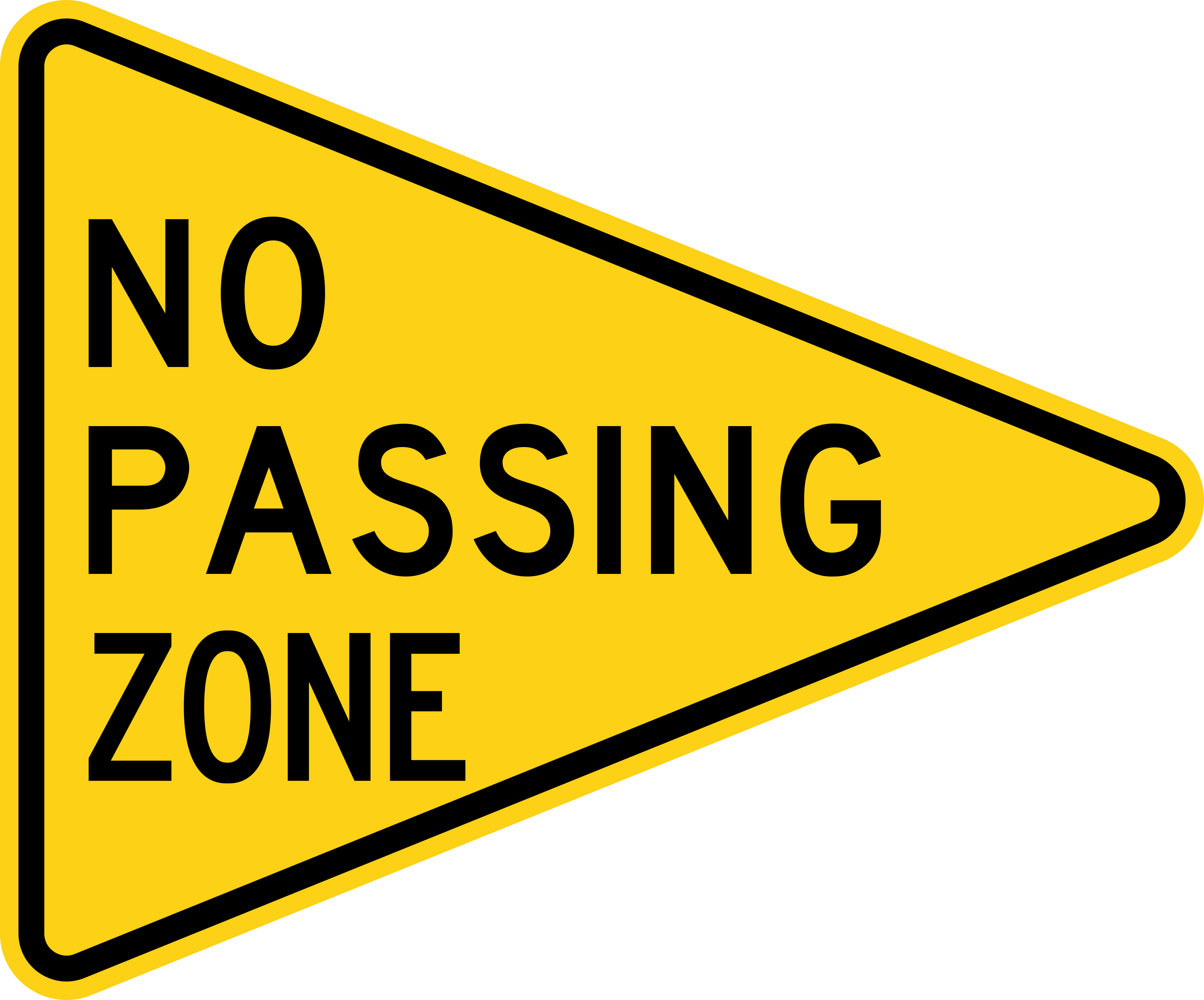
No passing zone 
Railroad crossing ahead 
School crossing 
Slippery when wet 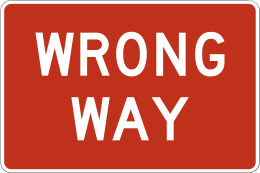
Wrong way
3 questions from the Indiana practice test
1. What type of traffic information is conveyed by a red sign?
- A nearby recreational or cultural attraction
- A regulation requiring immediate action for traffic safety
- A temporary highway construction condition only
- A permitted movement or route direction
Show answer
A regulation requiring immediate action for traffic safety. Indiana's manual assigns red to traffic regulations that require immediate action to avoid threats to traffic safety. The manual's example is the Wrong Way sign, so a driver should respond promptly rather than treat the color as general route information. Brown identifies recreational and cultural interest sites, orange warns about temporary construction conditions, and green provides permitted movements or directions. When a red sign appears, read its message and carry out the required action before continuing. The red background signals urgency, while the wording supplies the specific command.
2. What hazard is signaled by a circular traffic sign?
- A school area where children may cross
- An upcoming railroad crossing
- A no-passing zone on a two-way road
- A sharp curve with an advisory speed
Show answer
An upcoming railroad crossing. A circular traffic sign alerts drivers to an upcoming railroad crossing. That shape is an advance cue to look for tracks, signals, gates, and trains, then follow the crossing rules. A five-sided sign marks a school area, a pennant warns against passing, and a rectangular sign can carry an advisory speed. The shape does not tell you whether a train is present, so continue scanning and be prepared to stop. Reduce distractions before the tracks and never assume a quiet crossing is automatically clear.
3. What area is identified by a five-sided traffic sign?
- A railroad crossing with multiple tracks
- A no-passing zone on a rural road
- A highway entrance or exit
- An area near a school where children may cross
Show answer
An area near a school where children may cross. Five-sided signs warn that the vehicle is entering an area near a school where children may cross the road. That shape should prompt a slower, more attentive approach and careful scanning for students. Circular signs warn of railroad crossings, pennants mark no-passing zones, and green guidance signs can identify highway entrances or exits. The school warning does not guarantee that children are visible, so do not wait for a person to appear before reducing speed. Watch the roadside, crosswalks, and vehicles that may stop suddenly.
Practice this topic
Lock it in with road signs questions from the free Indiana practice test. Every answer comes with a plain English explanation.
Source: the Indiana Driver's Manual, Chapter 6: Traffic Signs and Signals. This lesson is a plain English summary, not the law itself; where it differs, the manual and the statute govern. Last checked 2026-09-27.