
Key points
Yellow lane markings separate lanes going in opposite directions.
Source: Handbook p. 37
“Yellow lane markings separate multiple lanes of traffic going in opposite directions.”
Indiana Driver's Manual, Handbook p. 37You may cross a broken yellow line to pass when safe, but should not cross a solid yellow line except to turn.
Source: Handbook p. 37
“You may cross a broken yellow line to pass another vehicle when it is safe, but you should not cross a solid yellow line except to turn.”
Indiana Driver's Manual, Handbook p. 37Cross a broken white line only when it is safe to change lanes, and do not cross a solid white line.
Source: Handbook p. 37
“You may cross a broken white line when it is safe to change lanes, but you should not cross a solid white line.”
Indiana Driver's Manual, Handbook p. 37Change only one lane at a time, and signal before turning or changing lanes.
Source: Handbook p. 37
“Change only one lane at a time. When changing lanes to prepare for a turn, you must give a proper signal before turning or changing lanes.”
Indiana Driver's Manual, Handbook p. 37Before changing lanes, briefly turn your head to check your blind spot.
Source: Handbook p. 37
“Briefly turn your head toward the lane that you are entering to make sure that there is no vehicle in your blind spot”
Indiana Driver's Manual, Handbook p. 37When passing, return to the right side no less than 100 feet before any oncoming vehicle.
Source: Handbook p. 38
“you must return to the right side of the road no less than 100 feet before any oncoming vehicle”
Indiana Driver's Manual, Handbook p. 38Do not pass within 100 feet of an intersection, railroad crossing, bridge, viaduct or tunnel.
Source: Handbook p. 38
“Within 100 feet of an intersection, railroad crossing, bridge, viaduct, or tunnel”
Indiana Driver's Manual, Handbook p. 38Passing is illegal where a solid yellow line is on your side of the center line.
Source: Handbook p. 38
“A solid yellow line is marked on the driver’s side of the center line of the road”
Indiana Driver's Manual, Handbook p. 38If you are being passed, let the other vehicle pass safely and do not speed up.
Source: Handbook p. 38
“If another vehicle is passing you on the left-hand side of the road, allow the other vehicle to pass safely and do not increase your speed.”
Indiana Driver's Manual, Handbook p. 38Never use a center left turn lane for passing.
Source: Handbook p. 39
“Never use this type of center lane for passing other vehicles.”
Indiana Driver's Manual, Handbook p. 39
Numbers to know
| Number | What it means | Manual |
|---|---|---|
| 100 feet | distance before an oncoming vehicle by which you must return to the right side after passing | Handbook p. 38 |
Recognize these signs
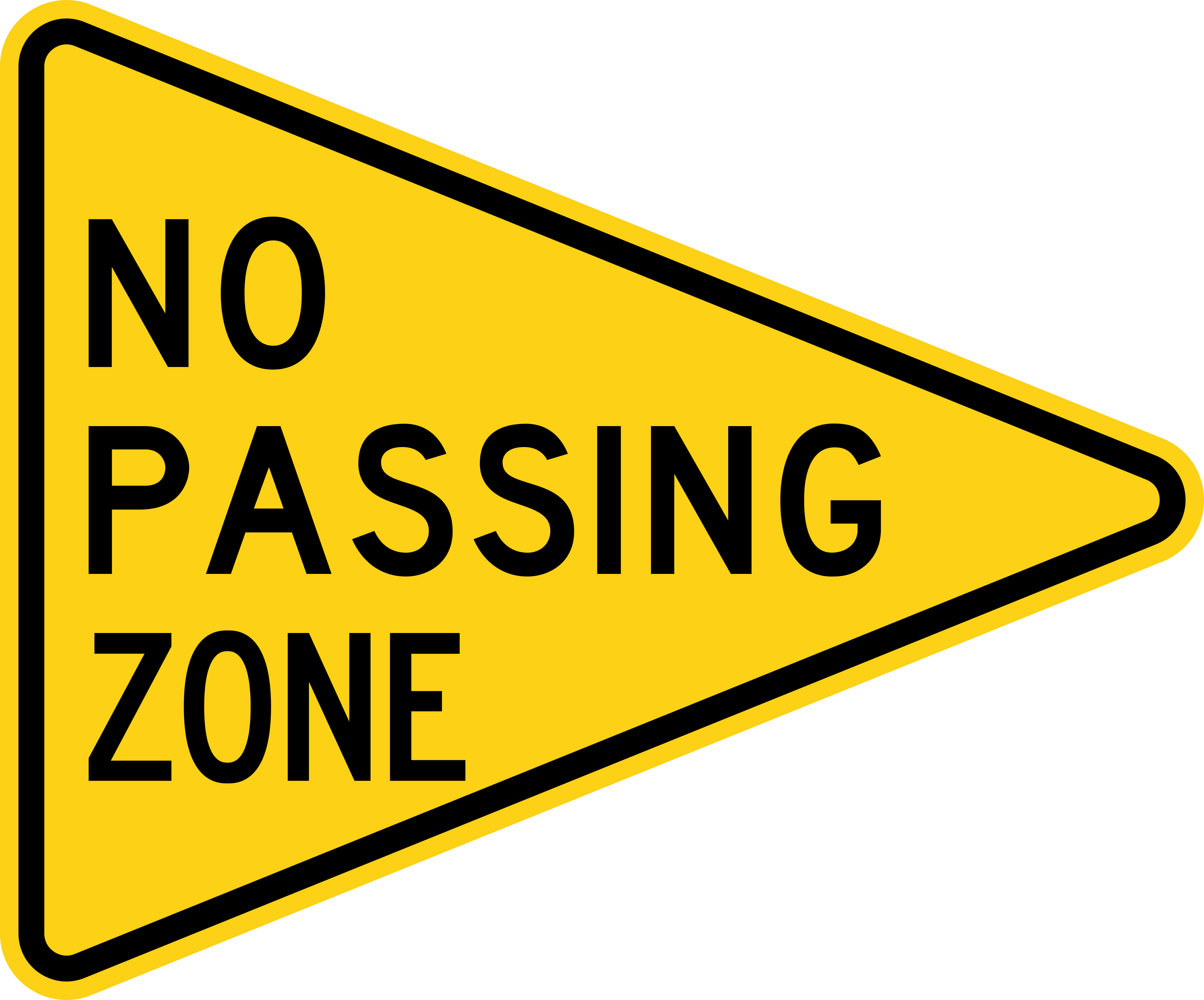
No passing zone 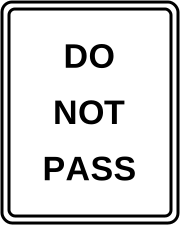
Do not pass
3 questions from the Indiana practice test
1. A broken yellow line is on the driver's side of a two-way road. When may it be crossed?
- Never, because every yellow line forbids crossing
- Only to park on the opposite shoulder
- To pass another vehicle when it is safe
- Whenever the driver wants to change lanes without signaling
Show answer
To pass another vehicle when it is safe. Yellow markings separate traffic moving in opposite directions. Indiana permits crossing a broken yellow line to pass when the maneuver is safe, while a solid yellow line generally should not be crossed except to turn. The broken marking is not an unlimited permission: the driver still needs clear sight distance, adequate space, and no conflicting traffic. Parking on the opposite shoulder and unsignaled lane changes are not the rule described. The cue is the broken center line combined with a safe opportunity, not the color alone.
2. What do yellow lane markings separate on an Indiana roadway?
- Traffic lanes moving in the same direction only
- A bicycle lane from a sidewalk
- Traffic lanes moving in opposite directions
- A parking lane from a loading zone
Show answer
Traffic lanes moving in opposite directions. Yellow lane markings divide traffic traveling in opposing directions. That is why a driver must evaluate a centerline before crossing it for a pass or turn. White lane markings usually separate lanes moving in the same direction, so confusing the two colors can lead to an unsafe movement across opposing traffic. The marking does not by itself identify a bicycle facility or curbside loading space. The cue is a yellow line near the roadway center: expect oncoming vehicles and obey whether the line is broken or solid.
3. When may a driver cross a solid yellow line on a two-way road?
- Whenever the vehicle is traveling below 25 mph
- Generally only to make a turn
- Only after turning on hazard lights
- For passing whenever the road appears empty
Show answer
Generally only to make a turn. Indiana's lane-marking guidance says a driver should not cross a solid yellow line except to turn. Passing across it is prohibited even when the road appears empty, and low speed or hazard lights do not create permission. The marking separates opposing traffic, so crossing it for an ordinary pass creates a conflict with vehicles coming the other way. Read the line on the driver's side before deciding whether a passing maneuver is legal.
Practice this topic
Lock it in with signals and markings questions from the free Indiana practice test. Every answer comes with a plain English explanation.
Source: the Indiana Driver's Manual, Chapter 7: Safe Vehicle Operation. This lesson is a plain English summary, not the law itself; where it differs, the manual and the statute govern. Last checked 2026-09-27.