
Key points
On rural interstates, cars may not exceed 70 mph or the posted limit, and heavy trucks 65 mph.
Source: Handbook p. 40
“Passenger vehicles may not exceed 70 miles per hour or the posted speed limit • Trucks that have a declared gross vehicle weight greater than 26,000 pounds may not exceed 65 miles per hour”
Indiana Driver's Manual, Handbook p. 40On a rural state divided highway, the limit is 60 mph or the posted limit.
Source: Handbook p. 40
“On a rural state divided highway, vehicles may not exceed 60 miles per hour or the posted speed limit.”
Indiana Driver's Manual, Handbook p. 40On an urban interstate, the limit is 55 mph or the posted limit.
Source: Handbook p. 41
“On an urban interstate highway, vehicles may not exceed 55 miles per hour or the posted speed limit”
Indiana Driver's Manual, Handbook p. 41Most urban residential areas are 30 mph, and alleys are 15 mph, unless posted otherwise.
Source: Handbook p. 41
“In most urban residential areas, vehicles may not exceed 30 miles per hour or the posted speed limit • In alleys, vehicles may not exceed 15 miles per hour or the posted speed limit”
Indiana Driver's Manual, Handbook p. 41Work site speed limits are always at least 10 mph below the area's maximum.
Source: Handbook p. 41
“Work site speed limits are always at least 10 miles per hour below the maximum established speed limit for the area.”
Indiana Driver's Manual, Handbook p. 41Stay at least 2 to 3 seconds behind the vehicle ahead.
Source: Handbook p. 41
“A good rule for drivers to follow is to stay at least two to three seconds behind the vehicle ahead.”
Indiana Driver's Manual, Handbook p. 41A car at 55 mph stops in about 130 to 140 feet.
Source: Handbook p. 50
“The average passenger car traveling at 55 miles per hour can stop in approximately 130 to 140 feet”
Indiana Driver's Manual, Handbook p. 50Cars use about 50 percent more fuel at 75 mph than at 55 mph.
Source: Handbook p. 42
“passenger cars and light trucks using approximately 50 percent more fuel traveling at 75 miles per hour than at 55 miles per hour.”
Indiana Driver's Manual, Handbook p. 42With ABS, keep firm, continuous pressure on the brake while steering; do not pump the brakes.
Source: Handbook p. 42
“If your vehicle has an anti-lock brake system (ABS), keep your foot on the brake pedal, maintaining firm and continuous pressure, while steering normally. Do not pump the brakes.”
Indiana Driver's Manual, Handbook p. 42If your vehicle leaves the roadway, do not turn back right away; ease up on the gas.
Source: Handbook p. 42
“If your vehicle leaves the roadway, do not turn back onto the pavement right away. Ease up on the gas pedal.”
Indiana Driver's Manual, Handbook p. 42
Numbers to know
| Number | What it means | Manual |
|---|---|---|
| 70 and 65 mph | rural interstate limits for cars and heavy trucks | Handbook p. 40 |
| 60 mph | rural state divided highway limit | Handbook p. 40 |
| 55 mph | urban interstate and non divided state highway limit in urban areas | Handbook p. 41 |
| 30 and 15 mph | urban residential and alley limits | Handbook p. 41 |
| 10 mph below | minimum work site speed reduction | Handbook p. 41 |
| 2 to 3 seconds | minimum following distance | Handbook p. 41 |
| 130 to 140 feet at 55 mph | stopping distance of an average car | Handbook p. 50 |
| 400 feet | a loaded tractor trailer with hot brakes may need more than this to stop | Handbook p. 50 |
| 50 percent at 75 vs 55 mph | extra fuel used at higher speed | Handbook p. 42 |
| 50,000 people | population that defines an urban area | Handbook p. 41 |
Recognize these signs
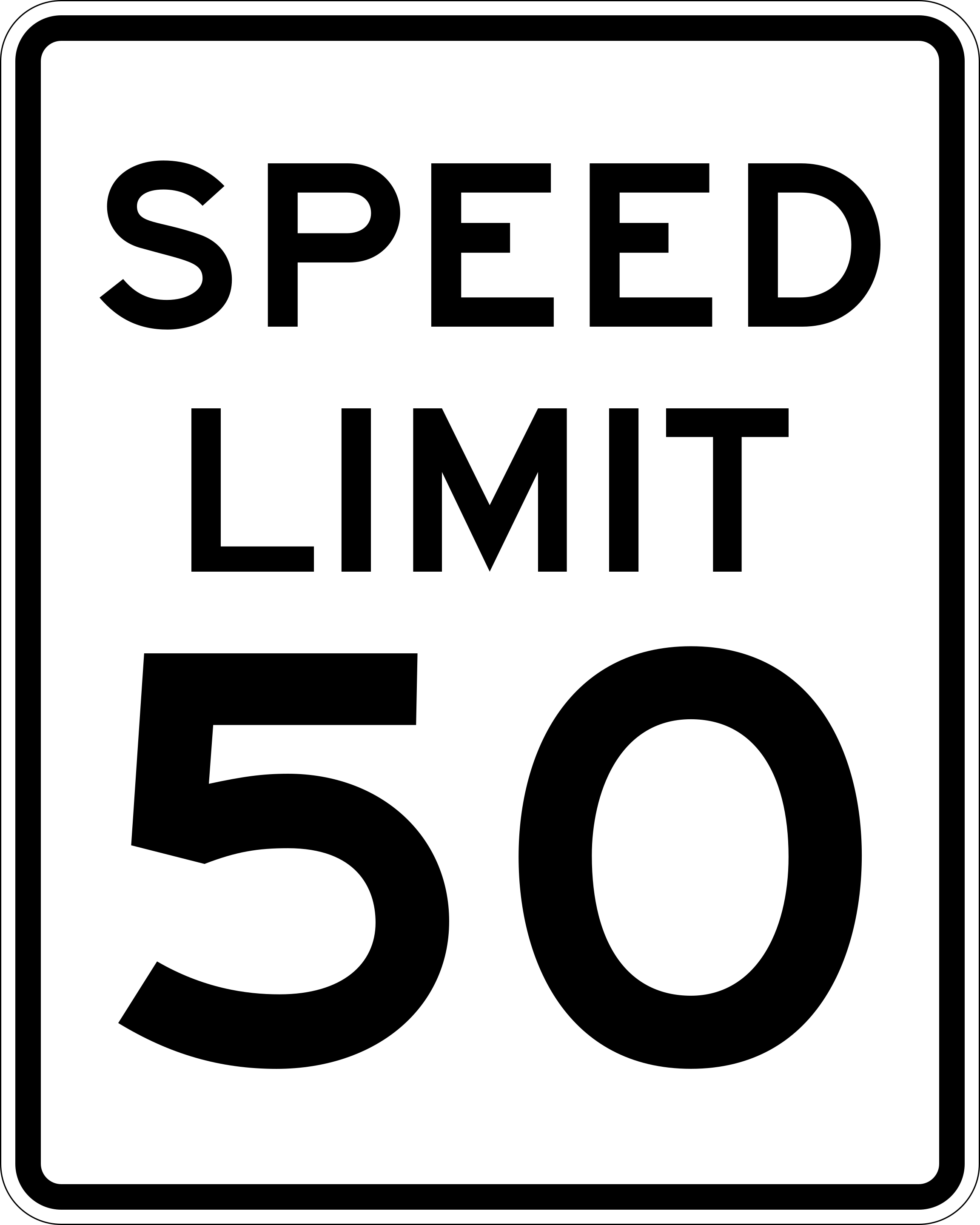
Speed limit
3 questions from the Indiana practice test
1. What following interval does Indiana recommend as a good rule for drivers behind the vehicle ahead?
- At least two to three seconds
- At least one second
- Exactly five seconds
- One car length per ten mph
Show answer
At least two to three seconds. Indiana recommends staying at least two to three seconds behind the vehicle ahead. The manual describes a timing method: watch the lead vehicle pass a fixed object and count until your vehicle reaches that same object. One second leaves little reaction space, while exactly five seconds is not the stated general rule. The car length formula is also not the manual's method. Use the fixed object cue in changing traffic because it adjusts naturally as speed changes.
2. About how far does an average car at 55 mph need to stop, according to Indiana's manual?
- About 50 feet
- About 1,000 feet
- About 400 feet
- Approximately 130 to 140 feet, about half a football field
Show answer
Approximately 130 to 140 feet, about half a football field. The average passenger car traveling at 55 miles per hour can stop in approximately 130 to 140 feet, or about half the length of a football field. A fully loaded tractor trailer with hot brakes may take more than 400 feet, longer than the whole field. That gap is why you should never make a sudden lane change or stop in front of a tractor trailer.
3. How much more fuel does a passenger car use at 75 mph than at 55 mph, according to the Indiana manual?
- Twice as much
- About 5 percent more
- About the same
- Approximately 50 percent more
Show answer
Approximately 50 percent more. Fuel consumption increases steadily above 45 miles per hour, with passenger cars and light trucks using approximately 50 percent more fuel traveling at 75 miles per hour than at 55. To maximize fuel economy, drive sensibly, observe the speed limit, avoid roof cargo and excess weight, and avoid rapid acceleration or sudden stops. Keeping the vehicle maintained and the tires properly inflated also helps.
Practice this topic
Lock it in with safe driving questions from the free Indiana practice test. Every answer comes with a plain English explanation.
Source: the Indiana Driver's Manual, Chapter 7: Safe Vehicle Operation. This lesson is a plain English summary, not the law itself; where it differs, the manual and the statute govern. Last checked 2026-09-27.