
Key points
To turn left, be in the far left lane for your direction; to turn right, the far right lane; and yield to oncoming vehicles and pedestrians.
Source: Handbook p. 38
“To turn left, be in the far-left lane for your direction of travel. To turn right, be in the farright lane for your direction of travel. Yield the right-of-way to oncoming vehicles and pedestrians.”
Indiana Driver's Manual, Handbook p. 38Never make a U turn on a curve or near the crest of a hill.
Source: Handbook p. 39
“Never make a U-turn on a curve in the road or when approaching the crest of a hill or grade”
Indiana Driver's Manual, Handbook p. 39At an all way stop, the first vehicle to stop is the first to go.
Source: Handbook p. 39
“At an all-way stop, the rule is that the first vehicle to stop at the intersection is the first to proceed through the intersection.”
Indiana Driver's Manual, Handbook p. 39If there is any doubt about who has the right of way, it is better to yield.
Source: Handbook p. 39
“if there is any doubt which driver has the right of way or if there is the chance of a crash, it is better to yield the right of way to the other driver.”
Indiana Driver's Manual, Handbook p. 39In a roundabout, traffic enters and exits only by right turns and moves counterclockwise; incoming traffic yields to circulating traffic.
Source: Handbook p. 40
“A roundabout is a circular intersection in which traffic enters or exits only through right turns and proceeds in a counterclockwise direction. When approaching a roundabout, incoming traffic always yields to the circulating traffic.”
Indiana Driver's Manual, Handbook p. 40In a multi lane roundabout, pick your lane before entering and do not change lanes inside.
Source: Handbook p. 40
“drivers should know which lane they need to be in prior to entering the roundabout. Drivers should not change lanes in the circulatory roadway.”
Indiana Driver's Manual, Handbook p. 40In a multi lane roundabout, yield to large vehicles going through at the same time.
Source: Handbook p. 40
“drivers must yield the right of way to large vehicles driving through the roundabout at the same time.”
Indiana Driver's Manual, Handbook p. 40Drivers entering an interstate must yield to vehicles already on it.
Source: Handbook p. 46
“However, drivers entering an interstate must yield the right of way to vehicles on the interstate.”
Indiana Driver's Manual, Handbook p. 46Before entering a street from an alley or driveway, stop and yield to other vehicles.
Source: Handbook p. 35
“Before entering a street from an alley or driveway, you should stop and yield the right of way to other vehicles.”
Indiana Driver's Manual, Handbook p. 35Official processions, such as funerals, have the right of way regardless of the signal.
Source: Handbook p. 54
“Official processions, such as a funeral procession, have the right of way regardless of a traffic signal that indicates otherwise.”
Indiana Driver's Manual, Handbook p. 54
Recognize these signs

Roundabout ahead 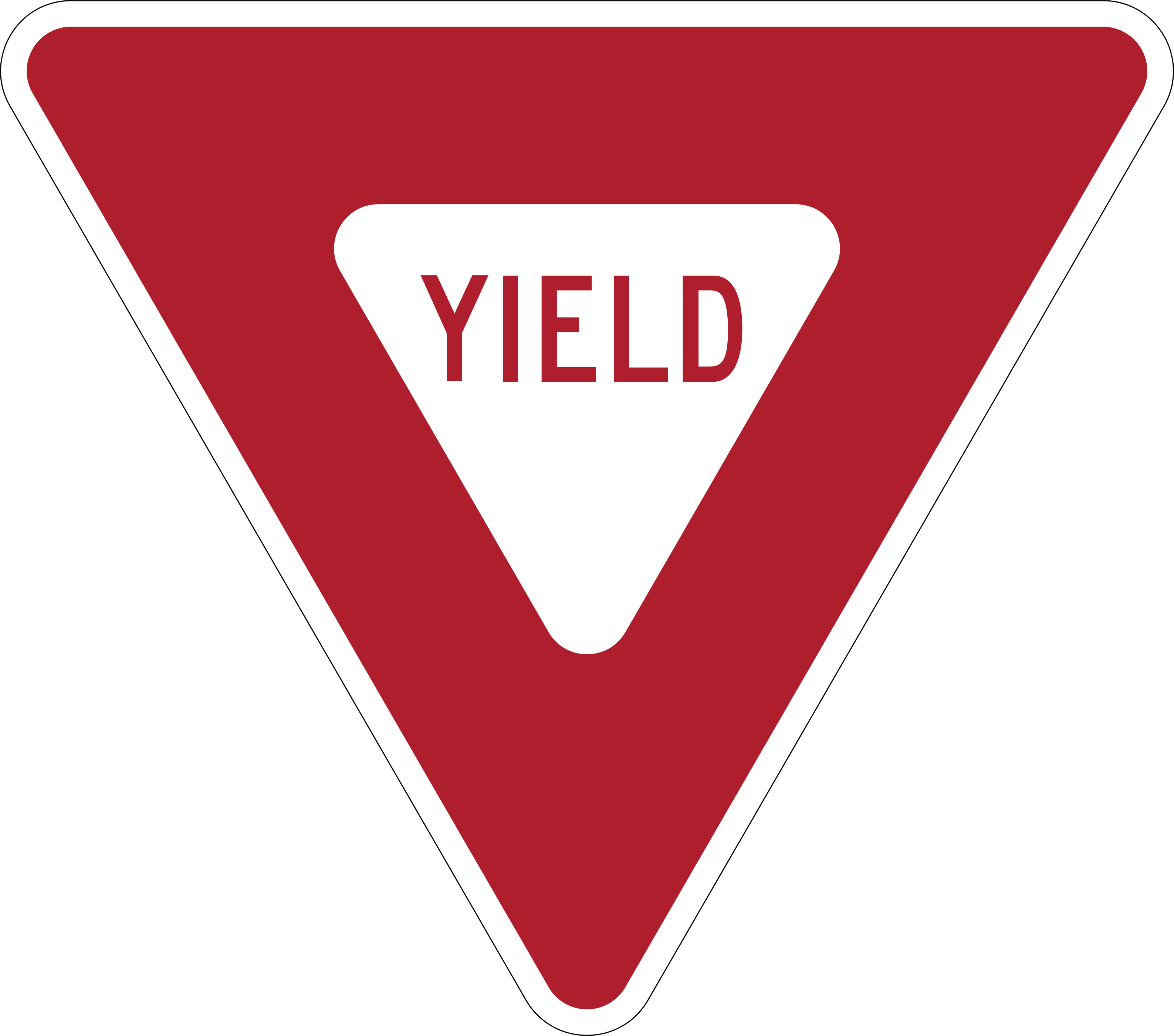
Yield
3 questions from the Indiana practice test
1. Two drivers stop at an all-way stop at the same time. Which driver must yield under Indiana's rule?
- The driver on the right yields to the driver on the left
- The driver on the left yields to the driver on the right
- The driver going straight always yields to a turning driver
- The larger vehicle automatically proceeds first
Show answer
The driver on the left yields to the driver on the right. At an all-way stop, Indiana first gives priority to the vehicle that stopped first. When arrival is simultaneous, the vehicle on the left yields to the one on the right. The opposite left-right assignment reverses the rule. Neither a vehicle's size nor whether it is turning creates an automatic priority in this tie. If there is doubt or a collision risk, the manual advises yielding, so a cautious driver should not force the movement simply because the right-side rule appears favorable.
2. At an Indiana roundabout, which traffic has priority when a vehicle is approaching the circular roadway?
- Traffic entering from the right-hand approach
- Traffic already circulating in the roundabout
- The largest vehicle approaching the entry
- The vehicle that signals first
Show answer
Traffic already circulating in the roundabout. Indiana requires incoming traffic to yield to traffic already circulating in a roundabout. The approach direction does not override that yield, and signaling first does not create priority. A larger vehicle does not gain priority to enter just because of its size; Indiana's separate rule about yielding to large vehicles applies to vehicles moving through a multi-lane roundabout at the same time. The useful driving cue is to slow before the entry, look into the circulating lane, and wait for a safe opening rather than expecting circulating drivers to stop for an entering vehicle.
3. Who must yield when a driver enters an Indiana interstate from an on-ramp?
- Interstate traffic must stop for the merging driver
- The driver entering from the ramp yields to interstate traffic
- Both streams must stop before the merge
- The entering driver has priority if signaling
Show answer
The driver entering from the ramp yields to interstate traffic. A driver entering an interstate must yield the right of way to vehicles already traveling on it. The ramp driver should use the acceleration lane to build speed and merge when the path is clear, but signaling does not reverse the yield requirement. Interstate traffic does not have to stop, and both streams are not required to stop. Look for a safe opening while matching the flow, with priority remaining with vehicles already on the highway.
Practice this topic
Lock it in with right of way questions from the free Indiana practice test. Every answer comes with a plain English explanation.
Source: the Indiana Driver's Manual, Chapter 7: Safe Vehicle Operation. This lesson is a plain English summary, not the law itself; where it differs, the manual and the statute govern. Last checked 2026-09-27.