
Key points
Signal at least 100 feet before a turn, and at least 500 feet before a turn on a highway.
Source: Handbook p. 97
“Signal your turn at least 100 feet before making the turn. On a highway, signal at least 500 feet before a turn.”
Massachusetts Driver's Manual, Handbook p. 97Do not make a U turn near a hill crest or curve, or anywhere you cannot see 500 feet away.
Source: Handbook p. 98
“Do not make a U-turn at the crest of a hill, near a curve, or anyplace where you or other drivers cannot see 500 feet away.”
Massachusetts Driver's Manual, Handbook p. 98You may not travel in a center left turn lane.
Source: Handbook p. 98
“You may not travel in a center turning lane.”
Massachusetts Driver's Manual, Handbook p. 98At an uncontrolled intersection, slow down, look left and right, and go only if the way is clear.
Source: Handbook p. 100
“Slow down at an uncontrolled intersection. Look left and right for oncoming traffic and proceed if the way is clear.”
Massachusetts Driver's Manual, Handbook p. 100At a four way stop, yield to a vehicle already stopped and to one directly to your right that stopped at the same time.
Source: Handbook p. 100
“Another vehicle that has already come to a full stop • A vehicle directly to your right that has stopped at the same time as you”
Massachusetts Driver's Manual, Handbook p. 100Before any left turn, yield to oncoming vehicles, and to vehicles already in the intersection.
Source: Handbook p. 100
“When making any left turn, you must first yield the right-of-way to any... • Oncoming vehicle • Vehicle already in the intersection”
Massachusetts Driver's Manual, Handbook p. 100From a private road, driveway or unpaved road, you must stop before entering a paved road.
Source: Handbook p. 100
“When entering a paved thoroughfare from a private road, a driveway, or an unpaved road, you must stop.”
Massachusetts Driver's Manual, Handbook p. 100On a single or two lane road meeting a divided highway or a road with 3 or more lanes, you must yield.
Source: Handbook p. 101
“If you are on a single or two-lane road and come to an intersection with a divided highway or a roadway with three or more lanes, you must yield the right-of-way.”
Massachusetts Driver's Manual, Handbook p. 101Rotary traffic travels counterclockwise; yield to vehicles already in the rotary and to pedestrians.
Source: Handbook p. 101
“Traffic travels counter-clockwise in a rotary. Always yield the right-of-way to vehicles already in the rotary (unless told differently by signs or police officers) and to pedestrians.”
Massachusetts Driver's Manual, Handbook p. 101Funeral processions have the right of way at intersections, but must yield to emergency vehicles.
Source: Handbook p. 107
“Funeral processions have the right-of-way at intersections, with the EXCEPTION that they must yield to emergency vehicles with flashing lights or sirens”
Massachusetts Driver's Manual, Handbook p. 107
Numbers to know
| Number | What it means | Manual |
|---|---|---|
| 100 and 500 feet | how far before a turn to signal on regular roads and highways | Handbook p. 97 |
| 500 feet | visibility needed for a U turn | Handbook p. 98 |
| 3 lanes | road size that makes a smaller road yield | Handbook p. 101 |
| 40 mph | speed big rotaries are designed for | Handbook p. 101 |
| 25 mph | speed or less needed in roundabouts | Handbook p. 102 |
Recognize these signs
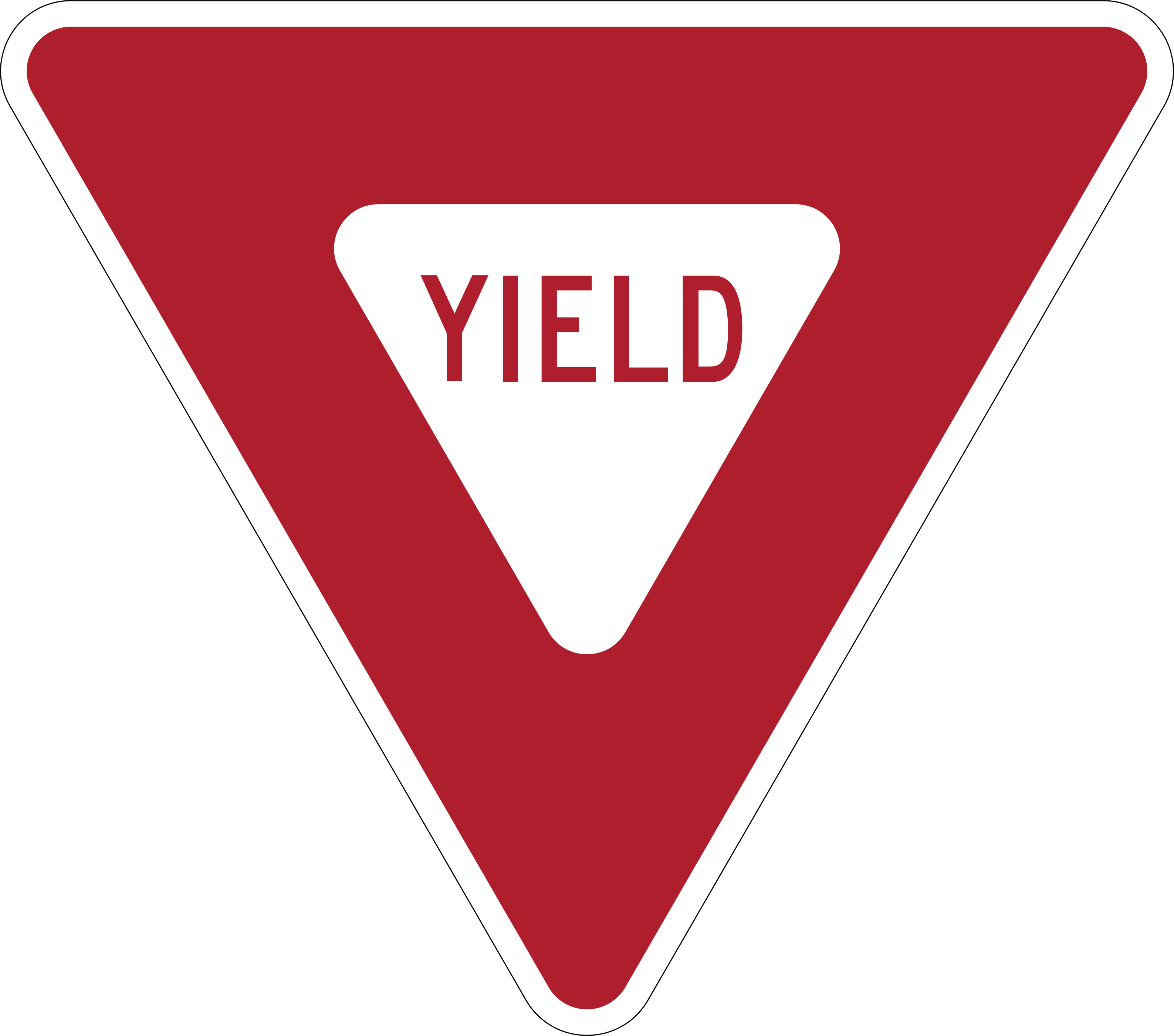
Yield 
Circular intersection ahead
3 questions from the Massachusetts practice test
1. When entering a Massachusetts rotary, to whom must you yield unless signs or a police officer direct otherwise?
- Vehicles already in the rotary and pedestrians
- Nobody, because entering traffic has priority
- Only trucks and buses
- Vehicles entering from your right
Show answer
Vehicles already in the rotary and pedestrians. Rotaries are a Massachusetts specialty, and the rule inside them is simple: traffic already circulating has the right of way, and so do pedestrians at the crossings. Entering vehicles wait for a gap, no matter which direction they come from, so the idea of yielding only to the right or of entering traffic having priority is backwards. Vehicle size plays no part. Signs or an officer can change the pattern at a particular rotary, which is why the rule carries that exception.
2. In which direction does traffic travel in a Massachusetts rotary?
- Counter-clockwise
- Clockwise
- Either direction, depending on the exit
- Straight through the center
Show answer
Counter-clockwise. Because Massachusetts drives on the right, every rotary is travelled counter-clockwise: you enter with a right turn, keep the island on your left, and leave with another right turn. Clockwise travel would send you head on into circulating cars, and there is never a choice of direction based on where you want to exit. Nothing crosses the center island. Signal your exit the same way you would at any intersection so the drivers waiting to enter can judge the gap.
3. At a Massachusetts four-way stop, you and a vehicle directly to your right stop at the same time. Who goes first?
- The vehicle on your right
- The larger vehicle
- You, because you are on the left
- Whoever accelerates first
Show answer
The vehicle on your right. The four-way stop rule has two parts: a vehicle that stopped before you goes first, and when you stop at the same moment, the vehicle to your right has the right of way. Being on the left gives you nothing, vehicle size never decides priority, and racing off the line is how these intersections produce crashes. Make eye contact with the other driver to confirm who is going, then proceed only when your turn is clear.
Practice this topic
Lock it in with right of way questions from the free Massachusetts practice test. Every answer comes with a plain English explanation.
Source: the Massachusetts Driver's Manual, Chapter 4: Rules of the Road. This lesson is a plain English summary, not the law itself; where it differs, the manual and the statute govern. Last checked 2026-09-27.