
Key points
White lane lines separate lanes of traffic moving in the same direction.
Source: Handbook p. 89
“White lane lines separate lanes of traffic moving in the same direction.”
Massachusetts Driver's Manual, Handbook p. 89You may cross a broken white line to change lanes once you have signaled and it is safe.
Source: Handbook p. 89
“Once you have signaled, and it is safe to do so, you may cross this line when changing lanes.”
Massachusetts Driver's Manual, Handbook p. 89Crossing a double solid white line is not allowed.
Source: Handbook p. 90
“A double solid white line separates two lanes of traffic going in the same direction. Crossing a double solid white line is not allowed.”
Massachusetts Driver's Manual, Handbook p. 90Yellow lines separate lanes of traffic moving in opposite directions.
Source: Handbook p. 90
“Yellow lane lines separate lanes of traffic moving in opposite directions.”
Massachusetts Driver's Manual, Handbook p. 90With one solid and one broken yellow line, you cannot cross if the solid line is closer to you.
Source: Handbook p. 90
“If the solid yellow line is closer to you, you cannot cross the lines. If the broken line is closer to you, you can only cross the line to pass another vehicle when it is safe to do so.”
Massachusetts Driver's Manual, Handbook p. 90Two solid yellow lines prohibit crossing to pass; cross them only to turn left when safe.
Source: Handbook p. 90
“Two solid yellow lines prohibit vehicles from crossing them to pass another vehicle. You may not cross these lines unless turning left when it is safe to do so.”
Massachusetts Driver's Manual, Handbook p. 90A white diamond symbol marks a special lane restriction, like HOV only or bus only.
Source: Handbook p. 91
“A white diamond symbol means there is a special lane restriction, like “high occupancy vehicle (HOV) only” or “bus only.””
Massachusetts Driver's Manual, Handbook p. 91Bicycle lanes are 5 feet wide; drive in them only when turning on or off the road.
Source: Handbook p. 91
“They are five feet wide. Motor vehicles may only drive in these lanes when turning on or off the road.”
Massachusetts Driver's Manual, Handbook p. 91You cannot drive over or park on a channelizing island unless a police officer directs you.
Source: Handbook p. 92
“You cannot drive over or park a motor vehicle upon any channelizing island, unless directed to do so by a police officer.”
Massachusetts Driver's Manual, Handbook p. 92A yield line looks like a row of triangles painted side by side.
Source: Handbook p. 91
“A YIELD line looks like a series of triangles painted next to each other.”
Massachusetts Driver's Manual, Handbook p. 91
Recognize these signs
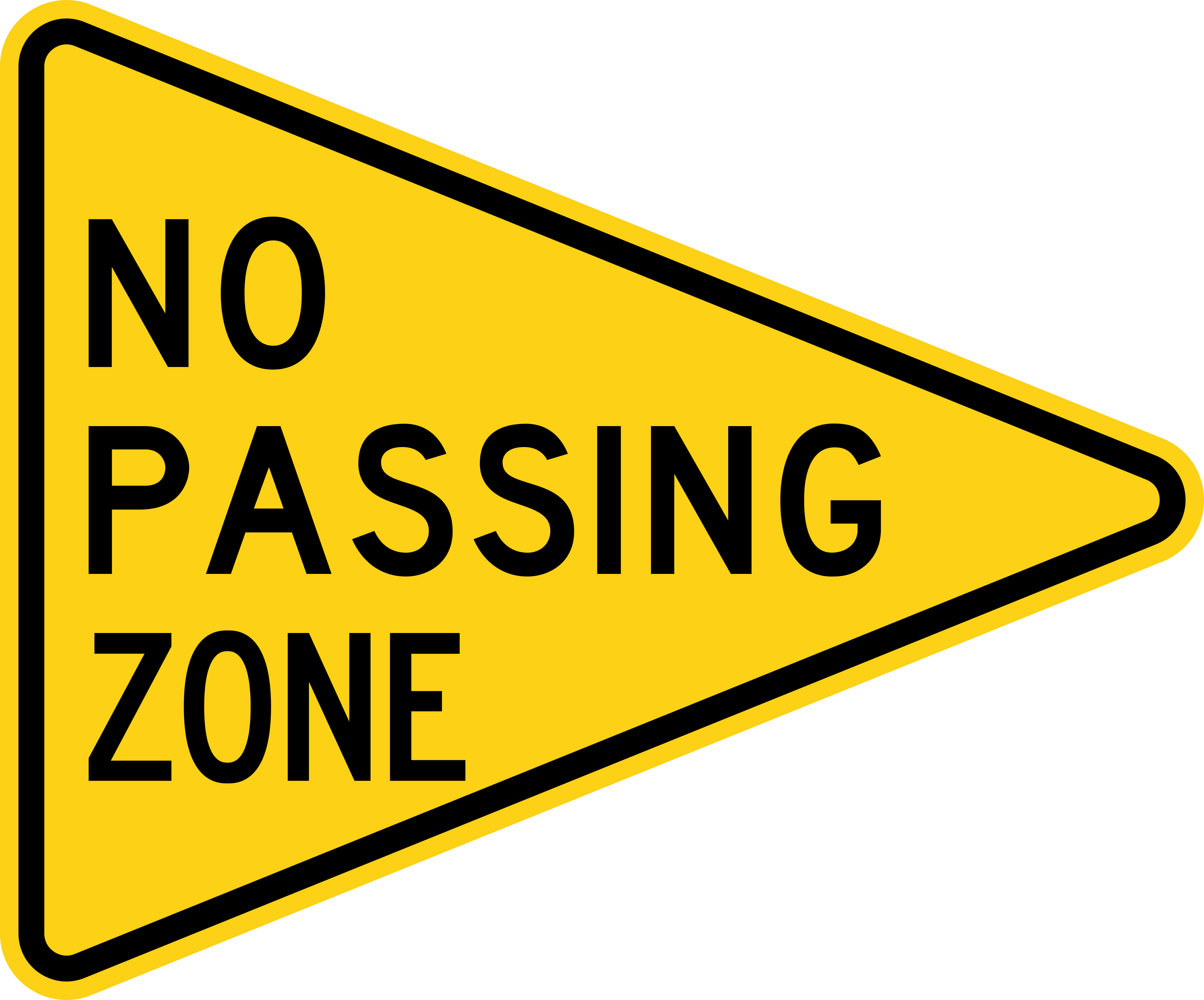
No passing zone
3 questions from the Massachusetts practice test
1. A Massachusetts road has a double yellow center line with one solid and one broken line, and the solid line is closer to you. What does that mean?
- You may pass when it is safe
- You cannot cross the lines
- The lines mark the shoulder
- Only vehicles from the other direction may not cross
Show answer
You cannot cross the lines. Read the line nearest your lane. With one solid and one broken yellow line, the solid line on your side means you cannot cross, while drivers on the broken line side may pass when it is safe. The rule is about which side the solid line is on, not about the other direction being free to cross, and yellow lines separate opposing traffic rather than marking a shoulder. Solid means stay, broken means you may pass with care.
2. What do broken white lines on a Massachusetts road separate?
- Traffic traveling in opposite directions
- Lanes of traffic traveling in the same direction
- The road from the shoulder
- Lanes where crossing is never allowed
Show answer
Lanes of traffic traveling in the same direction. White lines separate traffic moving the same way, and the broken pattern tells you that once you have signaled and it is safe, you may cross the line when changing lanes. Opposing traffic is separated by yellow lines, and the right edge of the pavement is marked by a single white line. The marking you may not cross is the double solid white line, which also separates two lanes going the same direction. A solid white line may be crossed only when you need to avoid danger, so the broken line is the one that invites a planned lane change.
3. What do two solid yellow lines in the center of a Massachusetts road prohibit?
- Turning left into a driveway
- Driving faster than 30 mph
- Crossing them to pass another vehicle
- Stopping for a school bus
Show answer
Crossing them to pass another vehicle. Double solid yellow means no passing in either direction. The manual says two solid yellow lines prohibit vehicles from crossing them to pass another vehicle, and that you may not cross them unless turning left when it is safe to do so. That is why a left turn into a driveway is not what the lines forbid. They set no speed, and they have nothing to do with school buses. If the vehicle ahead is slow, wait until a broken yellow line appears on your side and the way is clear rather than crossing the double line.
Practice this topic
Lock it in with signals and markings questions from the free Massachusetts practice test. Every answer comes with a plain English explanation.
Source: the Massachusetts Driver's Manual, Chapter 4: Rules of the Road. This lesson is a plain English summary, not the law itself; where it differs, the manual and the statute govern. Last checked 2026-09-27.