
Key points
The Basic Speed Rule is a safety principle, not a law: your speed is limited by current conditions.
Source: Handbook p. 46
“The Basic Speed Rule (BSR) is not a Tennessee law, but it is a general safety principle. The BSR does not set an exact speed limit; instead, it teaches that the speed you may drive is limited by current conditions.”
Tennessee Comprehensive Driver License Manual, Handbook p. 46Your speed must let you stop within the clear distance ahead.
Source: Handbook p. 46
“Your speed must be adjusted to conditions so you can stop within a clear distance ahead.”
Tennessee Comprehensive Driver License Manual, Handbook p. 46Unless posted, the limit on state and federal highways is 55 mph.
Source: Handbook p. 47
“Unless otherwise posted, the speed limit on primary and secondary state and federal highways is 55 m.p.h.”
Tennessee Comprehensive Driver License Manual, Handbook p. 47Tennessee's maximum interstate speed is 70 mph, and it may be set as low as 55 mph in large urban areas.
Source: Handbook p. 47
“The maximum speed set by Tennessee law for interstate highways is 70 m.p.h. This speed does not apply to ALL sections of the interstate highway system as they have variable speed limits. It may be set as low as 55 m.p.h. in some larger urban areas”
Tennessee Comprehensive Driver License Manual, Handbook p. 47Driving under 55 mph in the left lane of an interstate is unlawful unless congestion prevents it.
Source: Handbook p. 47
“It is unlawful for any person to drive a vehicle less than 55 m.p.h. in the left most lane of any Interstate highway, unless traffic congestion and flow prevent safe driving at such speed.”
Tennessee Comprehensive Driver License Manual, Handbook p. 47The minimum speed in the right interstate lanes is 45 mph under normal conditions.
Source: Handbook p. 47
“On the interstates, the minimum speed limit in the right lane(s) is 45 m.p.h., and under normal driving conditions, all vehicles must travel at least this fast”
Tennessee Comprehensive Driver License Manual, Handbook p. 47It is against the law to drive slower than the posted minimum under normal conditions.
Source: Handbook p. 46
“It is against the law to drive slower than the posted minimum speed under normal driving conditions.”
Tennessee Comprehensive Driver License Manual, Handbook p. 46Going 10 mph or more under the limit makes you a slow moving vehicle; with 5 or more vehicles behind you, pull off when safe.
Source: Handbook p. 46
“You are considered to be driving a slow-moving vehicle if you are traveling at a rate of speed that is 10 miles per hour or more below the lawful maximum speed. If five or more vehicles are lined up behind you, turn or pull off the roadway as soon as you can do so safely.”
Tennessee Comprehensive Driver License Manual, Handbook p. 46Speeding in a school zone is reckless driving by law and adds 6 points to your record.
Source: Handbook p. 47
“Exceeding the school zone speed limit is by law considered to be reckless driving. The penalty includes an automatic six points added to your driving record”
Tennessee Comprehensive Driver License Manual, Handbook p. 47Speeding in an active work zone carries a fine of $250 to $500.
Source: Handbook p. 47
“TENNESSEE LAW MANDATES A MINIMUM FINE OF $250 DOLLARS AND UP TO A MAXIMUM FINE OF $500 DOLLARS FOR VIOLATIONS OF THE SPEED LIMIT POSTED IN ACTIVE WORK ZONES.”
Tennessee Comprehensive Driver License Manual, Handbook p. 47
Numbers to know
| Number | What it means | Manual |
|---|---|---|
| 55 mph | default limit on state and federal highways | Handbook p. 47 |
| 70 mph | maximum interstate speed | Handbook p. 47 |
| 55 mph | lowest interstate limit in some larger urban areas | Handbook p. 47 |
| 45 mph | minimum speed in the right interstate lanes | Handbook p. 47 |
| 10 mph and 5 vehicles | slow moving vehicle threshold and line of traffic that means pull off | Handbook p. 46 |
| 6 points | points for speeding in a school zone | Handbook p. 47 |
| $250 to $500 | fine range for speeding in an active work zone | Handbook p. 47 |
Recognize these signs
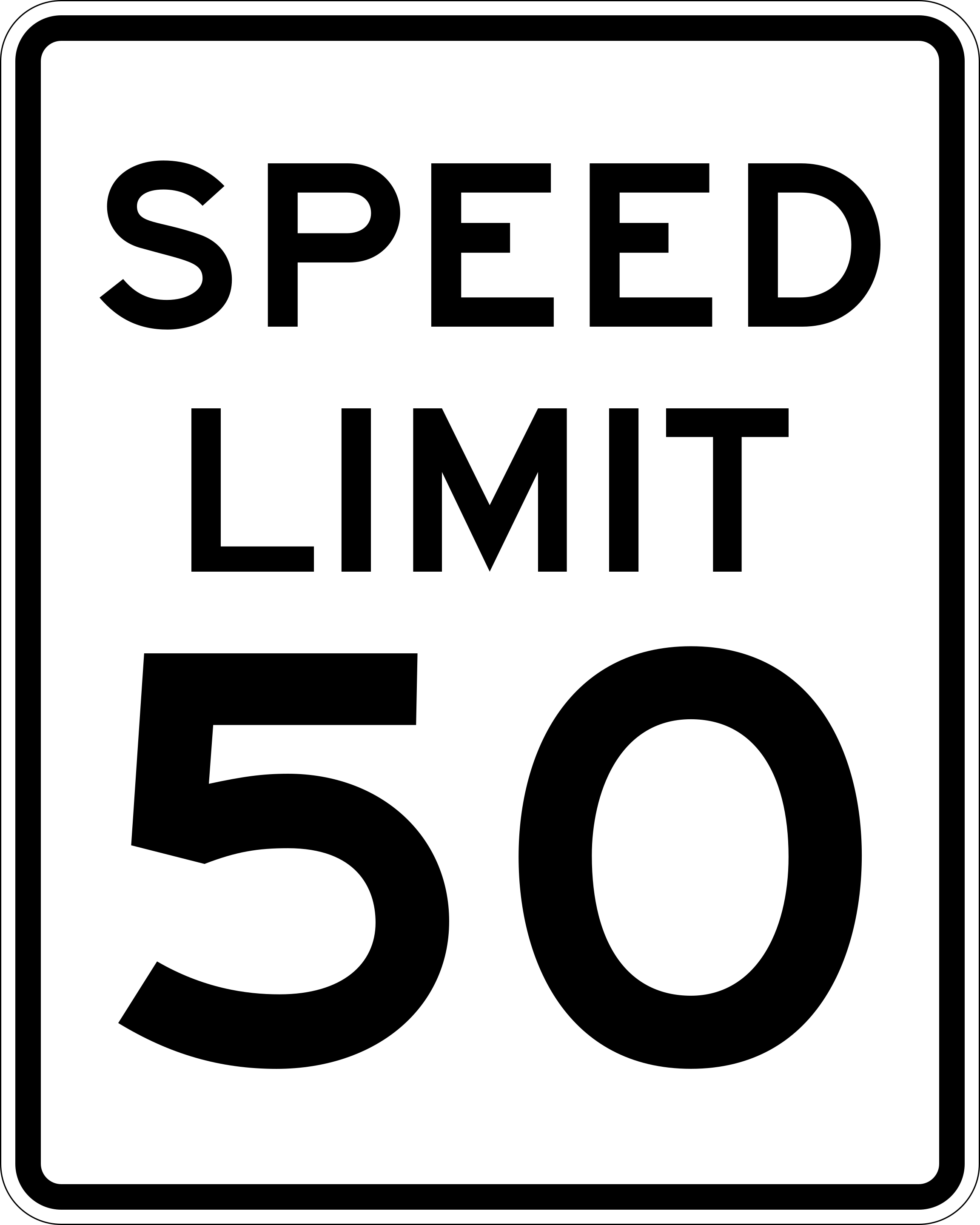
Speed limit
3 questions from the Tennessee practice test
1. What does Tennessee's Basic Speed Rule require a driver to consider?
- The posted number regardless of weather or visibility
- The speed of the fastest vehicle nearby
- Current driving conditions, rather than only the posted limit
- A fixed 35 mph maximum on every road
Show answer
Current driving conditions, rather than only the posted limit. The Basic Speed Rule is a safety principle that limits speed according to current conditions and does not set one exact number. A posted limit is not permission to maintain that speed when darkness, rain, fog, traffic, or the road surface makes it unsafe. Matching the fastest nearby vehicle can compound the danger, and Tennessee does not impose a universal 35 mph maximum through this rule. Use the posted limit as an upper boundary, then reduce speed when the conditions or the available stopping distance require it.
2. What maximum speed may Tennessee law set for interstate highways?
- 65 mph
- 55 mph
- 70 mph
- 80 mph
Show answer
70 mph. Tennessee law permits a maximum interstate speed of 70 mph. That figure is the ceiling authorized by the passage, not a guarantee that every interstate segment displays 70. Variable limits can reduce the number, particularly in congested urban areas, and the driver must still adjust for conditions. The 55 mph choice describes some urban sections rather than the statewide legal maximum. Check the sign where you are driving, then reduce further when weather, traffic, visibility, or roadway conditions make the maximum unsafe.
3. Under normal conditions, what minimum speed does Tennessee identify for the right interstate lanes?
- 35 mph
- 45 mph
- 55 mph
- 70 mph
Show answer
45 mph. The manual identifies 45 mph as the minimum speed limit in the right interstate lane or lanes under normal driving conditions. This is different from the 55 mph minimum mentioned for the leftmost lane and from the 70 mph maximum allowed on some interstate sections. Traffic congestion and safe flow can change what is practical, so the number should not be treated as a demand to drive too fast for conditions. If you cannot safely maintain the applicable minimum, the manual advises using another road.
Practice this topic
Lock it in with speed limits questions from the free Tennessee practice test. Every answer comes with a plain English explanation.
Source: the Tennessee Comprehensive Driver License Manual, Section B-4: Rules of the Road. This lesson is a plain English summary, not the law itself; where it differs, the manual and the statute govern. Last checked 2026-09-27.