
Key points
At a red light, stop before the intersection and wait behind the stop line, crosswalk or intersection until green.
Source: Section 4
“A red traffic light means stop before entering the intersection. You must wait behind the stop line, crosswalk, or intersection until the traffic light turns green.”
Ohio Driver Manual, Digest of Motor Vehicle Laws, Section 4A yellow light means the signal is about to turn red. Use caution and prepare to stop.
Source: Section 4
“A yellow traffic light indicates the color is about to change to red; use caution. Prepare to stop.”
Ohio Driver Manual, Digest of Motor Vehicle Laws, Section 4A green arrow lets you turn in the arrow's direction without stopping.
Source: Section 4
“A light marked with a green arrow indicates you can turn in the direction of the arrow without stopping.”
Ohio Driver Manual, Digest of Motor Vehicle Laws, Section 4Treat a traffic light that is not working like a stop sign.
Source: Section 4
“Inoperable traffic lights are treated the same as a stop sign.”
Ohio Driver Manual, Digest of Motor Vehicle Laws, Section 4White lines separate traffic going the same direction. A solid yellow line separates traffic going opposite ways.
Source: Section 4
“WHITE LINES: Separates traffic traveling in the same direction. White lines may be solid or broken (dashed) lines. YELLOW SOLID LINE: Separates traffic traveling in opposite directions.”
Ohio Driver Manual, Digest of Motor Vehicle Laws, Section 4Do not drive left of a double solid yellow line except to turn left or pass a slow-moving vehicle such as a bicycle.
Source: Section 4
“YELLOW SOLID DOUBLE LINE: Do not drive to the left of the center line, unless you must cross the lines to turn left or pass a slow-moving vehicle (e.g., bicycle or vehicle displaying a slow-moving vehicle sign).”
Ohio Driver Manual, Digest of Motor Vehicle Laws, Section 4With a solid and a broken yellow line, only drivers on the broken line side may pass.
Source: Section 4
“YELLOW SOLID LINE WITH A BROKEN (DASHED) LINE: Passing other vehicles is allowed for motorists traveling in the lane with the broken line. Passing is prohibited for motorists traveling in the lane with the solid line.”
Ohio Driver Manual, Digest of Motor Vehicle Laws, Section 4A broken yellow line lets traffic in either direction pass when safe.
Source: Section 4
“YELLOW BROKEN (DASHED) LINE: Vehicles traveling in either direction may pass vehicles traveling in the same direction when safe to do so.”
Ohio Driver Manual, Digest of Motor Vehicle Laws, Section 4The center two-way left turn lane is for left turns only, not for traveling or passing.
Source: Section 4
“The marked center lane is for left turns only. Vehicles from either direction may use the center lane immediately prior to making a left turn. This is not a lane used for traveling or passing.”
Ohio Driver Manual, Digest of Motor Vehicle Laws, Section 4If there is a stop line before a crosswalk, you must obey it.
Source: Section 4
“If there is a stop line before the crosswalk, the stop line must be obeyed.”
Ohio Driver Manual, Digest of Motor Vehicle Laws, Section 4
Recognize these signs
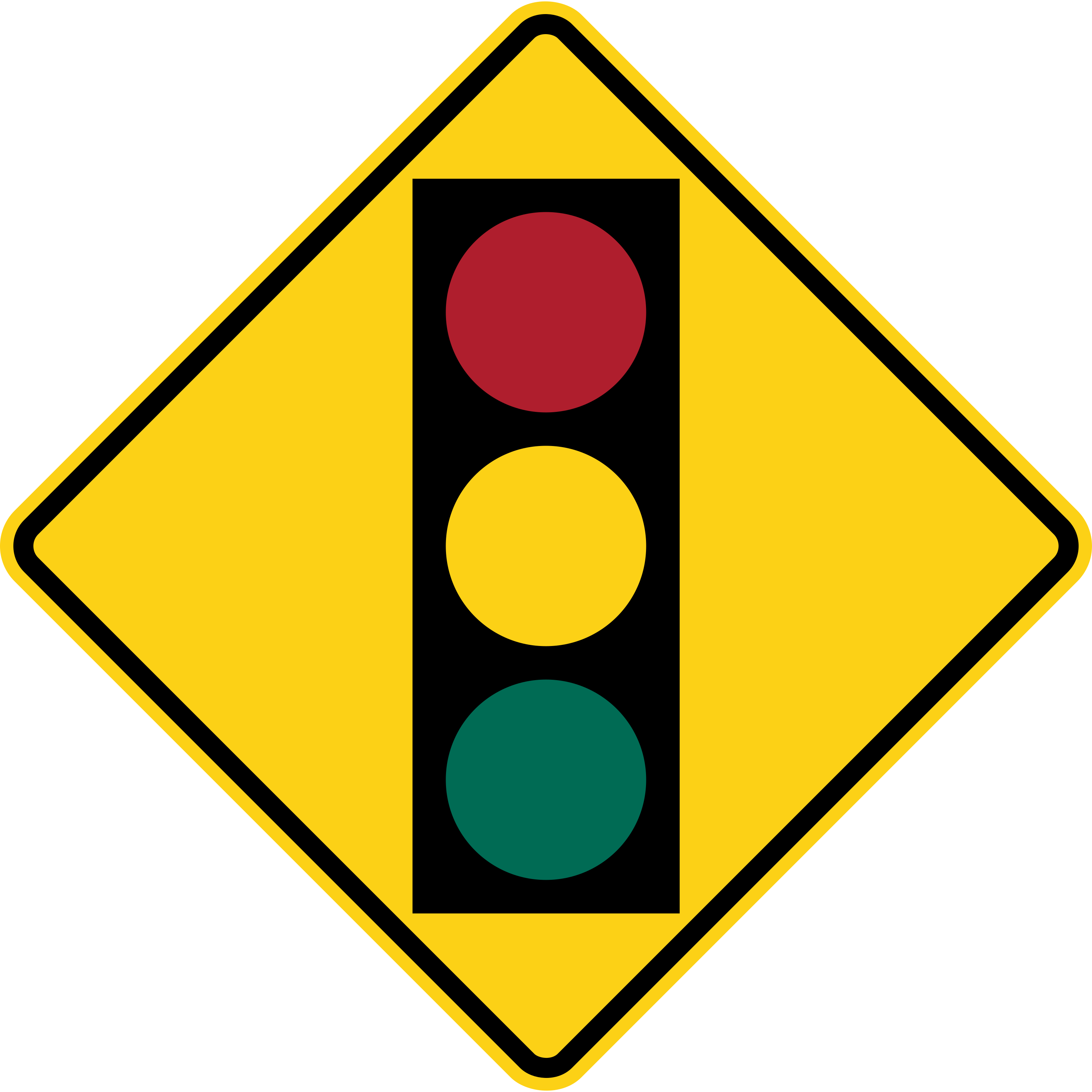
Signal ahead
3 questions from the Ohio practice test
1. What does a yellow traffic light indicate in Ohio?
- The driver has an unlimited right to continue
- The color is about to change to red, so use caution and prepare to stop
- The driver must accelerate through the intersection
- The signal is the same as a green arrow
Show answer
The color is about to change to red, so use caution and prepare to stop. A yellow traffic light indicates that the color is about to change to red. Ohio tells the driver to use caution and prepare to stop, not to accelerate or assume an unlimited right to continue. A green arrow has a different meaning and permits a turn in its displayed direction without stopping. As the signal changes, check the stop line, traffic, and pedestrians, then stop safely when there is enough distance to do so.
2. How should you treat an inoperable traffic light when approaching the intersection?
- Enter first because an inoperable signal gives priority
- Treat it like a green light if no car is visible
- Stop only if the signal has been dark for one minute
- Treat it like a stop sign, yield, and use caution
Show answer
Treat it like a stop sign, yield, and use caution. An inoperable signal removes the normal light guidance, so Ohio directs drivers to handle the location like a stop sign. The driver must yield the right of way and use caution while entering. A dark signal is not permission to continue as though it were green, and there is no waiting period that changes the rule. Entering first because the light is out ignores the duty to stop and yield. The practical habit is to stop, scan every approach, yield, and proceed only when the intersection is safe.
3. On a two-lane, two-way road with a broken yellow center line, when may vehicles pass?
- Never, because yellow always bans passing
- Whenever traffic in the opposite lane is faster
- Only while turning into a driveway
- When it is safe to pass vehicles traveling in the same direction
Show answer
When it is safe to pass vehicles traveling in the same direction. A broken yellow line allows passing of vehicles traveling the same direction when the maneuver is safe. The never choice confuses a broken yellow line with a solid yellow restriction. Before moving left, check for oncoming traffic, hills, curves, intersections, and enough clear space to return. The cue is the broken center marking on a two-way road: it permits passing, but only after the driver confirms the opposing lane can be used safely.
Practice this topic
Lock it in with signals and markings questions from the free Ohio practice test. Every answer comes with a plain English explanation.
Source: the Ohio Driver Manual, Digest of Motor Vehicle Laws, Section 4: Rules of the Road. This lesson is a plain English summary, not the law itself; where it differs, the manual and the statute govern. Last checked 2026-09-27.