
Key points
Speed is the greatest factor influencing the severity of a crash.
Source: Handbook p. 12
“Speed is the greatest factor influencing the severity of a crash.”
Colorado Driver Handbook, Handbook p. 12Driving slower than a posted minimum is a violation, unless road or weather conditions require it.
Source: Handbook p. 12
“Driving slower than the minimum speed limit is a traffic violation, unless due to road or weather conditions.”
Colorado Driver Handbook, Handbook p. 12Unless otherwise posted, the limit is 20 mph on narrow, winding mountain highways and blind curves.
Source: Handbook p. 12
“Unless otherwise posted, Colorado speed limits are as follows: 20 mph on narrow, winding mountain highways and blind curves”
Colorado Driver Handbook, Handbook p. 1225 mph in any business district and 30 mph in any residence district.
Source: Handbook p. 12
“25 mph in any business district 30 mph in any residence district”
Colorado Driver Handbook, Handbook p. 1240 mph on open mountain highways.
Source: Handbook p. 12
“40 mph on open mountain highways”
Colorado Driver Handbook, Handbook p. 1255 mph on urban interstates and highways, and 65 to 75 mph on designated rural interstates and highways.
Source: Handbook p. 12
“55 mph on urban interstate and highways 65-75 mph on designated rural interstate and highways”
Colorado Driver Handbook, Handbook p. 12A lightweight car at 55 mph can stop in about 200 feet.
Source: Handbook p. 12
“a lightweight passenger car traveling 55 mph can stop in about 200 feet.”
Colorado Driver Handbook, Handbook p. 12Braking too quickly can make you skid and make it hard for drivers behind you to stop.
Source: Handbook p. 12
“brake too quickly, you could skid, lose control of your vehicle, and/or make it difficult for drivers behind you to stop without hitting you.”
Colorado Driver Handbook, Handbook p. 12
Numbers to know
| Number | What it means | Manual |
|---|---|---|
| 20 mph | narrow, winding mountain highways and blind curves | Handbook p. 12 |
| 25 mph, 30 mph | business districts and residence districts | Handbook p. 12 |
| 40 mph | open mountain highways | Handbook p. 12 |
| 55 mph; 65 to 75 mph | urban interstates and highways; designated rural interstates and highways | Handbook p. 12 |
| 200 feet at 55 mph | about how far a lightweight car needs to stop | Handbook p. 12 |
Recognize these signs
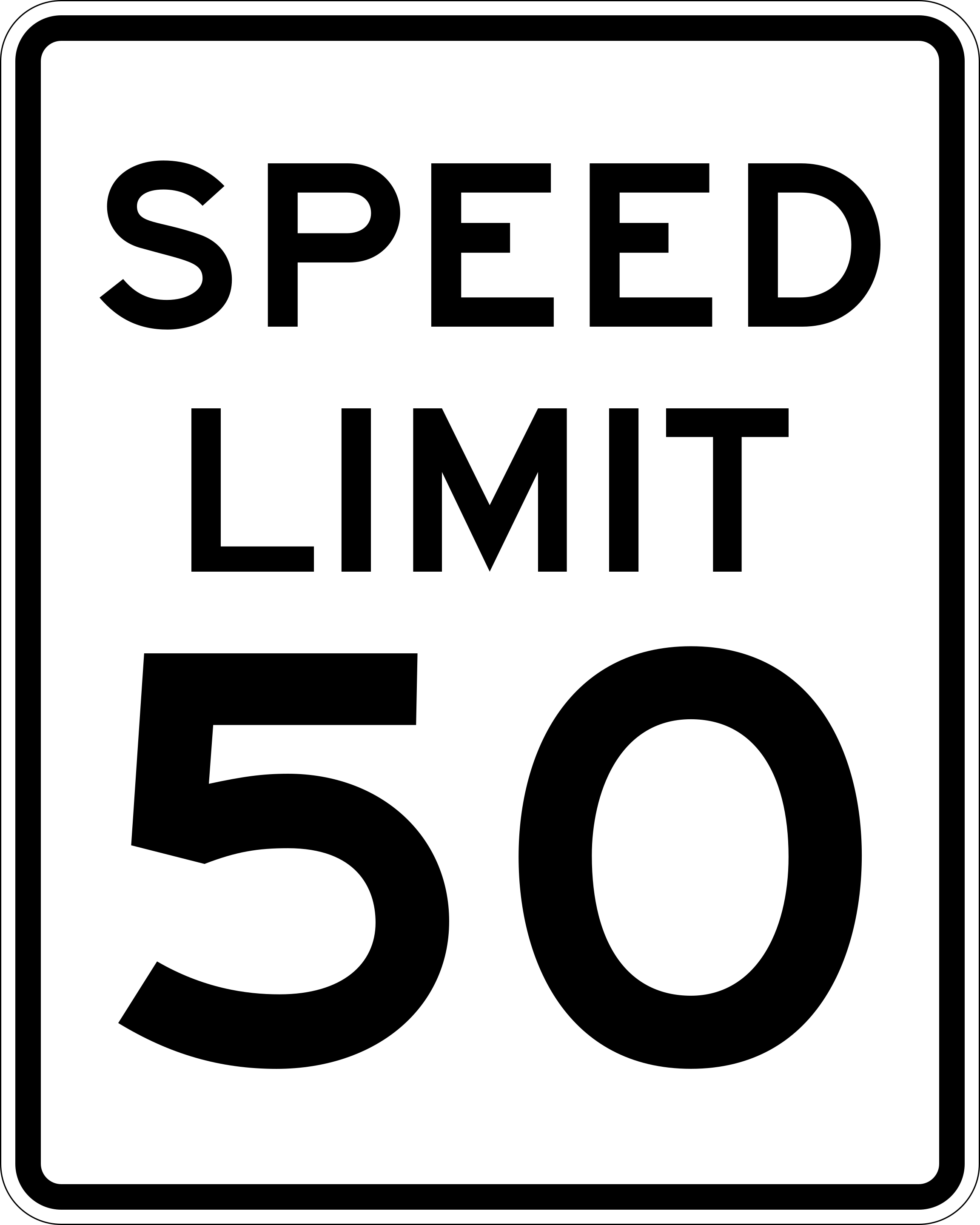
Speed limit
3 questions from the Colorado practice test
1. Unless a different limit is posted, what speed applies on narrow, winding mountain highways and blind curves?
- 30 mph
- 25 mph
- 20 mph
- 40 mph
Show answer
20 mph. Colorado lists 20 mph for narrow, winding mountain highways and blind curves unless a different limit is posted. The nearby default figures can be confusing: 25 mph applies in a business district, 30 mph in a residence district, and 40 mph on open mountain highways. The road description controls here, not the general mountain setting alone. Slow further if weather, visibility, traffic, or the curve itself makes even the posted maximum unsafe.
2. On which Colorado roads does the handbook list a possible 65 to 75 mph limit?
- Designated rural interstates and highways
- All city streets
- Any business district
- Narrow mountain highways
Show answer
Designated rural interstates and highways. The 65 to 75 mph range is listed for designated rural interstates and highways. It is not a universal rural permission: the actual posted limit controls, and the handbook says speed signs show the maximum allowed in ideal conditions. City streets may have lower limits, business districts default to 25 mph, and narrow winding mountain highways default to 20 mph. Confirm the sign and reduce speed when weather, traffic, or roadway conditions demand it.
3. When is driving below a posted minimum speed limit allowed?
- When road or weather conditions require it
- Whenever traffic is light
- Only when a passenger requests it
- Any time the driver is behind schedule
Show answer
When road or weather conditions require it. The handbook says driving slower than a minimum speed limit is a traffic violation unless road or weather conditions require the slower pace. This exception recognizes hazards such as poor weather or unsafe roadway conditions, not personal preference or schedule. Light traffic does not automatically authorize driving below the minimum, and a passenger request has no legal effect. Watch the roadway and weather ahead, maintain a safe pace, and slow only as much as the conditions require while avoiding unnecessary disruption to traffic.
Practice this topic
Lock it in with speed limits questions from the free Colorado practice test. Every answer comes with a plain English explanation.
Source: the Colorado Driver Handbook, Speed. This lesson is a plain English summary, not the law itself; where it differs, the manual and the statute govern. Last checked 2026-09-27.