
Key points
At a stop sign, stop before entering the crosswalk on the near side of the intersection.
Source: Handbook p. 31
“Every driver of a vehicle approaching a stop sign shall stop before entering the crosswalk on the near side of the intersection.”
Rhode Island Driver's Manual, Handbook p. 31A yellow diamond sign with arrows around a circle warns of a roundabout ahead.
Source: Handbook p. 39
“Prior to entering a roundabout, the motorist should observe the yellow diamond shaped warning sign for an arrow with a circle pattern”
Rhode Island Driver's Manual, Handbook p. 39Roundabouts use yield signs, directional signs and pavement markings instead of stop signs or signals.
Source: Handbook p. 39
“This type of traffic control does not have stop signs or traffic signals; instead, it utilizes yield signs, directional signs and pavement markings to guide traffic through the intersection.”
Rhode Island Driver's Manual, Handbook p. 39Construction signs are orange, diamond or rectangular, and appear before, within and after work zones.
Source: Handbook p. 71
“Construction signs are orange in color, diamond or rectangular in shape, and posted prior to, within, and after the work zones.”
Rhode Island Driver's Manual, Handbook p. 71Flaggers have legal authority to control traffic in a work zone.
Source: Handbook p. 71
“Flaggers have the legal authority to control traffic.”
Rhode Island Driver's Manual, Handbook p. 71Do not tailgate in a work zone: most work zone crashes are rear end collisions.
Source: Handbook p. 71
“Do not tailgate; most work zone crashes are rear-end collisions.”
Rhode Island Driver's Manual, Handbook p. 71A No Turn on Red sign means you may not turn right on the red light.
Source: Handbook p. 55
“Drivers of motor vehicles in Rhode Island are permitted, but not required, to turn right at a red light after a full stop unless there is a “no turn on red” sign posted.”
Rhode Island Driver's Manual, Handbook p. 55
Recognize these signs

Stop 
Roundabout ahead 
Stop sign ahead 
Yield sign ahead 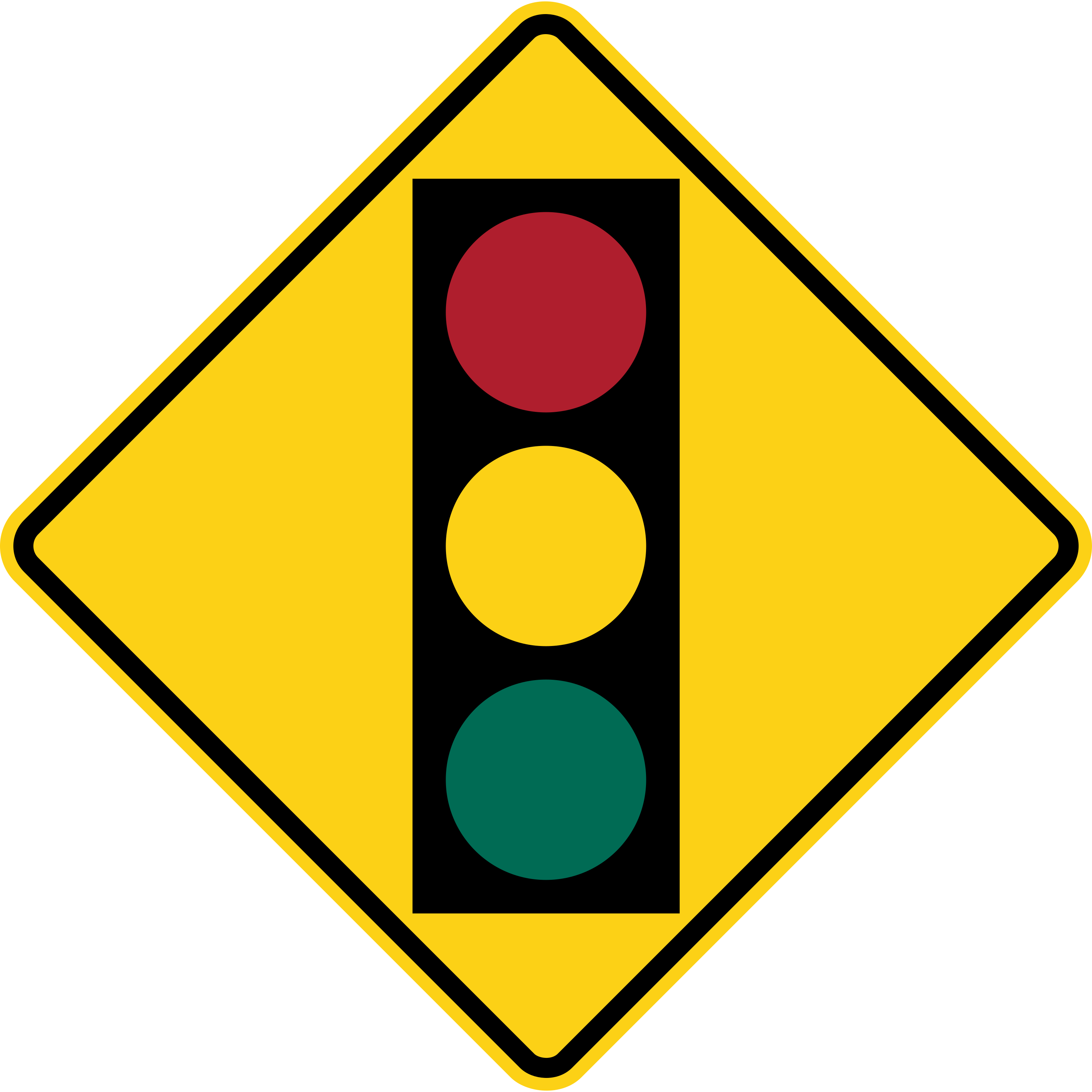
Traffic signal ahead 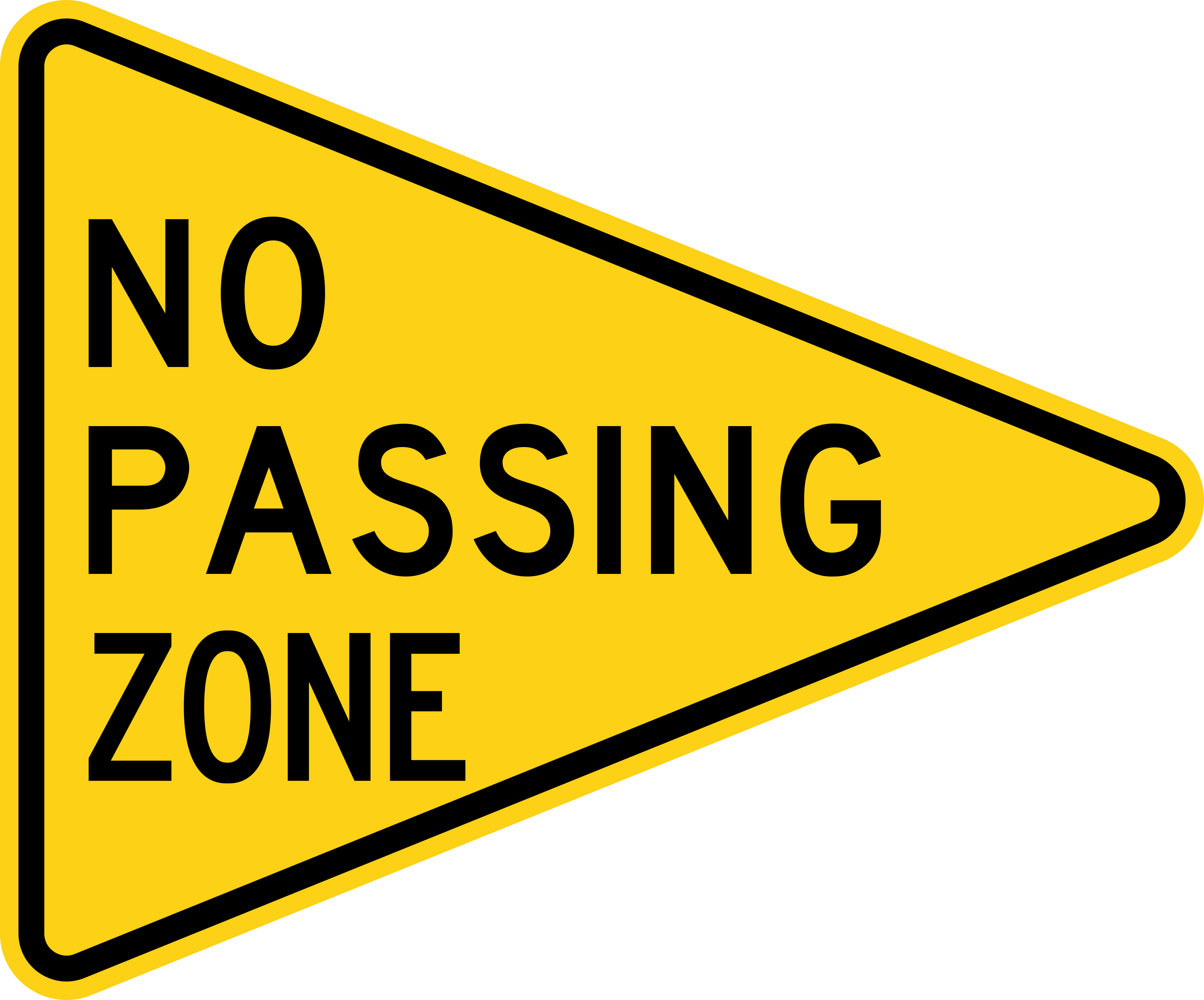
No passing zone 
Railroad crossing ahead 
Slow moving vehicle 
Winding road 
Slippery when wet 
Deer crossing 
Flagperson ahead
3 questions from the Rhode Island practice test
1. In a Rhode Island work zone, what color and shapes identify construction signs?
- White, pentagonal or oval
- Blue, circular or octagonal
- Green, triangular or square
- Orange, diamond or rectangular
Show answer
Orange, diamond or rectangular. Construction signs in Rhode Island work zones are orange and may be diamond or rectangular. The other combinations borrow colors or shapes associated with unrelated sign functions and are not the construction-sign description in the manual. This visual cue helps a driver recognize warnings before, within, and after a work zone. When approaching roadwork, look for the orange panel first, then read the message and respond to the hazard it identifies.
2. Before entering a Rhode Island roundabout, what sign should a motorist look for?
- A red octagon requiring an immediate U-turn
- A blue rectangle showing a fuel pump
- A yellow diamond warning sign with an arrow and circle pattern
- A white circle marking a parking zone
Show answer
A yellow diamond warning sign with an arrow and circle pattern. The manual directs motorists approaching a roundabout to observe a yellow diamond warning sign showing an arrow with a circle pattern and two or more arrows pointing away from the circle. The sign warns about the roundabout and its exits. The blue, red, and white options describe unrelated colors or invented meanings. Use the yellow diamond as the advance cue, then slow, yield, and enter only when a safe gap is available.
3. At a red octagonal STOP sign, where must the driver stop before proceeding?
- Past the crosswalk so the front wheels reach the next lane
- Only after entering the intersection far enough to see cross traffic
- At the center of the intersection
- Before entering the crosswalk on the near side of the intersection
Show answer
Before entering the crosswalk on the near side of the intersection. The stop requirement applies before entering the near-side crosswalk. If there is no crosswalk, the driver uses a marked stop line, or the nearest point where approaching traffic can be seen before entering the intersection. Stopping in the middle or beyond the crosswalk places the vehicle where pedestrians and cross traffic may already be moving. Approach slowly, stop at the required location, look both ways, and proceed only after yielding.
Practice this topic
Lock it in with road signs questions from the free Rhode Island practice test. Every answer comes with a plain English explanation.
Source: the Rhode Island Driver's Manual, XVII. Appendices. This lesson is a plain English summary, not the law itself; where it differs, the manual and the statute govern. Last checked 2026-09-27.