
Key points
At 50 to 55 mph you need 10 to 12 seconds to pass safely.
Source: Handbook p. 7-6
“At highway speeds of 50 to 55 mph, you need from 10 to 12 seconds to complete a pass safely.”
Maine Driver's License Manual, Handbook p. 7-6You need over 1600 feet, about one third of a mile, to pass safely.
Source: Handbook p. 7-7
“That means you need over 1600 feet or about one-third of a mile to pass safely”
Maine Driver's License Manual, Handbook p. 7-7Treat a hill or curve like an oncoming car: do not start to pass within a third of a mile of one.
Source: Handbook p. 7-7
“Therefore, you should treat a curve or a hill as you do an oncoming car. This means you should not start to pass if you are within one-third of a mile of a hill or curve.”
Maine Driver's License Manual, Handbook p. 7-7Passing is dangerous at intersections, crossroads and shopping center entrances.
Source: Handbook p. 7-7
“Passing is dangerous at intersections, crossroads, and shopping center entrances.”
Maine Driver's License Manual, Handbook p. 7-7Maine law requires you to finish a pass before the start of a no passing zone.
Source: Handbook p. 7-8
“Maine law requires that you complete a pass before you reach the beginning of a no passing zone.”
Maine Driver's License Manual, Handbook p. 7-8Do not pass with a solid center line on your side; with a broken line on your side, pass only if no cars are coming.
Source: Handbook p. 7-8
“You should not pass when there is a solid center line on your side of the road. You may pass if there is a broken center line on your side of the road. Pass only if there are no oncoming cars in the passing lanes.”
Maine Driver's License Manual, Handbook p. 7-8Markings tell you when passing is unsafe, but only you can tell when it is safe.
Source: Handbook p. 7-8
“Lane markings and signs can tell you when it is unsafe to pass. Only you can tell when it is safe to pass.”
Maine Driver's License Manual, Handbook p. 7-8Do not pass where a yellow pennant NO PASSING ZONE sign is on the left of the road.
Source: Handbook p. 7-8
“You may not pass where a yellow pennant NO PASSING ZONE sign appears on the left of the road”
Maine Driver's License Manual, Handbook p. 7-8Maine law requires at least 3 feet between your vehicle and a bicycle as you pass.
Source: Handbook p. 7-8
“Maine law requires that there be at least three feet of space between the right side of your vehicle and the bicycle as you pass.”
Maine Driver's License Manual, Handbook p. 7-8
Numbers to know
| Number | What it means | Manual |
|---|---|---|
| 10 to 12 seconds (50 to 55 mph) | time needed to pass at highway speed | Handbook p. 7-6 |
| 1600 feet | clear distance needed to pass an oncoming car | Handbook p. 7-7 |
| 3 feet | minimum space when passing a bicycle | Handbook p. 7-8 |
Recognize these signs
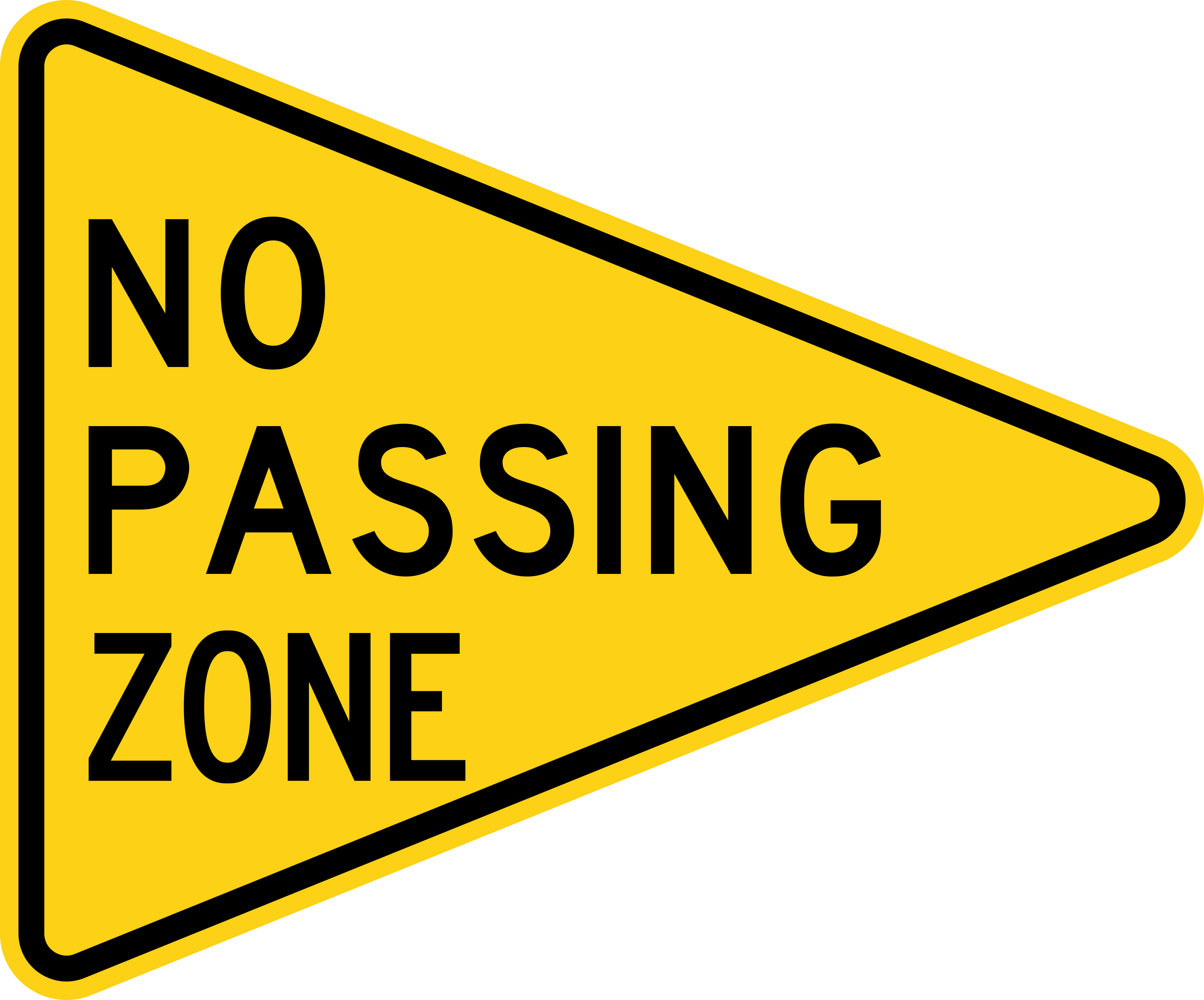
No passing zone 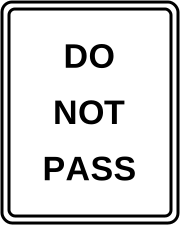
Do not pass
3 questions from the Maine practice test
1. What must a Maine driver do before reaching the start of a no-passing zone?
- Move onto the shoulder
- Complete the pass
- Increase speed after entering the zone
- Continue beside the other vehicle
Show answer
Complete the pass. Maine requires a driver to finish a pass before reaching the beginning of a no-passing zone. A driver who is already beside another vehicle cannot assume the solid marking allows extra time to complete the maneuver. Check the road ahead before starting, and do not begin a pass that cannot be completed legally with adequate space. Hills, curves, intersections, bridges, and railroad crossings can shorten the available view. The cue is plan the entire pass, not just the first move around the vehicle.
2. When should a driver avoid passing based on the center line?
- When there is a solid center line on the driver's side
- When there is a broken center line on the driver's side
- When the road has two lanes in the same direction
- When the vehicle ahead is traveling below the posted limit
Show answer
When there is a solid center line on the driver's side. A solid center line on the driver's side marks a situation where passing should not begin. The line signals that the driver may not have enough sight distance or safe space to move into opposing traffic. A broken line on the driver's side can permit passing, but it still requires a clear view and a safe opening. Two lanes moving in the same direction do not create this specific no-passing condition, and a slower vehicle ahead is not a reason to cross a solid line. Check the pavement marking before considering any maneuver.
3. What determines whether a pass is safe after signs and lane markings are checked?
- The driver’s assessment of traffic and road conditions
- The speed of the vehicle being passed alone
- The presence of a passenger in the car
- Whether the vehicle has automatic headlights
Show answer
The driver’s assessment of traffic and road conditions. Only the driver can determine whether a pass is safe. Pavement markings and signs provide restrictions, but the driver must also judge sight distance, oncoming traffic, road width, speed, and escape space. A broken line does not guarantee a safe opening, and a clear view can disappear quickly near a hill or curve. Before moving left, search ahead and behind, signal, and abandon the maneuver if any condition changes. Safety requires a complete traffic assessment, not reliance on one marking alone.
Practice this topic
Lock it in with signals and markings questions from the free Maine practice test. Every answer comes with a plain English explanation.
Source: the Maine Driver's License Manual, Section 7: General Driving. This lesson is a plain English summary, not the law itself; where it differs, the manual and the statute govern. Last checked 2026-09-27.